
Adapting writing for form: letters, articles and speeches
Lerne es beim Spielen
Beantworte diese Fragen für Energie, dann angle und erkunde. Kein Konto nötig.
Für Lehrkräfte: sofort einsetzbare Lektionsfolien, Lernnotizen für Adapting writing for form: letters, articles and speeches (English Language, Writing) — nutze sie in deiner Lektion oder starte das Thema als interaktive Klassenaktivität, die deine Lernenden als Live-Spiel spielen.
Lektionsnotizen
Why form matters
- The form of a text is its type. Each has conventions that readers expect, and marks are given for matching form to purpose and audience.
- Always identify the form, the audience and the purpose in the task before you start.
Formal and informal letters
- A full formal letter commonly includes addresses, a date, greeting, clear purpose, paragraphs and a suitable sign-off. Top-right sender address is one traditional layout; left-aligned block layouts are also used. Common British sign-offs pair “Dear Sir or Madam” with “Yours faithfully” and a named greeting with “Yours sincerely”. Follow any task instructions.
- Informal letter: friendly greeting, chatty tone, contractions, and a casual sign-off ("Best wishes", "Love").
Common British formal sign-offs
Articles
- An article usually has a relevant headline, focused opening and organised paragraphs, sometimes with a by-line or subheading. A news report, opinion column and magazine feature have different purposes and styles; the publication type alone does not determine the tone.
One event, different forms
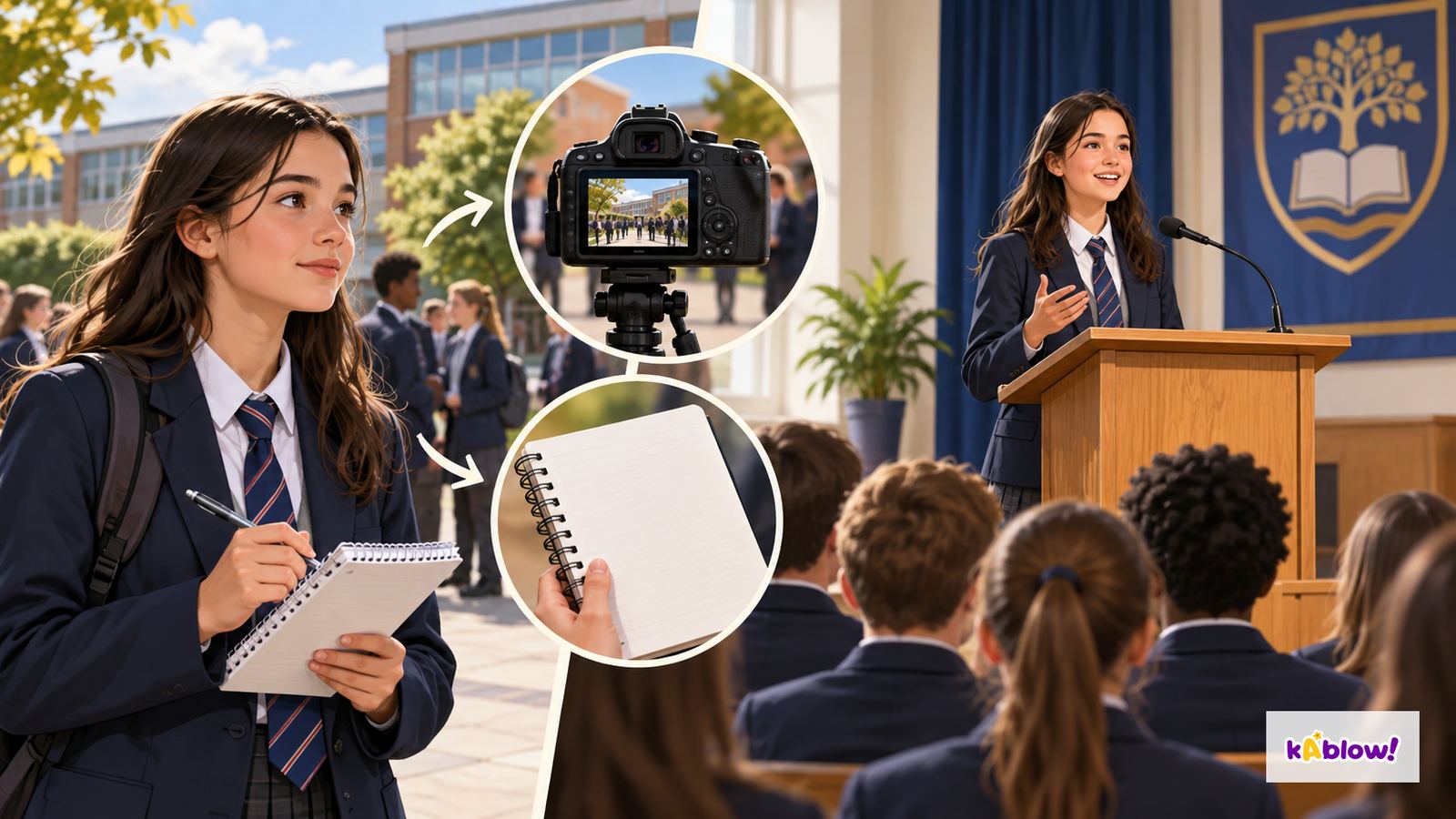
Speeches
- Address listeners appropriately, develop a clear message and close purposefully. Direct address, rhetorical questions, triplets and repetition can help where relevant; none is compulsory in every speech.
Other forms
- Reviews develop judgements with evidence; blogs can be informal, formal or specialist; leaflets often use headings, short sections and bullet points to help readers find information.
Register
- Choose register for the specific relationship, situation and purpose. Do not assume that writing to peers or young readers must always be informal.
Situation shapes register
Folien
Sign up free to view the lesson slides
Step through every slide for this topic — plus flashcards and revision notes — with a free account.
Übungsfragen
Gratis-Vorschau — 8 von 34 Fragen. Registriere dich, um alle zu sehen.
1.What is 'form' in writing?
Easy- Athe type of text
- Bthe font
- Cthe title
- Dthe length
2.Which greeting is formal?
Easy- AHi mate
- BYo
- CHey there
- DDear Sir or Madam
3.Which sign-off is the most friendly and conversational here?
Easy- AYours sincerely
- BYours truly sir
- CBest wishes
- DYours faithfully
4.A newspaper article usually starts with:
Easy- Aan index
- Ba headline
- Ca poem
- Da conversation
5.Under a common British formal-letter convention, which sign-off follows “Dear Mrs Patel”?
Easy- AYours sincerely
- BYours faithfully
- CCheers
- DBye
6.In one traditional British letter layout, where is the sender’s address placed?
Easy- Abottom left
- Bmiddle
- Cnot included
- Dtop right
7.Which is most suitable for a letter to a headteacher?
Easy- Arude
- Bchildish
- Cformal and respectful
- Dchatty and slangy
8.What is a by-line?
Easy- Aa quotation
- Bthe author's name on an article
- Ca spelling mistake
- Da punctuation mark
Unlock all 34 questions & more
Erstelle ein Gratis-Konto, um alle Fragen, Folien, Karteikarten und Lernnotizen zu diesem Thema zu sehen.
Altklausuren
Altklausuren-Übungen für dieses Thema kommen bald.
Bald verfügbar