Responde estas preguntas para ganar energía, luego pesca y explora. Sin cuenta.
Para educadores: diapositivas de la lección, apuntes de repaso listos para usar sobre Analysing structure in fiction extracts (English Language, Reading) — úsalos en tu lección, o presenta el tema como una actividad interactiva de clase que tus aprendices juegan como un juego en vivo.
Structure is how a writer organises a text: the order of events, where the focus moves, how the pace changes, and how the opening and ending are shaped.
When the question covers the whole extract, follow significant developments across it. A focused quotation can support a structural observation, but single-word analysis alone will not trace the organisation.
Think about the extract as a journey: where does it start, where does it shift, where does it end up?
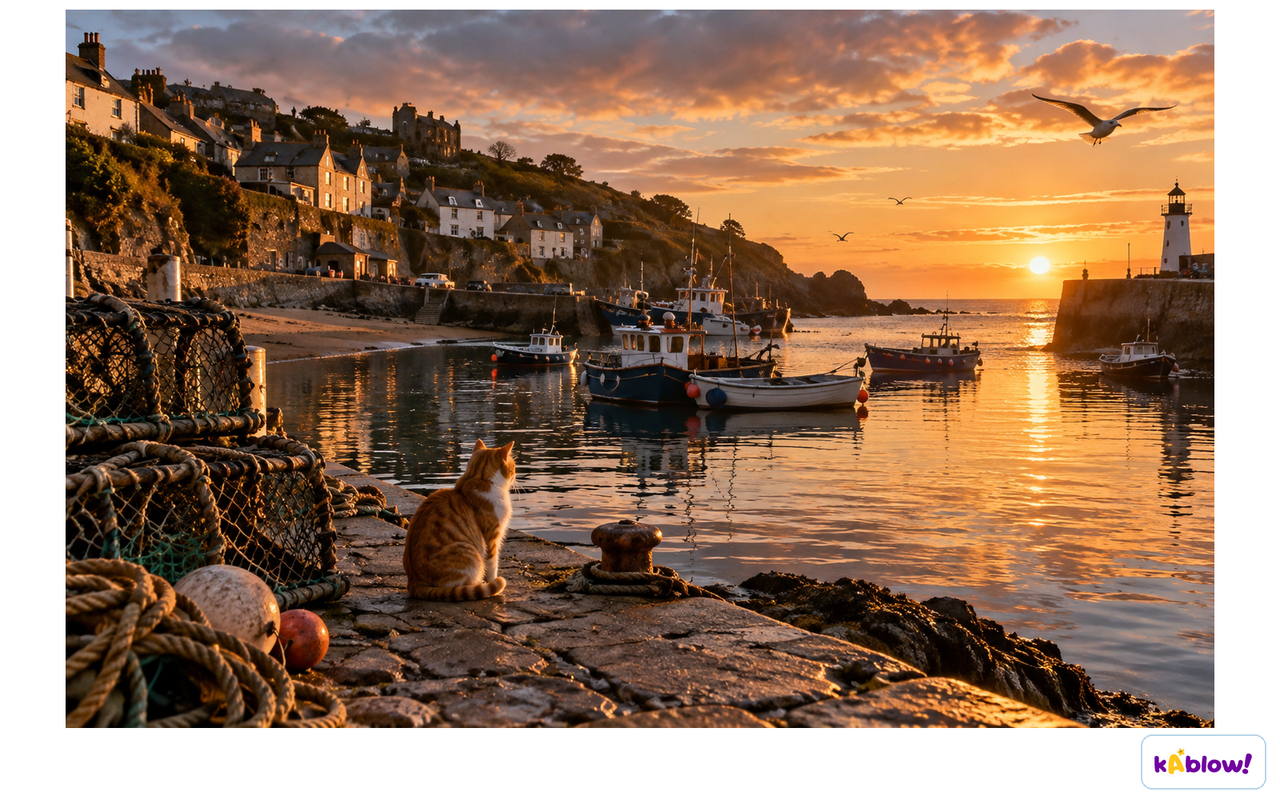
A setting with a foreground detail
Structural features to look for
Opening: sets the scene, hooks the reader, or begins in the middle of action.
Shifts in focus: moving from a wide view to a close-up (zooming in) or from one character to another. A shift in time might be a flashback or a jump forward.
Pace is context-dependent. A short paragraph may accelerate action or create a pause; a long sentence may sustain rapid movement or dwell on detail.
Juxtaposition places elements alongside one another for comparison or contrast. Contrast can highlight a change, such as movement from calm to violence.
Foreshadowing, repetition, cyclical structure (an ending that echoes the beginning) and a final twist or cliffhanger.
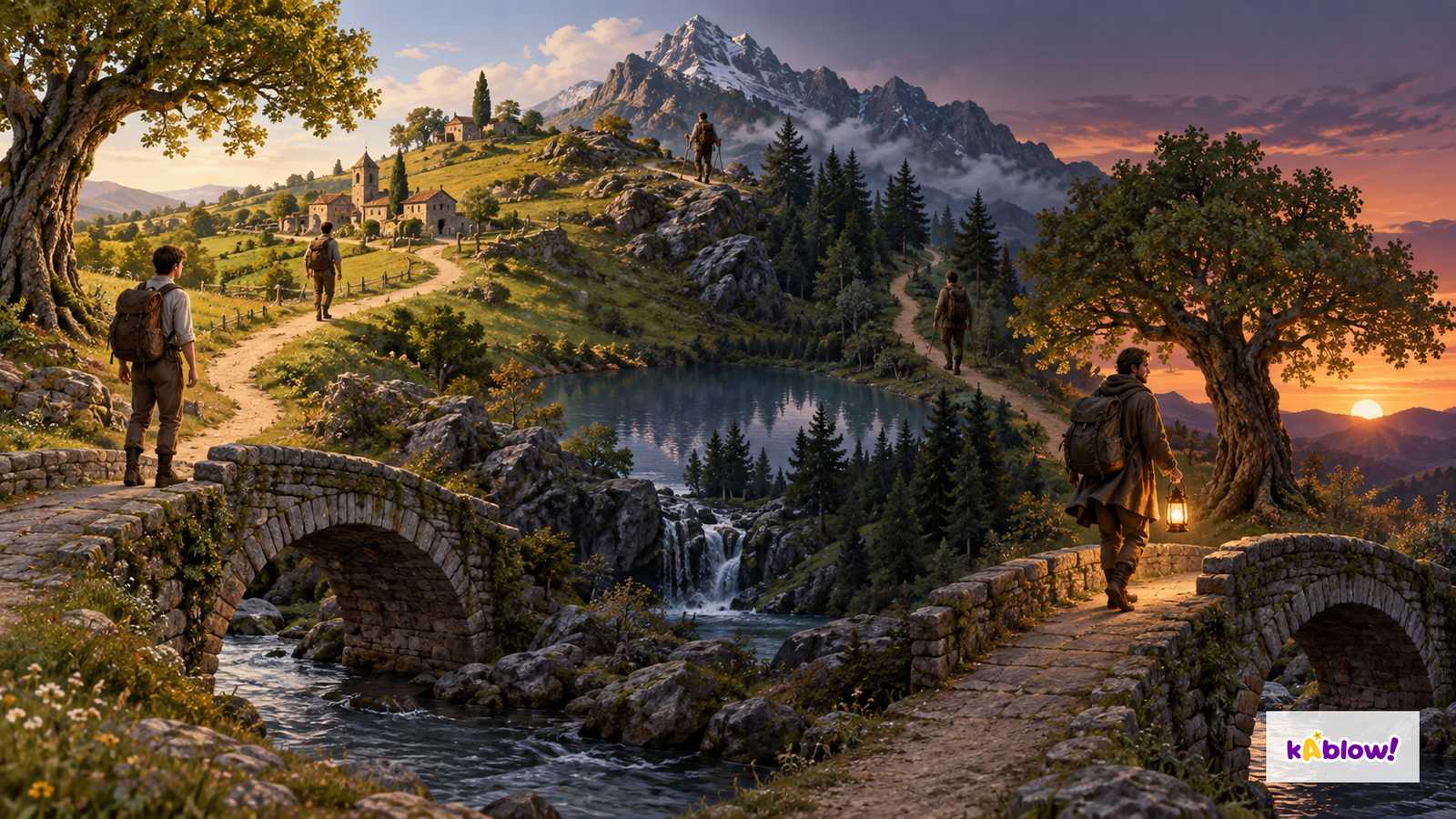
An imagined return
Analysing structure
Name the feature, say where it happens in the extract (beginning, middle, end), and explain the effect on the reader: tension, sympathy, surprise, curiosity.
A good structure answer covers the whole extract and uses short quotations to show the shifts.
Do not assume the author’s whole story ends where a printed extract stops. Analyse the effects of the supplied passage while distinguishing deliberate textual choices from its selection.
Tracking the focus
Diapositivas
Sign up free to view the lesson slides
Step through every slide for this topic — plus flashcards and revision notes — with a free account.
Vista previa gratis — 8 de 36 preguntas. Regístrate para verlas todas.
1.What is structure in a text?
Easy
Ahow a writer organises the text
Bthe writer's word choice
Cthe punctuation only
Dthe spelling
2.What is a flashback?
Easy
Aa jump to the future
Ba simile
Ca summary
Da shift to an earlier time
3.What does 'zooming in' mean in a structure answer?
Easy
Achanging the speaker
Busing a metaphor
Cnarrowing the focus from general to specific
Dwidening the view
4.What is a cyclical structure?
Easy
Athe text is non-fiction
Bthe ending echoes the beginning
Cthe text has no ending
Dthe text is a poem
5.What is a cliffhanger?
Easy
Aan ending that leaves tension unresolved
Ba happy ending
Ca flashback
Da description of a mountain
6.A writer isolates “The door opened.” in a one-line paragraph. What is one possible reason?
Easy
ATo guarantee the reader knows who opened it.
BTo mark a definite flashback without other clues.
CTo make the language automatically formal.
DTo draw attention to a decisive moment.
7.A long description delays the next action by dwelling on a room’s details. What may this do to the narrative pace?
Easy
Acreate shock
Bshow a list
Cslow the pace
Dspeed up the pace
8.What does a shift of focus from one character to another do?
Easy
Ashows alliteration
Bredirects attention to a different character
Cends the story
Dshows a simile
Más preguntas
9.What is foreshadowing?
Easy
Ahinting at later events
Bdescribing the past
Crepeating a word
Da rhetorical question
10.What is contrast in structure?
Easy
Arepeating the same idea
Busing one tone throughout
Cending suddenly
Darranging different situations so their differences become noticeable
11.What might a flashback add when inserted during a character’s present-day decision?
Easy
Athe story is over
Bthe pace is faster
Cthe character's past affects the present
Dthe writer made a mistake
12.An extract begins with a view of a whole street and ends focused on one door. What is the effect?
Medium
Ait is a rhetorical question
Bit builds curiosity about the door
Cit shows the street is dull
Dit is a shift to the past
13.A tense chase is followed by a calm, quiet paragraph. What structural technique is this?
Medium
Acontrast
Bsimile
Crepetition
Dalliteration
14.An extract ends at the window mentioned in its opening. Which structural pattern may this create?
Medium
Ait shows a fast pace
Bit introduces a new character
Cit is a flashback
Da cyclical return that may highlight continuity or change
15.What is the effect of ending a chapter on an unanswered question?
Medium
Ait makes the text formal
Bit shows a flashback
Cit makes the reader want to read on
Dit ends the story
16.Which comment best analyses structure?
Medium
AThe word 'dark' is an adjective.
BThe extract moves from the calm opening to the sudden crash, building tension.
CThe writer uses a simile.
DThe sentence is long.
17.Repetition of a key phrase at the start and end of a passage creates:
Medium
Aa sense of circularity or obsession
Ba rhetorical question
Ca simile
Da list
18.Which is a shift in time?
Medium
A'The room was cold.'
B'She laughed.'
C'The door was blue.'
D'Years later, she still remembered that night.'
19.An extract begins with the characters laughing and ends with one alone. What does the structure suggest?
Medium
Athere is no change
Bthe characters are friends forever
Ca movement from joy to isolation
Dthe story is a comedy
20.During a pursuit, a paragraph reads: “Run. Hide. Wait.” Which comment best explains its organisation?
Medium
AThe sequence makes the story a comedy.
BThe isolated commands emphasise urgent decisions, with a pause at “Wait”.
CEvery short sentence must slow the whole story equally.
DThe paragraph proves the narrator is bored.
21.What does it show if a writer withholds a character's name until the end of the extract?
Medium
Ait builds mystery and surprise
Bit is a mistake
Cthe character is unimportant
Dit shows a simile
22.'The sun rose. The village woke. At the edge of town, a man waited.' How does the focus move?
Medium
Afrom narrow to wide
Bfrom past to future
Cthere is no shift
Dfrom wide to narrow
23.Which structure feature gives the reader clues about what will happen?
Easy
Ahyperbole
Bmetaphor
Cforeshadowing
Dalliteration
24.What is a juxtaposition?
Easy
Arepetition
Bplacing elements side by side to invite comparison or contrast
Ca long sentence
Da spelling error
25.Why might a writer insert a paragraph break just before a shocking reveal?
Medium
Abuild tension before the reveal
Bslow the whole text
Cshow a metaphor
Davoid a conclusion
26.Why might a writer deliberately leave a character’s speech unfinished, marked by a dash?
Medium
Ato show a simile
Bto be formal
Cto list facts
Dto suggest interruption or uncertainty
27.When a question asks about the structure of the whole extract, which scope should the response consider?
Easy
Aonly the last line
Bone word
Cbeginning, middle and end
Donly the opening
28.In a structure answer, what should come after naming the feature?
Easy
Aa rhyme
Bits effect on the reader
Ca new feature
Da summary of the plot
29.Structure is about how a text is organised.
Easy
True or false?
30.A shift in time can be a flashback.
Easy
True or false?
31.A structure answer should focus on one word only.
Easy
True or false?
32.A cyclical ending can echo an opening image or idea without returning to the same physical place.
Easy
True or false?
33.Foreshadowing shows what happened long ago.
Medium
True or false?
34.Which are structural features?
Medium
Aa shift in focus
Ba flashback
Ca change in pace
Dan isolated simile analysed only for its word choice
Ea cyclical ending
35.Which can be effects of a short paragraph?
Medium
Aemphasis
Burgency
Cslowing the pace
Dshock
Eautomatically making any text formal
36.Read: 'The street was crowded and noisy. Through the crowd, a girl walked. She was crying.' Explain how the structure of this extract guides the reader's attention.
Medium
Unlock all 36 questions & more
Crea una cuenta gratis para ver todas las preguntas, las diapositivas, las tarjetas y los apuntes de repaso de este tema.