
Vocabulary and sentence variety
Apréndelo jugando
Responde estas preguntas para ganar energía, luego pesca y explora. Sin cuenta.
Para educadores: diapositivas de la lección, apuntes de repaso listos para usar sobre Vocabulary and sentence variety (English Language, Writing) — úsalos en tu lección, o presenta el tema como una actividad interactiva de clase que tus aprendices juegan como un juego en vivo.
Apuntes de la lección
Vocabulary
- Choose precise words for the intended meaning. “Ancient” describes great age; “dilapidated” describes disrepair. “Devour” adds intensity to “eat”, and “furious” expresses more anger than “angry”. They are not interchangeable in every context.
- Check meaning, connotation, register and grammatical fit before using a thesaurus suggestion. Plain words and repetition can be effective; do not automatically replace “nice”, “good”, “very” or “said”.
- Use specialist vocabulary for the topic where suitable, and adjust register (formal v informal).
Different impressions of a dwelling
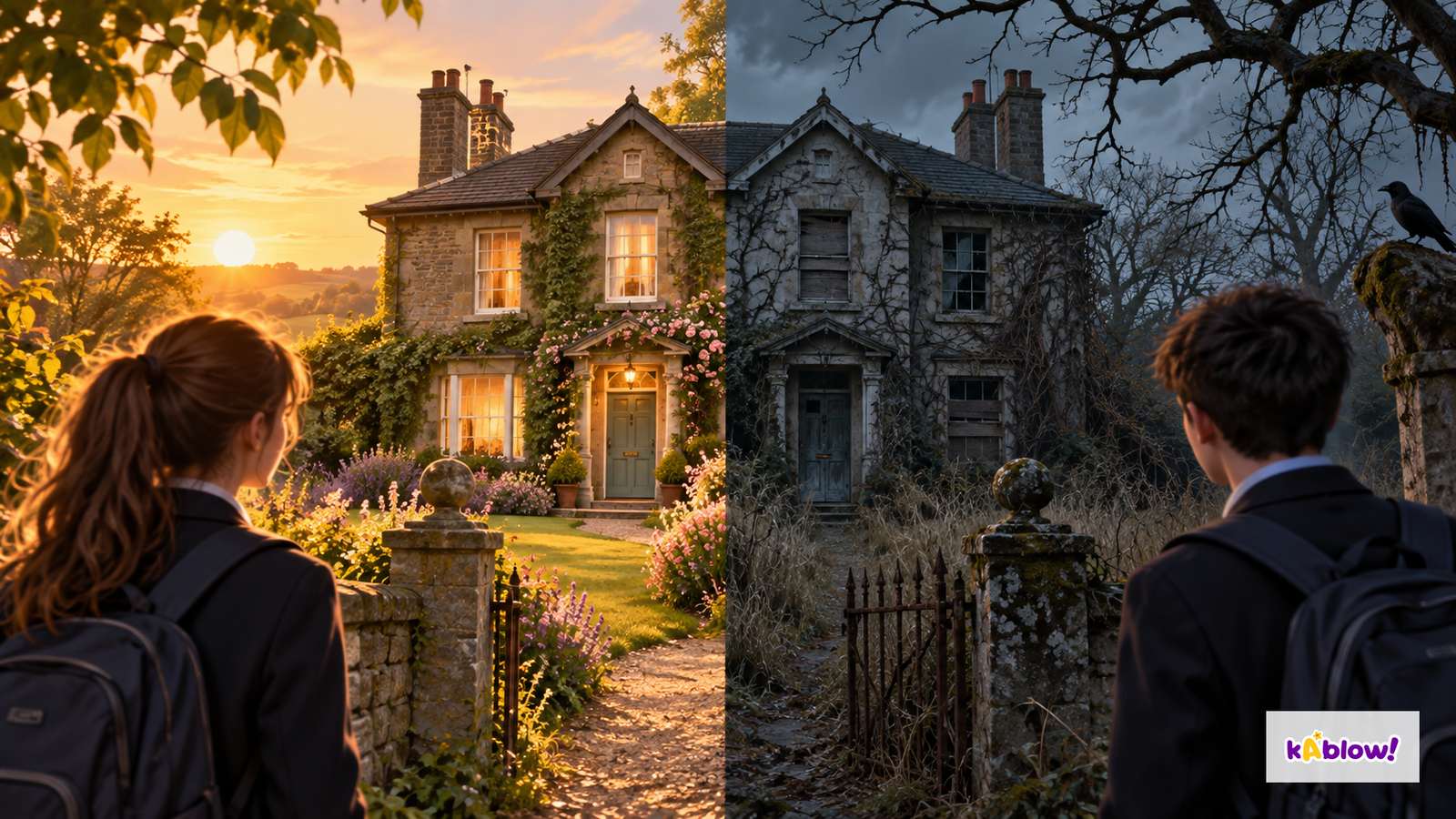
Sentence variety
- Mix simple, compound and complex sentences. Vary openings: start with a verb ("Trembling, she..."), an adverb ("Slowly..."), a prepositional phrase ("Across the field..."), or a subordinate clause ("Although he was tired...").
- Use sentence length and pattern for the effect needed in context. A short sentence can create a pause or urgency; a long sentence can accumulate detail or sustain rapid movement.
- A minor sentence such as “Silence.” can isolate a detail. Minor sentences lack usual full clause structure, but can contain a verb, as in “Coming?”.
Structure serves meaning
Techniques for impact
- Fronted adverbials, supplementary clauses set off by commas, lists of three, repetition and rhetorical questions can add variety. Defining relative clauses and other subordinate clauses do not automatically take paired commas.
- Check that variety serves meaning: do not use long words or complicated sentences just to show off.
Revising
- Read carefully, silently in an examination or aloud during practice when appropriate. Improve words or structures only when the revision helps the intended meaning.
Preserve the intended meaning
Diapositivas
Sign up free to view the lesson slides
Step through every slide for this topic — plus flashcards and revision notes — with a free account.
Preguntas de práctica
Vista previa gratis — 8 de 33 preguntas. Regístrate para verlas todas.
1.What does 'vocabulary' mean?
Easy- Athe words you know and use
- Bspelling
- Cgrammar
- Dpunctuation
2.Which word is vague?
Easy- Afurious
- Bancient
- Cdevoured
- Dnice
3.Which verb specifically indicates speaking in a very quiet voice?
Easy- Agot
- Bhad
- Cwhispered
- Dwent
4.Which sentence is a minor sentence?
Easy- AHe knew it.
- BSilence.
- CShe ran.
- DThe room fell silent.
5.Which single word most strongly expresses very large size?
Easy- Aenormous
- Blarge
- Cvery big
- Dbig big
6.Which opening is a fronted adverbial?
Easy- AA fox crept.
- BThe fox was red.
- CFoxes exist.
- DAcross the field, a fox crept.
7.Which is a complex sentence?
Easy- AWe went out and played.
- BOut.
- CAlthough it rained, we went out.
- DWe went out.
8.Which sentence uses a triplet?
Easy- AHe slept.
- BHe was tired, hungry and cold.
- CHe was tired.
- DHe was tired and cold.
Unlock all 33 questions & more
Crea una cuenta gratis para ver todas las preguntas, las diapositivas, las tarjetas y los apuntes de repaso de este tema.
Exámenes anteriores
La práctica con exámenes anteriores de este tema llegará pronto.
Próximamente