
Presenting and responding in spoken English
Belajar sambil bermain
Jawab soal-soal ini untuk dapat energi, lalu memancing dan menjelajah. Tanpa akun.
Untuk pendidik: slide pelajaran, catatan ulasan siap pakai untuk Presenting and responding in spoken English (English Language, Spoken Language) — gunakan dalam pelajaranmu, atau jalankan topik sebagai aktivitas kelas interaktif yang dimainkan pembelajar sebagai permainan langsung.
Catatan pelajaran
The spoken language assessment
- For AQA GCSE English Language 8700, the spoken-language endorsement is reported separately as Pass, Merit, Distinction or Not Classified; it does not contribute to the written GCSE grade.
- Prepare a presentation on an agreed topic, then listen and respond to questions or feedback. Check your own specification for its precise arrangements.
Planning a presentation
- Choose a topic you can speak about with confidence and interest. Decide your purpose (inform, persuade, explain, entertain) and audience.
- A clear opening, logically developed points with examples, and a conclusion help listeners follow the talk. The number of points depends on the task and available time.
- Notes, cue cards or presentation aids may help, but they are not compulsory in the AQA specification. Rehearse so the aid supports communication rather than distracting from it.
A prepared classroom talk
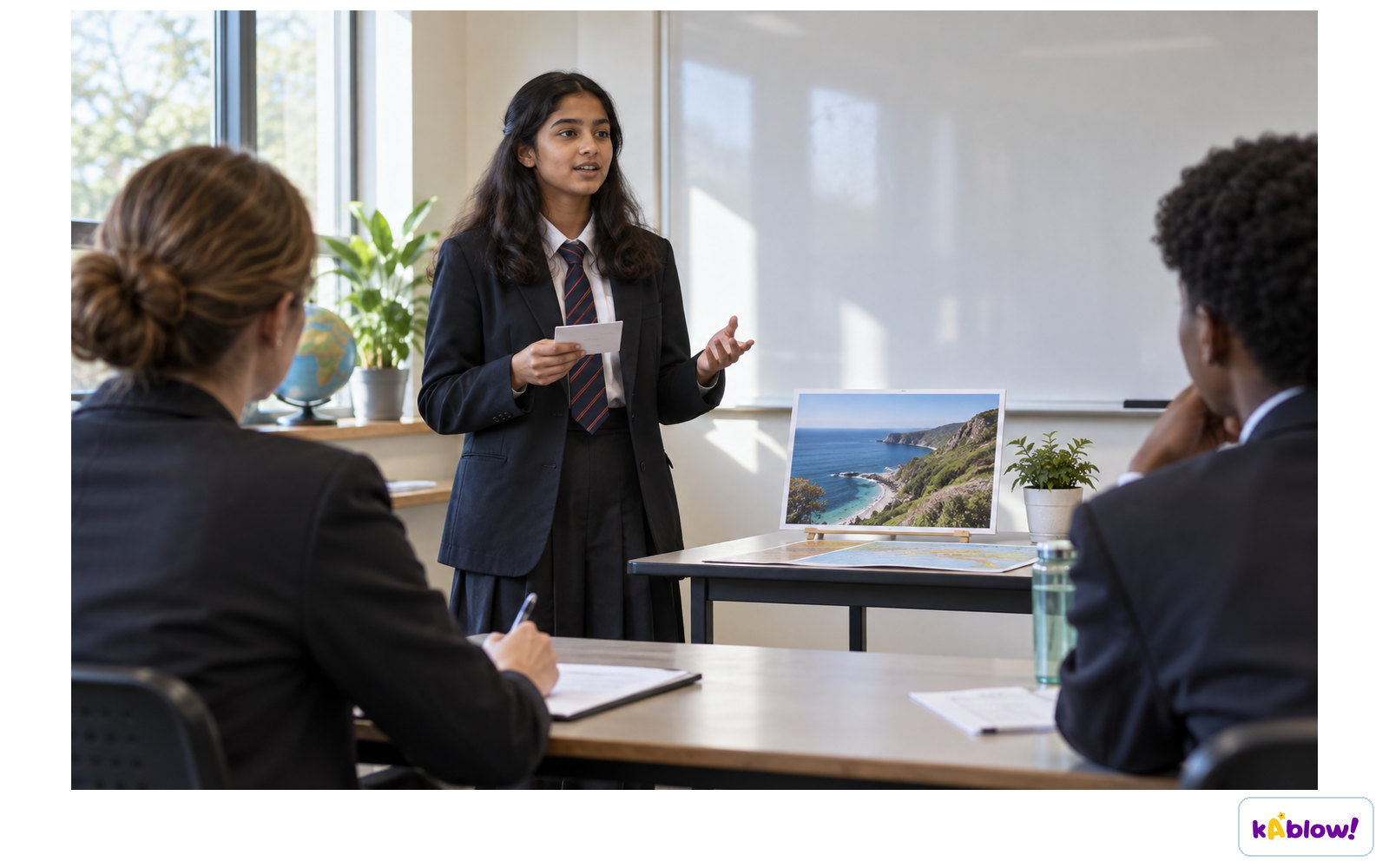
Delivering
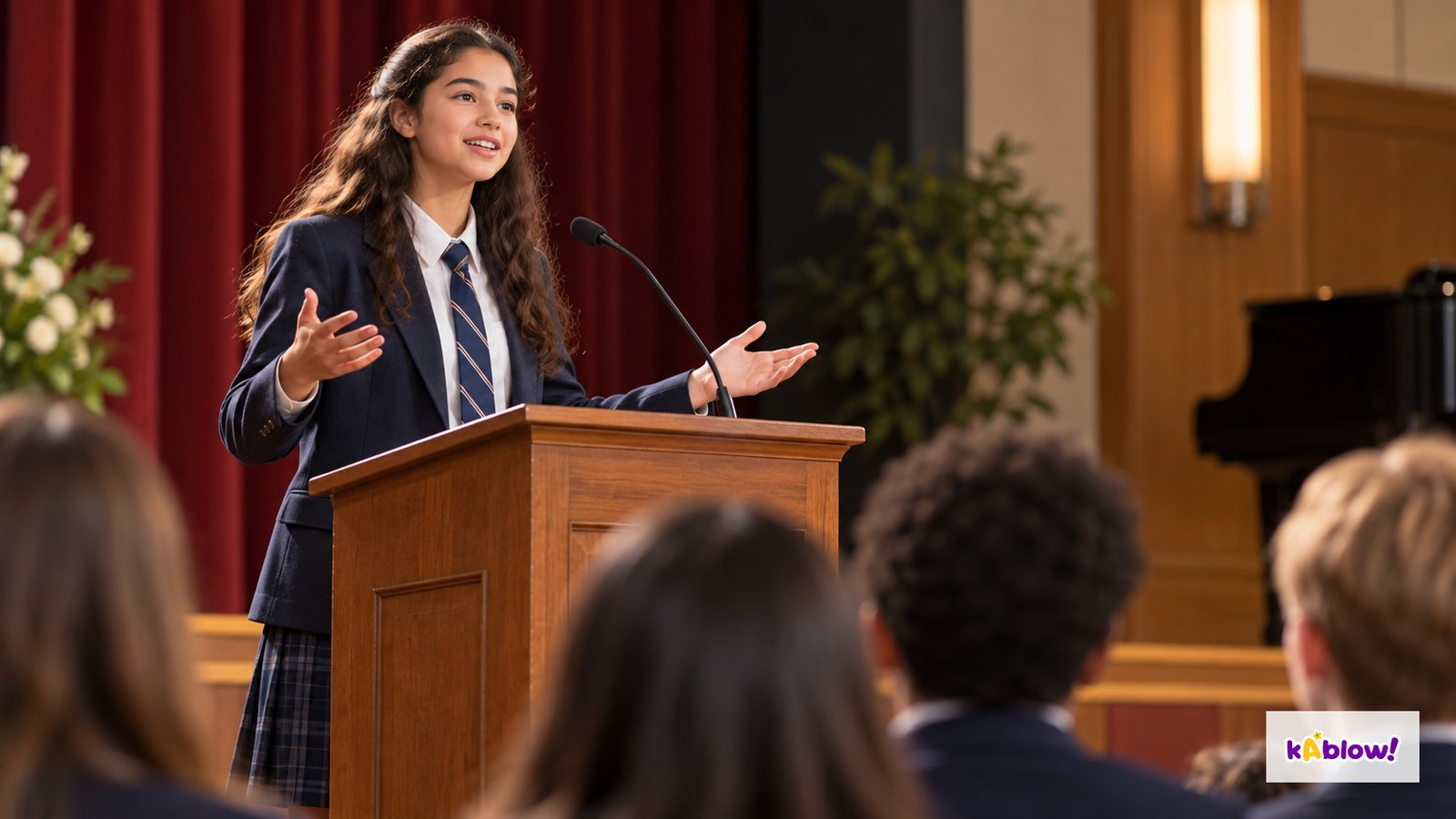
- Speak clearly and at a steady pace, with varied tone and volume. Use pauses for emphasis.
- Use intelligible language appropriate to the formal setting. Standard English is not a particular accent; choose vocabulary and register for your audience.
- Eye contact, posture and gesture may help engagement. Use suitable alternatives and any agreed access arrangements so delivery supports the speaker’s communication.
Delivery choices for a listener
Responding to questions
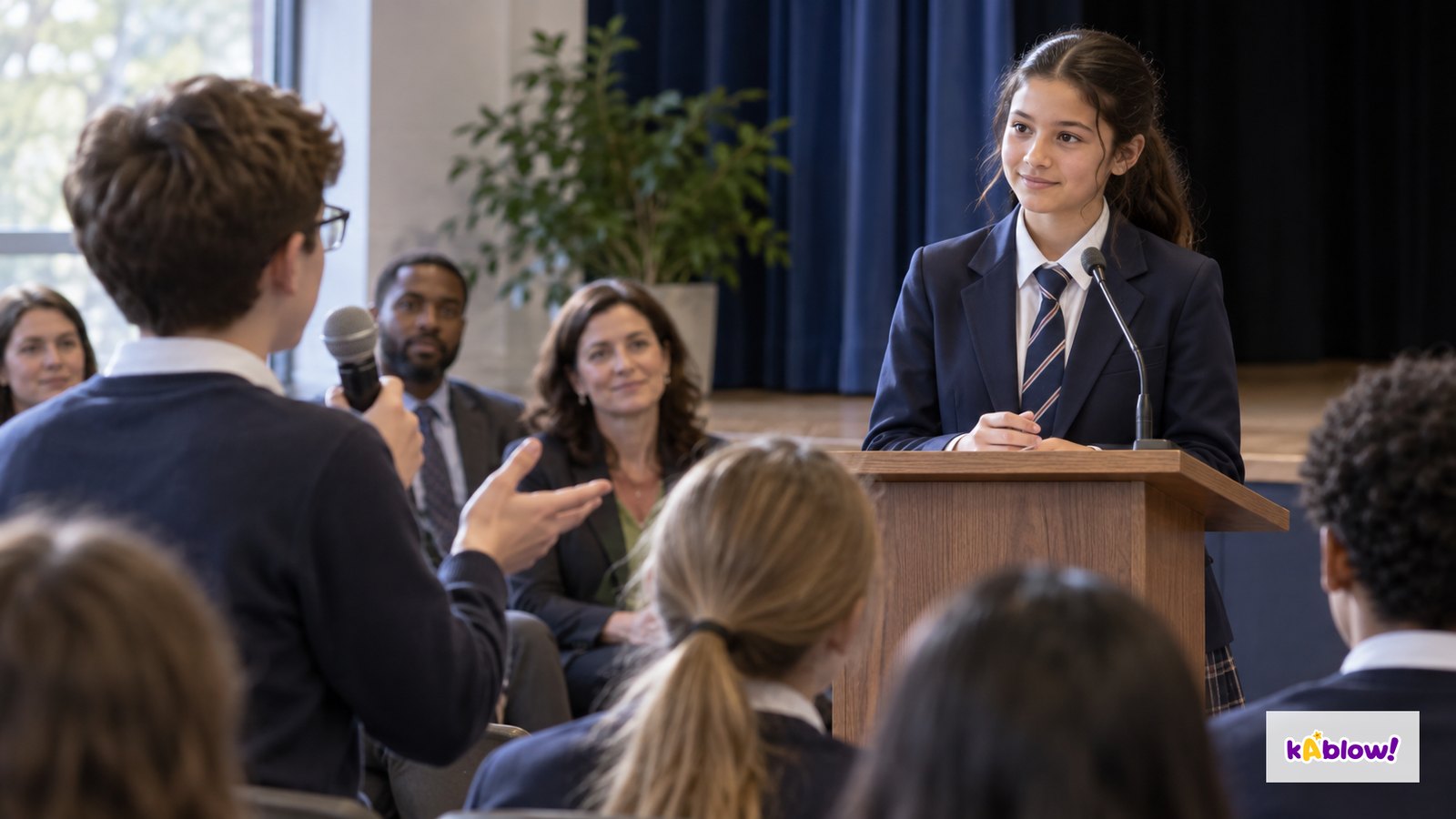
- Listen carefully, think, and answer directly using examples. Say "That is an interesting point..." if you need time. If you do not know, say so honestly and explain what you do know.
Listening before responding
Evaluation
- Reflect afterwards on what went well and what to improve.
- Evaluate specific evidence: could listeners follow the argument, were examples relevant, and did responses address the questions? Choose one practical improvement for the next rehearsal.
Slide
Sign up free to view the lesson slides
Step through every slide for this topic — plus flashcards and revision notes — with a free account.
Soal latihan
Pratinjau gratis — 8 dari 32 soal. Daftar untuk melihat semuanya.
1.What is a presentation?
Easy- Aa prepared talk to an audience
- Ba written essay
- Ca poem
- Da game
2.What should you decide before planning a talk?
Easy- Athe font
- Bthe page count
- Cthe paper type
- Dpurpose and audience
3.What is the purpose of eye contact?
Easy- Ato hide notes
- Bto rhyme
- Cto engage the audience
- Dto fill time
4.What are cue cards for?
Easy- Ato hide your face
- Bto hold key words to prompt you
- Cto read a whole script
- Dto decorate
5.Which sentence suits a formal presentation?
Easy- AToday I will explain why recycling matters.
- BThis presentation is a private message to my closest friend.
- CThe topic does not need explaining to anyone.
- DI have no message or purpose for this audience.
6.What does 'register' mean in speech?
Easy- Ahow loud you are
- Bthe length of the talk
- Cthe subject
- Dhow formal the language is
7.Which is a rhetorical device for speech?
Easy- Aheading
- Bindex
- Crhetorical question
- Dfootnote
8.How can you vary your voice?
Easy- Ashout only
- Bchange tone, pace and volume
- Cuse one tone
- Dwhisper only
Unlock all 32 questions & more
Buat akun gratis untuk melihat setiap soal, slide, kartu flash, dan catatan ulasan topik ini.
Soal ujian lampau
Latihan soal ujian lampau untuk topik ini segera hadir.
Segera hadir