
Elizabethan England 1558-88: government, religion and society
Belajar sambil bermain
Jawab soal-soal ini untuk dapat energi, lalu memancing dan menjelajah. Tanpa akun.
Untuk pendidik: slide pelajaran, catatan ulasan siap pakai untuk Elizabethan England 1558-88: government, religion and society (History, British Depth Study) — gunakan dalam pelajaranmu, atau jalankan topik sebagai aktivitas kelas interaktif yang dimainkan pembelajar sebagai permainan langsung.
Catatan pelajaran
Elizabeth and her government
- Elizabeth acceded in November 1558 and was crowned on 15 January 1559. Court, council, Parliament and local government had different roles. Patronage and progresses helped maintain relationships and display authority, while hosts and recipients could have their own interests.
- Cecil, Walsingham and Dudley were important advisers at different times. Parliament was summoned for business including laws and subsidies; marriage, succession and religion could cause disputes. Its intermittent sessions did not make it irrelevant. Local justices and other officials were important to implementation.
Government relied on several institutions
The Religious Settlement (1559)
- The Acts of Supremacy and Uniformity in 1559 restored royal supremacy under the title Supreme Governor and prescribed a revised Book of Common Prayer. The settlement rejected papal jurisdiction and had a Protestant direction, retaining bishops and some traditional forms and wording.
- Middle way is a useful description to evaluate, not proof that both faiths were accepted equally. Parliamentary resistance, negotiation and pressure shaped legislation; attendance requirements and penalties sought conformity. Some Catholics rejected the settlement while some Protestant reformers wanted further change. Enforcement and individual responses varied.
Compromise within a Protestant settlement
Challenges
- The 1569 Northern Rebellion combined religious and aristocratic concerns. The papal excommunication of 1570 challenged Elizabeth’s position and allegiance. Mary, Queen of Scots, detained after entering England in 1568, provided a possible alternative around whom opponents could organise. Do not infer that every Catholic endorsed rebellion.
- Ridolfi in 1571, Throckmorton in 1583 and Babington in 1586 involved different actors and plans. The Babington correspondence was intercepted through Walsingham’s intelligence operation and decoded by Phelippes. It was used at Mary’s trial before her execution in February 1587; copying, interception and the handling of evidence warrant scrutiny.
- Jesuits were members of an international Catholic order. Campion and Persons joined the English mission in 1580; not all Catholic priests were Jesuits. Religious ministry, official suspicions and involvement in a particular plot are separate matters, even when authorities connected them.
- Puritan reformers sought further Protestant change in preaching, worship and sometimes church organisation. They were not one uniform revolutionary group. Elizabeth opposed unauthorised prophesying meetings in 1576–77, while Archbishop Grindal defended their value, illustrating conflict within Protestantism as well as Catholic opposition.
Distinguish challenges and responses
Society
- Poverty reflected interacting pressures including population growth, prices and employment insecurity. The 1572 law developed compulsory local relief funding alongside harsh punishment of people classified as vagrants. Contemporary labels for deserving and undeserving people expressed official judgements; they are not neutral measures of human worth. The 1601 law lies outside this lesson’s period.
- London playhouses included the Red Lion in 1567, the Theatre and Newington Butts in 1576, the Curtain in 1577 and the Rose in 1587. Different prices and types of venue offered varied access, alongside regulation and opposition. The Globe opened only in 1599. Do not move later Shakespeare performances into the 1570s without evidence.
- Burghley House, built for Cecil from the 1550s into the 1580s, illustrates elite display and ambition. Its present appearance includes later changes. Grand buildings and theatrical culture cannot alone establish widespread prosperity or equality. Keep every example’s date and social reach visible.
Relief and regulation operated locally
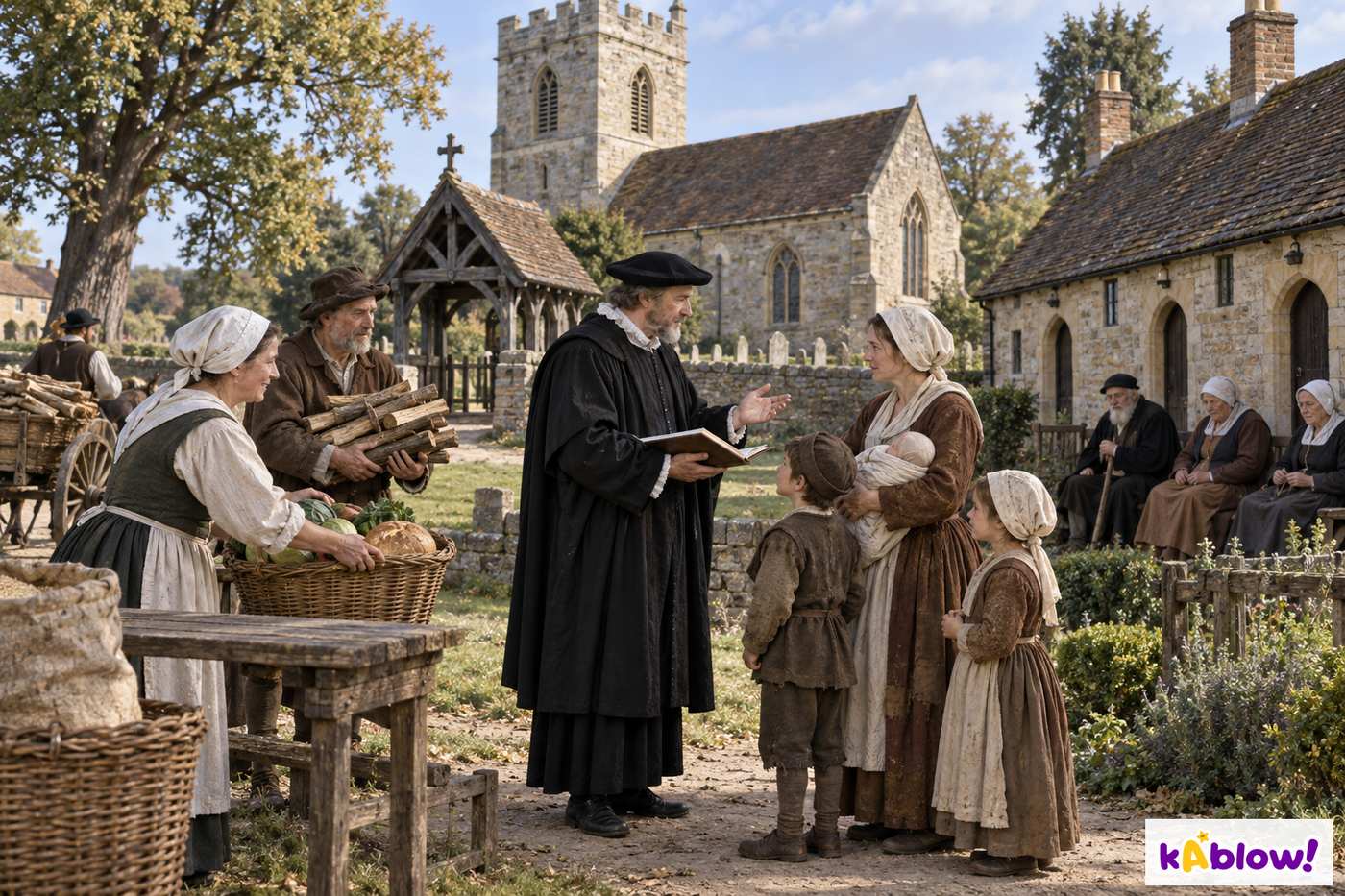
Slide
Sign up free to view the lesson slides
Step through every slide for this topic — plus flashcards and revision notes — with a free account.
Soal latihan
Pratinjau gratis — 8 dari 33 soal. Daftar untuk melihat semuanya.
1.When was Elizabeth I crowned?
Easy- A1559
- B1066
- C1588
- D1603
2.What was the Privy Council?
Easy- Aa parliament
- Ba court of law
- Ca church
- DElizabeth's group of advisers
3.What was the Act of Supremacy?
Easy- Amade Catholicism law
- Bcreated Parliament
- Cmade Elizabeth Supreme Governor of the Church
- Dabolished the Church
4.What was the Act of Uniformity?
Easy- Acreated a new church
- Brequired use of the Book of Common Prayer
- Cended worship
- Dbanned prayers
5.What was a progress?
Easy- Aa royal journey around the country
- Ba law
- Ca rebellion
- Da battle
6.Who was Mary, Queen of Scots?
Easy- Aher sister
- Bher daughter
- Cher enemy in Spain
- DElizabeth's Catholic cousin and rival
7.What was the Northern Rebellion?
Easy- Aa trade war
- Ba peasant revolt
- Ca 1569 Catholic revolt
- Da Puritan march
8.What did the Pope do in 1570?
Easy- Aignored her
- Bexcommunicated Elizabeth
- Ccrowned her
- Dsupported her
Unlock all 33 questions & more
Buat akun gratis untuk melihat setiap soal, slide, kartu flash, dan catatan ulasan topik ini.
Soal ujian lampau
Latihan soal ujian lampau untuk topik ini segera hadir.
Segera hadir