トピック / GCSE / Computer Science / Algorithms Computational thinking: decomposition, abstraction and algorithms 遊んで学ぼう
問題に答えてエネルギーを集めたら、釣りや探検を楽しもう。アカウント不要。
教育者の方へ: Computational thinking: decomposition, abstraction and algorithms(Computer Science、Algorithms)向けのすぐ使えるレッスンスライド, 復習ノート — レッスンで使うか、学習者がライブゲームとして遊ぶインタラクティブなクラス活動としてトピックを実施できます。
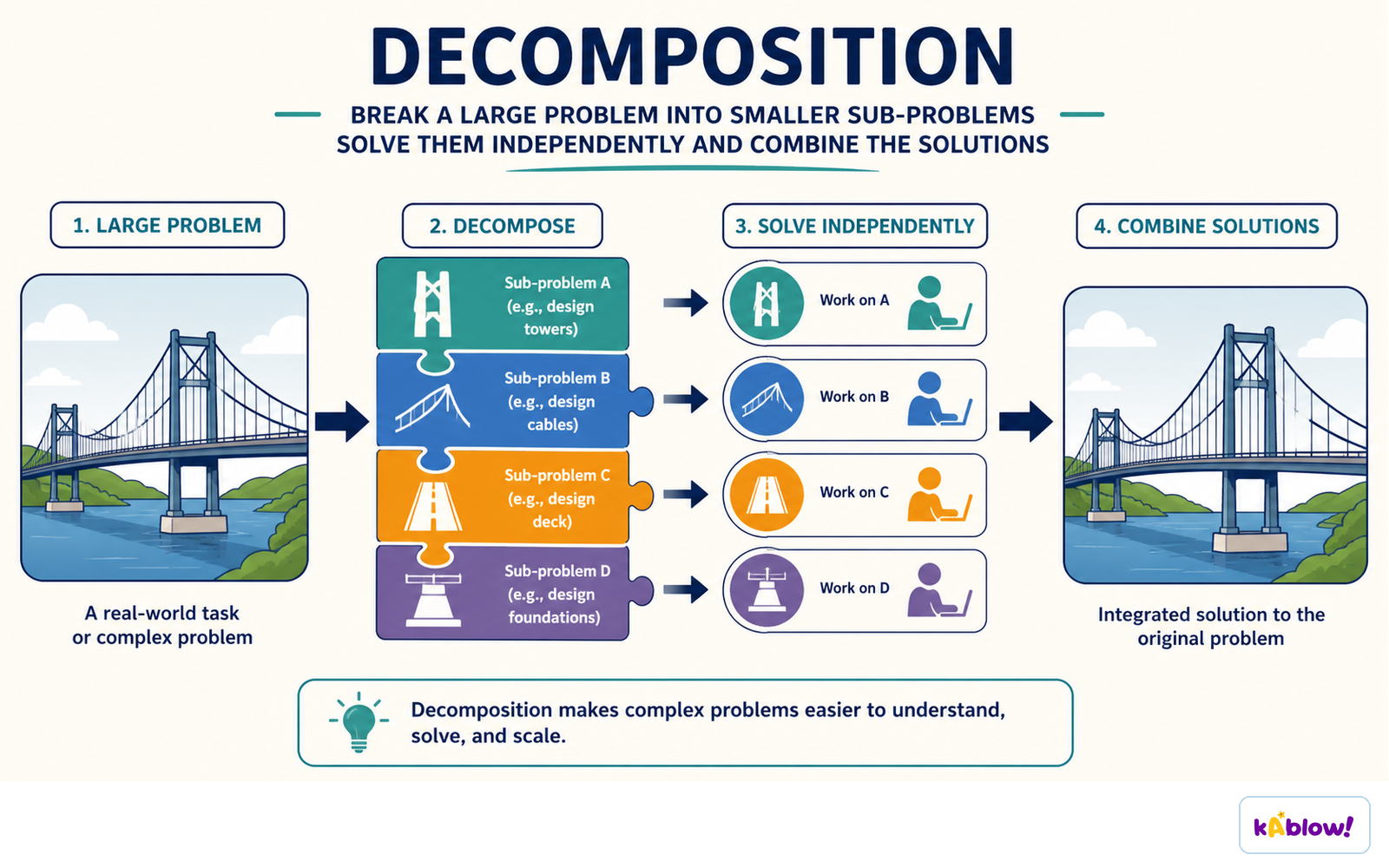
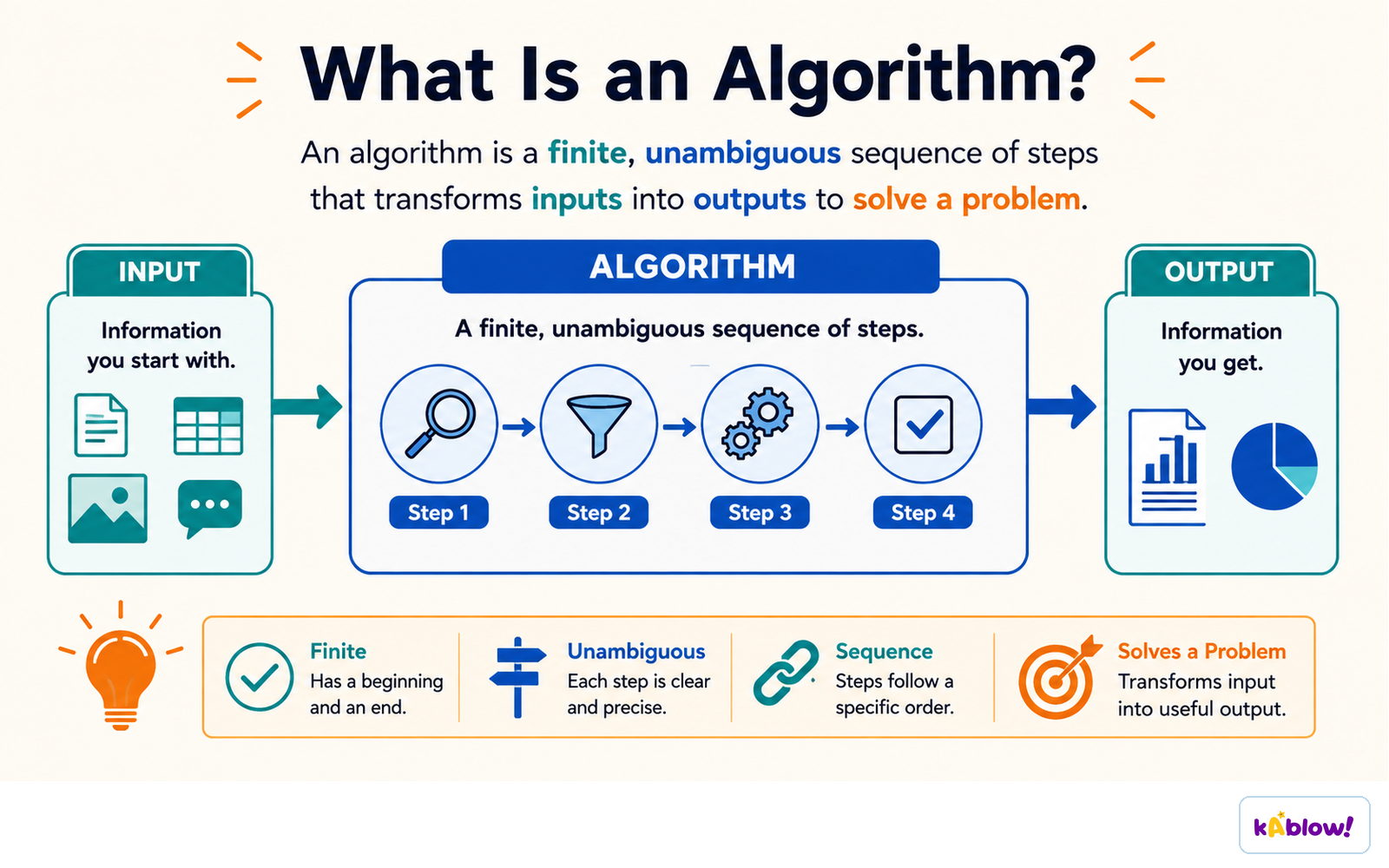
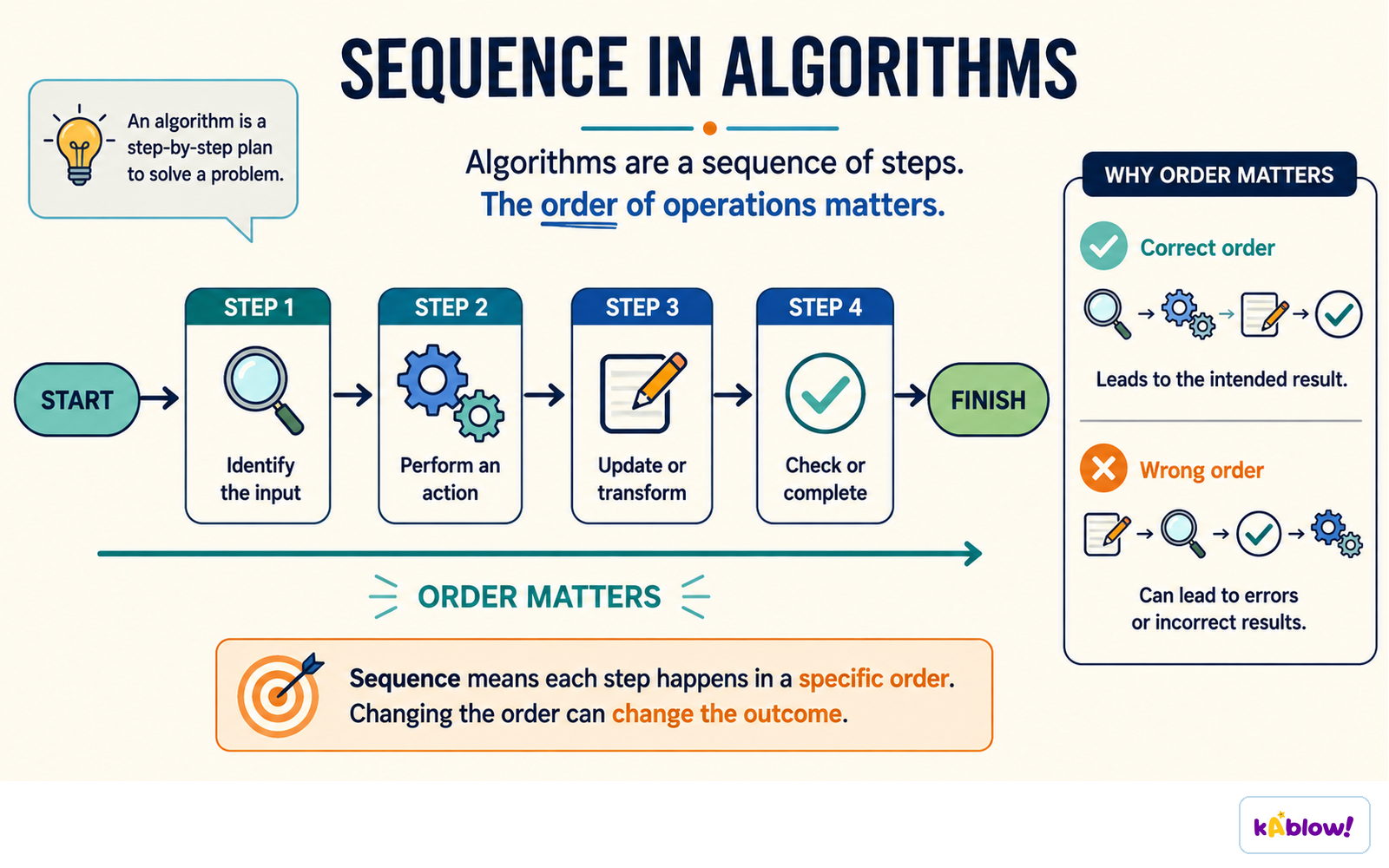
レッスンノート Computational thinking Computational thinking is a way of solving problems so that a computer can help. Its main parts are decomposition , abstraction , pattern recognition and algorithmic thinking .Decomposition : breaking a big problem into smaller, more manageable parts. Planning a school timetable can be split into rooms, teachers, classes and times.Abstraction : removing unnecessary detail to focus on what matters. A map of the Tube shows stations and lines, not every street.Pattern recognition : spotting similarities, so a solution can be reused.Decomposition Algorithms An algorithm is a finite, ordered set of unambiguous steps for a task. It terminates for each valid input in the model used here, but different inputs may take different numbers of steps. Algorithms may process stored input and need not request new user input. Algorithms can be shown in plain English , flowcharts or pseudocode . Structure : sequence (steps in order), selection (decisions: IF), iteration (repeating: loops).What is an algorithm? Example Algorithm to find the larger of two numbers: input A, input B; if A is greater than B then output A, otherwise output B. Why it matters Computational thinking helps design programs that are efficient and easy to test and change. Control structures Sequence follows instructions in order; selection chooses a branch; iteration repeats a body. Example: input a mark, use IF to choose pass/fail, and repeat for each student. Choose relevant details: omit button styling when designing scoring logic, but retain it when designing the interface. Sequence in algorithms スライド Sign up free to view the lesson slides
Step through every slide for this topic — plus flashcards and revision notes — with a free account.
練習問題 無料プレビュー — 34問中8問。すべて見るには登録を。 1. What is an algorithm?
Easy A a set of step-by-step instructions to solve a problemB a type of computerC a programming languageD a hardware part2. What is decomposition?
Easy A breaking a problem into smaller partsB hiding detailsC repeating stepsD fixing errors3. What is abstraction?
Easy A focusing on important details and ignoring the restB breaking into partsC repeatingD testing4. What is pattern recognition?
Easy A spotting similarities or trendsB removing detailC loopingD deleting5. Which structure repeats instructions?
Easy A iterationB selectionC sequenceD input6. Which structure makes a decision?
Easy A selectionB iterationC sequenceD output7. Which is an example of abstraction?
Easy A a Tube map showing stations but not streetsB a list of all streetsC a photographD a full city plan8. Which is an example of decomposition?
Easy A splitting a game into graphics, sound, scoring and controlsB writing one long programC ignoring partsD deleting codeもっと問題 9. What should a good algorithm be?
Easy A clear, finite and unambiguousB vague and endlessC randomD secret10. Which three terms form the input-process-output model commonly used to describe a program?
Easy A input, process, outputB read, write, deleteC start, stop, pauseD first, second, third11. What does 'sequence' mean?
Easy A steps carried out in orderB repeating stepsC decidingD ending12. Which is a result rather than a representation of algorithm steps?
Easy A a reported forecast temperature of 18°CB a flowchartC pseudocodeD clear step-by-step natural-language instructions13. An algorithm uses IF to compare two numbers and output the larger. Which control structure is being used?
Medium A selectionB iteration onlyC no structureD recursion only14. Calculating the average of 100 test scores best uses:
Medium A iterationB no loopC selection onlyD no input15. Why is decomposition useful in a team project?
Medium A different people can work on different partsB it makes all parts identicalC it removes testingD it hides the problem16. Which is an unambiguous instruction?
Medium A Add 5 to the totalB Make it betterC Do something goodD Fix it somehow17. Which is a limitation of abstraction?
Medium A important details may be omittedB it removes all detailC it makes models complicatedD it creates bugs18. What does 'finite' mean for an algorithm?
Medium A it ends after a limited number of stepsB it never endsC it is longD it is hidden19. Which task best shows pattern recognition?
Medium A noticing that many programs need the same login checkB typing fasterC drawing a mapD counting characters20. A taxi app only shows the pickup point and destination on a simple map. This is:
Medium A abstractionB decompositionC iterationD a bug21. Why might poor decomposition cause problems?
Medium A parts may overlap or be missed, causing errorsB no problems occurC programs run fasterD testing is easier22. How does computational thinking help programmers?
Medium A it makes problems easier to solve and programs easier to testB it makes bugsC it deletes codeD it removes data23. What is a 'subproblem'?
Easy A a smaller part of a larger problemB an errorC a variableD a loopA data given to a programB data producedC a loopD an error25. What is an output?
Medium A data produced by a programB data enteredC a variableD a loop26. Which describes iteration in everyday life?
Medium A repeating a recipe step until the dough is smoothB making one decisionC doing steps onceD stopping27. An algorithm is a set of step-by-step instructions.
Easy True or false?
28. Decomposition breaks a problem into smaller parts.
Easy True or false?
29. Abstraction adds extra detail.
Easy True or false?
30. Selection means making decisions.
Easy True or false?
31. Algorithms can only be written in code.
Medium True or false?
32. Which are parts of computational thinking?
Medium A decompositionB abstractionC pattern recognitionD algorithmic thinkingE hardware repair33. Which are program structures?
Medium A sequenceB selectionC iterationD inputE compression34. Explain how decomposition and abstraction could be used to plan a quiz game.
Medium Unlock all 34 questions & more 無料アカウントを作って、このトピックのすべての問題・スライド・フラッシュカード・復習ノートを見よう。
過去問 このトピックの過去問練習は近日公開。