Kablow!

Memory and storage

遊んで学ぼう

問題に答えてエネルギーを集めたら、釣りや探検を楽しもう。アカウント不要。

教育者の方へ: Memory and storage(Computer Science、Computer Systems)向けのすぐ使えるレッスンスライド, 復習ノート — レッスンで使うか、学習者がライブゲームとして遊ぶインタラクティブなクラス活動としてトピックを実施できます。

レッスンノート

Primary memory

  • RAM (random access memory): volatile (loses data when power is off), holds programs and data currently in use; read and write.
  • ROM (read-only memory): non-volatile, holds the boot-up instructions (BIOS/firmware); cannot normally be changed.
  • Cache: small, very fast memory in or near the CPU.
  • Virtual memory: secondary storage (an SSD or HDD) used to hold memory pages when they cannot all remain in RAM; accessing it is slower than RAM.

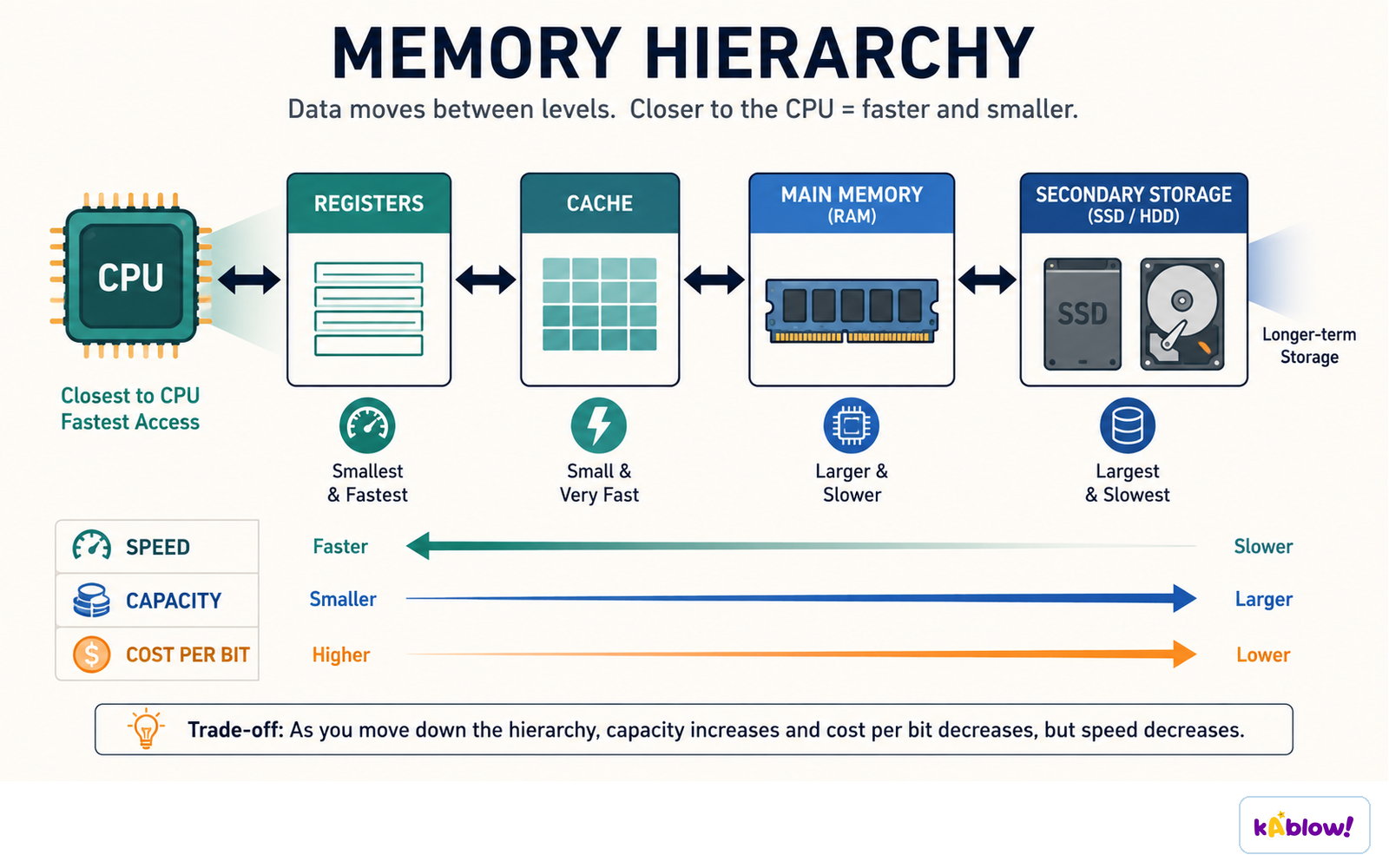
Memory hierarchy

Memory hierarchy

Secondary storage

  • Secondary storage retains saved files without continuous power, but devices can fail or wear out; non-volatile does not mean permanent.
  • Magnetic (hard disk drive, HDD): large capacity, cheap, slower, moving parts, can be damaged.
  • Solid-state (SSD, USB flash): no moving parts, fast, durable, quiet, more expensive per GB.
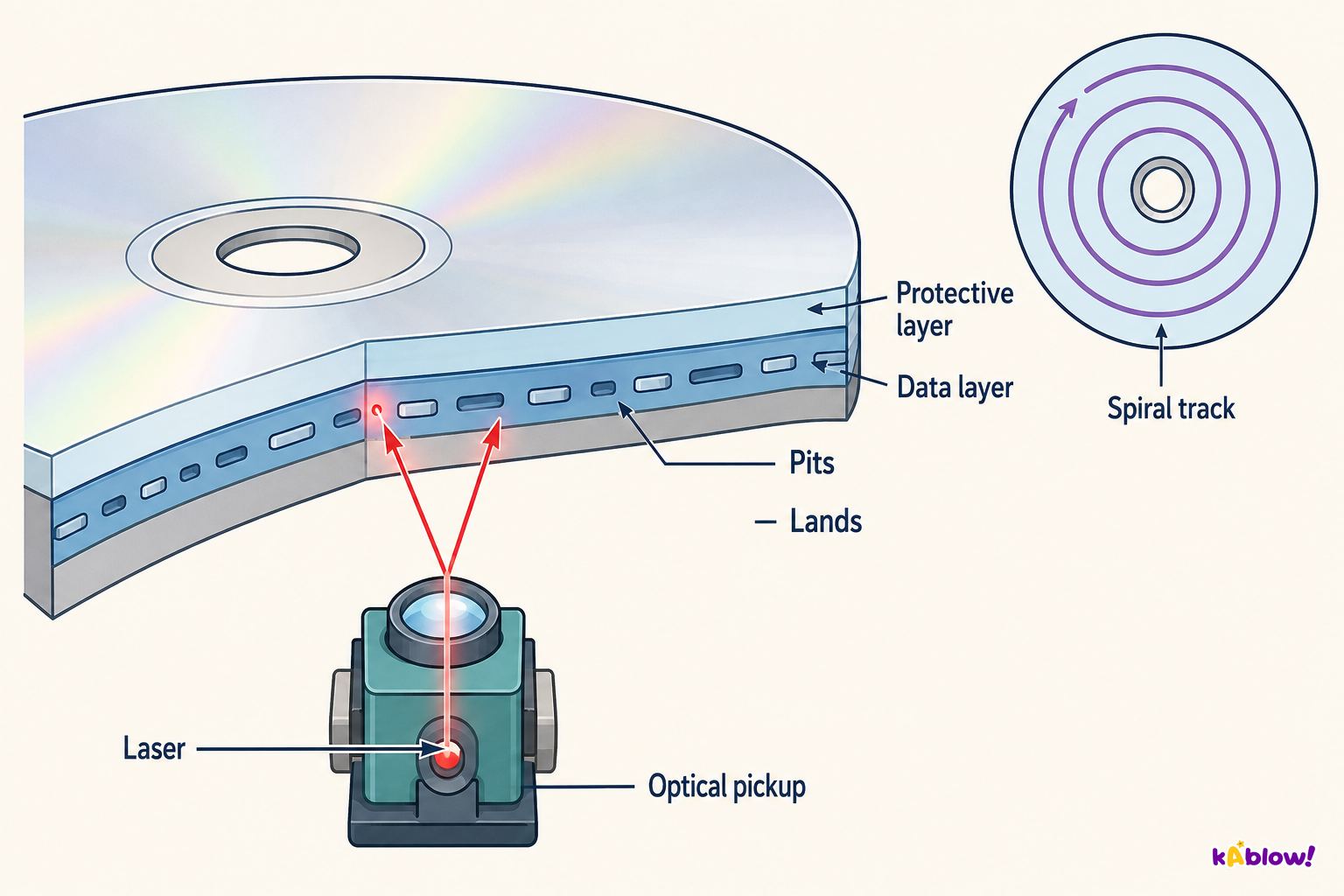
  • Optical (CD, DVD, Blu-ray): portable, low capacity, can scratch; used for media.

Optical storage

Optical storage

Comparing storage

  • Consider capacity, speed, portability, durability, reliability and cost.

Cloud storage

  • Cloud storage uses remote systems reached through a network, typically the Internet. Compatible devices and authorised access are required.
  • Synchronised local copies may remain usable offline. Synchronisation is not automatically a separate backup: deletions or corruption may propagate, so check version history and recovery arrangements.

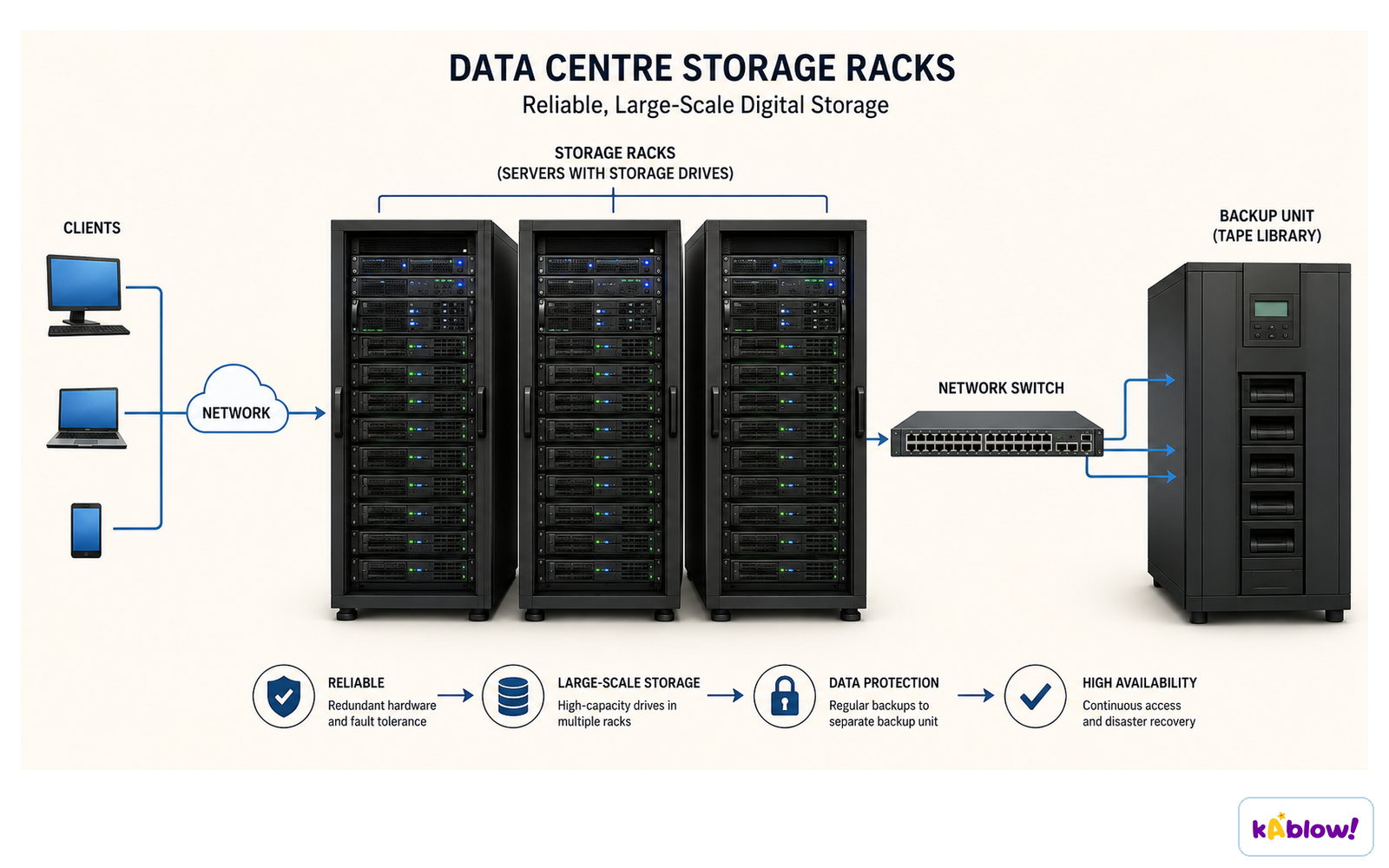
Remote storage in a data centre

Remote storage in a data centre

Units

  • Capacity in bytes: KB, MB, GB, TB.

スライド

Sign up free to view the lesson slides

Step through every slide for this topic — plus flashcards and revision notes — with a free account.

練習問題

無料プレビュー — 33問中8問。すべて見るには登録を。
  1. 1.What does RAM stand for?

    Easy
    • Arandom access memory
    • Bread access memory
    • Crapid access memory
    • Dremote access memory
  2. 2.What does ROM stand for?

    Easy
    • Aread-only memory
    • Brandom-only memory
    • Creal-time memory
    • Dremote memory
  3. 3.In the simplified GCSE model, which kind of instructions is commonly stored in ROM?

    Easy
    • Aboot-up instructions
    • Bdocuments
    • Cphotos
    • Dgames
  4. 4.What does volatile mean?

    Easy
    • Adata is lost without power
    • Bdata is kept
    • Cdata is hidden
    • Ddata is large
  5. 5.What is secondary storage for?

    Easy
    • Aretaining files and programs without continuous power
    • Breplacing every CPU register
    • Cperforming every arithmetic instruction
    • Dshowing images on a screen
  6. 6.Which is magnetic storage?

    Easy
    • AHDD
    • BSSD
    • CDVD
    • DROM
  7. 7.Which is optical storage?

    Easy
    • ADVD
    • BSSD
    • CHDD
    • DRAM
  8. 8.What is virtual memory?

    Easy
    • Ausing secondary storage for memory pages that cannot all remain in RAM
    • Badding physical cache to the CPU
    • Ca type of read-only memory
    • Dstoring all data only in the cloud

Unlock all 33 questions & more

無料アカウントを作って、このトピックのすべての問題・スライド・フラッシュカード・復習ノートを見よう。

過去問

このトピックの過去問練習は近日公開。
近日公開