教育者の方へ: Operating systems and software(Computer Science、Computer Systems)向けのすぐ使えるレッスンスライド, 復習ノート — レッスンで使うか、学習者がライブゲームとして遊ぶインタラクティブなクラス活動としてトピックを実施できます。
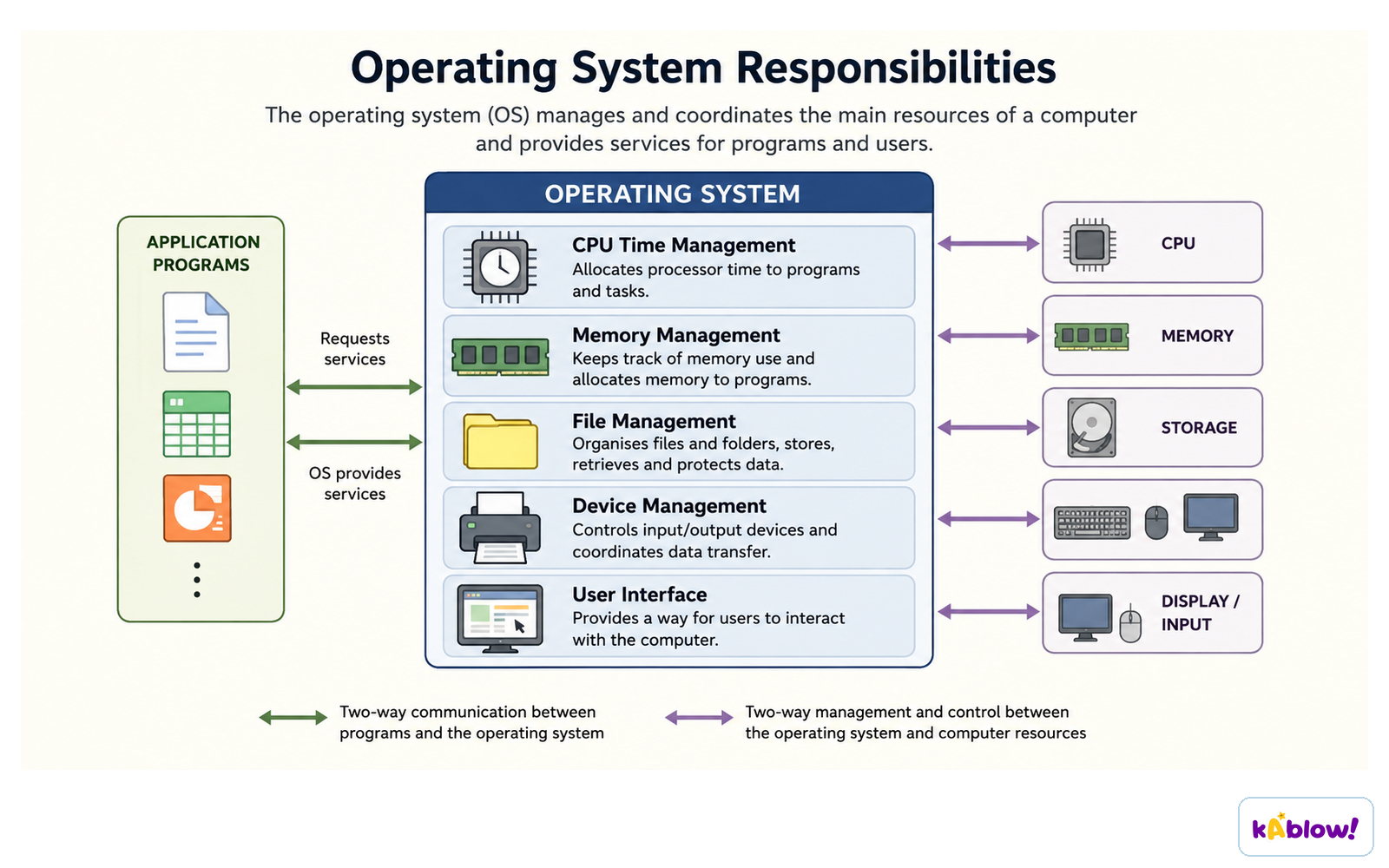
An operating system manages the computer's hardware and provides services for software. Functions: user interface (GUI or command line), memory management, multitasking (process scheduling), file management, device management (drivers) and security (accounts, permissions).
Examples: Windows, macOS, Linux, Android, iOS.
Operating system responsibilities
Types of software
System software: OS and utility software (antivirus, backup, disk defragmenter, compression).
Application software: performs tasks for users (word processor, web browser, games).
System and application software
Programming languages
High-level languages use readable abstractions and can be implemented on different platforms; a suitable translator or runtime and libraries are still needed.
Machine code and assembly are low-level and processor-specific. They permit close hardware control, but are harder to write and maintain.
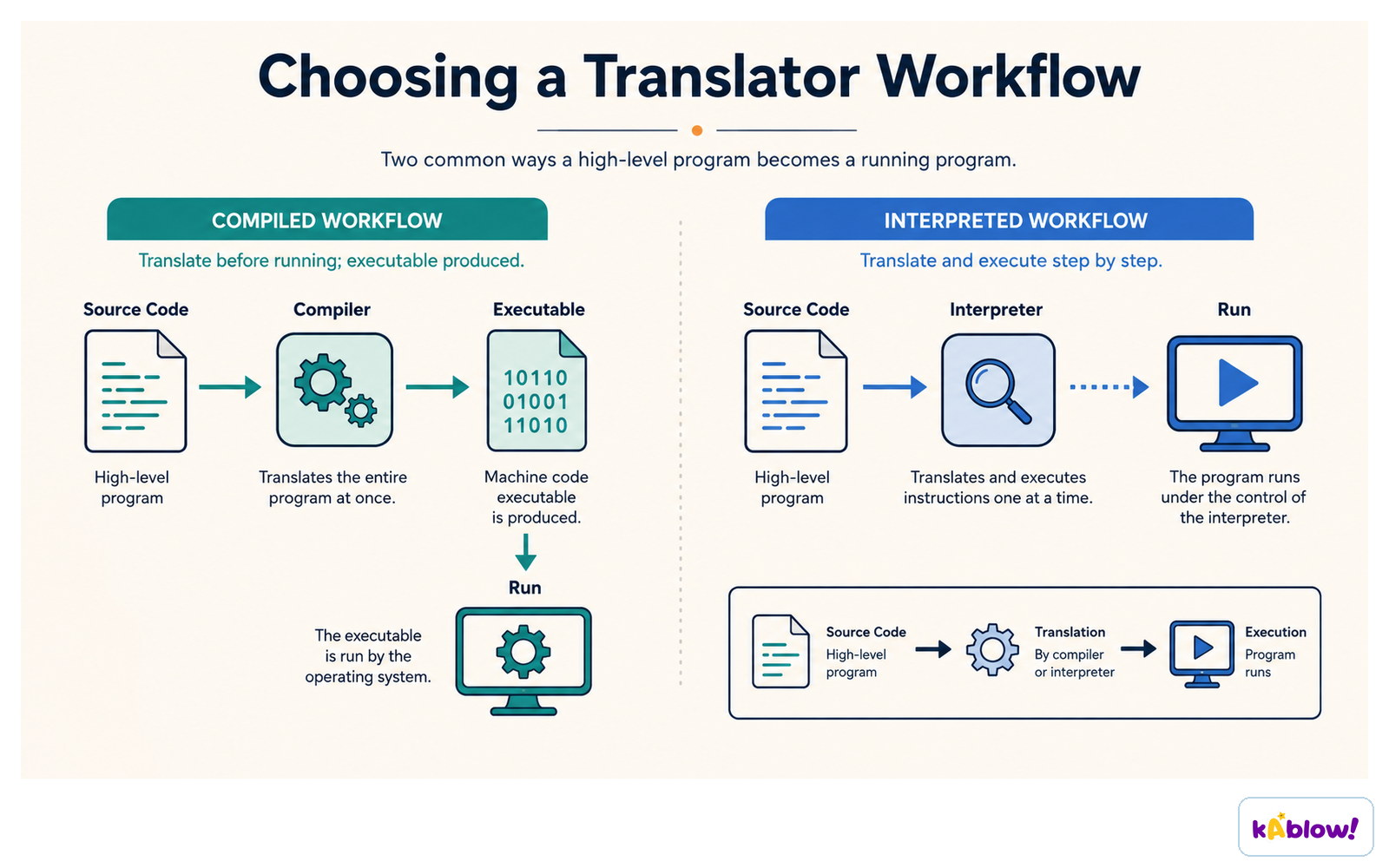
Translating and running source code
Translators
In the simplified GCSE model, a compiler translates source before execution, often producing a native executable; an interpreter translates and executes as the program runs.
An assembler translates assembly notation to machine code. Real systems may combine interpretation, bytecode and just-in-time compilation.
Compiled code often runs faster, while interpretation can support interactive debugging; neither is a universal speed rule.
Open source vs proprietary
Open-source licences provide source-code access and permissions to use, modify and redistribute under specified conditions.
Proprietary licences reserve more control to the rights holder. Proprietary software may be paid or free; price alone does not determine the licence category.
スライド
Sign up free to view the lesson slides
Step through every slide for this topic — plus flashcards and revision notes — with a free account.