Kablow!

The CPU and the fetch-decode-execute cycle

遊んで学ぼう

問題に答えてエネルギーを集めたら、釣りや探検を楽しもう。アカウント不要。

教育者の方へ: The CPU and the fetch-decode-execute cycle(Computer Science、Computer Systems)向けのすぐ使えるレッスンスライド, 復習ノート — レッスンで使うか、学習者がライブゲームとして遊ぶインタラクティブなクラス活動としてトピックを実施できます。

レッスンノート

What the CPU does

  • The central processing unit (CPU) is the "brain" of a computer. It fetches instructions from memory, decodes them and executes them.

Components

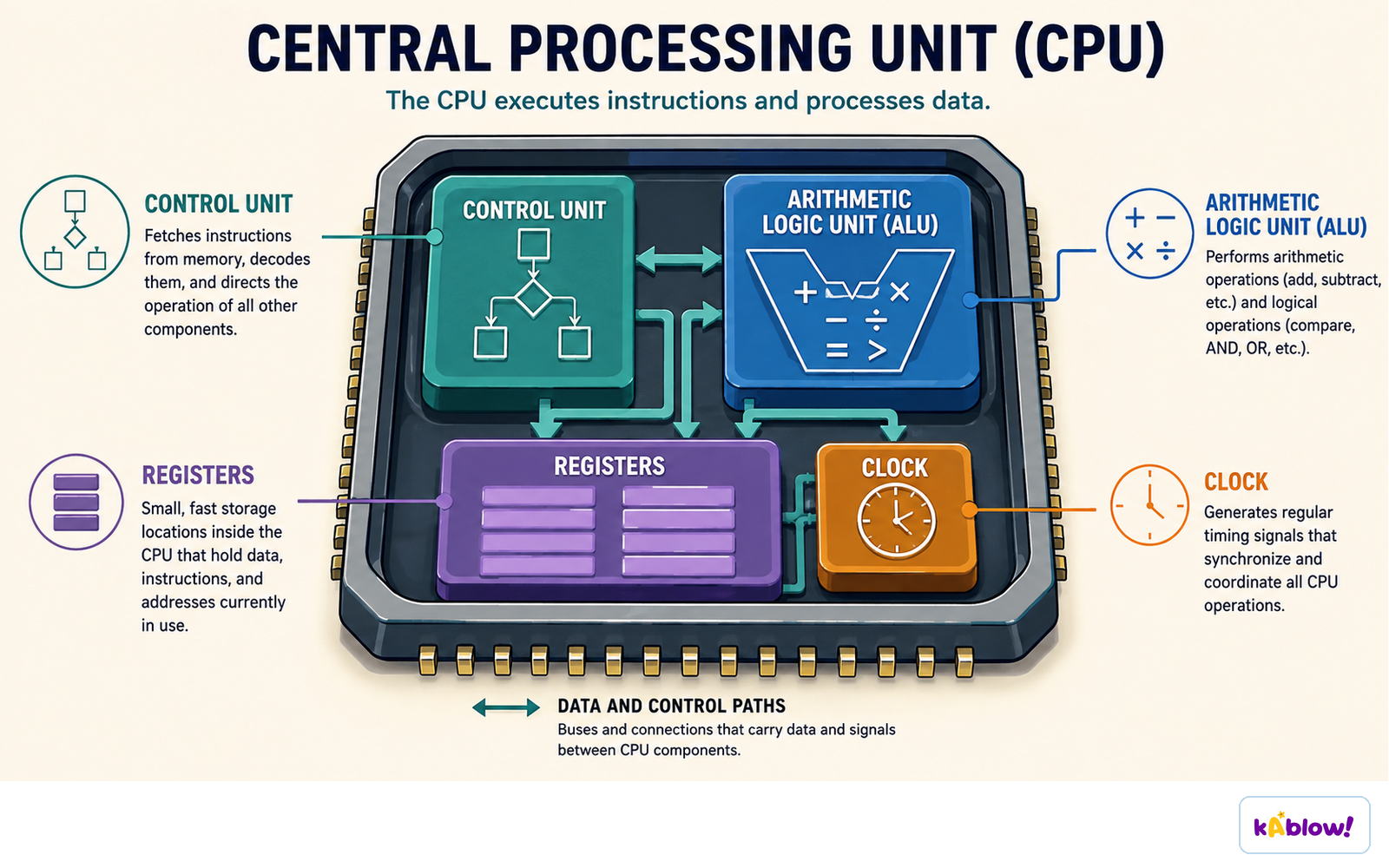
  • ALU (arithmetic logic unit): performs calculations and logical comparisons.
  • Control unit (CU): directs the operation of the CPU, controlling the flow of data and instructions.
  • Registers: very fast storage inside the CPU: program counter (PC) (address of the next instruction), memory address register (MAR), memory data register (MDR), accumulator (ACC) (stores results).
  • Cache: small, very fast memory close to the CPU holding frequently used data.

CPU components

CPU components

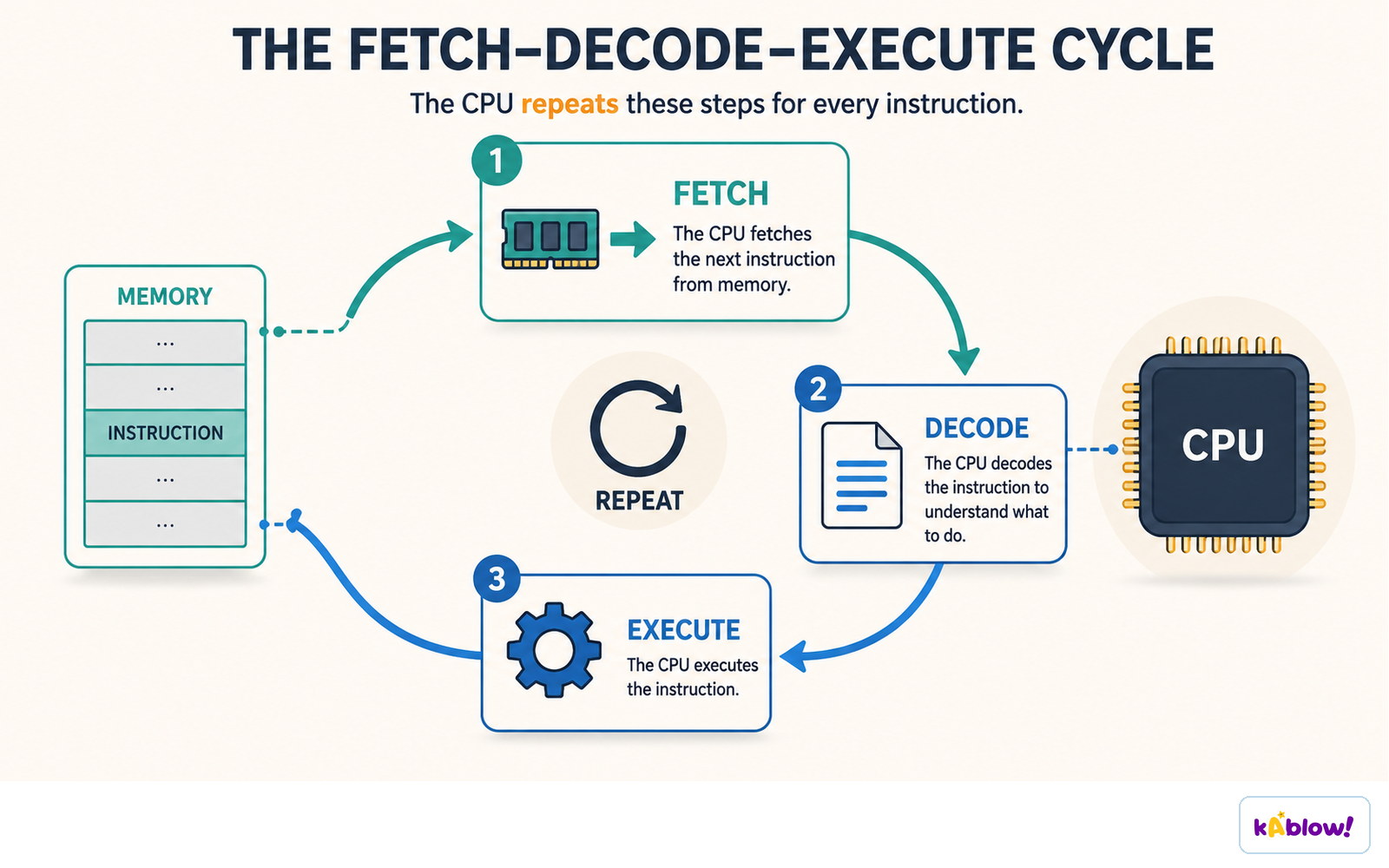
The fetch-decode-execute cycle

  • Fetch: the PC's address is copied to the MAR; the instruction at that address is fetched into the MDR; the PC increments.
  • Decode: the control unit decodes the instruction.
  • Execute: the instruction is carried out (the ALU may calculate).

Fetch, decode and execute

Fetch, decode and execute

Performance

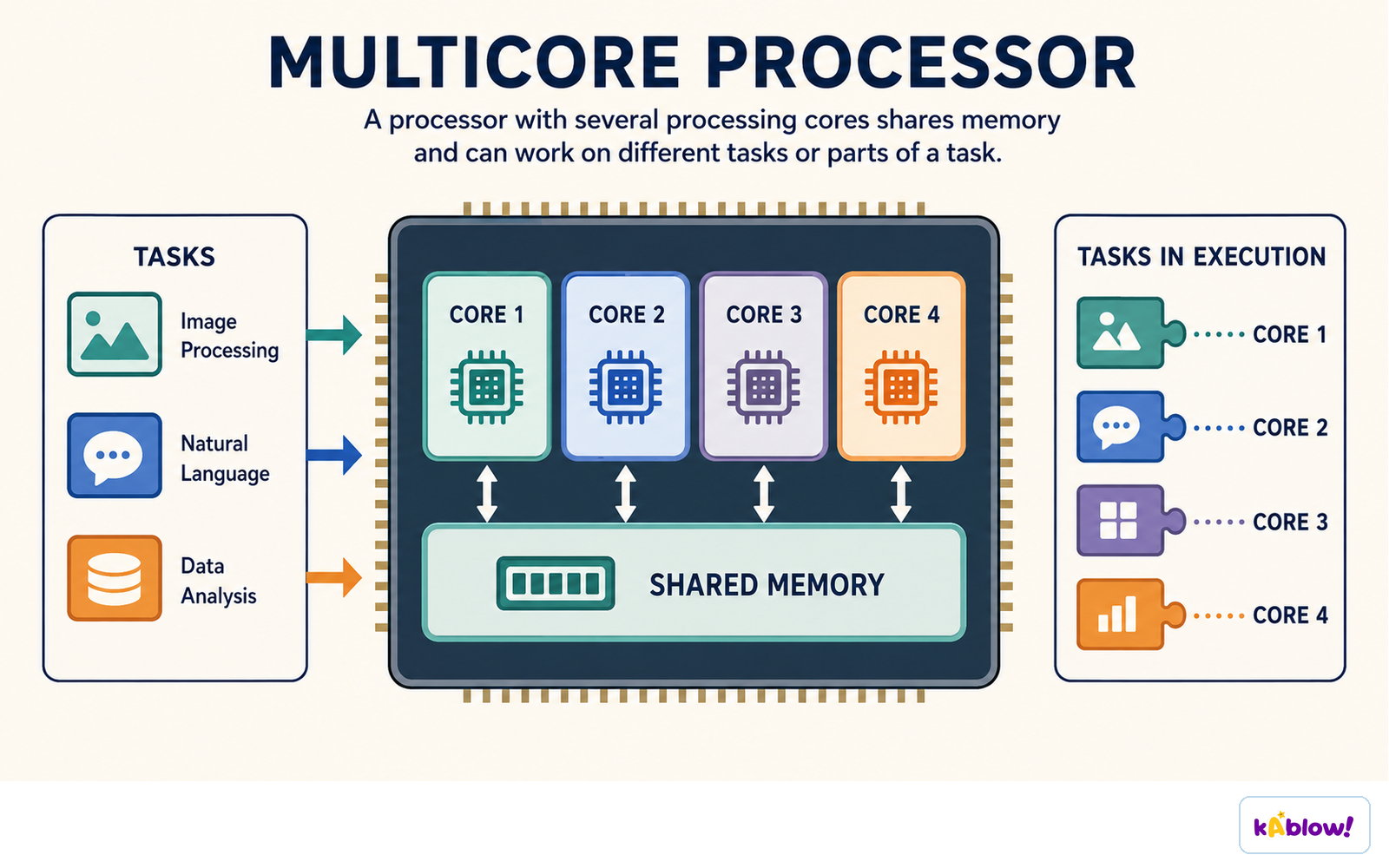
  • Clock speed (GHz: cycles per second), number of cores (more can run tasks in parallel), and cache size affect speed.

Multiple processor cores

Multiple processor cores

Von Neumann architecture

  • Instructions and data are stored in the same memory. Embedded systems (e.g. washing machine controller) are dedicated computers.

スライド

Sign up free to view the lesson slides

Step through every slide for this topic — plus flashcards and revision notes — with a free account.

練習問題

無料プレビュー — 33問中8問。すべて見るには登録を。
  1. 1.What does CPU stand for?

    Easy
    • Acentral processing unit
    • Bcentral program unit
    • Ccomputer processing unit
    • Dcore processing utility
  2. 2.What does ALU stand for?

    Easy
    • Aarithmetic logic unit
    • Ball logic unit
    • Canalogue logic unit
    • Darray logic unit
  3. 3.What does the control unit do?

    Easy
    • Adirects the flow of data and instructions
    • Bperforms calculations
    • Cstores files
    • Ddisplays output
  4. 4.What is a register?

    Easy
    • Aa small, fast storage location in the CPU
    • Ba hard drive
    • Ca network card
    • DRAM
  5. 5.What is cache memory?

    Easy
    • Asmall, very fast memory close to the CPU
    • Bslow storage
    • Ca hard drive
    • Da printer
  6. 6.What does the PC hold?

    Easy
    • Athe address of the next instruction
    • Bthe result
    • Cthe current data
    • Dthe clock speed
  7. 7.What does the MAR hold?

    Easy
    • Athe address of the memory location being accessed
    • Bthe data
    • Cthe instruction
    • Dthe result
  8. 8.What does the MDR hold?

    Easy
    • Adata transferred to or from memory
    • Bonly a memory address
    • Conly the clock frequency
    • Donly the result of every addition

Unlock all 33 questions & more

無料アカウントを作って、このトピックのすべての問題・スライド・フラッシュカード・復習ノートを見よう。

過去問

このトピックの過去問練習は近日公開。
近日公開