Writers choose words for their connotations: the feelings and ideas a word suggests beyond its basic meaning. "Stroll" and "stagger" both mean walk but suggest very different moods.
A verb such as lurched or crept specifies a kind of movement and may suggest an attitude, feeling or atmosphere. Avoid assuming a character’s emotions without contextual evidence.
A semantic field groups words associated with a shared area of meaning, such as battle, assault and defences. A pattern may draw attention to conflict; explain how it works in the passage.
Contrasting connotations
Imagery and figurative language
A simile makes a figurative comparison, often using like or as. A metaphor presents one thing in terms of another and need not contain the verb is; for example, “Her words stabbed at him.”
Personification gives human qualities to non-human things: "the wind whispered".
Symbolism uses an object to represent an idea: a caged bird for lost freedom.
Sensory language appeals to the five senses and makes a scene vivid.
Imagining human qualities in nature
Other devices
Alliteration repeats initial sounds, onomatopoeia imitates sounds, hyperbole deliberately exaggerates, and an oxymoron places apparently contradictory terms together. Relate any label to its use in context.
Analysing effectively
Use the structure: point (what the writer does), evidence (a short quotation), analysis (what the word or image suggests and the effect on the reader).
Zoom in on one or two key words. Do not just name devices: always say what effect they create.
Reader responses can differ. Explain a plausible effect using the actual wording rather than asserting that all readers must react identically.
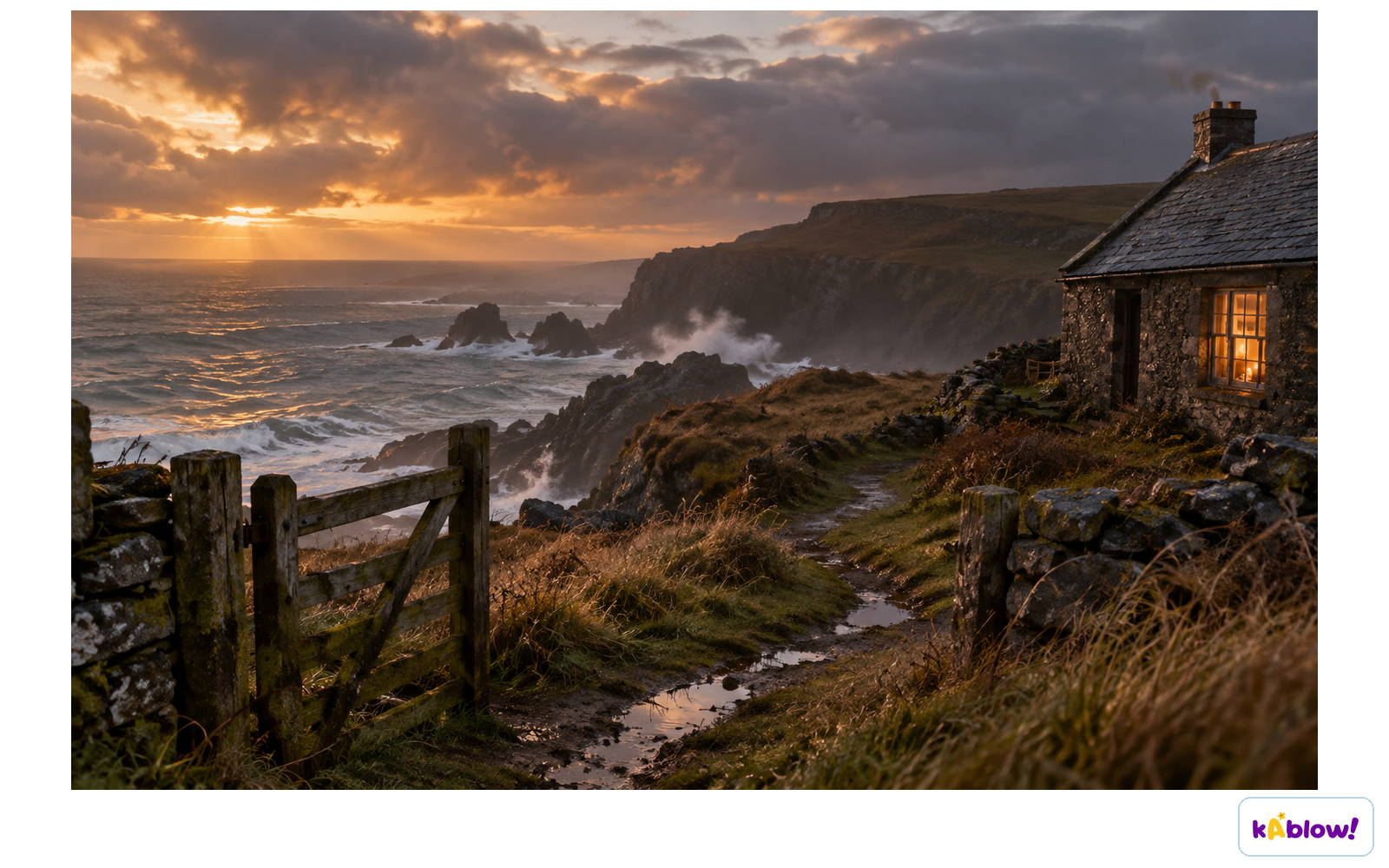
A storm as a language-analysis stimulus
スライド
Sign up free to view the lesson slides
Step through every slide for this topic — plus flashcards and revision notes — with a free account.