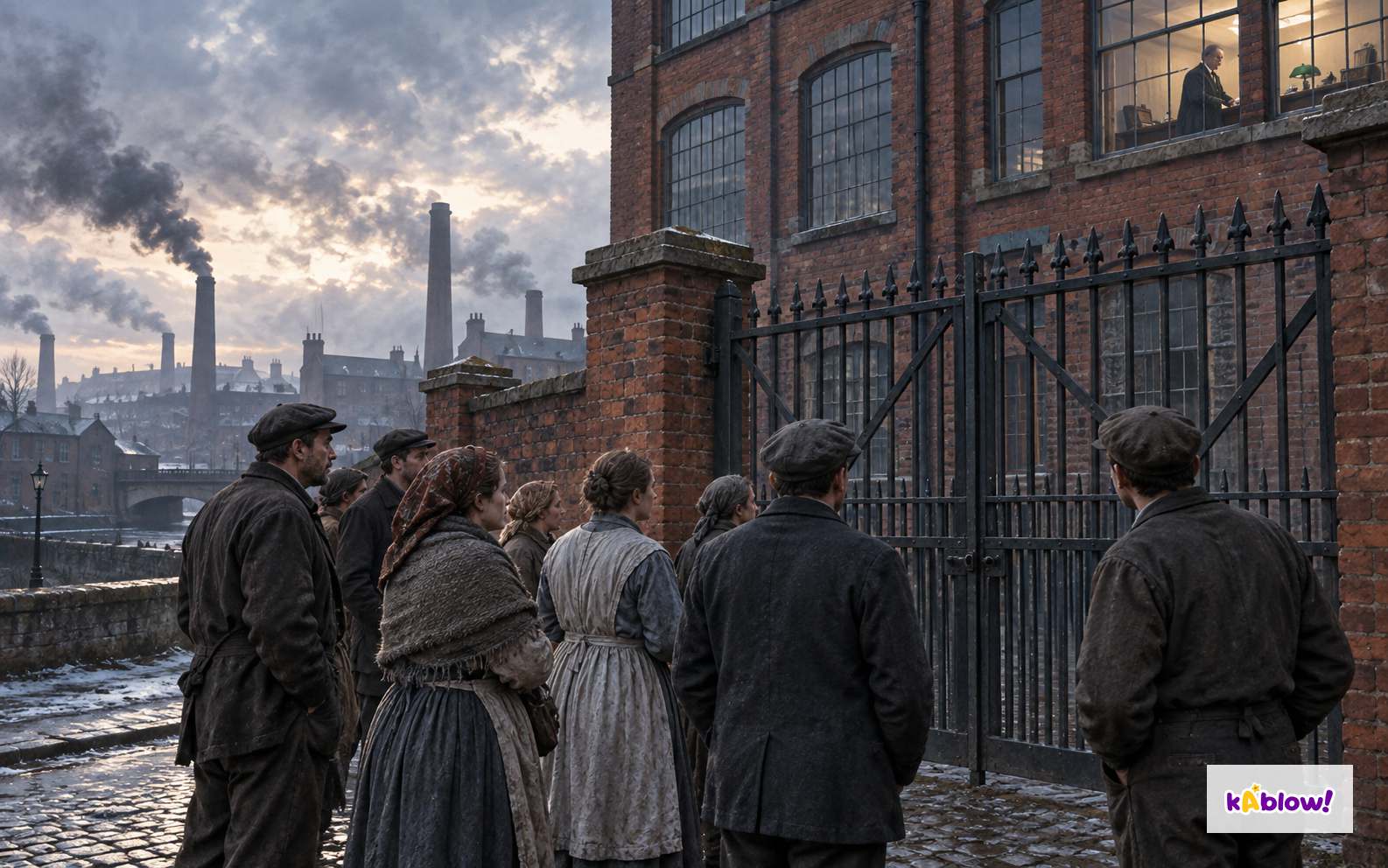
Nineteenth-century writing covers many forms and audiences. Some passages use vocabulary or syntax that feels unfamiliar today; others are direct, conversational or humorous.
Social circumstances and conventions can differ from the present. Writers within a period can disagree, and may criticise the assumptions around them.
Read for the gist first, then use context and any glossary to clarify details.
Translate without changing meaning
Reading strategies
For a complex sentence, find its main clause and then work out how the other clauses and inserted phrases relate to it. This strategy helps with older and modern texts.
Use the glossary and context: guess a word from the words around it. "The poor lad was greatly afflicted by hunger" tells you afflicted means troubled.
Identify purpose and attitude from the actual language and structure. Formality is register; a formal passage may convey sympathy, anger, humour or another tone.
Archaic expressions include “whence” (from where), “thither” (to that place), “ere” (before) and “ye” (you). They can appear in later literary writing and are not exclusive markers of one century.
Unpack the sentence
Writing about 19th-century texts
Compare the writer's attitude with modern views if the question asks.
Treat the text as a real piece of persuasion or description: comment on language and structure just as for modern texts.
Context can help explain a viewpoint, but class, gender or date do not guarantee a particular belief. Support your interpretation with the text and avoid invented biography.
An imagined industrial setting
スライド
Sign up free to view the lesson slides
Step through every slide for this topic — plus flashcards and revision notes — with a free account.
4.Which sentence uses the most elaborate syntax and formal vocabulary?
Easy
ACold.
BIt was an exceedingly cold morning, and the streets, being narrow and ill-lit, were deserted.
CIt was cold and quiet.
DMornings are cold.
5.What should you do first with a long, complex sentence?
Easy
Afind the subject and the main verb
Bskip it
Cread only the last word
Dcount the commas
6.How can you work out an unfamiliar word?
Easy
Aignore it
Bguess randomly
Cwrite a different word
Duse the context
7.Why might attitudes in a 19th-century text seem unfamiliar?
Easy
Amodern readers are foolish
Bthey are all the same
Csocial attitudes have changed
Dthe writer was careless
8.What is the 'gist' of a text?
Easy
Athe length
Bthe general meaning
Ceach word
Dthe spelling
もっと問題
9.'The workhouse was a place of dread.' What is the writer's attitude?
Easy
Anegative and fearful
Bcheerful
Cneutral
Dexcited
10.'Whence came ye?' means:
Medium
Awho are you?
Bwhat do you want?
Cwhere are you going?
Dwhere did you come from?
11.Which expression most clearly uses a formal register?
Medium
APop in if you fancy it.
BSee you there, mate.
CYour attendance is respectfully requested.
DCome along, yeah?
12.Which punctuation can separate independent clauses or mark an interruption?
Medium
Aellipses only
Bsemicolons and dashes
Chashtags
Demojis
13.'The gentleman regarded the child with disdain.' What is implied?
Medium
Ahe looks down on the child
Bhe admires the child
Che is shy
Dhe is the child's father
14.A writer is shocked by conditions in a poor district. Which phrase shows this?
Medium
A'it was Tuesday'
B'I walked home'
C'I had tea'
D'a scene of such wretchedness as I had never beheld'
15.Why might a writer use long sentences?
Medium
Ato avoid verbs
Bto save space
Cto build detailed description or argument
Dto be unclear
16.'The streets teemed with a multitude of ragged children, who, unwashed and unfed, sought what charity the passers-by might bestow.' What is the writer's attitude?
Medium
Aindifference
Bsympathy for the poor
Ccontempt for the rich
Djoy
17.In “The streets teemed with a multitude of ragged children”, what does “teemed” suggest?
Medium
Acrowded, overflowing
Bempty
Cquiet
Dclean
18.A student says 'I do not understand this text because it is old.' What would help?
Medium
Astop reading
Bguess the meaning without reading the surrounding sentences
Cguess the whole text
Dread for the gist and use context
19.How might the writer's class affect their view of the poor?
Medium
Athey always agree with the poor
Bthey will not write
Cexperience may influence the viewpoint, which must still be checked against the text
Dthere is no effect
20.In the archaic question “Whence came ye?”, what does “ye” mean?
Easy
Ayet
Byou
Cyes
Dthe
21.Which is the main verb in 'The boy, tired and hungry, ran home'?
Easy
Aran
Btired
Chungry
Dboy
22.Which is an adverb in 'He spoke gravely'?
Easy
Ahe
Bspoke
Cnone
Dgravely
23.'She was possessed of a fortune' means:
Medium
Ashe lost money
Bshe was ill
Cshe owned wealth
Dshe was haunted
24.'The scene was most disagreeable' is:
Medium
Aa question
Bformal negative judgement
Cslang
Dshouting
25.What helps you understand the writer's purpose?
Easy
Athe tone and the language
Bthe page number
Cthe font
Dthe margin
26.Some nineteenth-century texts use long, complex sentences, but styles vary.
Easy
True or false?
27.You should use context to understand unfamiliar words.
Easy
True or false?
28.All 19th-century writers share modern attitudes.
Easy
True or false?
29.'Whence' means 'where from'.
Easy
True or false?
30.You should give up if a text is old.
Medium
True or false?
31.Which are strategies for 19th-century texts?
Medium
Aread for the gist
Buse context
Cfind the main verb
Dskip the text
Eignore the question
32.Which are archaic words?
Medium
Aere
Bwhence
Cthither
DWi-Fi
Eselfie
33.Read this original example in an older literary style: “The child, ragged and barefoot, stood shivering at the gates, while the gentlemen within dined upon the finest fare.” What response might the description encourage? Use evidence.