For AQA GCSE English Language 8700, the spoken-language endorsement is reported separately as Pass, Merit, Distinction or Not Classified; it does not contribute to the written GCSE grade.
Prepare a presentation on an agreed topic, then listen and respond to questions or feedback. Check your own specification for its precise arrangements.
Planning a presentation
Choose a topic you can speak about with confidence and interest. Decide your purpose (inform, persuade, explain, entertain) and audience.
A clear opening, logically developed points with examples, and a conclusion help listeners follow the talk. The number of points depends on the task and available time.
Notes, cue cards or presentation aids may help, but they are not compulsory in the AQA specification. Rehearse so the aid supports communication rather than distracting from it.
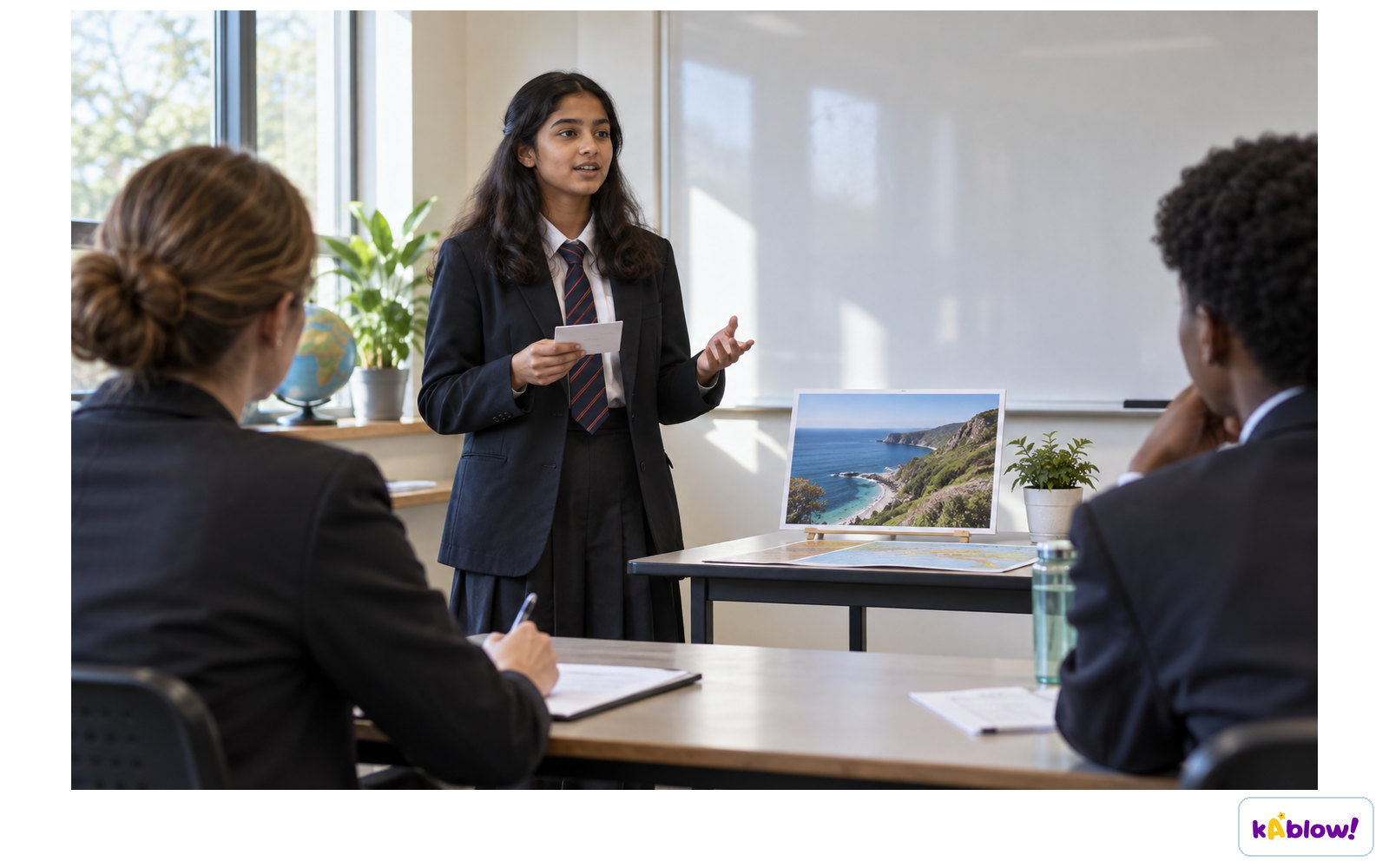
A prepared classroom talk
Delivering
Speak clearly and at a steady pace, with varied tone and volume. Use pauses for emphasis.
Use intelligible language appropriate to the formal setting. Standard English is not a particular accent; choose vocabulary and register for your audience.
Eye contact, posture and gesture may help engagement. Use suitable alternatives and any agreed access arrangements so delivery supports the speaker’s communication.
Delivery choices for a listener
Responding to questions
Listen carefully, think, and answer directly using examples. Say "That is an interesting point..." if you need time. If you do not know, say so honestly and explain what you do know.
Listening before responding
Evaluation
Reflect afterwards on what went well and what to improve.
Evaluate specific evidence: could listeners follow the argument, were examples relevant, and did responses address the questions? Choose one practical improvement for the next rehearsal.
スライド
Sign up free to view the lesson slides
Step through every slide for this topic — plus flashcards and revision notes — with a free account.