Kablow!

Narrative writing

遊んで学ぼう

問題に答えてエネルギーを集めたら、釣りや探検を楽しもう。アカウント不要。

教育者の方へ: Narrative writing(English Language、Writing)向けのすぐ使えるレッスンスライド, 復習ノート — レッスンで使うか、学習者がライブゲームとして遊ぶインタラクティブなクラス活動としてトピックを実施できます。

レッスンノート

What narrative writing needs

  • Narrative writing tells a story or part of one. Follow the task’s scope: it may ask for an opening rather than a complete plot. AQA 8700 Paper 1’s updated narrative option from summer 2026 asks for an opening; see the dedicated Paper 1 lesson for the current format.
  • For a complete story, one possible plan is hook, build-up, climax and resolution. Other shapes can work. For an opening, establish a purposeful start without rushing to a full resolution.
  • Keep the cast and setting manageable within the available length. One or two characters can work well, but there is no universal required number.

An original story outline

An original story outlineStagePossible developmentOpeningA traveller waits after the last trainBuild-upA light appears along the trackTurning pointThe traveller must decide what to doEndingChoose a consequence that fits the plan

Techniques

  • Openings: start in the middle of action, with a vivid detail, a line of dialogue or an intriguing question.
  • Characterisation can use actions, speech, thoughts, description and direct summary. Select details that serve the narrative.
  • Dialogue: punctuate correctly with a new line for each speaker, and use it to reveal character or move the plot.
  • Control pace through detail, sentence patterns, pauses and the order of information. Short sentences can hurry action or isolate and delay a moment.
  • First person uses a narrating “I” or “we”; third person may be limited to one character or offer a wider view. Control whose knowledge and perceptions the reader receives; signal deliberate shifts.

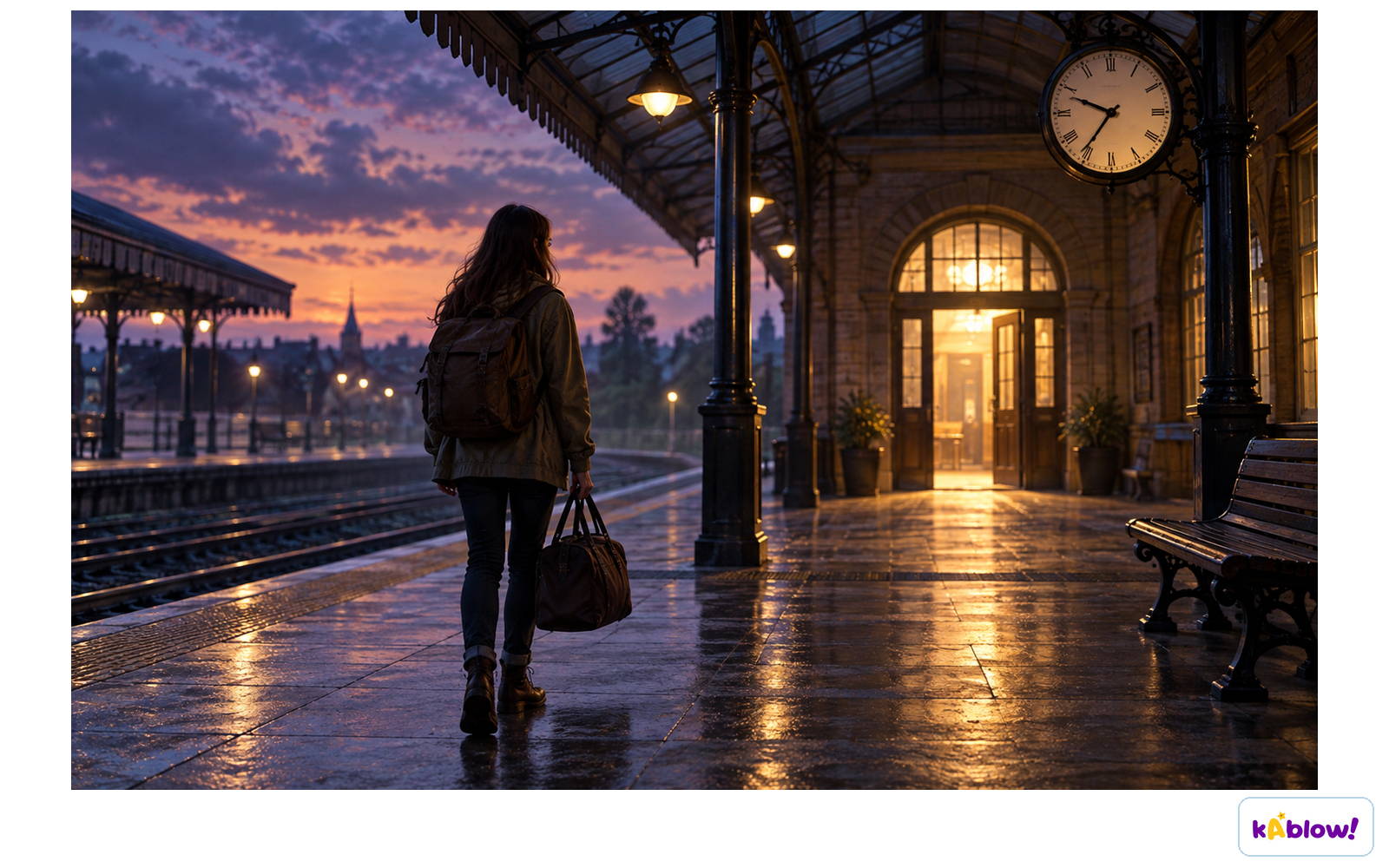
A station as a story setting

A station as a story setting

Endings

  • Choose an ending that serves the story: resolution, an opening motif revisited, a prepared twist or a purposeful unresolved question. Avoid relying on an unprepared dream reveal merely to stop writing.

A repeated motif can change

A repeated motif can changeOriginal openingPossible closing echoThe clock ticked above anempty platformThe same clock marks anew departureSilence makes the travelleruneasySilence now feelspeacefulQuestion: will anyonearrive?Choose whether arrivalresolves it

Technical accuracy

  • Use paragraphs for changes of speaker and significant shifts of focus, time or place. Keep tense relationships clear, signal deliberate shifts, and check spelling and punctuation.

スライド

Sign up free to view the lesson slides

Step through every slide for this topic — plus flashcards and revision notes — with a free account.

練習問題

無料プレビュー — 36問中8問。すべて見るには登録を。
  1. 1.What is narrative writing?

    Easy
    • Astory writing
    • Bpersuasive writing
    • Ca report
    • Da leaflet
  2. 2.Which is part of a story structure?

    Easy
    • Afootnote
    • Bindex
    • Cheading
    • Dclimax
  3. 3.What is a hook?

    Easy
    • Aan ending
    • Ba title only
    • Can opening that grabs attention
    • Da type of verb
  4. 4.In dialogue you should:

    Easy
    • Ause capital letters only
    • Bstart a new line for each speaker
    • Cnever use quotation marks
    • Dwrite it all in one line
  5. 5.Which punctuation is correct for speech?

    Easy
    • A"Come here," she whispered.
    • B"Come here" she whispered.
    • CCome here, she whispered.
    • D"Come here, she whispered
  6. 6.What does 'cyclical' mean for a story ending?

    Easy
    • Ait ends suddenly
    • Bit has no end
    • Cit is a poem
    • Dit echoes the beginning
  7. 7.What is foreshadowing?

    Easy
    • Aa flashback
    • Ba metaphor
    • Chinting at what will happen
    • Dsummarising
  8. 8.Which point of view uses 'I'?

    Easy
    • Anone
    • Bfirst person
    • Csecond person
    • Dthird person

Unlock all 36 questions & more

無料アカウントを作って、このトピックのすべての問題・スライド・フラッシュカード・復習ノートを見よう。

過去問

このトピックの過去問練習は近日公開。
近日公開