
Resource management: food, water and energy
遊んで学ぼう
問題に答えてエネルギーを集めたら、釣りや探検を楽しもう。アカウント不要。
教育者の方へ: Resource management: food, water and energy(Geography、Human Geography)向けのすぐ使えるレッスンスライド, 復習ノート — レッスンで使うか、学習者がライブゲームとして遊ぶインタラクティブなクラス活動としてトピックを実施できます。
レッスンノート
Global resources
- Food, usable water and energy resources vary among places and through time. Demand depends on population, consumption per person, technology, industry, climate and waste. Income-group averages conceal major inequality and do not determine each country’s use.
- Resource security concerns dependable access, not just material existing somewhere. Trade and infrastructure can connect sources with users but introduce costs and vulnerabilities. Electricity is part of total energy: transport and heating also use fuels directly.
Food
- Food security requires dependable access to enough safe and nutritionally suitable food. Availability, affordability, use and stability all matter. Malnutrition includes inadequate, excessive or imbalanced nutrients; food insecurity does not automatically mean famine.
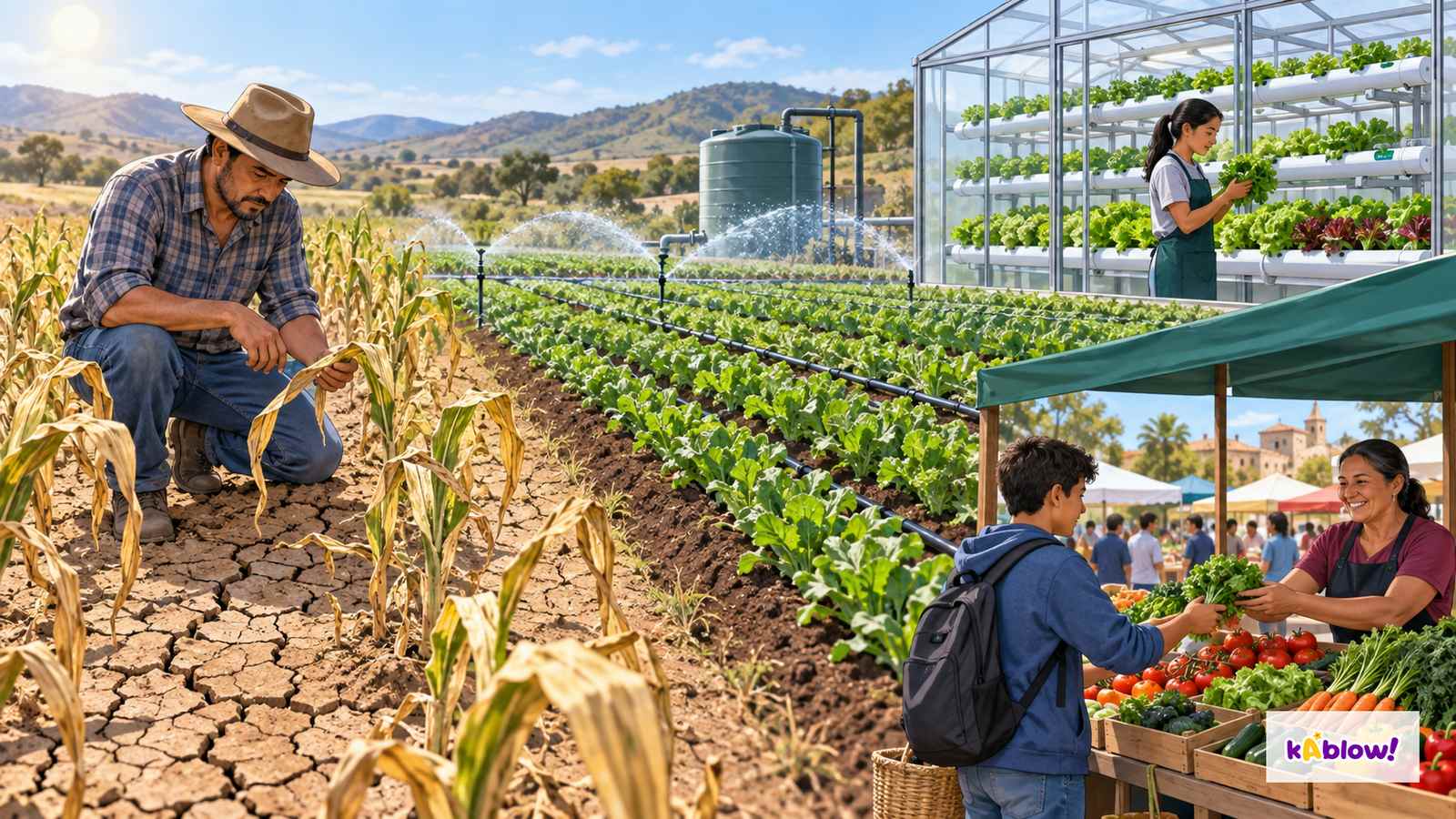
- Drought, pests or storage losses can reduce supply; conflict, poverty, prices and disrupted transport can restrict access. Irrigation, suitable crop traits and nutrient management may improve output, while reducing losses or supporting incomes can address different problems.
- Evaluate each proposal: irrigation can deplete water or salinise soil; fertiliser runoff can damage water bodies; engineered traits have crop-specific effects and costs. Neither GM nor organic or other sustainable farming labels guarantee a particular yield. Include maintenance, affordability, land rights and long-term soil and water effects.
Crop stress, production and access
Water
- Water stress reflects pressure on usable supply relative to demand and can involve poor quality. Seasonal flows, drought, pollution, infrastructure and environmental requirements matter. Do not label a whole continent permanently surplus or deficit without place, season and indicator.
- Aquifers are permeable rock or sediment storing and transmitting groundwater in pores or fractures. Abstraction that persistently exceeds replenishment can deplete stores or affect rivers and ecosystems. Reservoirs and transfers can improve reliability but have land, energy and ecological costs.
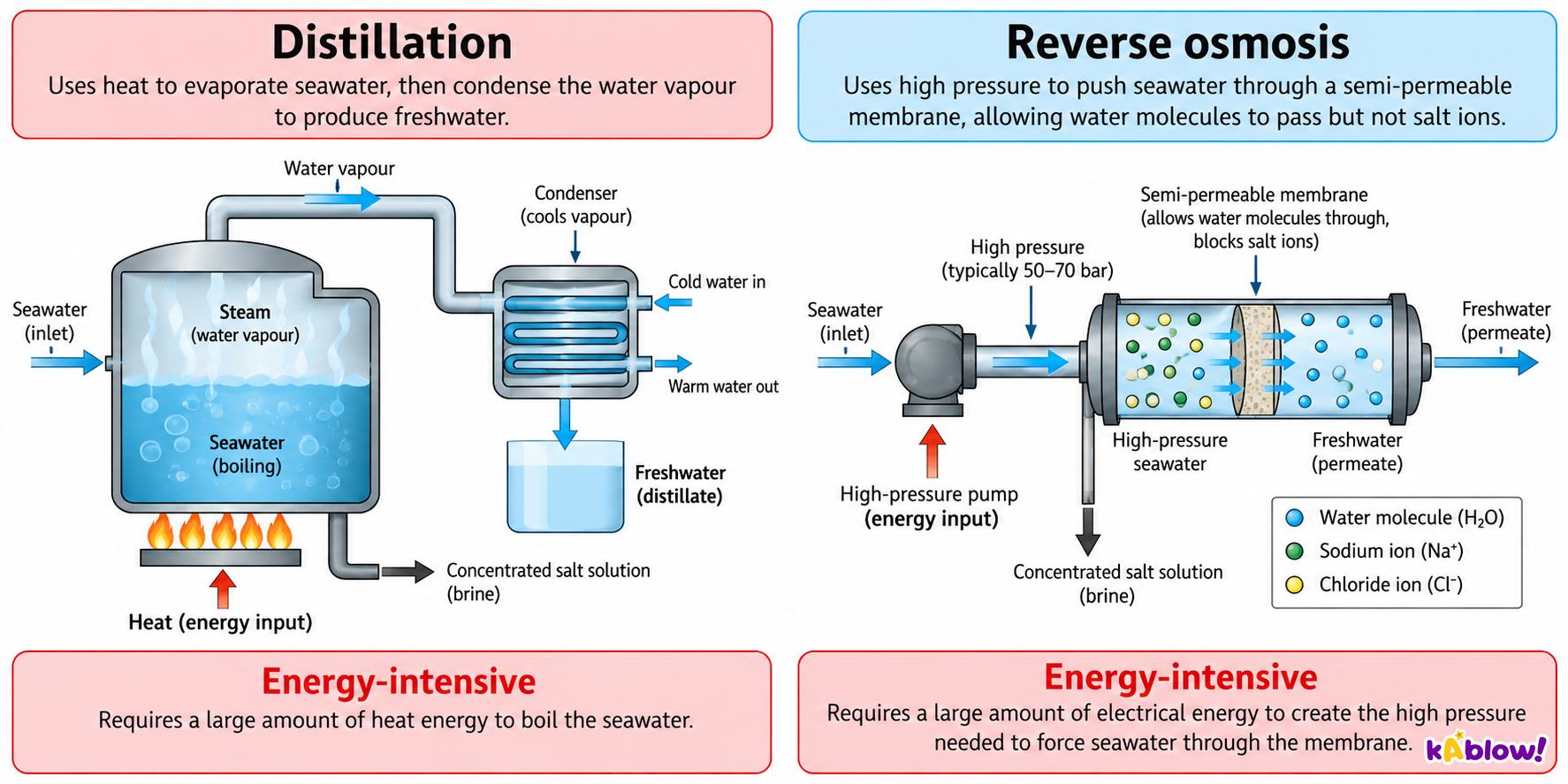
- The desalination illustration compares heat-driven distillation with pressure-driven reverse osmosis. Both require energy and produce concentrated brine; assess cost, supply, treatment and disposal. It is a conceptual process illustration, not an engineering design or proof of one method’s cost everywhere.
- Demand measures include leakage repair, efficient irrigation, suitable rainwater storage and appropriately treated reuse. Greywater excludes toilet wastewater; definitions can exclude kitchen water too. Reused water needs standards appropriate to its purpose, rather than an assumption that it is safe to drink.
Two desalination methods
Energy
- Coal, oil and gas are finite fossil fuels. Nuclear fission uses finite fuel but is not a fossil fuel; it has low operational carbon emissions alongside waste, cost and other risks. Wind, solar, hydro, tidal and geothermal use replenished resources, though local conditions affect output. Biomass requires careful assessment of regrowth, land use and carbon timing.
- Operational emissions differ from lifecycle impacts. Wind and solar generation do not burn fuel, but construction and disposal have impacts and variable output requires system flexibility. Fossil fuels can be stored but are not automatically secure or affordable; diverse supplies and resilient infrastructure matter.
- The last UK coal-fired power station closed on 30 September 2024. This is a dated electricity-generation milestone, not a claim that all coal use or all fossil-fuel energy ended. Check the year, geographical coverage and whether a statistic refers to electricity, primary energy or final consumption.
Different energy trade-offs
Sustainability
- Efficiency provides a service with less resource input, such as insulation reducing the energy needed for warmth. Conservation also includes avoiding unnecessary use. Actual savings depend on behaviour, maintenance and rebound effects; local suitability is more useful than claiming a solution works everywhere.
- For an invented household, reducing water use from 150 to 120 litres a day saves 30 litres, or 20%. If a settlement needs 2,000 m³ per day and supplies 1,700 m³, the simplified shortfall is 300 m³. Real planning must also examine seasons, quality, ecosystem needs, costs and equitable access.
- Evaluate who benefits, who pays, whether skills and replacement parts are available, and how environmental and social effects change over time. A proposal can improve short-term supply while creating long-term pressure elsewhere, such as groundwater depletion or a transfer’s effect on the donor catchment.
Invented daily water saving
スライド
練習問題
無料プレビュー — 37問中8問。すべて見るには登録を。
1.What is malnutrition?
Easy- Ainsufficient, excessive or imbalanced energy or nutrient intake
- Btoo much sleep
- Ca type of crop
- Da river
2.What is a famine?
Easy- Aa feast
- Ba surplus
- Ca harvest
- Dan extreme food crisis with severe deprivation, malnutrition and excess deaths
3.Which combination can contribute to food insecurity?
Easy- Ahigh incomes
- Birrigation
- Cdrought and conflict
- Dgood harvests
4.What is irrigation?
Easy- Aharvesting
- Bsupplying water to crops artificially
- Cdraining fields
- Dploughing
5.What are GM crops?
Easy- Acrops altered using genetic engineering to introduce selected traits
- Bwild plants
- Corganic
- Dimported only
6.What is water stress?
Easy- Aexcess rain
- Ba flood
- Cclean water
- Dpressure on usable water when demand is high relative to supply or quality restricts use
7.What is an aquifer?
Easy- Aa lake
- Ba sea
- Cpermeable rock or sediment that stores and transmits groundwater
- Da river
8.What is rainwater harvesting?
Easy- Aselling rain
- Bcollecting rainwater for use
- Cwasting rain
- Ddraining rain
過去問
このトピックの過去問練習は近日公開。
近日公開