
Conflict and tension: Cold War crises 1950-75
遊んで学ぼう
問題に答えてエネルギーを集めたら、釣りや探検を楽しもう。アカウント不要。
教育者の方へ: Conflict and tension: Cold War crises 1950-75(History、Period Study)向けのすぐ使えるレッスンスライド, 復習ノート — レッスンで使うか、学習者がライブゲームとして遊ぶインタラクティブなクラス活動としてトピックを実施できます。
レッスンノート
Korea and Hungary
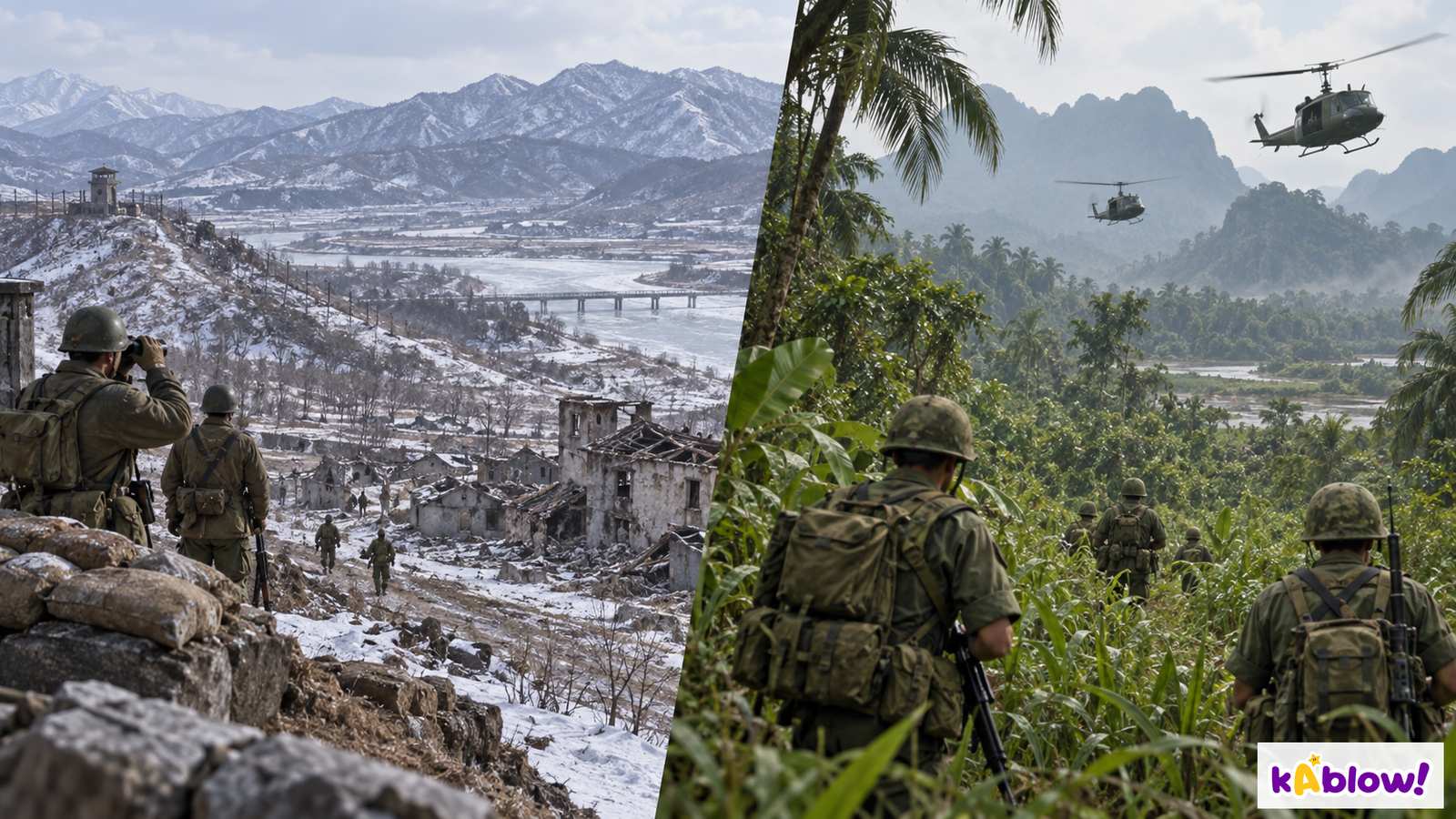
- North Korea invaded South Korea in June 1950. A UN command, dominated by US forces but including other countries, supported the South; China intervened on the North’s side, with Soviet support also important. Korean actors pursued their own aims.
- The July 1953 armistice suspended major hostilities and established a Military Demarcation Line and demilitarised zone near the 38th parallel. This was not an exact restoration of the original latitude boundary or a peace treaty.
- Hungary’s 1956 uprising involved popular protest, workers, students and reformers, not one leader alone. Nagy headed a government that declared neutrality and intended Warsaw Pact withdrawal; Soviet intervention in November restored control. Western governments avoided military intervention amid escalation risks, geographic and political constraints and the Suez crisis.
Local wars within wider rivalry
Berlin and the U-2
- Powers’s U-2 reconnaissance aircraft was shot down over the USSR on 1 May 1960. Disputes about the flight damaged trust and disrupted the Paris summit.
- East German forces closed Berlin’s sector border on 13 August 1961, initially using barriers and wire before walls and fortifications developed. Soviet backing supported the effort to stop emigration, including loss of skilled workers. Official protective claims should be distinguished from the purpose of restricting departure.
Cuba
- The 1962 Soviet deployment involved agreement with Castro and Cuban security concerns after US-backed efforts against his government, as well as Soviet strategic calculations. US reconnaissance revealed missile sites in October.
- Kennedy’s quarantine was pressure short of an immediate strike or invasion. The peak confrontation ended through Soviet withdrawal, a US non-invasion assurance and a private assurance about later Jupiter missile removal from Turkey. Dangerous incidents and uncertainty made escalation possible.
- The 1963 hotline initially used telegraph/teleprinter equipment, not a red voice telephone or a system available during the crisis. The Limited Test Ban Treaty prohibited tests in the atmosphere, outer space and underwater; underground testing remained permitted under its terms.
Pressure short of an immediate attack
Czechoslovakia and Vietnam
- Dubček and other reformers introduced liberalising changes within socialism during the 1968 Prague Spring. Soviet-led Warsaw Pact forces invaded in August; subsequent normalisation reversed key reforms. The Brezhnev Doctrine claimed a right of intervention when socialist rule was threatened, limiting sovereignty.
- Vietnam’s conflict combined local political struggles, nationalism, civil conflict and foreign involvement. US costs, casualties, opposition and strategic choices contributed to withdrawal under the 1973 Paris agreement. Fighting continued, and North Vietnamese forces took Saigon in 1975.
Détente
- Détente describes easing tensions through diplomacy and agreements, not the disappearance of rivalry. Nixon’s 1972 visits to China and Moscow were different diplomatic relationships, with triangular strategic considerations.
- SALT I in 1972 included the ABM Treaty and an Interim Agreement restricting specified strategic offensive missile launchers. It did not abolish nuclear arsenals, cap every warhead or end qualitative competition. Earlier communication and test-ban agreements were steps toward managing dangers, while events such as the 1968 invasion showed the limits.
- This is a cross-regional overview of selected crises and diplomacy, not a complete course for every board’s Asia or Cold War depth-study option. Use the named option and period for examination preparation.
Agreements had defined limits
スライド
練習問題
無料プレビュー — 33問中8問。すべて見るには登録を。
1.In which year did East Germany begin closing Berlin’s sector border and constructing the Wall?
Easy- A1961
- B1948
- C1956
- D1968
2.What was the historical role of the 38th parallel in Korea?
Easy- Aa missile
- Ba treaty
- Ca plane
- Da latitude used for the post-war division into northern and southern zones
3.What did Khrushchev do in 1962?
Easy- Asigned NATO
- Binvaded Vietnam
- Cplaced missiles in Cuba
- Dbuilt the Berlin Wall in 1948
4.What did Kennedy order during the October 1962 missile crisis?
Easy- Aa treaty
- Ba naval quarantine
- Can invasion
- Da bombing
5.What was the Prague Spring?
Easy- Aan attempt by Dubček to reform communism
- Ba US mission
- Ca peace treaty
- Da missile
6.What did the Brezhnev Doctrine claim?
Easy- AEastern Europe was free
- BSoviet troops would leave
- Cdemocracy was good
- Da claimed right of intervention when socialist rule in another state was threatened
7.What was the hotline?
Easy- Aa spy network
- Ba radio
- Ca direct communication link between Washington and Moscow
- Da telephone company
8.What was the Limited Test Ban Treaty 1963?
Easy- Acreated NATO
- Bprohibited nuclear tests in the atmosphere, outer space and underwater
- Cended the Cold War
- Dbanned all weapons
過去問
このトピックの過去問練習は近日公開。
近日公開