
Oxidation, Reduction & Redox Equations
플레이하며 배우기
이 문제들을 풀어 에너지를 얻은 뒤 낚시하고 탐험하세요. 계정이 필요 없어요.
교육자를 위해: Oxidation, Reduction & Redox Equations(Chemistry, AQA)을(를) 위한 바로 쓸 수 있는 수업 슬라이드, 복습 노트, 다이어그램 — 수업에 사용하거나, 학습자들이 실시간 게임으로 즐기는 인터랙티브 클래스 활동으로 진행하세요.
수업 노트
Track electrons in oxidation and reduction
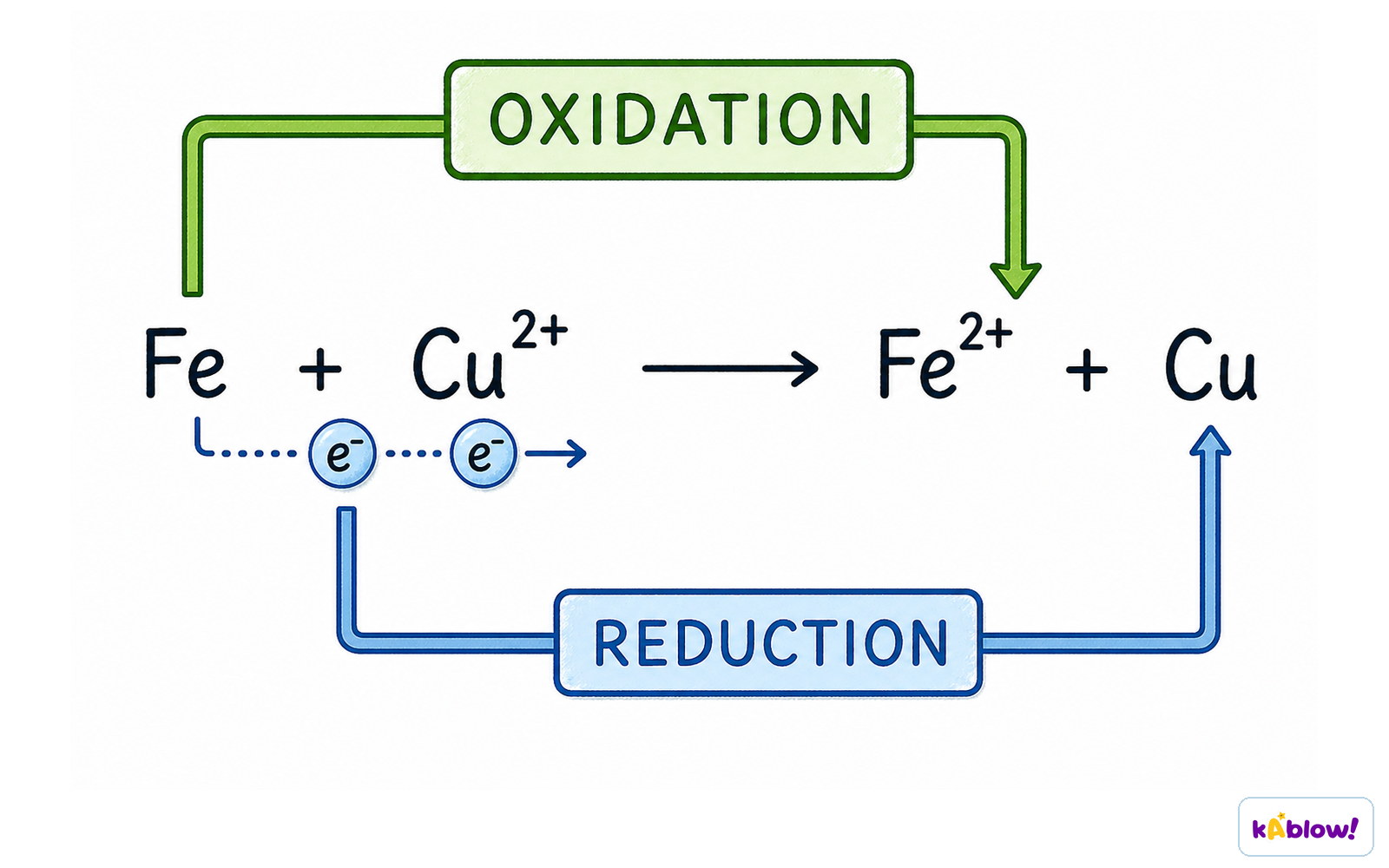
- Oxidation is electron loss and reduction is electron gain. The electrons transferred by one partner must be accepted by another in the overall redox process.
- The reviewed iron/copper illustration shows Fe becoming Fe²⁺ while Cu²⁺ becomes Cu. Iron loses two electrons and copper(II) ions gain the same two electrons.
- Oxygen gain or hydrogen loss can identify oxidation in suitable examples, but electron accounting and oxidation-state changes apply more generally. A reaction need not contain oxygen to be redox.
Electron transfer between iron and copper(II) ions
Distinguish oxidation state from actual atomic charge
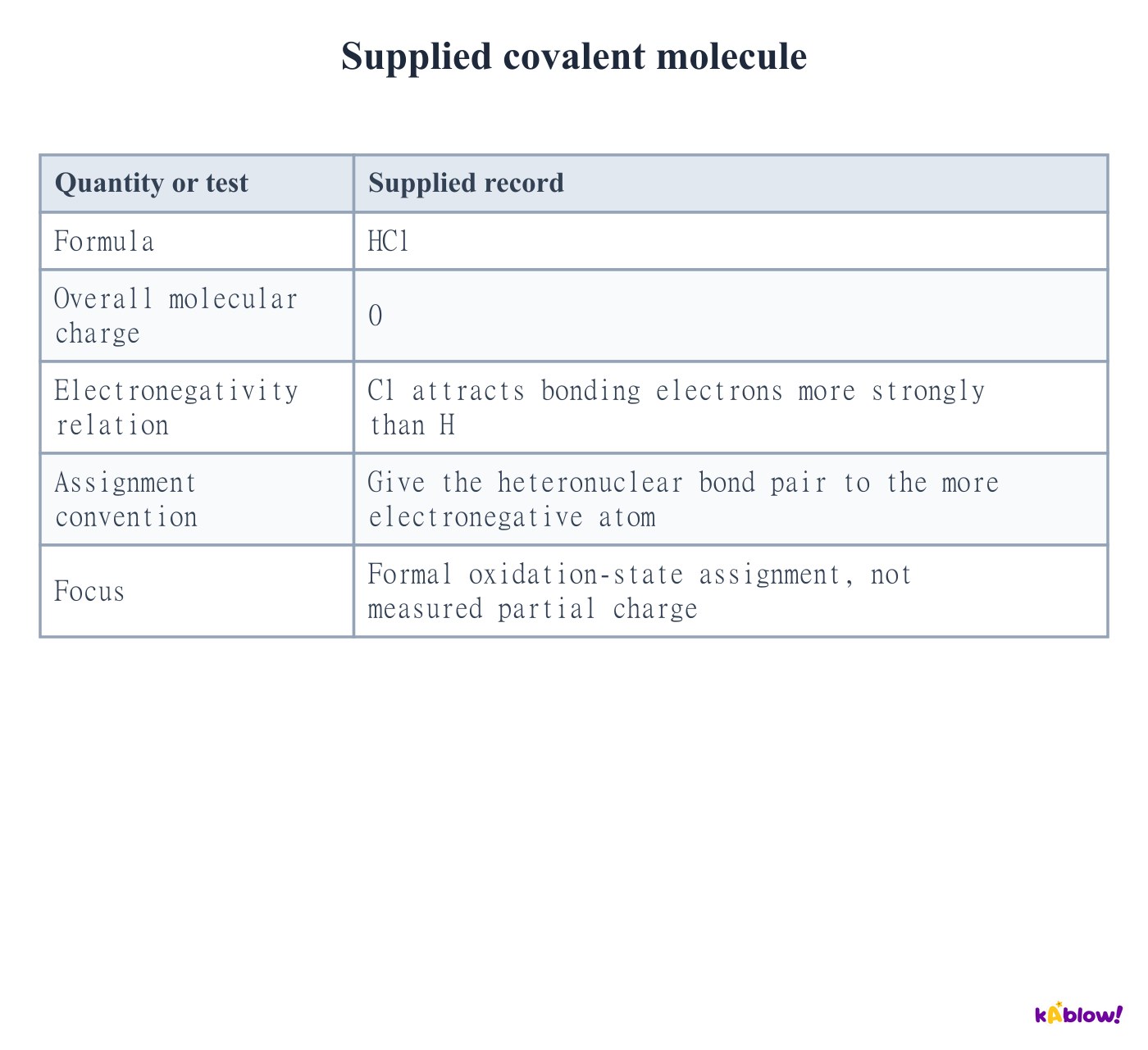
- Oxidation state is a formal electron-accounting assignment based on an ionic approximation of bonds. It is not generally the measured partial charge of an atom in a covalent molecule.
- For a heteronuclear bond in the simple assignment used here, give the bond electrons to the more electronegative atom. Equal-atom bonds are shared equally for oxidation-state bookkeeping.
- The sum of the assigned oxidation states, including atom counts, must equal the overall species charge. This is distinct from assuming the covalent compound contains free ions.
Supplied covalent molecule
Assign uncombined elements and monatomic ions
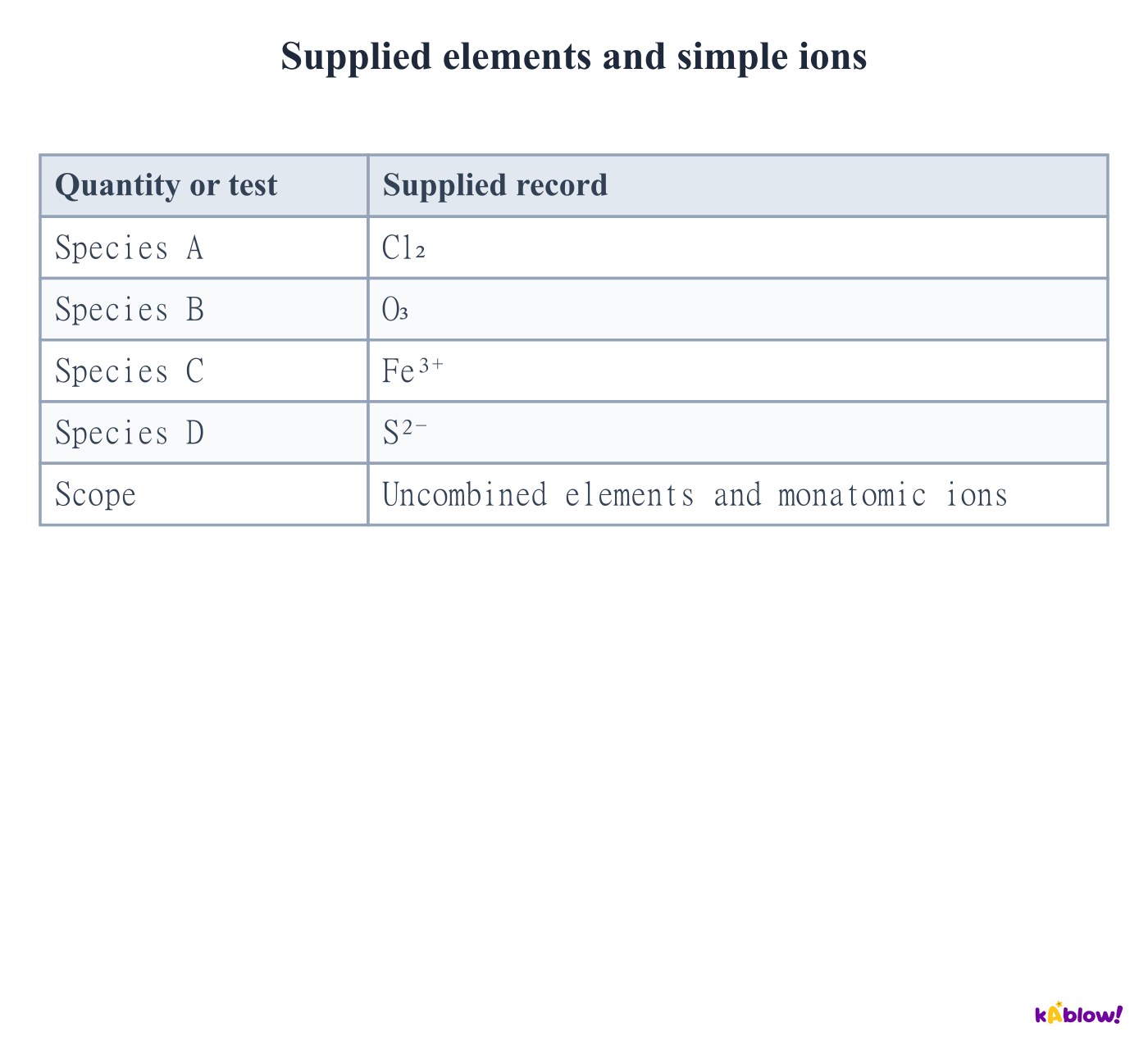
- An uncombined element has oxidation state zero, whether monatomic, molecular or an extended solid. This is not restricted to its standard-state allotrope.
- For a monatomic ion, oxidation state equals its ionic charge: Fe³⁺ is +3 and S²⁻ is −2.
- Distinguish a molecular subscript from an ionic charge. The two atoms in Cl₂ do not each have oxidation state +2, and ozone oxygen is still an uncombined element.
Supplied elements and simple ions
Use atom counts in a neutral-compound balance
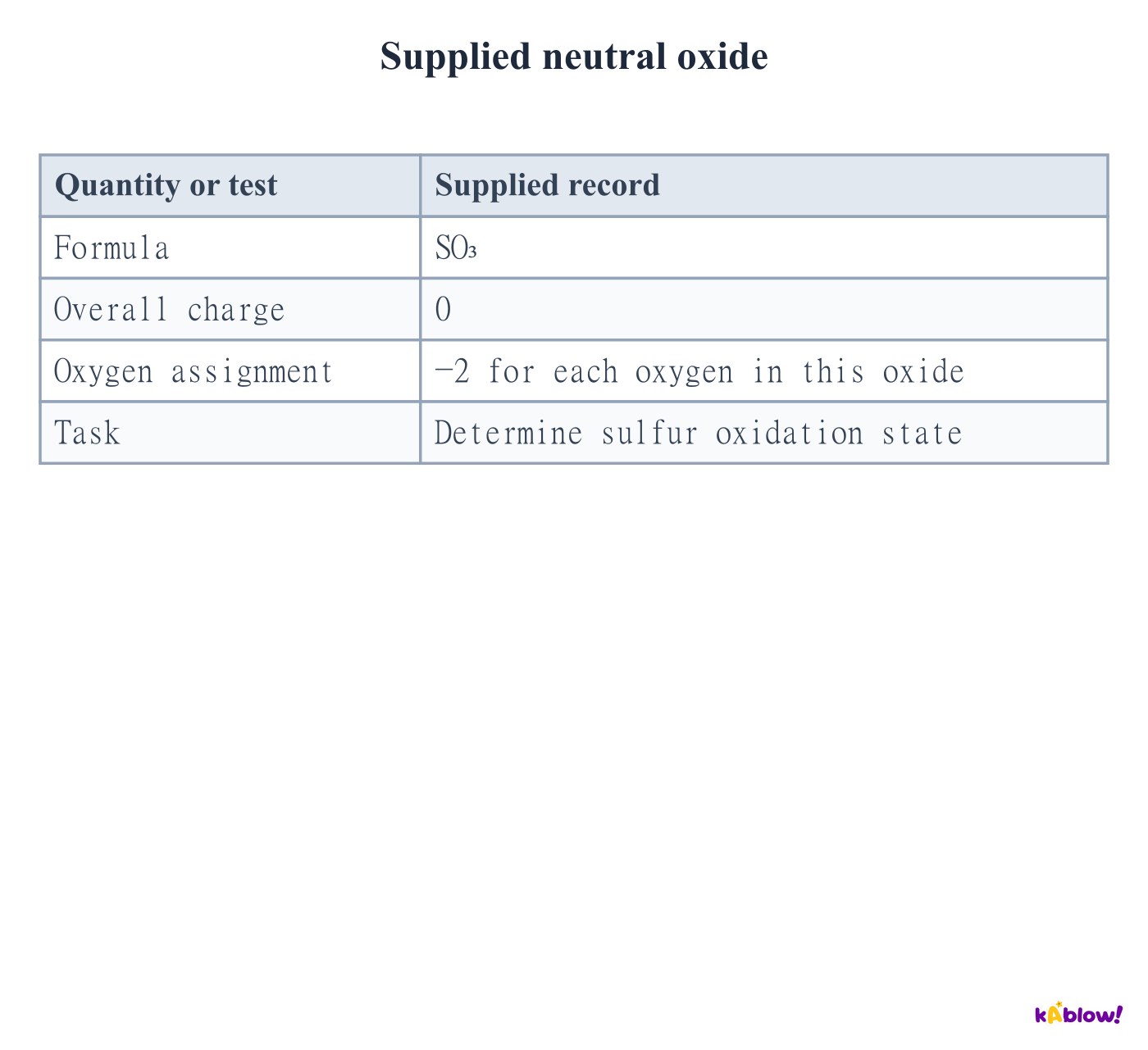
- For a neutral formula, the atom-count-weighted sum of oxidation states is zero. Multiply each assigned value by the number of atoms of that element.
- For SO₃ with oxygen assigned −2, let sulfur be x. Then x+3(−2)=0, giving x=+6.
- Write the sign explicitly. A subscript is an atom count; it is not an oxidation-state multiplier that can be ignored.
Supplied neutral oxide
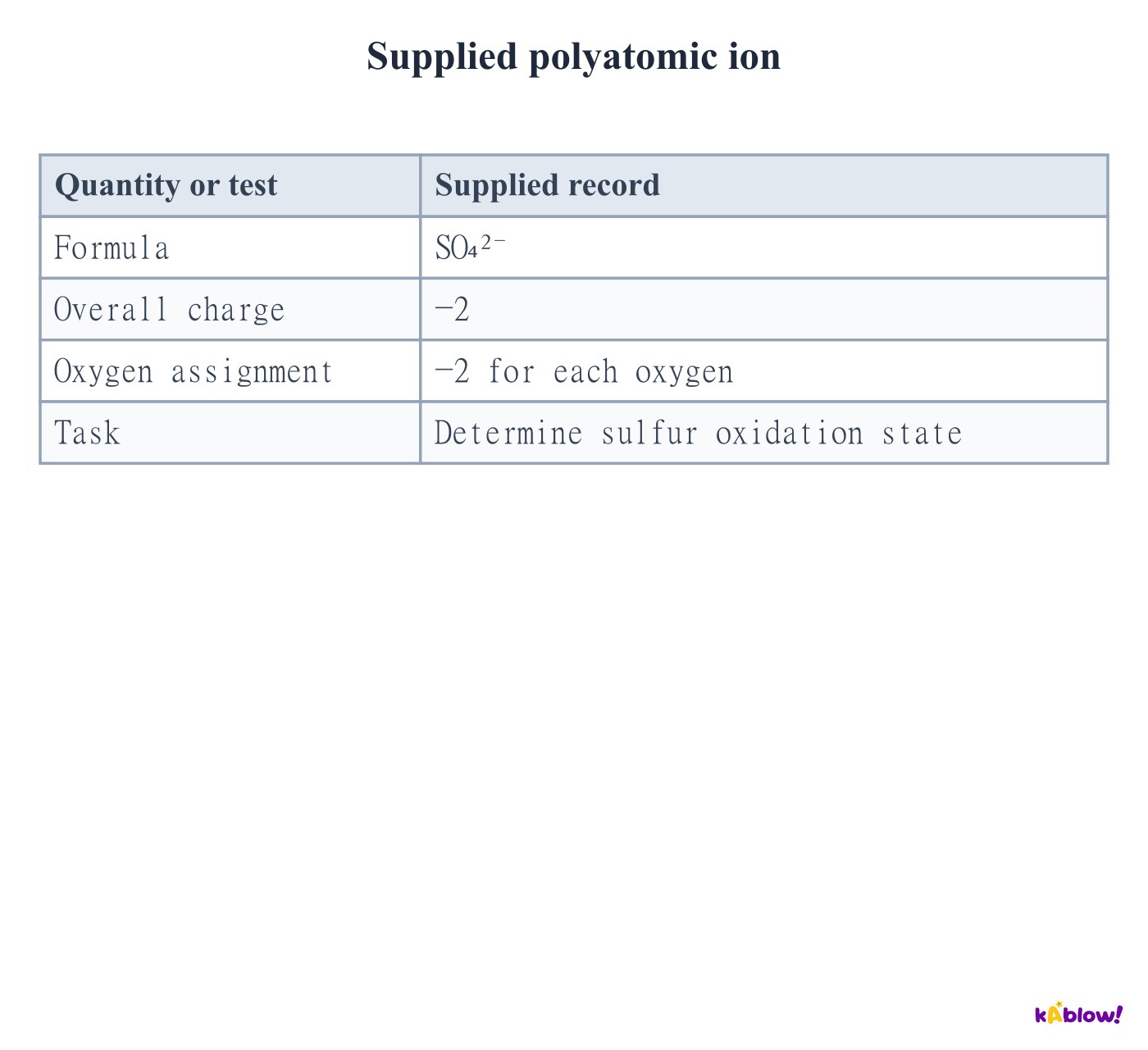
Use the overall charge of a polyatomic ion
- For a polyatomic ion, the weighted oxidation-state sum equals the ion’s total charge, rather than always zero.
- For SO₄²⁻ with oxygen −2, x+4(−2)=−2, giving sulfur +6.
- The−2 ion charge belongs to the whole sulfate ion. It is not the oxidation state of sulfur and is not a subscript giving two extra oxygen atoms.
Supplied polyatomic ion
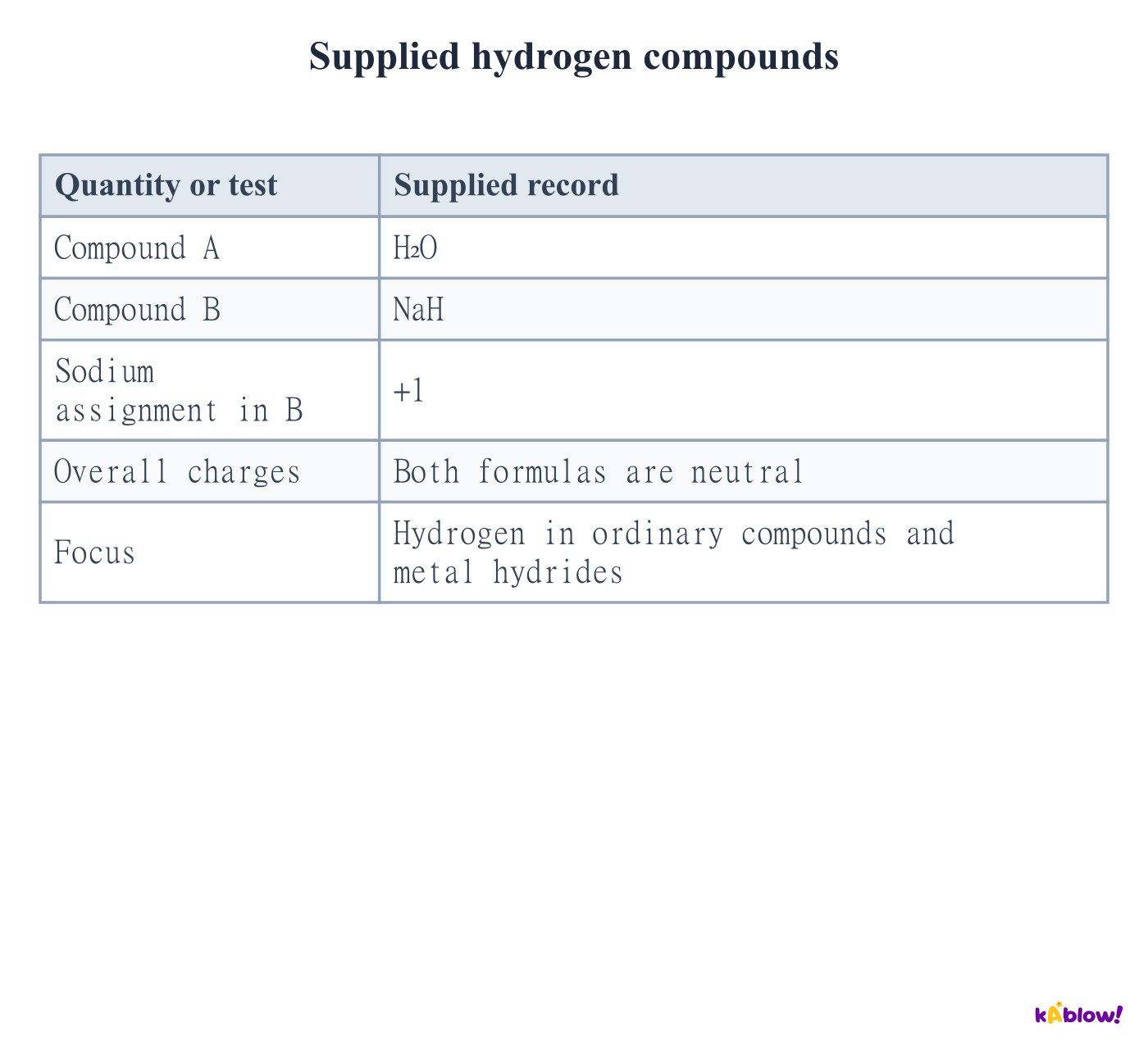
Recognise the hydrogen rule and metal-hydride exception
- Hydrogen commonly has oxidation state +1 in compounds with more electronegative elements, such as water.
- In a metal hydride such as NaH, sodium is +1 and hydrogen is −1. Use the species and bonding context rather than an exception-free slogan.
- Uncombined H₂ has oxidation state zero. A rule for hydrogen in compounds must not be applied to the elemental molecule.
Supplied hydrogen compounds
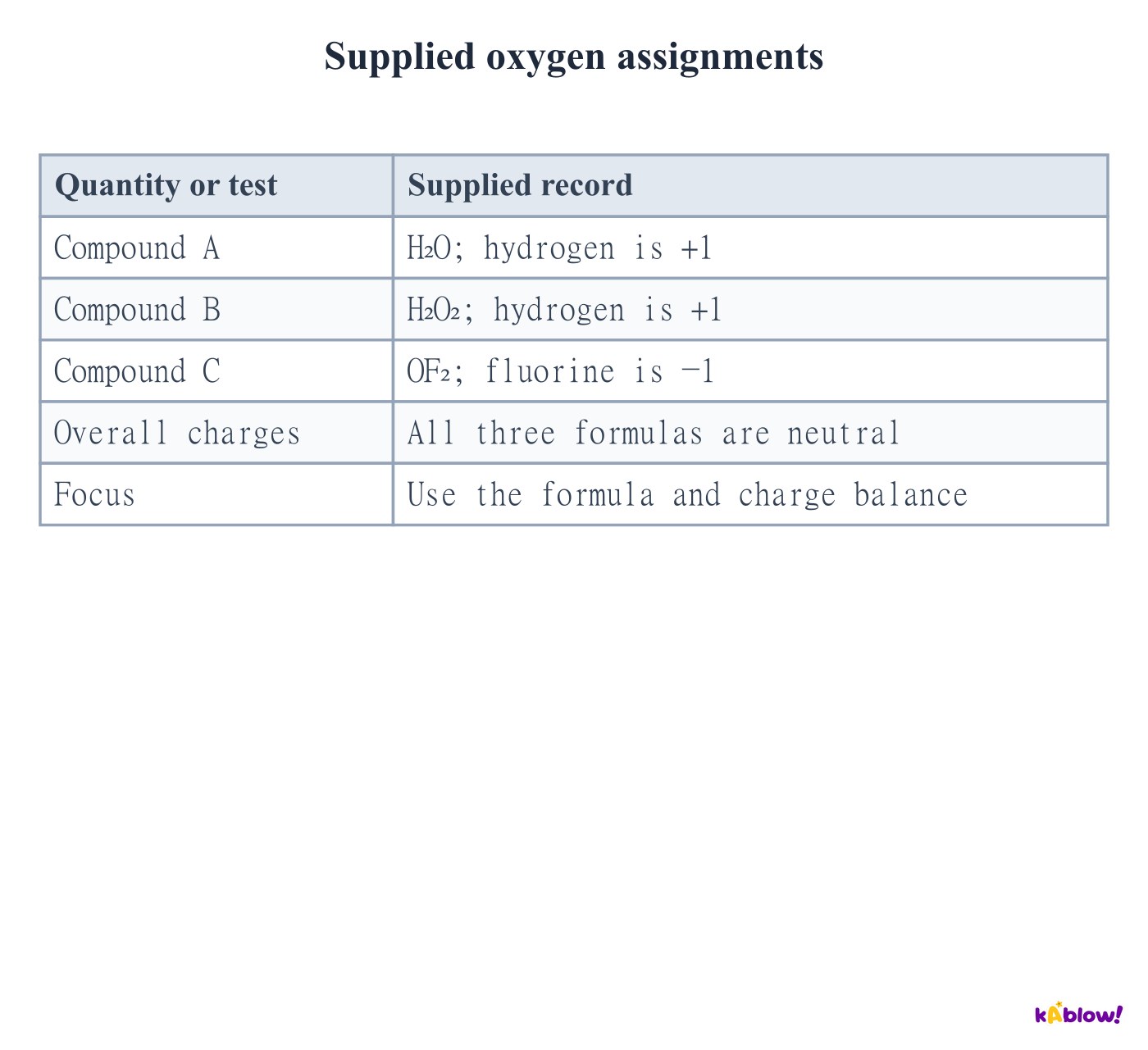
Handle oxygen and fluorine exceptions
- Oxygen is commonly −2, but it is −1 in hydrogen peroxide. In OF₂, fluorine is −1 and oxygen is +2.
- Use electronegativity and the overall charge balance to select the appropriate assignment. Fluorine in its compounds is assigned −1 in the examples covered here.
- Do not use the peroxide assignment for every oxygen-containing compound, or assign−2 to oxygen in OF₂ despite the more electronegative fluorine.
Supplied oxygen assignments
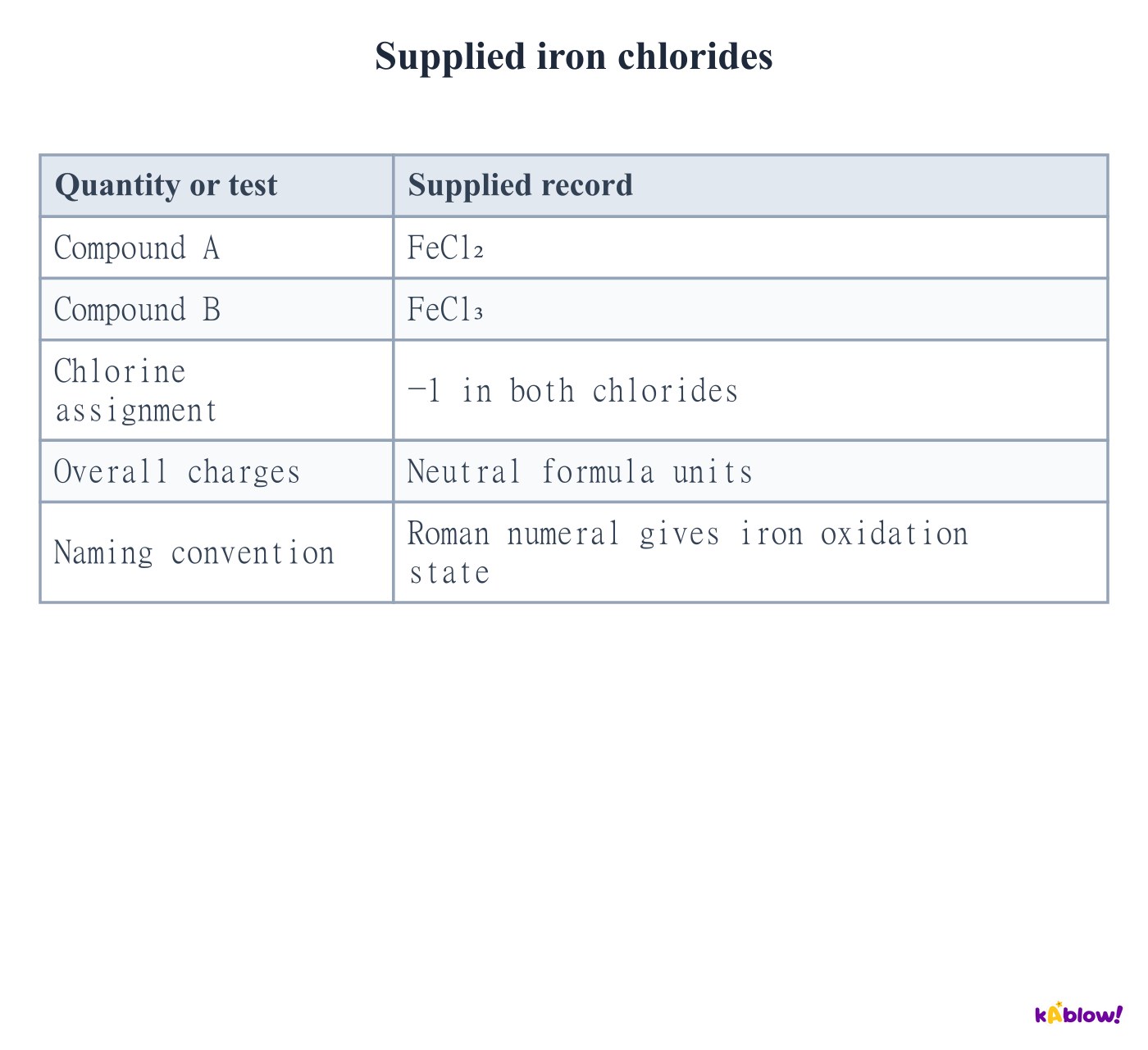
Interpret Roman numerals in compound names
- A Roman numeral in a Stock name identifies an element’s oxidation state. Iron(II) and iron(III) distinguish+2 from +3.
- For neutral FeCl₂, two chloride assignments−1 require iron +2. For FeCl₃, three require iron +3.
- The numeral is not the number of atoms or the charge of the whole neutral compound. Common names such as sodium chloride do not always need a numeral.
Supplied iron chlorides
Identify oxidising and reducing agents
- An oxidising agent accepts electrons and is itself reduced. A reducing agent donates electrons and is itself oxidised.
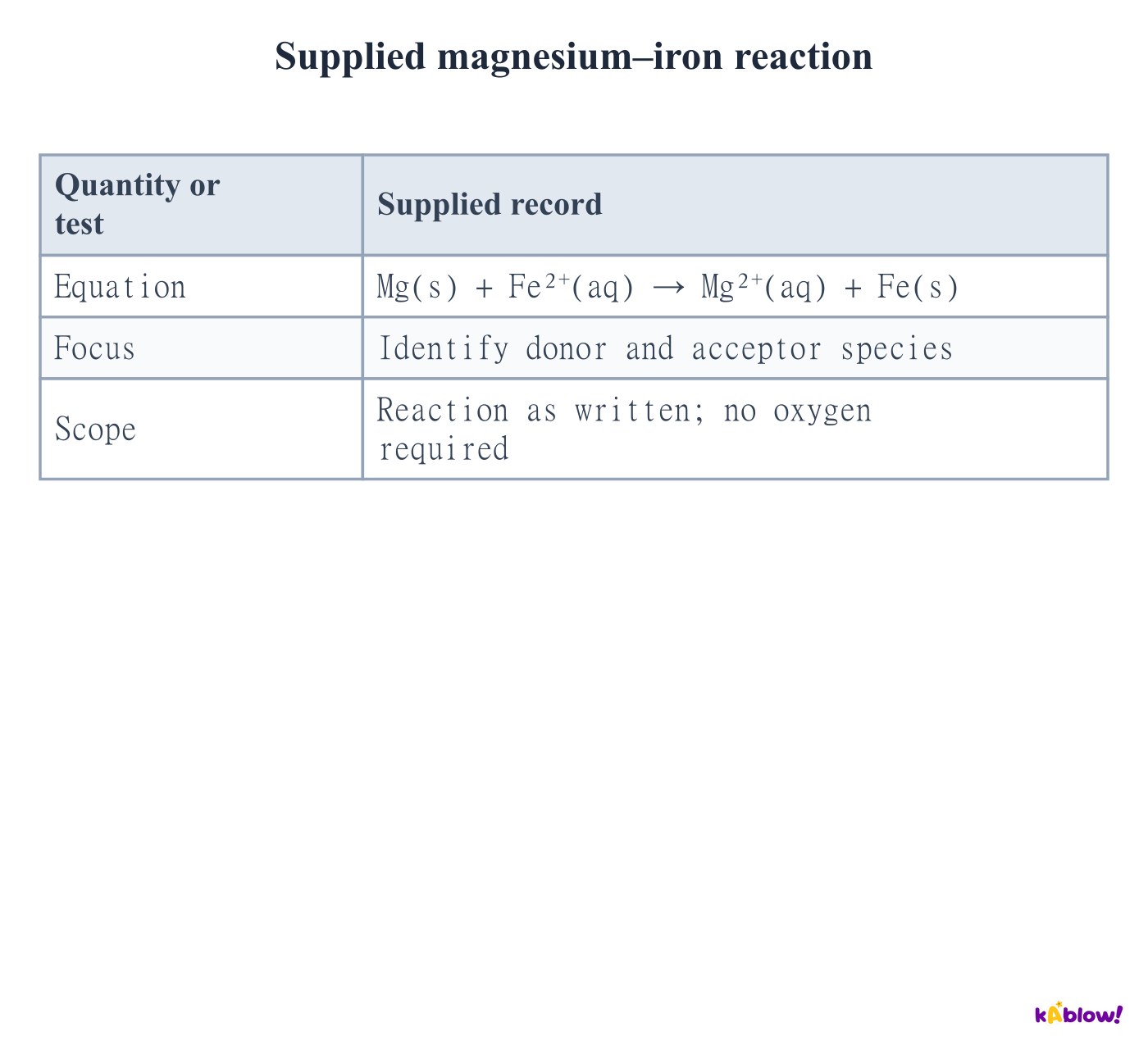
- In Mg+Fe²⁺→Mg²⁺+Fe, magnesium donates two electrons and Fe²⁺ accepts them. The agent name describes what it does to the other partner.
- Name the reactant species precisely. Fe²⁺, rather than the neutral product Fe, is the oxidising agent in this written reaction.
Supplied magnesium–iron reaction
Explain why one substance can play different redox roles
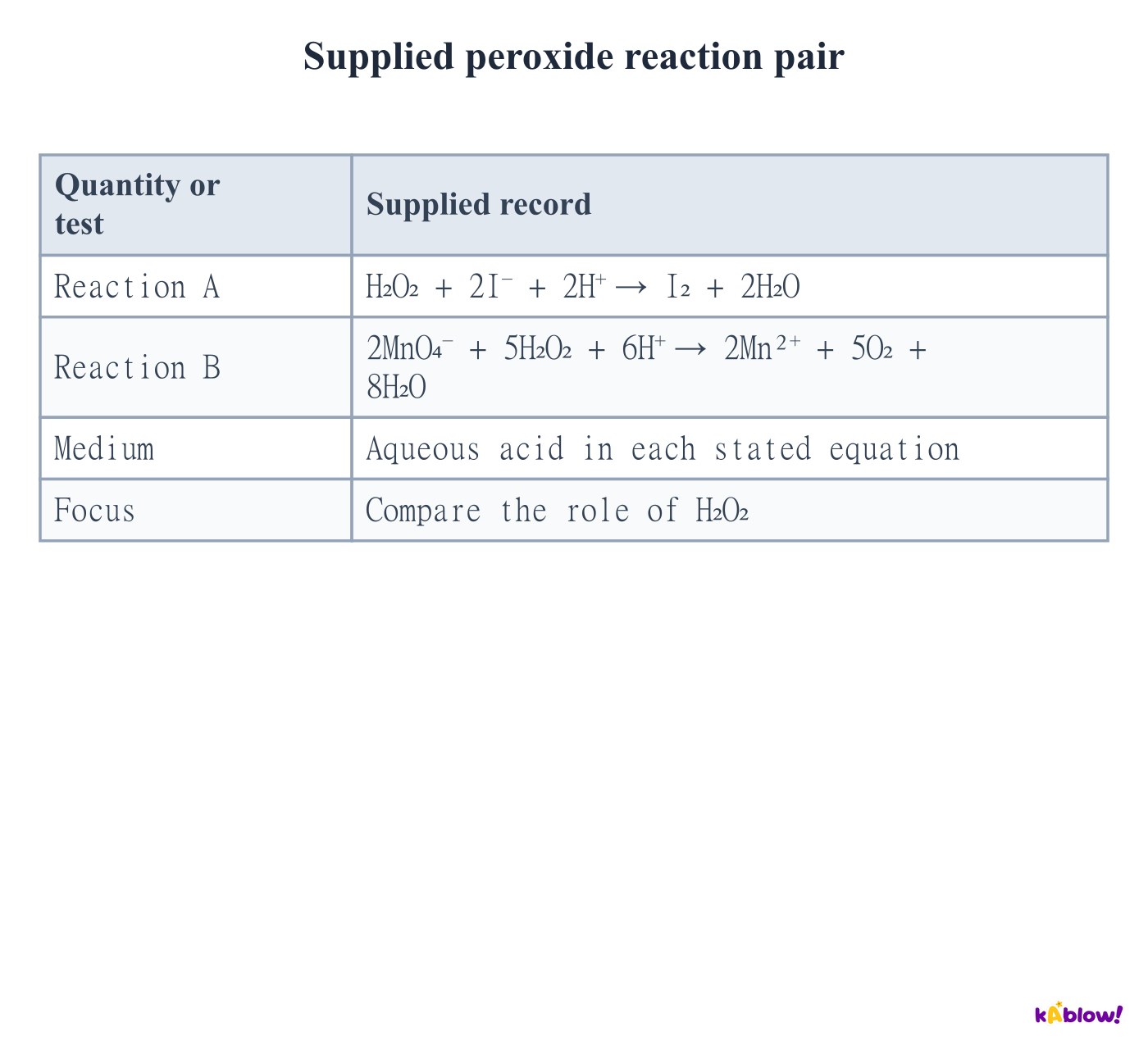
- A substance’s redox role depends on the reaction partners and conditions. Hydrogen peroxide contains oxygen at −1, which can become−2 or0 in different reactions.
- In supplied reaction A peroxide oxygen becomes water oxygen at −2, so peroxide is reduced and acts as oxidising agent.
- In reaction B peroxide oxygen becomes O₂ at 0, so peroxide is oxidised and acts as reducing agent. These equations illustrate roles; they are not mixing instructions.
Supplied peroxide reaction pair
Distinguish a formula average from individual sites
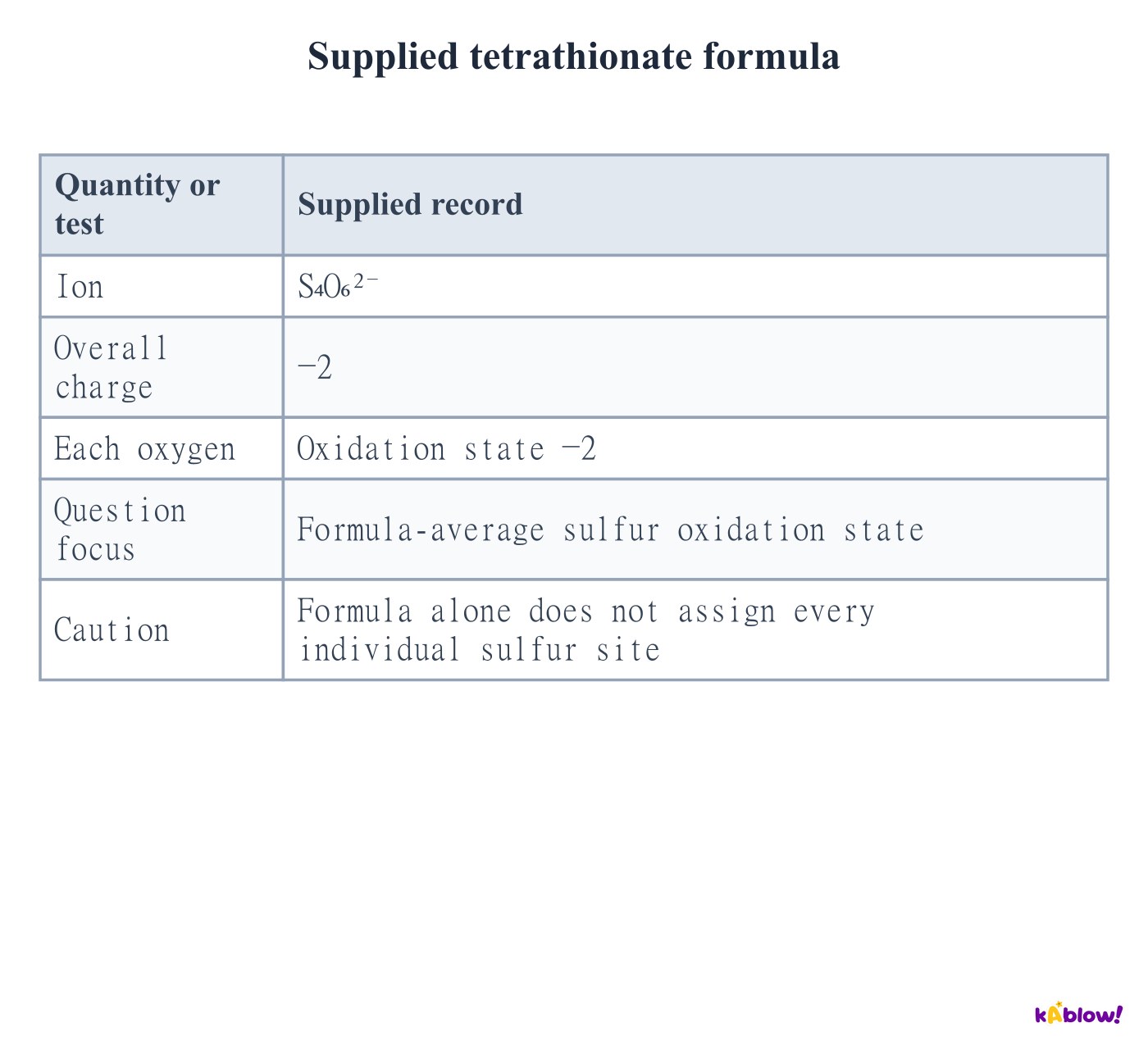
- The total sulfur oxidation-state contribution in S₄O₆²⁻ is +10 when each oxygen is −2. Dividing by four gives a formula-average value+2.5.
- That average does not establish that every sulfur atom has the same local environment or assignment. A structure is needed to distinguish individual sites.
- A fractional formula average is not evidence that half an electron has been transferred in a single elementary event. Use the average only for the aggregate accounting it represents.
Supplied tetrathionate formula
Classify a redox reaction from oxidation-state changes
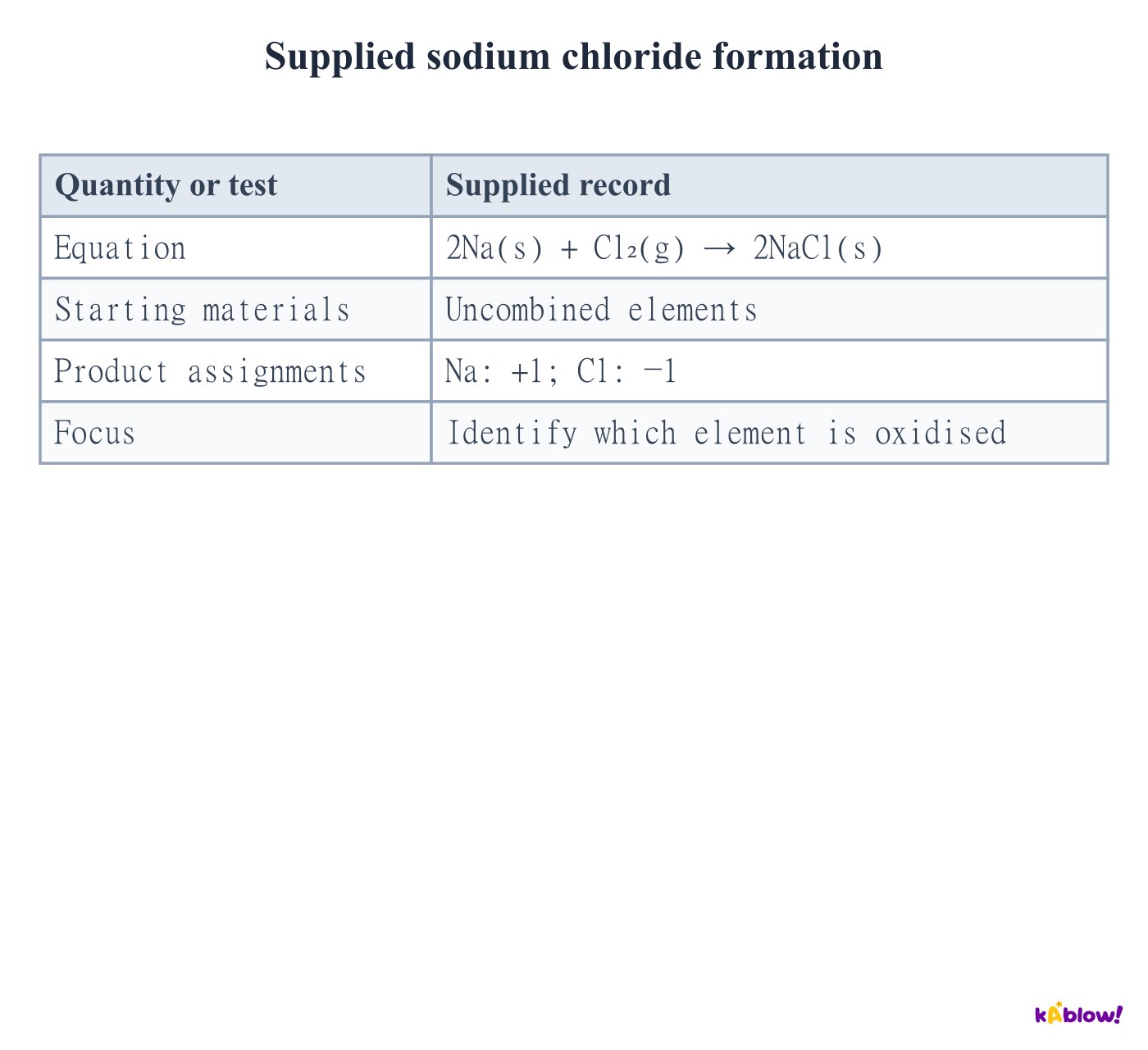
- For 2Na+Cl₂→2NaCl, sodium changes from 0 to +1 and is oxidised. Chlorine changes from 0 to −1 and is reduced.
- Each sodium atom loses one electron; the two chlorine atoms together accept two. Both atoms and transferred electrons must balance.
- This example also shows why oxidation-state increase means oxidation and decrease means reduction. Follow the actual signs rather than the position of an element in the equation.
Supplied sodium chloride formation
Recognise a reaction that is not redox
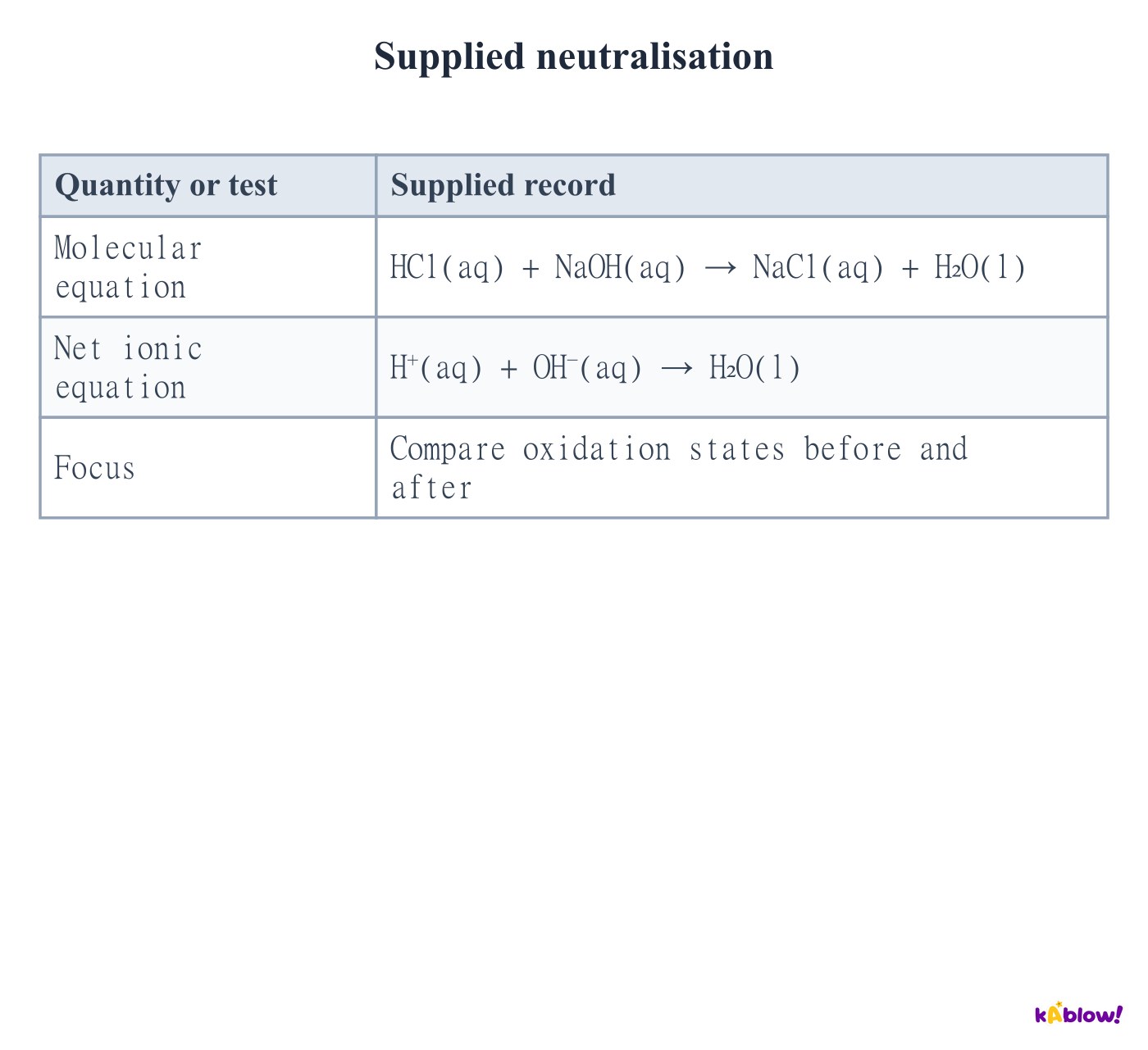
- A balanced reaction can occur without oxidation-state changes. Acid–base neutralisation is a useful contrast to electron-transfer reactions.
- In H⁺+OH⁻→H₂O, hydrogen remains +1 and oxygen remains −2. The ionic charges combine, but those oxidation states do not change.
- Changes in total species charge or proton transfer alone do not prove electron transfer. Check the oxidation states before labelling a reaction redox.
Supplied neutralisation
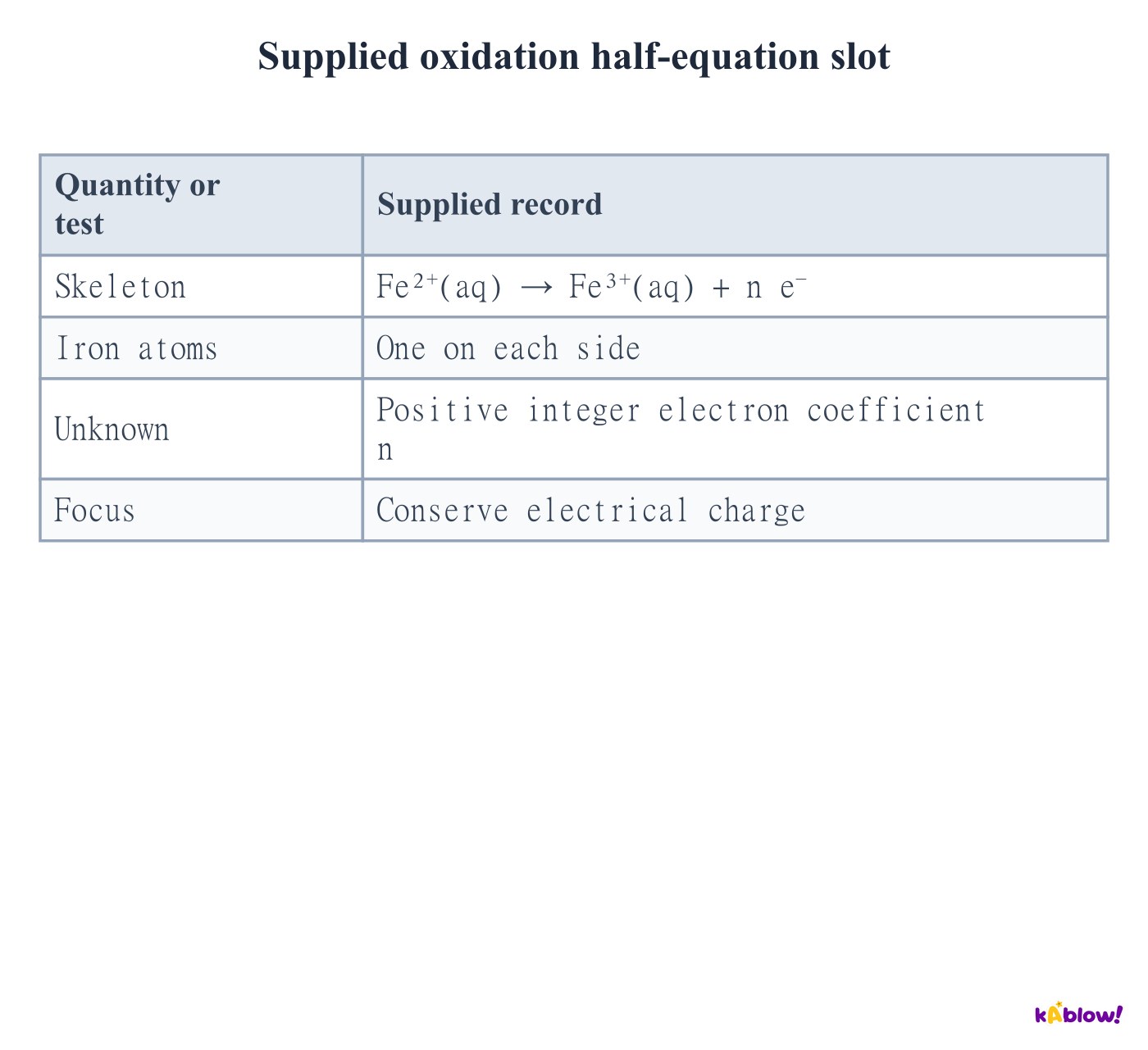
Write an oxidation half-equation
- An oxidation half-equation places released electrons on the product side. Balance the atoms and then the total electrical charge.
- Fe²⁺→Fe³⁺+e⁻ has one iron atom on each side and charge +2 on each side after the electron is included.
- The coefficient counts electrons, not iron atoms. Adding an electron to the wrong side would increase the charge mismatch rather than repair it.
Supplied oxidation half-equation slot
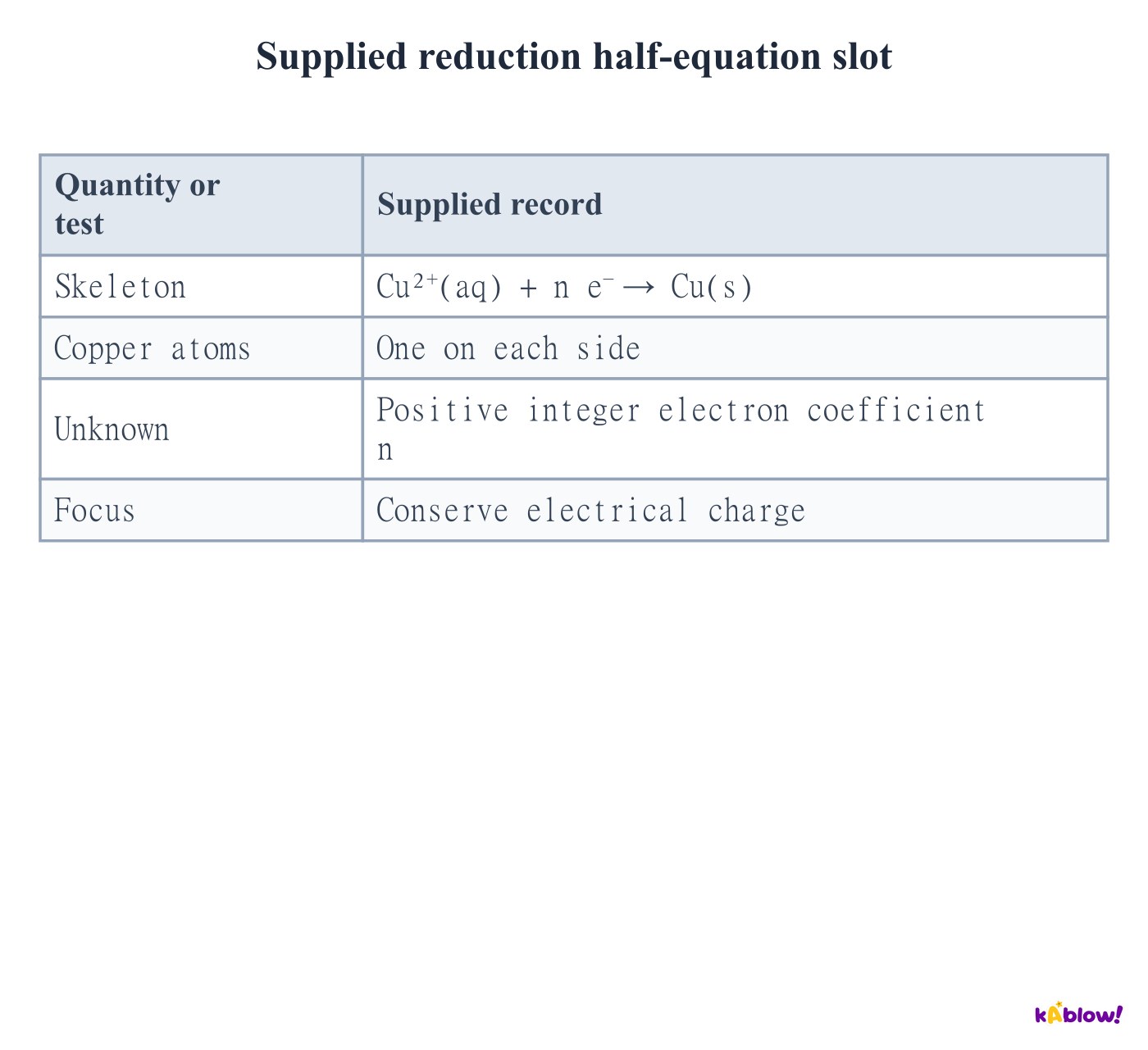
Write a reduction half-equation
- A reduction half-equation places accepted electrons on the reactant side. Cu²⁺+2e⁻→Cu balances one copper atom and zero net charge.
- The oxidation state decreases from +2 to 0, corresponding to two electrons gained per copper ion.
- Check both atom count and charge. Equal atom counts alone would not distinguish a correct electron coefficient from an incorrect one.
Supplied reduction half-equation slot
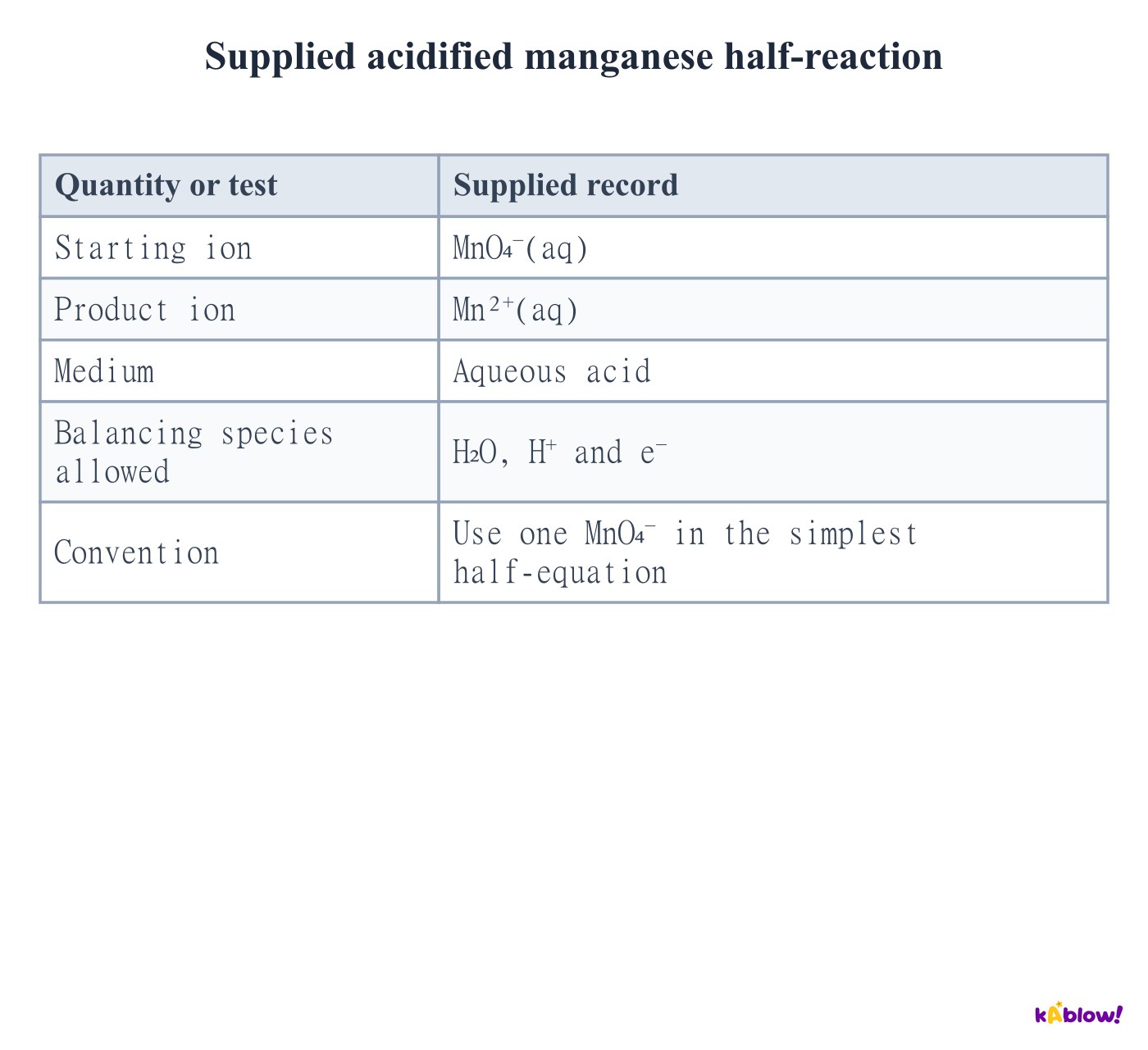
Balance an oxygen-containing half-equation in acid
- For the supplied MnO₄⁻→Mn²⁺ reduction in acid, first balance manganese, then oxygen with water and hydrogen with H⁺.
- The balanced half-equation is MnO₄⁻+8H⁺+5e⁻→Mn²⁺+4H₂O. Manganese falls from +7 to +2 and gains five electrons.
- The medium and stated product matter. This acidified Mn²⁺ equation must not be replaced by a MnO₂ equation from different conditions.
Supplied acidified manganese half-reaction
Account for two redox-active atoms in one ion
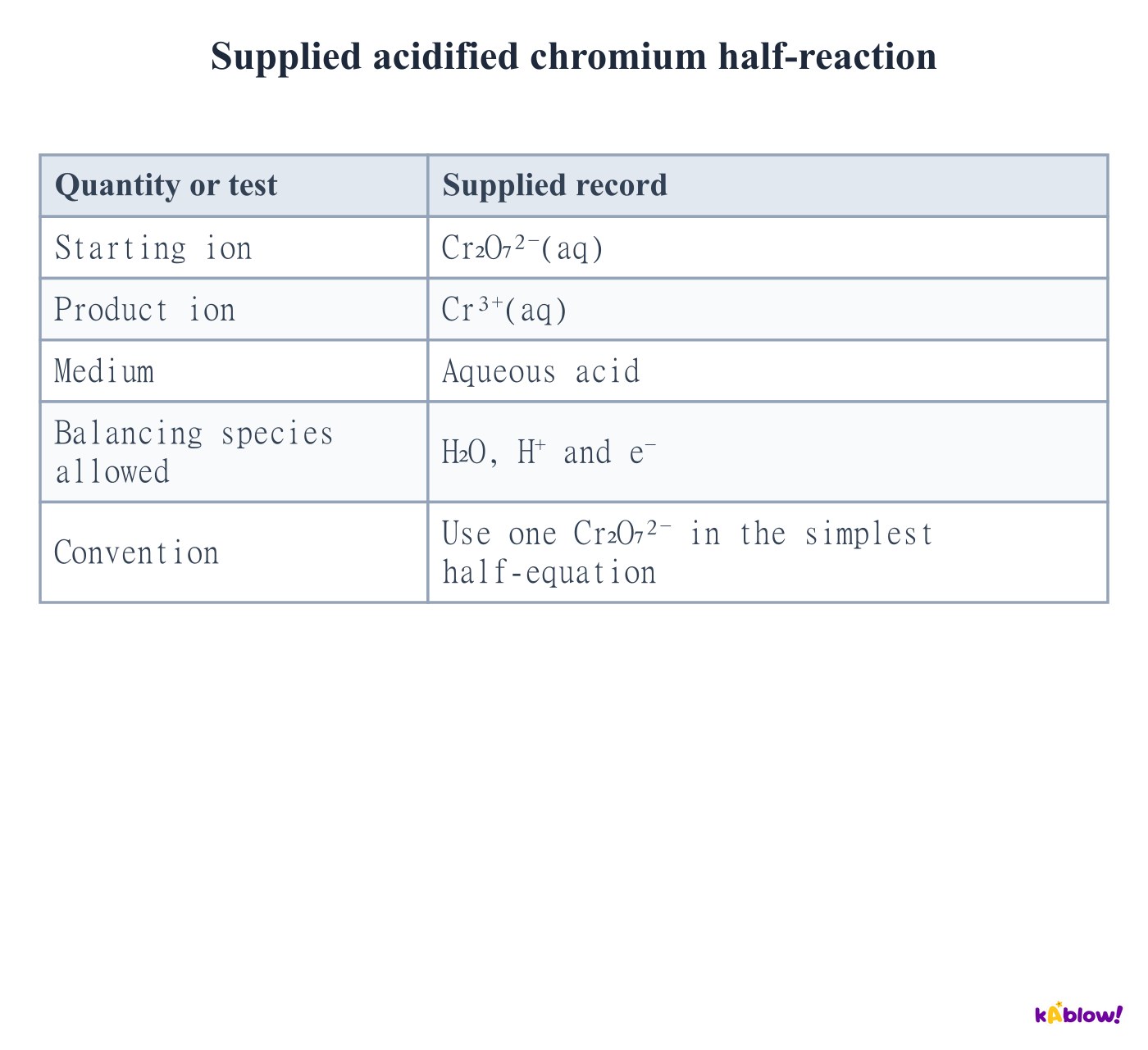
- One Cr₂O₇²⁻ contains two chromium atoms, each at +6. Formation of two Cr³⁺ therefore requires six electrons in total.
- In acid the half-equation is Cr₂O₇²⁻+14H⁺+6e⁻→2Cr³⁺+7H₂O.
- Do not use a three-electron total for the whole dichromate ion merely because each individual chromium changes by three. Multiply by the atom count.
Supplied acidified chromium half-reaction
Combine half-equations using equal electron totals
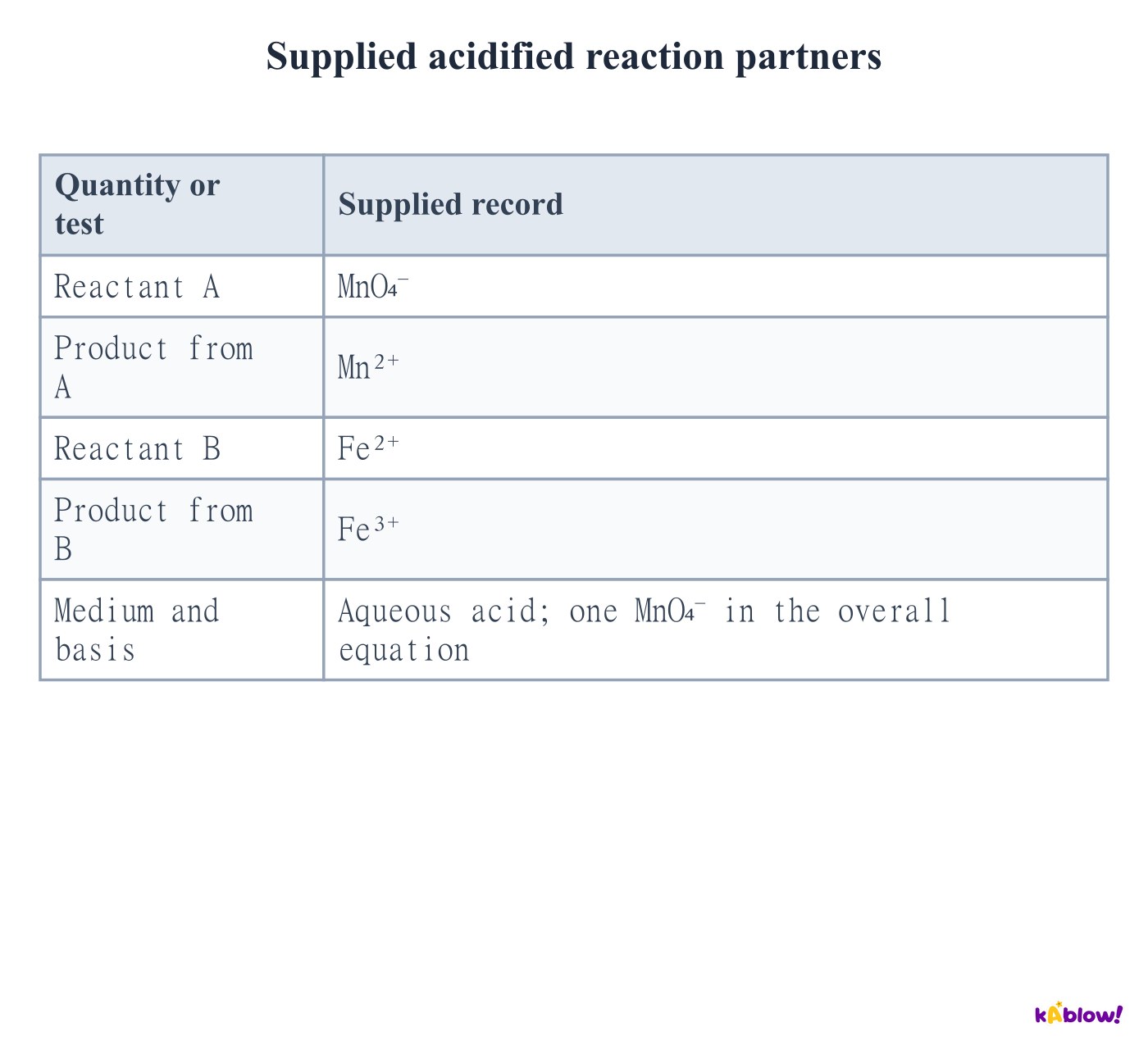
- MnO₄⁻ in acid accepts five electrons per ion, while Fe²⁺→Fe³⁺ supplies one per iron ion. Multiply the iron half-equation by five.
- After adding and cancelling electrons, MnO₄⁻+8H⁺+5Fe²⁺→Mn²⁺+4H₂O+5Fe³⁺.
- Electrons cancel from the overall ionic equation. The final coefficient ratio follows from electron conservation, not from guessing equal amounts of the two ions.
Supplied acidified reaction partners
Remove spectator ions from an ionic equation
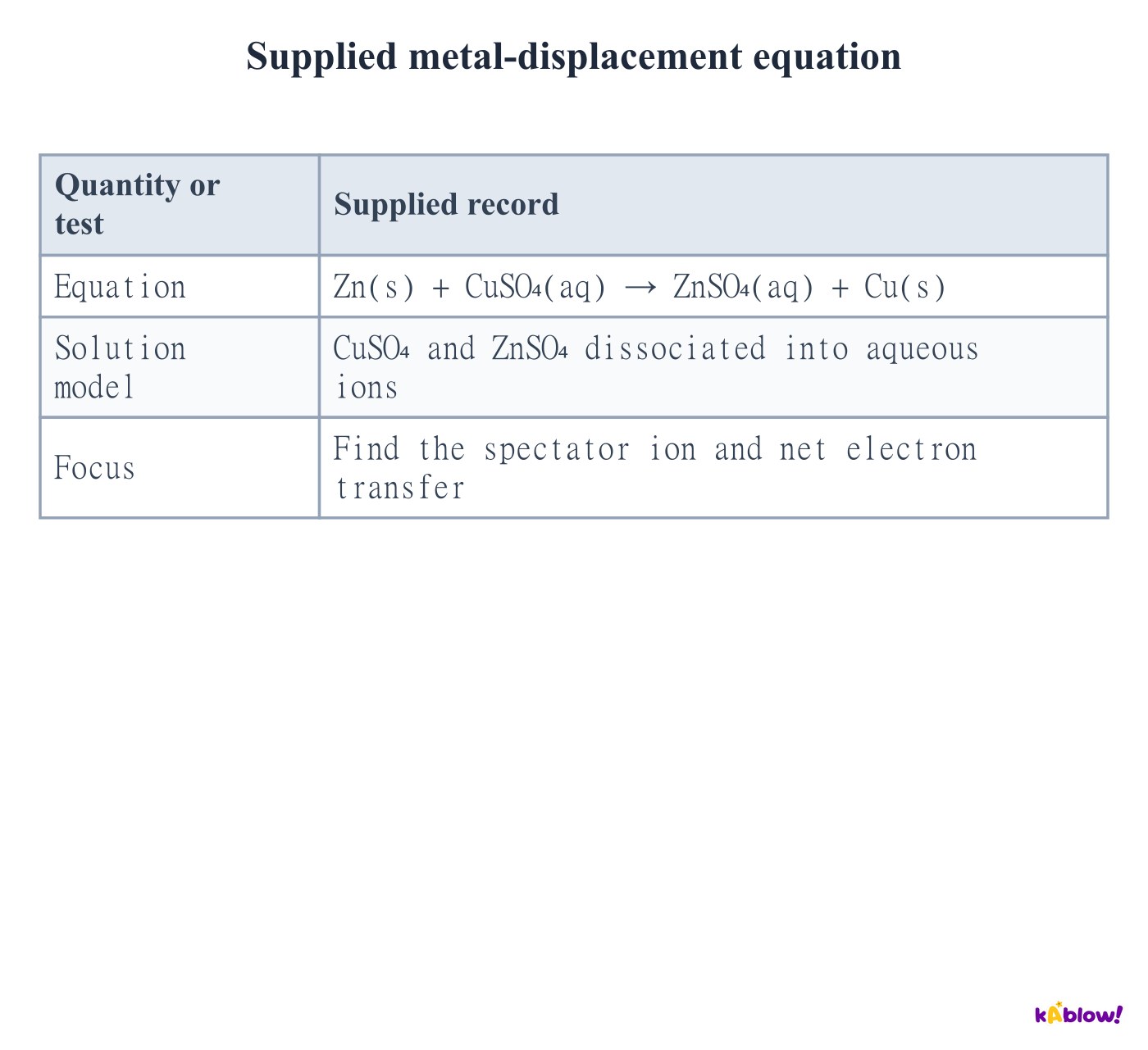
- In Zn+CuSO₄→ZnSO₄+Cu under the supplied dissociation model, sulfate appears unchanged on both sides.
- Cancel sulfate to obtain Zn+Cu²⁺→Zn²⁺+Cu. Zinc donates two electrons and copper(II) ions accept them.
- Remove only species unchanged in the same form on both sides. An atom that changes charge or chemical form is not a spectator merely because its element appears twice.
Supplied metal-displacement equation
Use a balanced redox equation for amounts
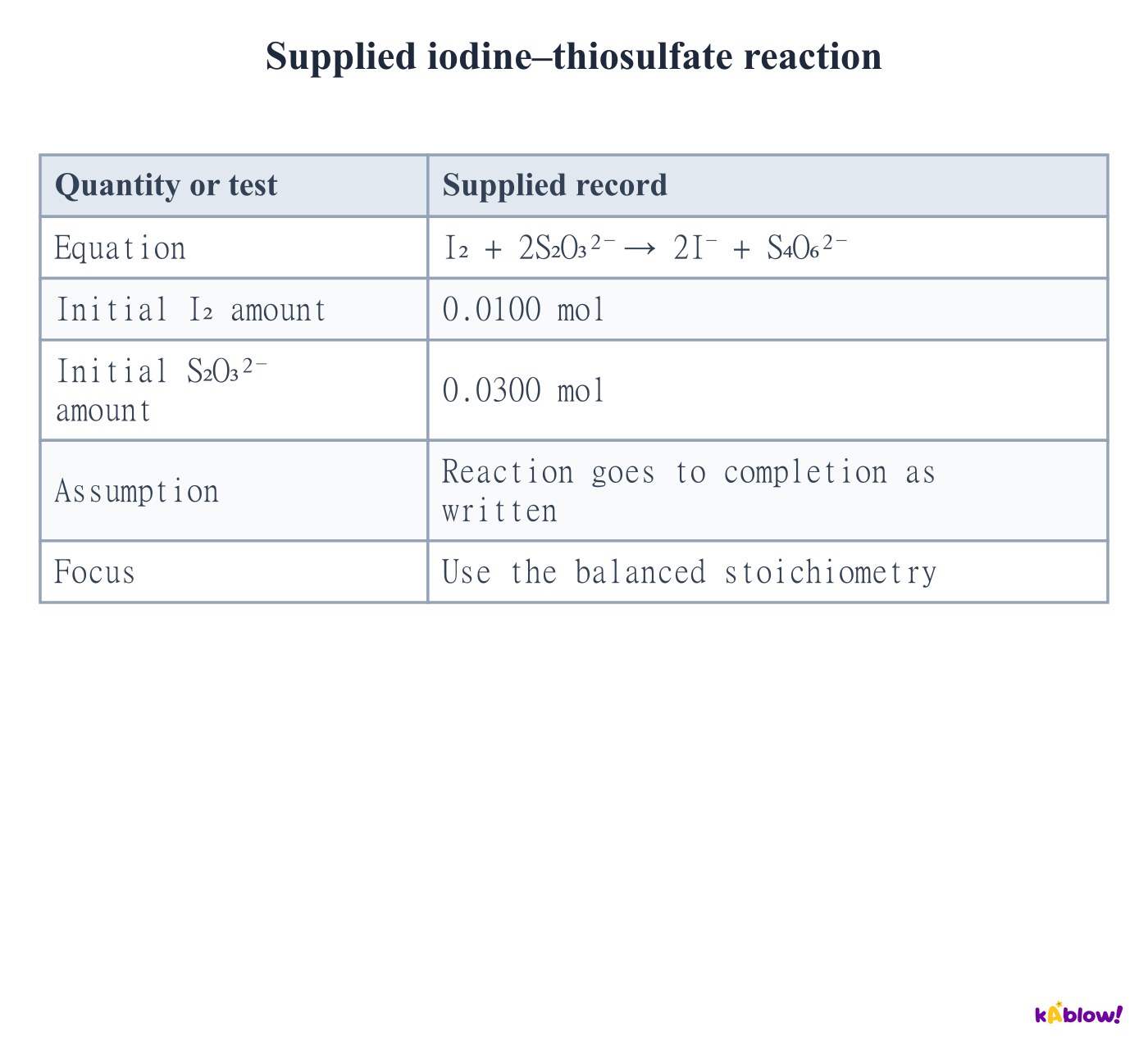
- The iodine–thiosulfate equation consumes two moles of thiosulfate per mole of I₂. The ratio comes from the balanced coefficients.
- The supplied 0.0100 mol I₂ needs 0.0200 mol thiosulfate. Starting with 0.0300 mol leaves 0.0100 mol thiosulfate after iodine is consumed.
- Distinguish I₂ molecules from individual iodine atoms or iodide ions. A mole of I₂ corresponds to two moles of iodine atoms and forms two moles of I⁻ in this reaction.
Supplied iodine–thiosulfate reaction
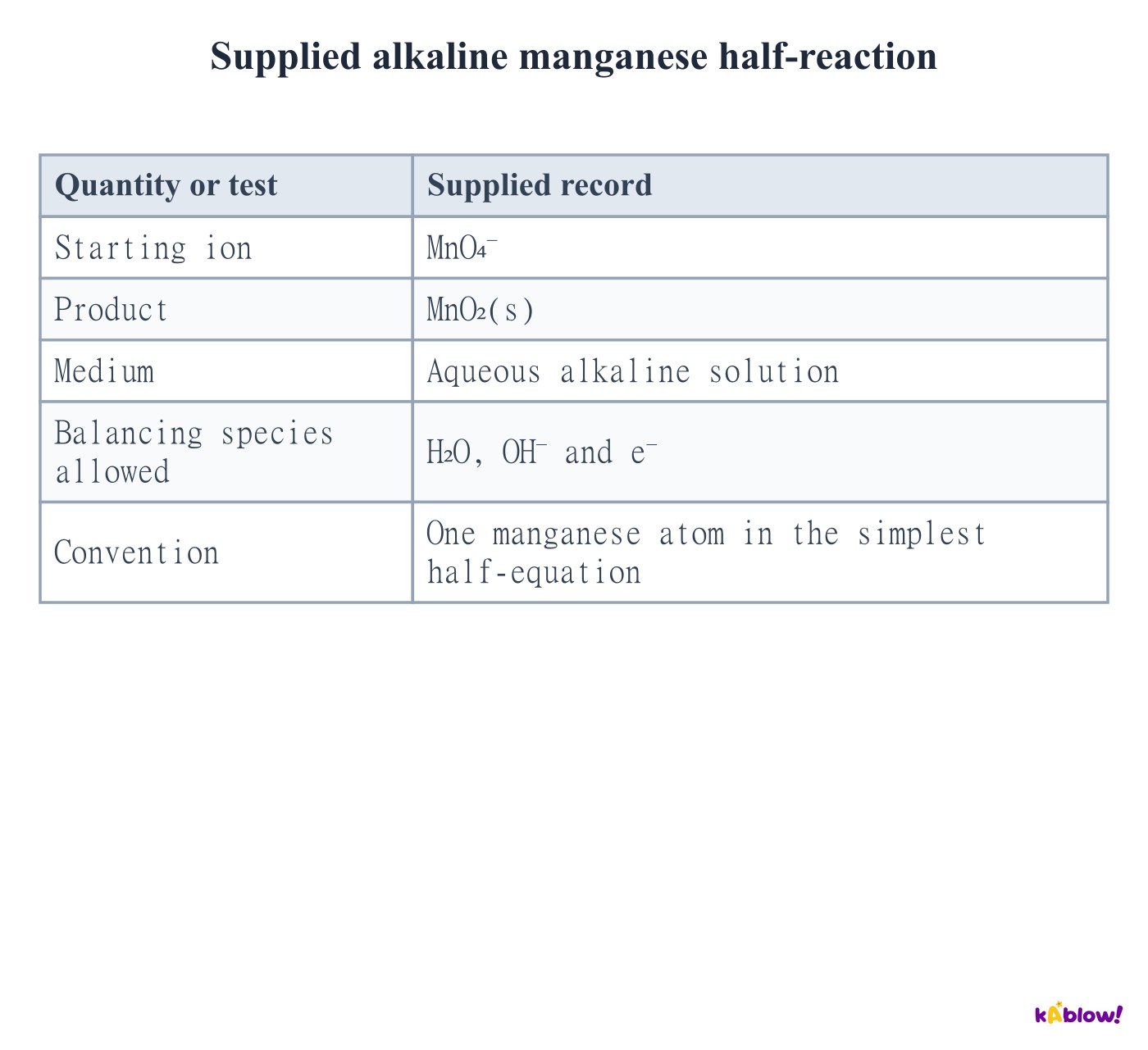
Balance a half-equation in alkaline solution
- For MnO₄⁻→MnO₂ in alkaline solution, manganese falls from +7 to +4 and accepts three electrons per atom.
- The balanced alkaline half-equation is MnO₄⁻+2H₂O+3e⁻→MnO₂+4OH⁻. Atoms and charge match on both sides.
- One method balances in acid first, then adds OH⁻ to both sides to neutralise H⁺ and cancels excess water. The final alkaline equation must not retain uncancelled H⁺.
Supplied alkaline manganese half-reaction
Recognise cold-alkali disproportionation
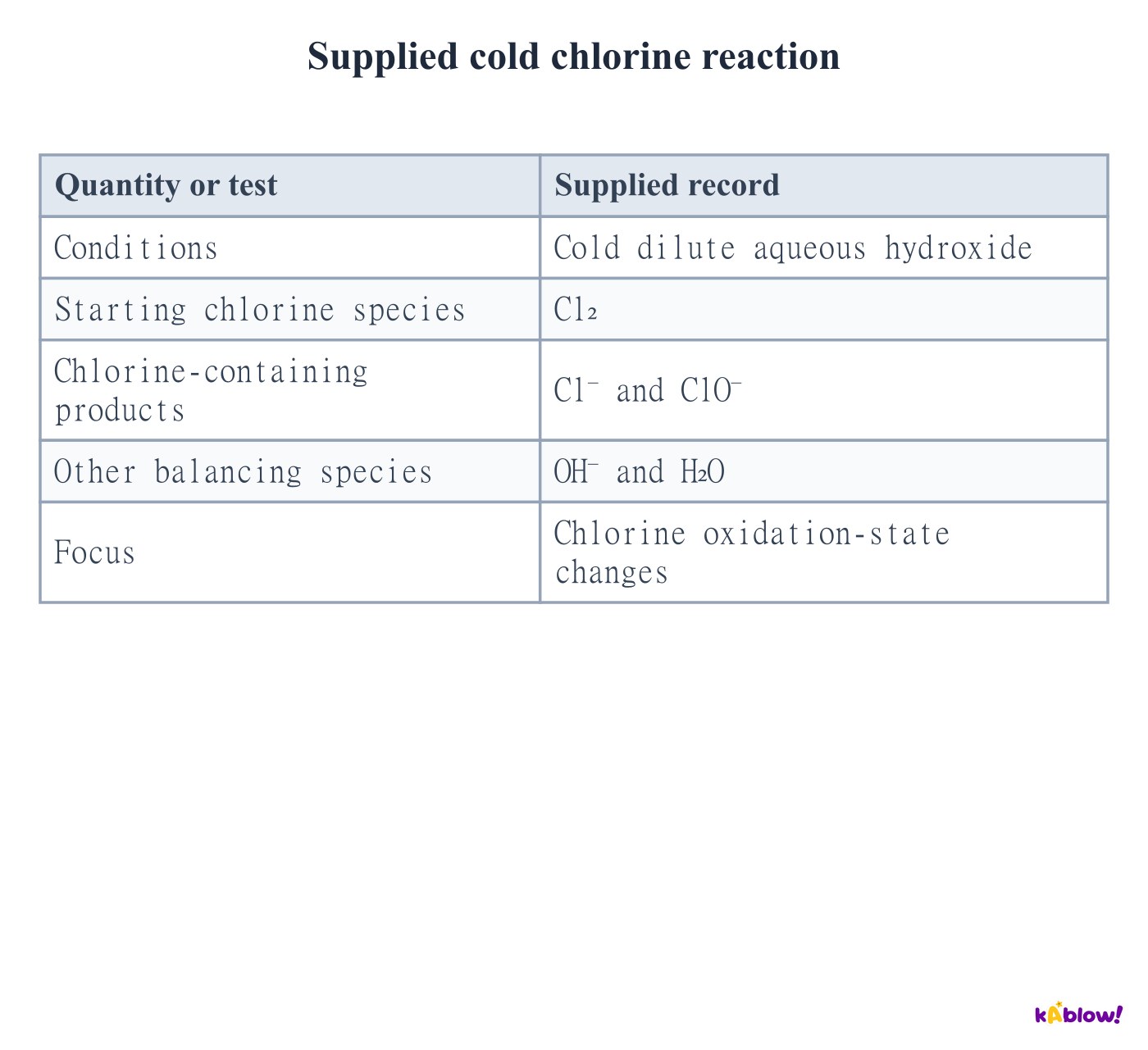
- Disproportionation occurs when the same starting species is both oxidised and reduced in one overall reaction.
- For the supplied cold dilute hydroxide products, chlorine at 0 becomes−1 in Cl⁻ and+1 in ClO⁻. The equation is Cl₂+2OH⁻→Cl⁻+ClO⁻+H₂O.
- The starting chlorine species fills both redox roles. Different product oxidation states show the two directions; no separate external electron source is required in the overall equation.
Supplied cold chlorine reaction
Balance hot-alkali disproportionation
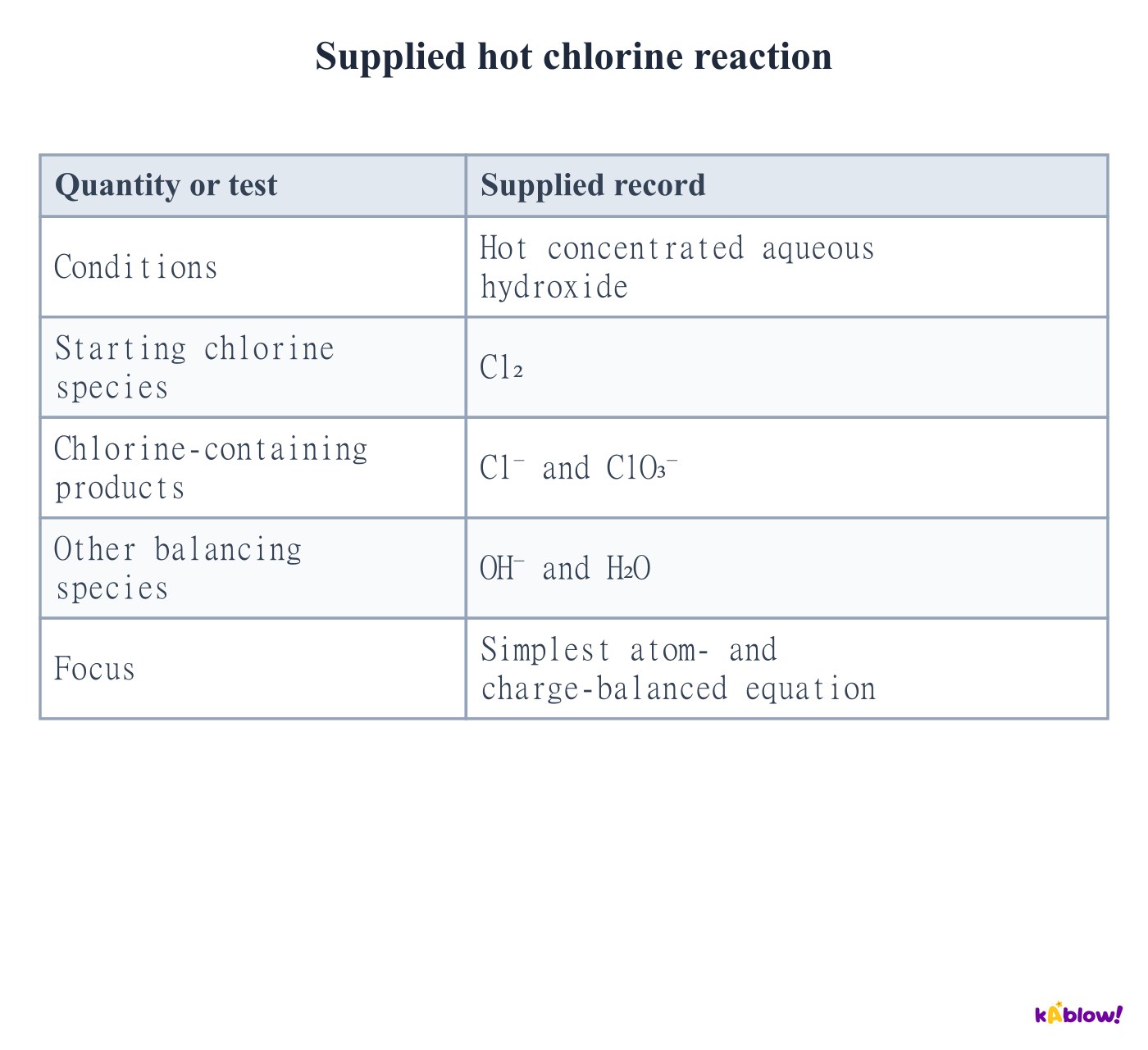
- For the supplied hot concentrated hydroxide products, chlorine becomes−1 in Cl⁻ and+5 in ClO₃⁻.
- One chlorine atom rising from 0 to +5 loses five electrons overall, balanced by five chlorine atoms each falling from 0 to −1.
- The simplest equation is 3Cl₂+6OH⁻→5Cl⁻+ClO₃⁻+3H₂O. Do not substitute the cold-alkali ClO⁻ product into the hot-condition calculation.
Supplied hot chlorine reaction
Audit atoms, charge and electron cancellation
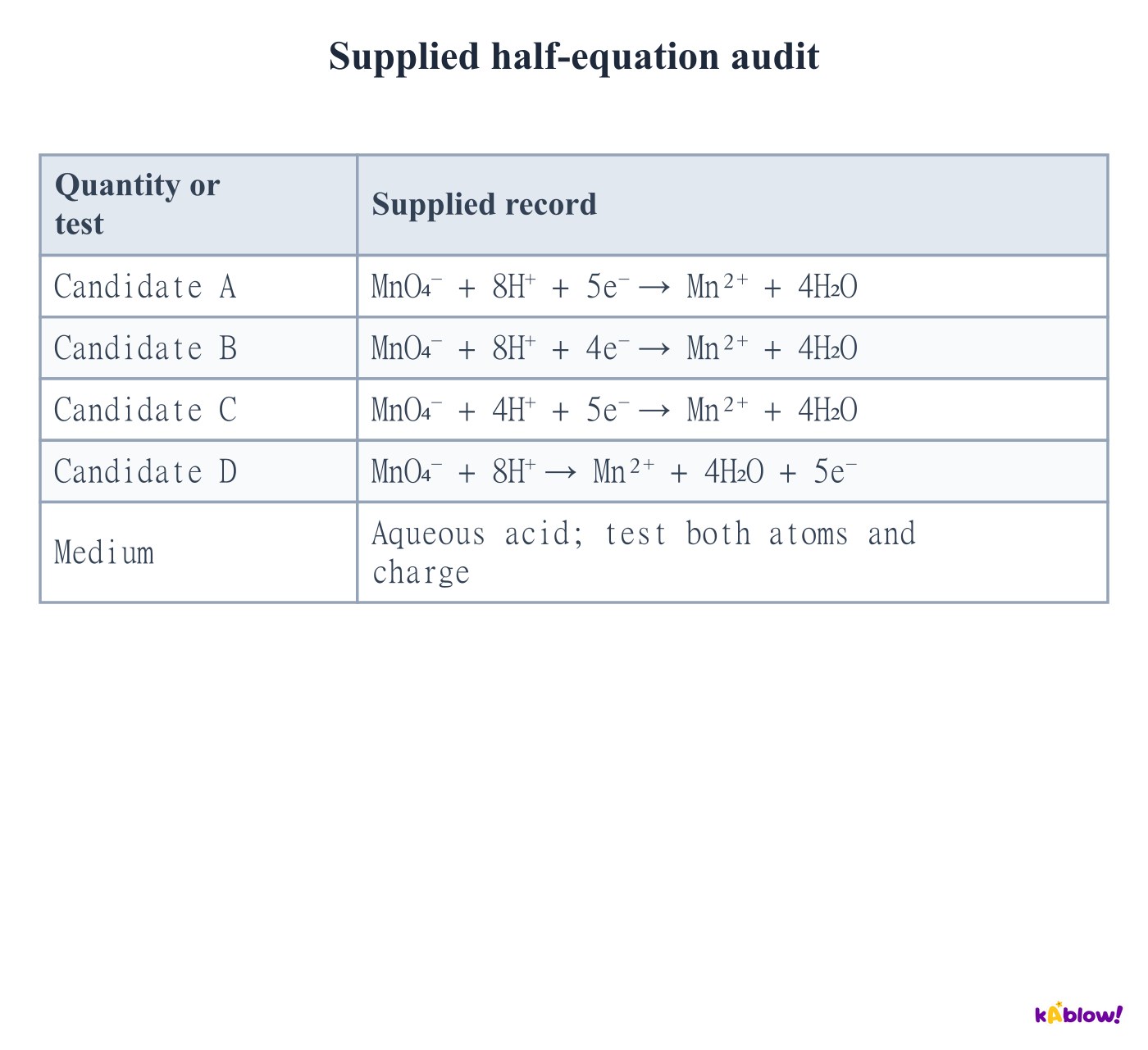
- A valid half-equation conserves each element and total electrical charge. A valid overall redox equation also cancels electrons transferred between its partners.
- For the acidified MnO₄⁻ half-equation, check one manganese, four oxygen, eight hydrogen and equal net charge, rather than checking only one feature.
- An equation can have the correct manganese change but the wrong water, hydrogen-ion or electron coefficient. Record medium, species and the smallest integer ratio as part of the final answer.
Supplied half-equation audit
슬라이드
연습 문제
무료 미리 보기 — 60개 중 8개 문제. 가입하면 전부 볼 수 있어요.
1.In the supplied Mg/Cu²⁺ equation, which reactant is oxidised?
Medium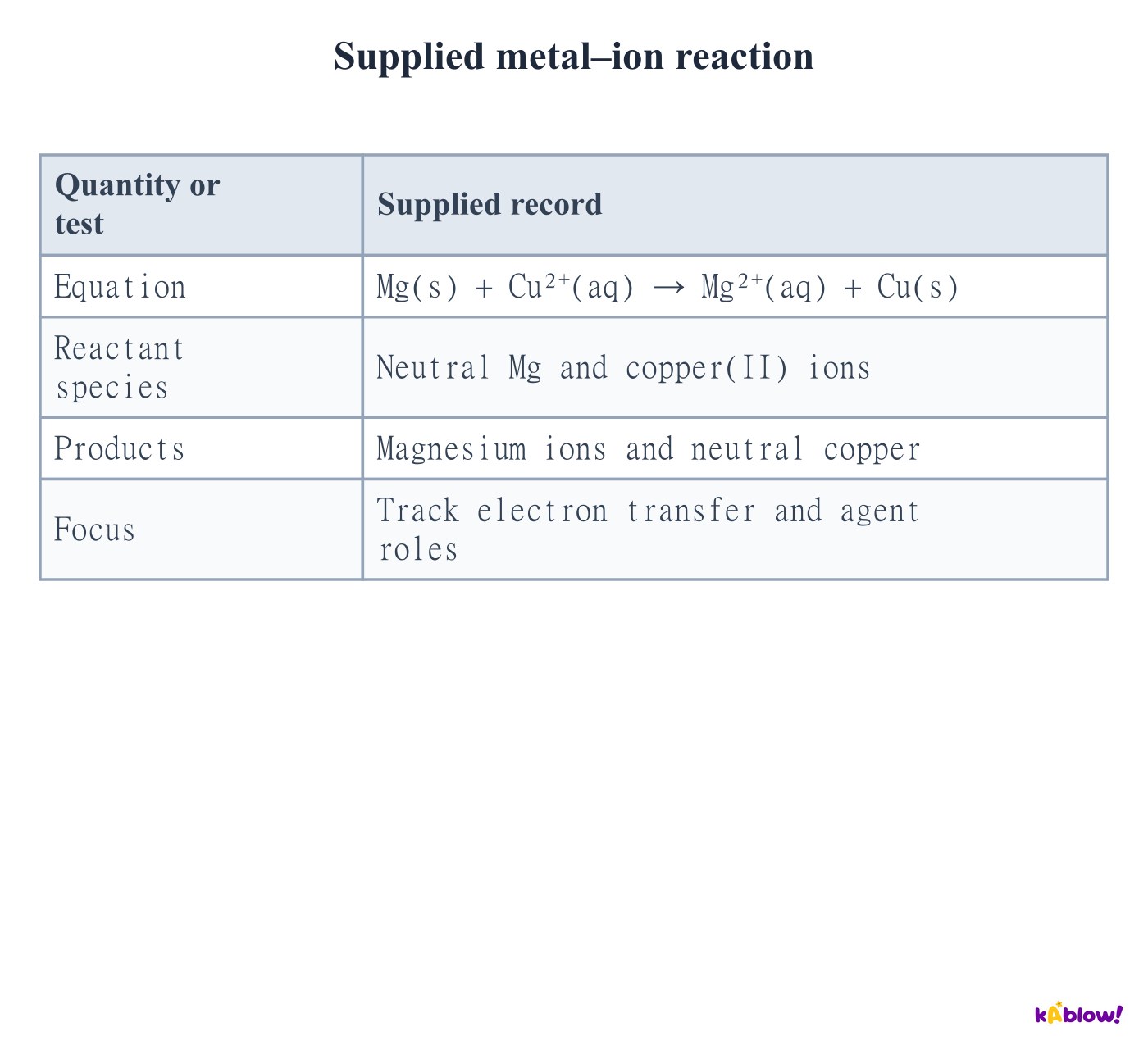
- AMg
- BCu²⁺
- CBoth reactants
- DNeither reactant
2.What oxidation state is assigned to chlorine in the supplied neutral HCl molecule?
Medium- A−1
- B0
- C+1
- D+2
3.Which supplied species has oxidation state +3 for its atom?
Medium- AA
- BB
- CC
- DD
4.What sulfur oxidation state follows for the supplied SO₃?
Medium- A−6
- B−2
- C+3
- D+6
5.What sulfur oxidation state follows for the supplied sulfate ion?
Medium- A−2
- B+2
- C+6
- D+8
6.What oxidation state belongs to hydrogen in supplied compound B, NaH?
Medium- A−1
- B0
- C+1
- D+2
7.What oxidation state belongs to oxygen in supplied compound C, OF₂?
Medium- A−2
- B−1
- C0
- D+2
8.Which Roman numeral belongs to iron in supplied compound B?
Medium- AI
- BII
- CIII
- DVI
기출 문제
이 주제의 기출 문제 연습이 곧 나와요.
곧 출시