교육자를 위해: The CPU and the fetch-decode-execute cycle(Computer Science, Computer Systems)을(를) 위한 바로 쓸 수 있는 수업 슬라이드, 복습 노트 — 수업에 사용하거나, 학습자들이 실시간 게임으로 즐기는 인터랙티브 클래스 활동으로 진행하세요.
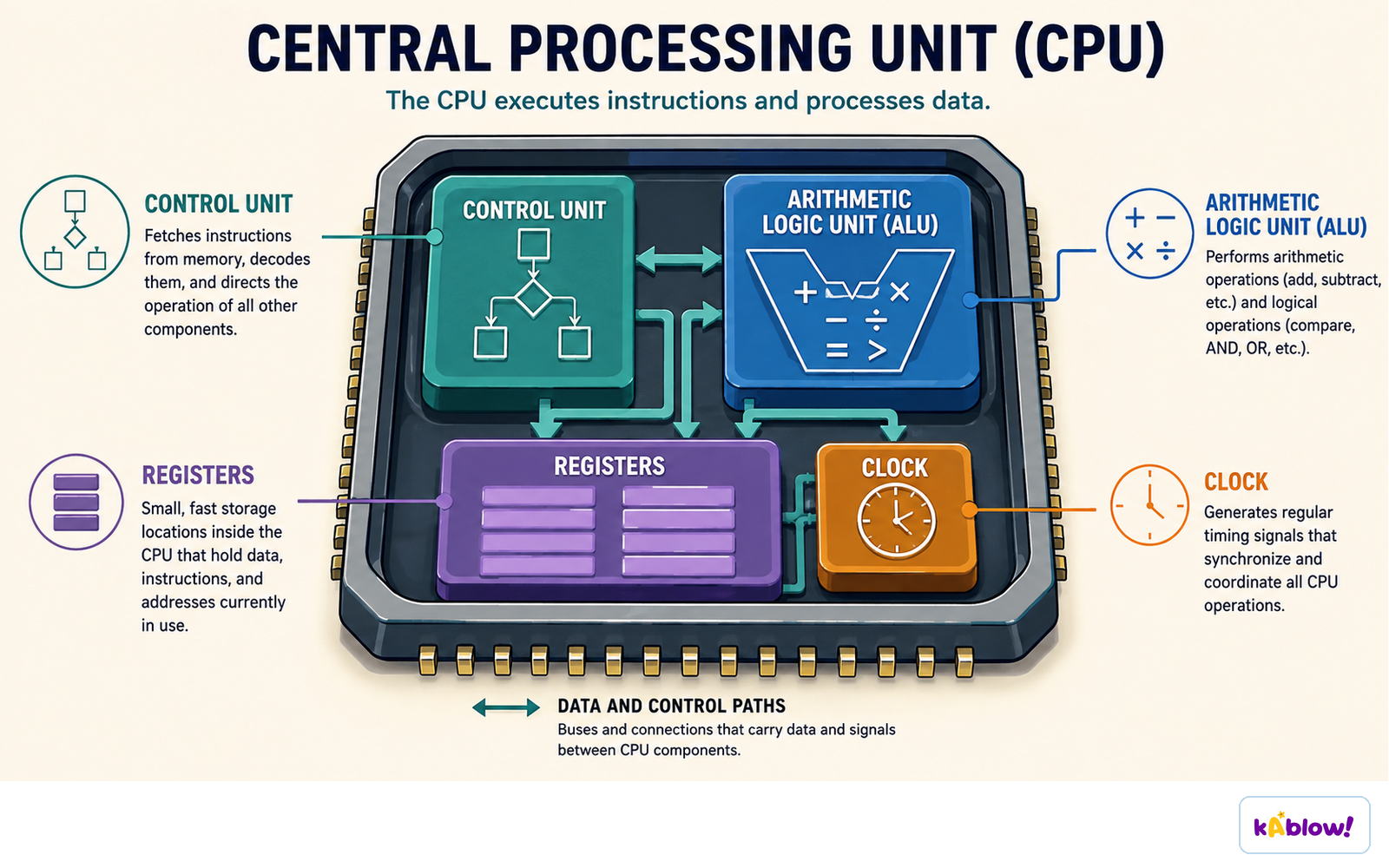
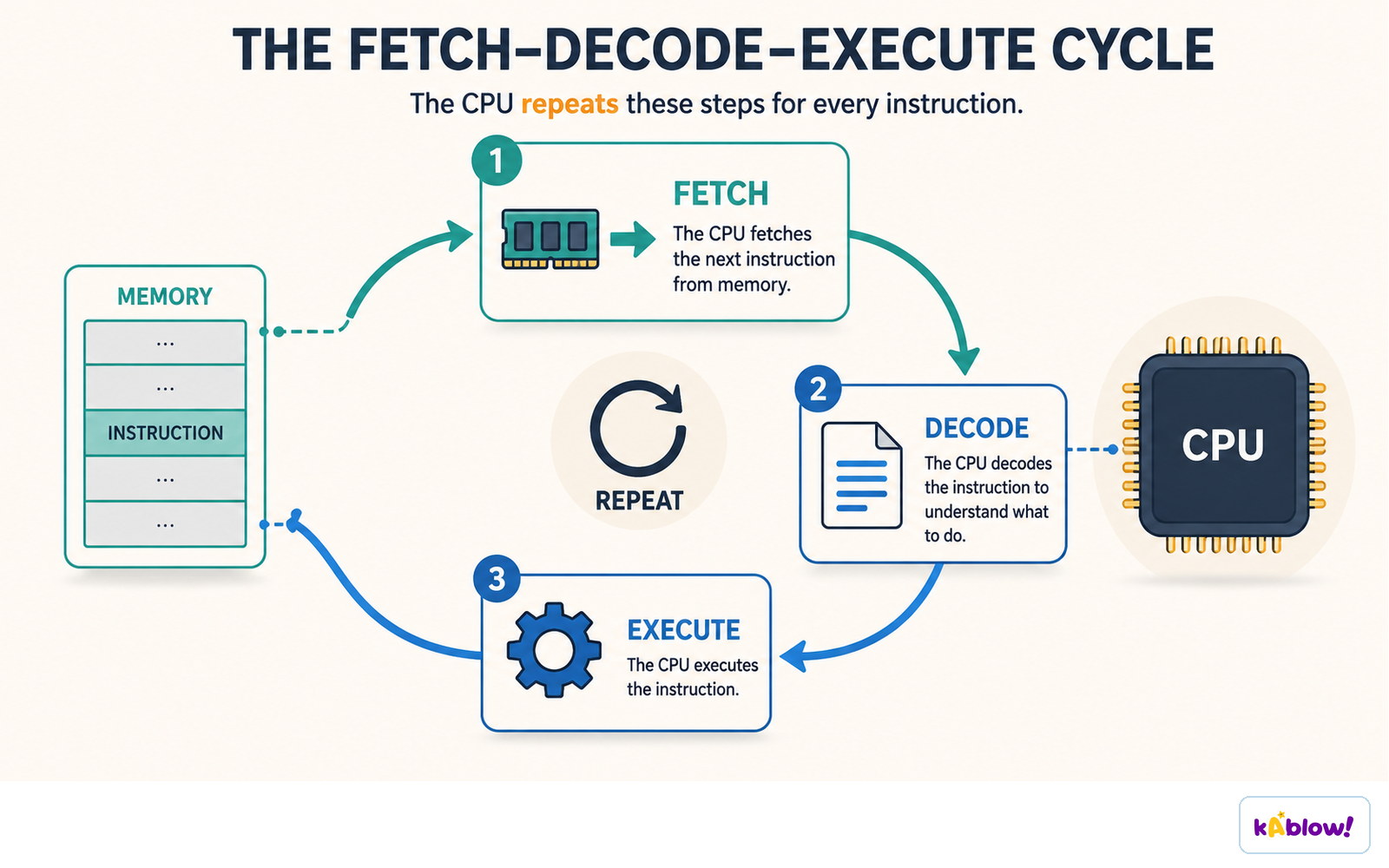
The central processing unit (CPU) is the "brain" of a computer. It fetches instructions from memory, decodes them and executes them.
Components
ALU (arithmetic logic unit): performs calculations and logical comparisons.
Control unit (CU): directs the operation of the CPU, controlling the flow of data and instructions.
Registers: very fast storage inside the CPU: program counter (PC) (address of the next instruction), memory address register (MAR), memory data register (MDR), accumulator (ACC) (stores results).
Cache: small, very fast memory close to the CPU holding frequently used data.
CPU components
The fetch-decode-execute cycle
Fetch: the PC's address is copied to the MAR; the instruction at that address is fetched into the MDR; the PC increments.
Decode: the control unit decodes the instruction.
Execute: the instruction is carried out (the ALU may calculate).
Fetch, decode and execute
Performance
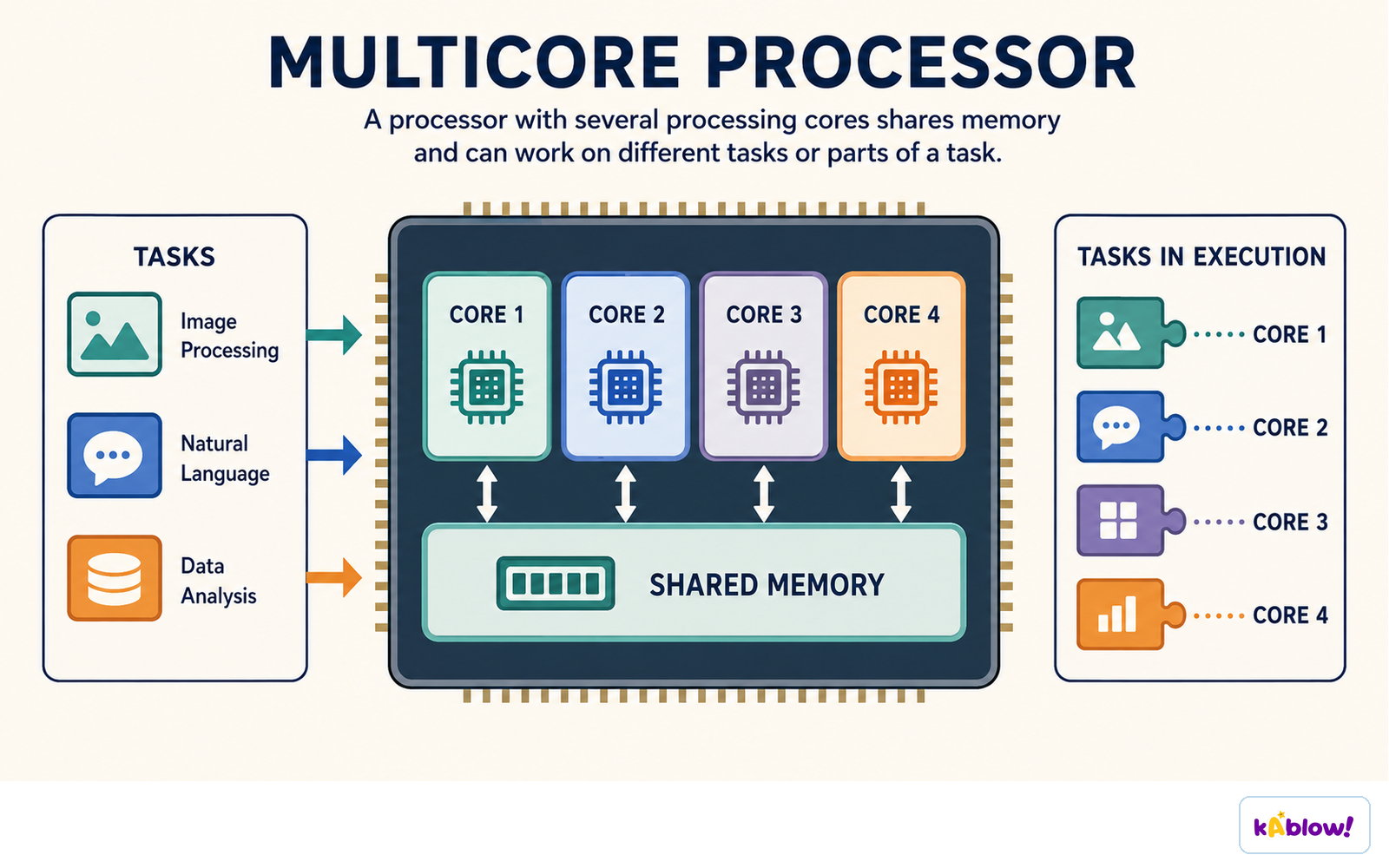
Clock speed (GHz: cycles per second), number of cores (more can run tasks in parallel), and cache size affect speed.
Multiple processor cores
Von Neumann architecture
Instructions and data are stored in the same memory. Embedded systems (e.g. washing machine controller) are dedicated computers.
슬라이드
Sign up free to view the lesson slides
Step through every slide for this topic — plus flashcards and revision notes — with a free account.