교육자를 위해: Arrays, lists and records(Computer Science, Programming)을(를) 위한 바로 쓸 수 있는 수업 슬라이드, 복습 노트 — 수업에 사용하거나, 학습자들이 실시간 게임으로 즐기는 인터랙티브 클래스 활동으로 진행하세요.
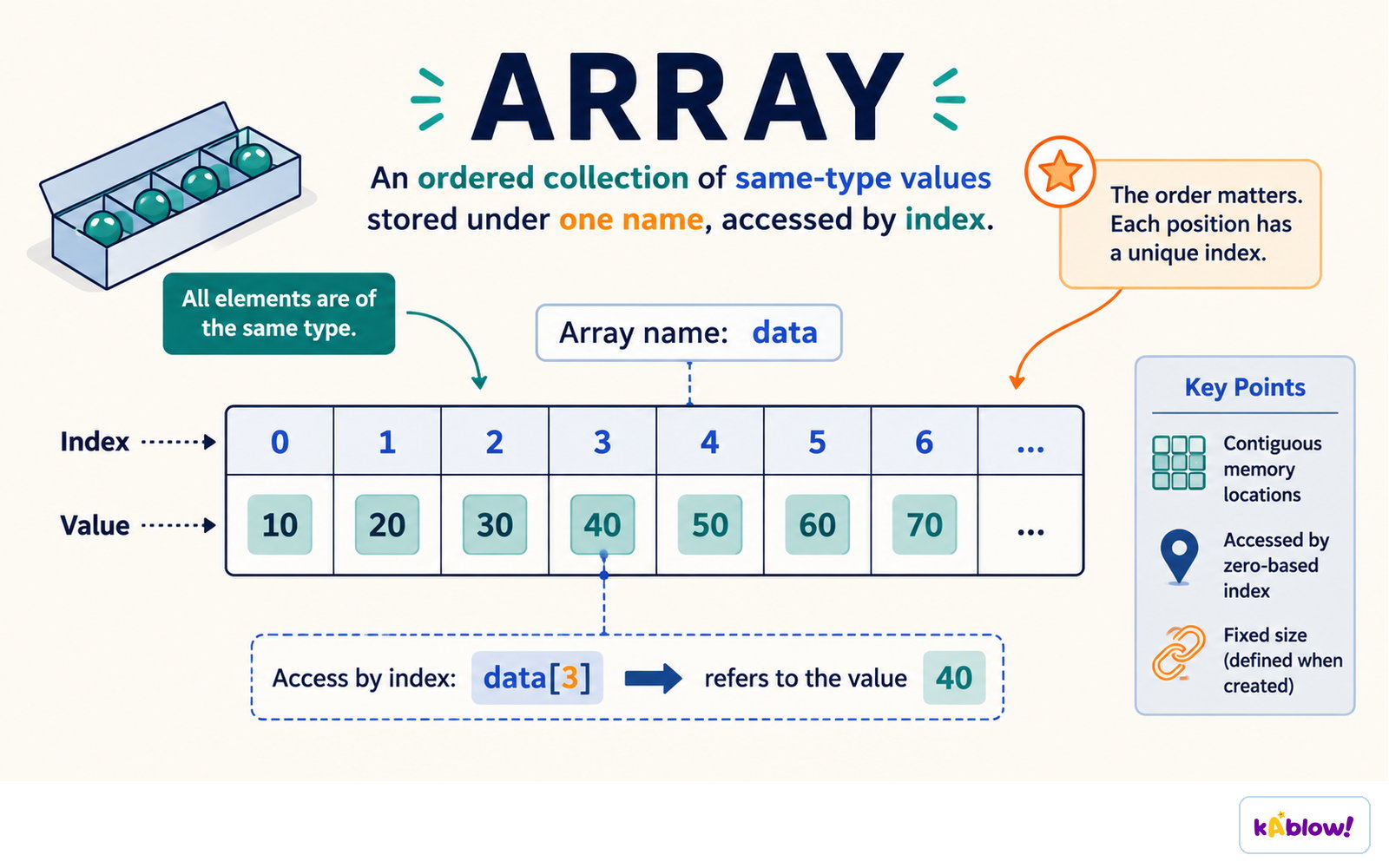
An array stores multiple values of the same data type under one name. Each item has an index (usually starting at 0). Example: scores = [12, 8, 15]; scores[0] is 12.
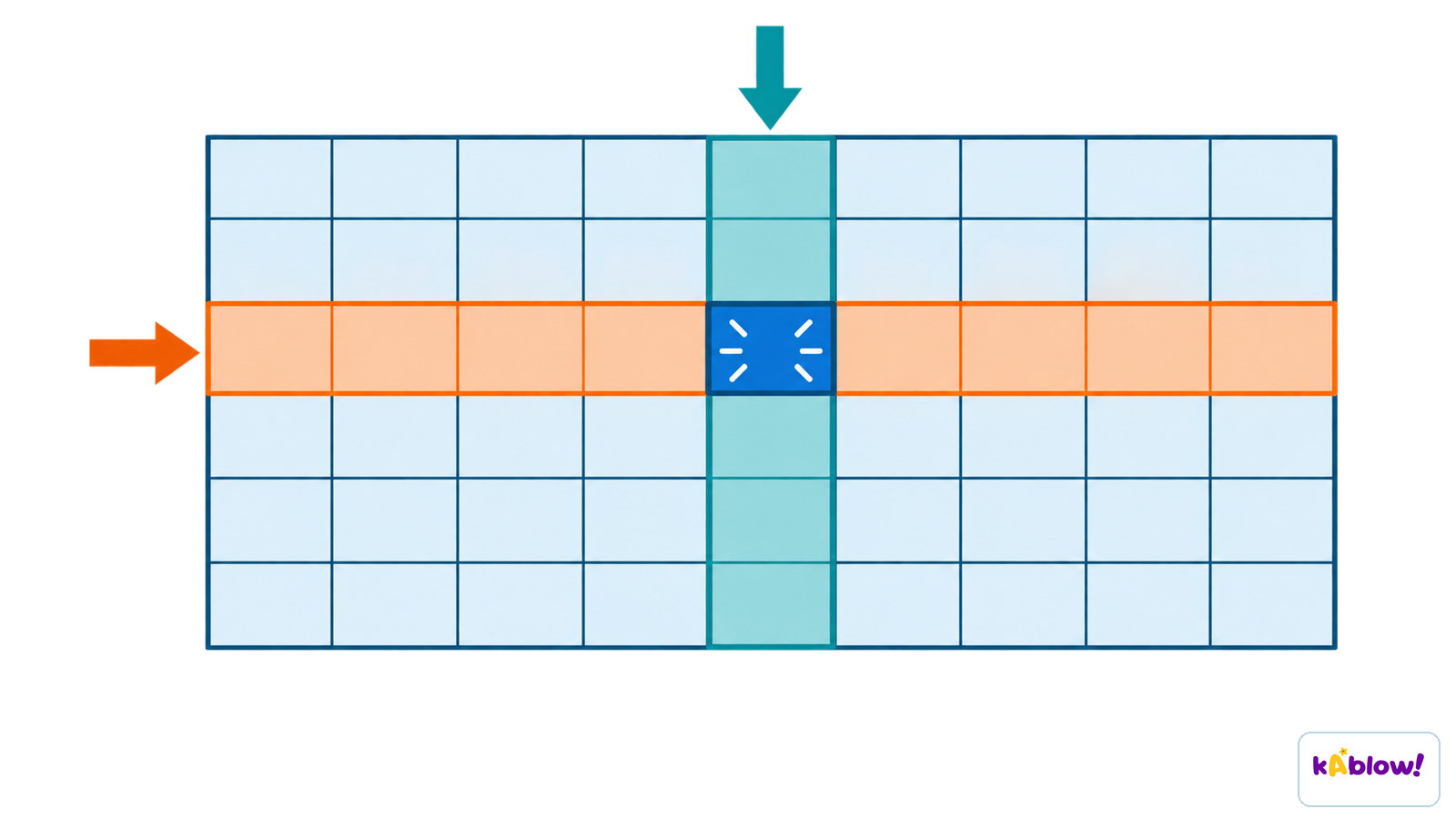
One-dimensional (1D) arrays are lists; two-dimensional (2D) arrays are tables with rows and columns: grid[row][column].
Arrays have a fixed size in many languages; lists may grow.
Indexed array
Using arrays
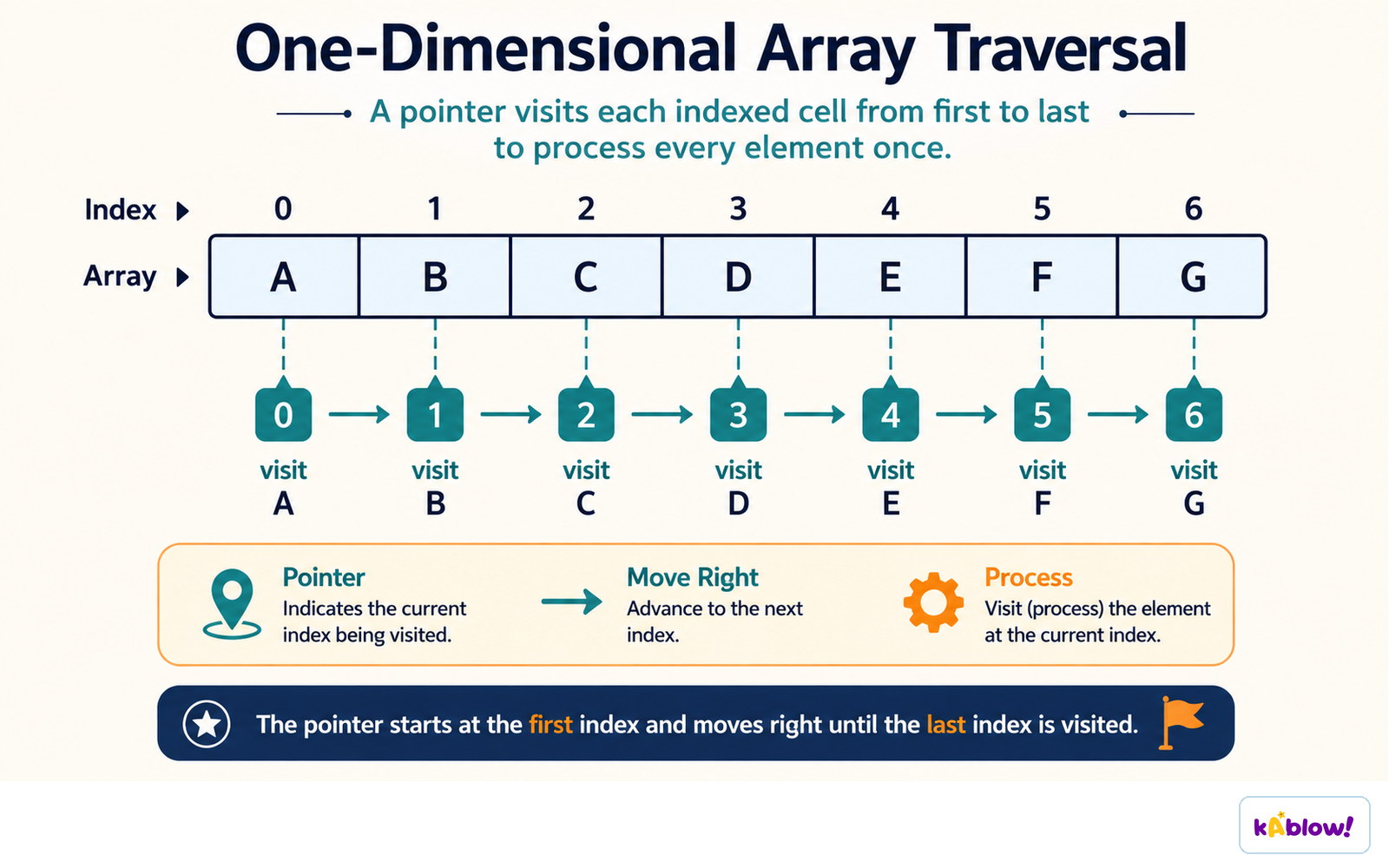
Traversal visits elements using their valid indices. For total = 0 and scores = [12, 8, 15], an inclusive FOR loop from 0 to 2 adds all three elements to give 35.
Initialise an accumulator before adding values. For a maximum search, initialise from the first element of a non-empty array rather than assuming zero is a valid starting maximum.
Array traversal
Records
A record groups named fields about one entity, such as a student’s name, age and grade. Fields may have different types.
Collections of records may be held in files or database tables; not every record file by itself is a database system.
When to use
Use arrays for lists of the same type; records for related fields of different types.
Advantages
Arrays avoid many separate variables, make code shorter and loops possible.
Two-dimensional arrays
grid[row][column]
Rows and columns
Nested loops
Accessing a two-dimensional array
슬라이드
Sign up free to view the lesson slides
Step through every slide for this topic — plus flashcards and revision notes — with a free account.