
Strings and string handling
플레이하며 배우기
이 문제들을 풀어 에너지를 얻은 뒤 낚시하고 탐험하세요. 계정이 필요 없어요.
교육자를 위해: Strings and string handling(Computer Science, Programming)을(를) 위한 바로 쓸 수 있는 수업 슬라이드, 복습 노트 — 수업에 사용하거나, 학습자들이 실시간 게임으로 즐기는 인터랙티브 클래스 활동으로 진행하세요.
수업 노트
What a string is
- A string is a sequence of characters (letters, digits, symbols). Strings are written in quotation marks: "Hello".
Zero-based string positions
Common operations
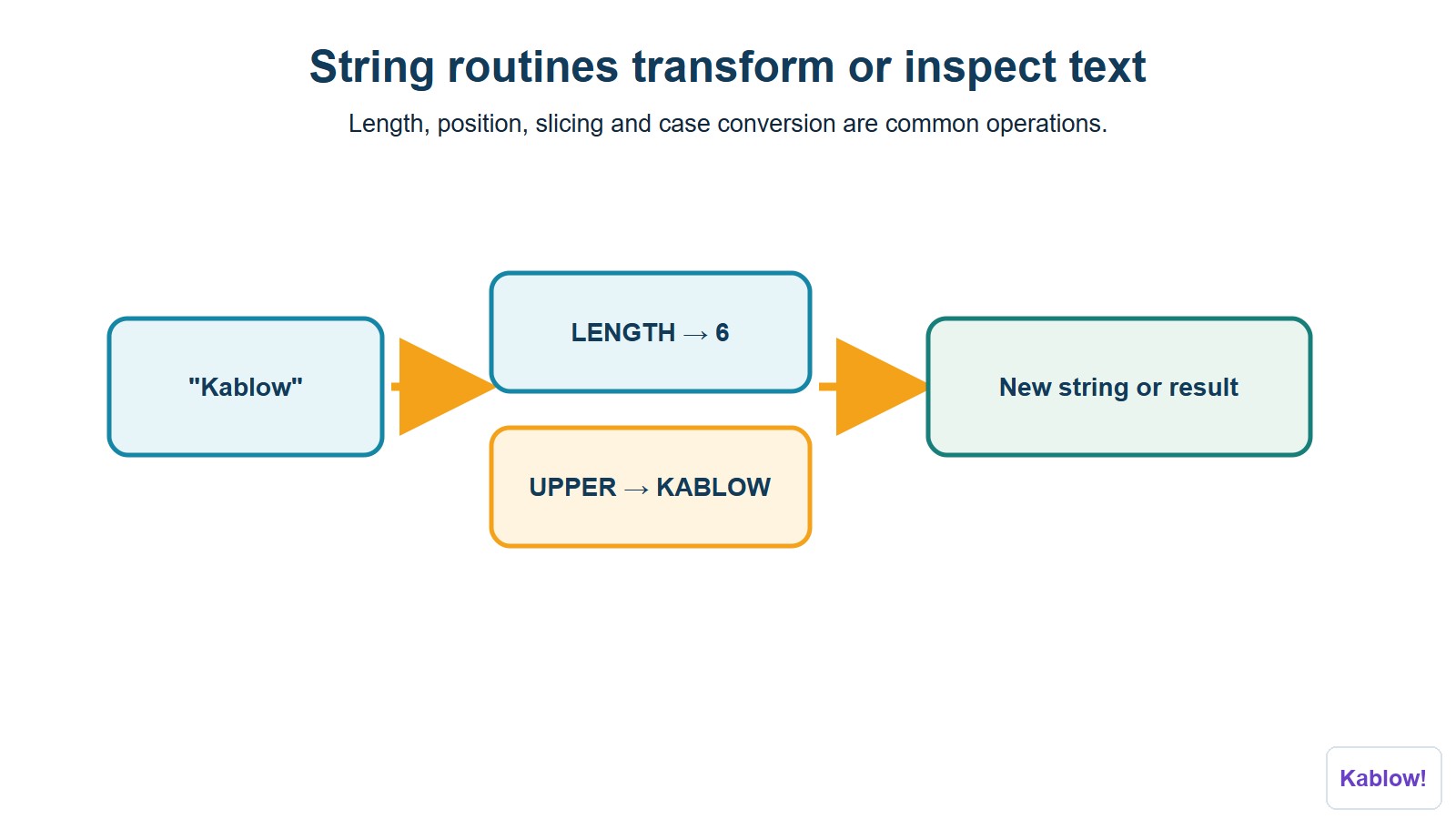
- Length: LEN("Hello") = 5.
- Concatenation: joining strings: "Hello" + " " + "World" = "Hello World".
- Substrings: part of a string by position (usually starting at 0): "Computer".SUBSTRING(0,3) = "Com".
- Case: UPPER and LOWER convert the case.
- Position/indexing: the first character is at index 0.
- Searching: finding where a character or word appears; checking if a string contains a substring.
- ASCII conversion: ASC("A") = 65 and CHR(65) = "A".
String length and case
Comparing strings
- For the simple ASCII examples here, comparison is case-sensitive and follows character codes: apple comes before banana and A differs from a.
- Language-specific collation and Unicode processing can differ; state comparison and normalisation rules when needed.
Common tasks
- Reverse a non-empty string by visiting indices LEN(s) − 1 down to 0 and appending each character to an initially empty result.
- A palindrome equals its reverse under the chosen comparison rules. Check for an empty string before accessing s[0]; counting vowels can use traversal and selection.
Casting and conversion
- Convert numbers to strings and back when joining or calculating.
ASCII conversion
- ASC gives a character code
- CHR gives the character
- ASC("A") = 65
Characters and ASCII codes
슬라이드
연습 문제
무료 미리 보기 — 33개 중 8개 문제. 가입하면 전부 볼 수 있어요.
1.What is a string?
Easy- Aa sequence of characters
- Ba whole number
- CTrue or False
- Da decimal
2.What is concatenation?
Easy- Ajoining strings together
- Bsplitting strings
- Cdeleting strings
- Dsorting strings
3.Using the zero-based indexing convention in this lesson, what is the first character’s index?
Easy- A0
- B1
- C-1
- D2
4.What does UPPER("abc") return?
Easy- A"ABC"
- Bthe number 3
- C"CBA"
- Dan error
5.What does LEN do?
Easy- Areturns the number of characters
- Breturns the first character
- Cjoins strings
- Ddeletes characters
6.Using zero-based start and a length argument, what is "Hello".SUBSTRING(1,3)?
Easy- A"ell"
- B"Hel"
- C"llo"
- D"Hello"
7.What is LEN("Hello World")?
Easy- A11
- B10
- C12
- D2
8.What is "Good" + " " + "Day"?
Easy- A"Good Day"
- B"GoodDay"
- C"Good Day"
- D"Day Good"
기출 문제
이 주제의 기출 문제 연습이 곧 나와요.
곧 출시