교육자를 위해: Macbeth: themes, language and structure(English Literature, Shakespeare)을(를) 위한 바로 쓸 수 있는 수업 슬라이드, 복습 노트 — 수업에 사용하거나, 학습자들이 실시간 게임으로 즐기는 인터랙티브 클래스 활동으로 진행하세요.
Ambition and power: Macbeth's "vaulting ambition" drives him; unchecked ambition leads to tyranny and self-destruction.
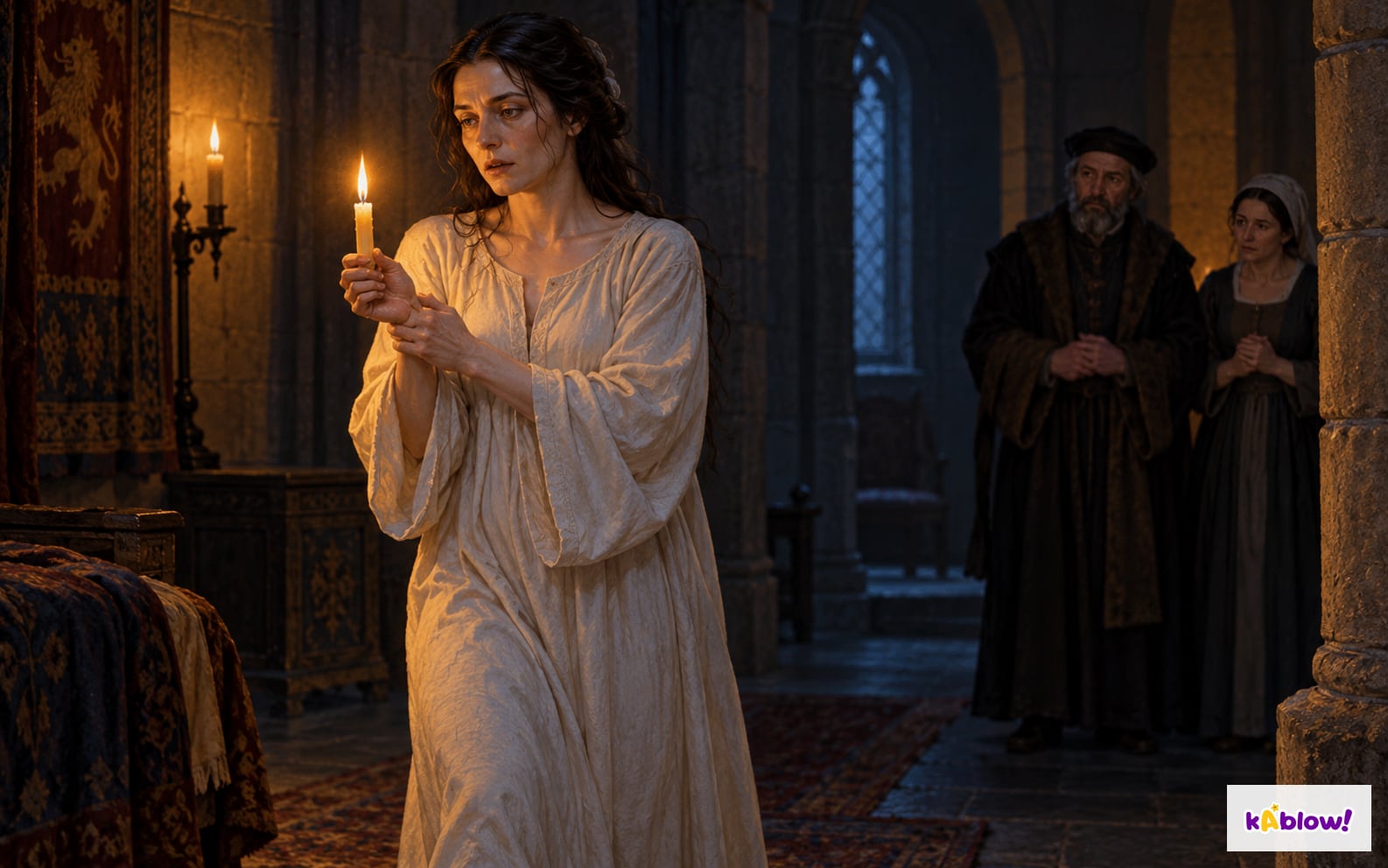
Guilt and conscience: distinguish the dagger vision before Duncan’s murder from the blood, banquet and sleepwalking scenes later. Banquo’s ghost can support psychological and supernatural readings.
Fate and free will: do the Witches control Macbeth, or does he choose to kill? Shakespeare leaves it open.
Appearance and reality: "Fair is foul, and foul is fair"; Lady Macbeth advises Macbeth to "look like the innocent flower, / But be the serpent under't".
Kingship and tyranny: Duncan is a good king; Macbeth becomes a tyrant who rules by fear.
Prediction and human response
Language and imagery
Blood, darkness, sleep, disease and clothing recur. Explain the particular wording and dramatic context rather than assigning a permanent one-word meaning to every image.
Soliloquy conventionally presents private thought as if unheard by others. Dramatic irony depends on a gap in knowledge. Macbeth’s dagger speech precedes Duncan’s murder; its imagined or supernatural status can be explored through performance.
An imagined stain
Structure
The tragedy moves from Macbeth’s military honour through violent kingship to defeat. Ambition, choices and pressures contribute to his fall; hamartia can denote an error or flaw. Malcolm’s accession suggests restored legitimacy, but an essay can qualify how fully order is repaired.
Two dramatic techniques
슬라이드
Sign up free to view the lesson slides
Step through every slide for this topic — plus flashcards and revision notes — with a free account.