Much Ado About Nothing: themes, language and structure
플레이하며 배우기
이 문제들을 풀어 에너지를 얻은 뒤 낚시하고 탐험하세요. 계정이 필요 없어요.
교육자를 위해: Much Ado About Nothing: themes, language and structure(English Literature, Shakespeare)을(를) 위한 바로 쓸 수 있는 수업 슬라이드, 복습 노트 — 수업에 사용하거나, 학습자들이 실시간 게임으로 즐기는 인터랙티브 클래스 활동으로 진행하세요.
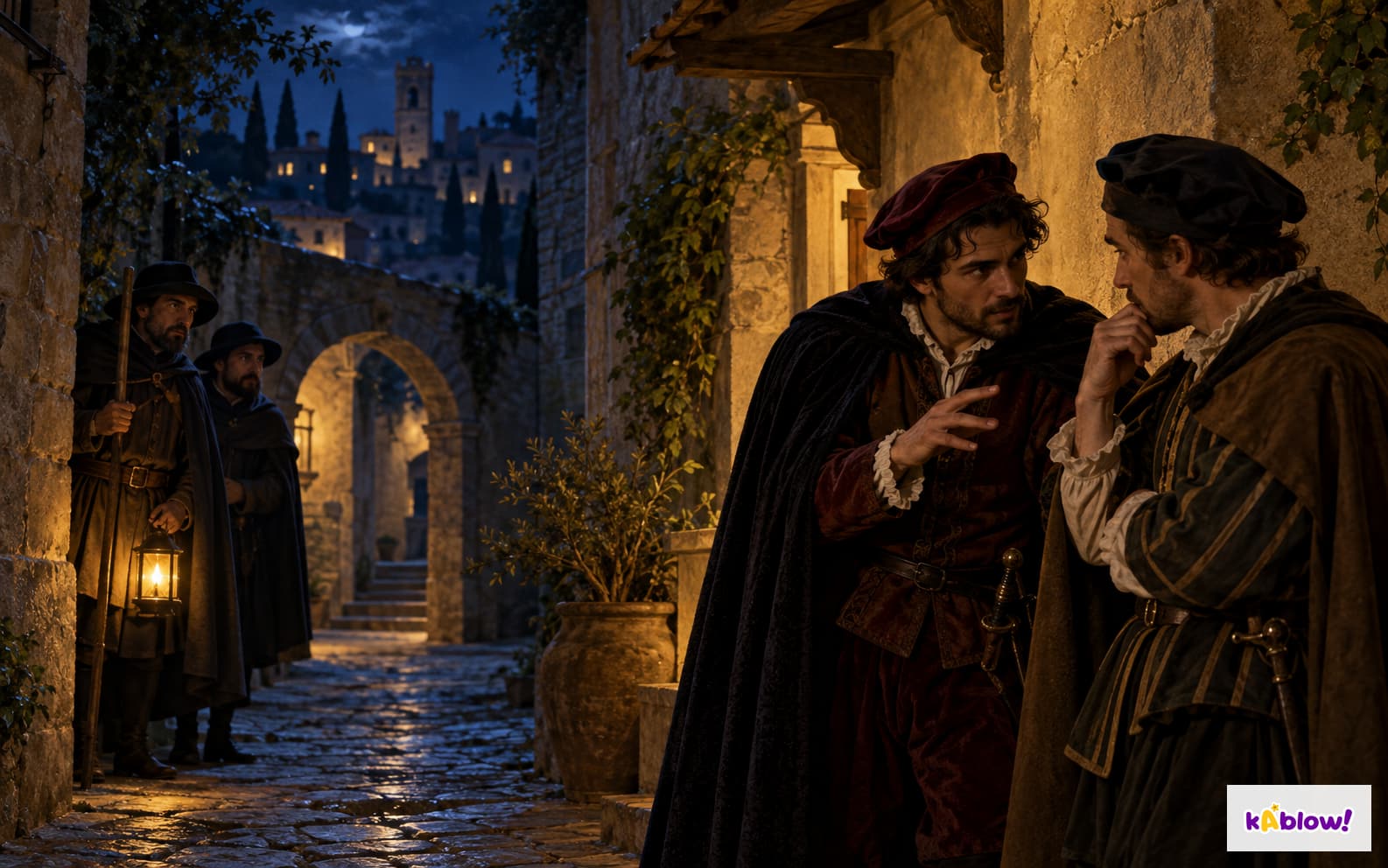
Deception and appearance: the plot depends on tricks: masks at the ball, the overhearing scenes, and Don John's slander. People are fooled by what they see and hear.
Love and courtship: Claudio and Hero's conventional romance contrasts with Beatrice and Benedick's witty relationship, which grows from "merry war" to love.
Manipulated evidence threatens reputation. Claudio’s understanding of honour can be read as a justification for cruelty; the play allows that understanding to be questioned.
Beatrice voices anger at limits placed on her. Hero is not literally silent: she denies wrongdoing but is not believed. Compare power and credibility rather than treating women as uniformly passive.
Wit and wordplay: language is a weapon and a game.
Who discovers the truth?
Language
Verse and prose can shape rhythm, formality and relationships. Beatrice and Benedick often use prose for wit despite their rank; Claudio and Hero also vary language by situation. Explain the passage rather than imposing a mechanical class rule.
Puns: "nothing"/"noting" (overhearing); malapropisms by Dogberry ("comprehended two auspicious persons").
Imagery of war, animals and disease; Beatrice's lines such as "I had rather hear my dog bark at a crow than a man swear he loves me".
Words and dramatic knowledge
Structure
The two principal courtships interweave with slander and discovery. Helpful and harmful deception can be compared. Anticipated weddings and a closing dance suggest reconciliation without proving every injury fully repaired.
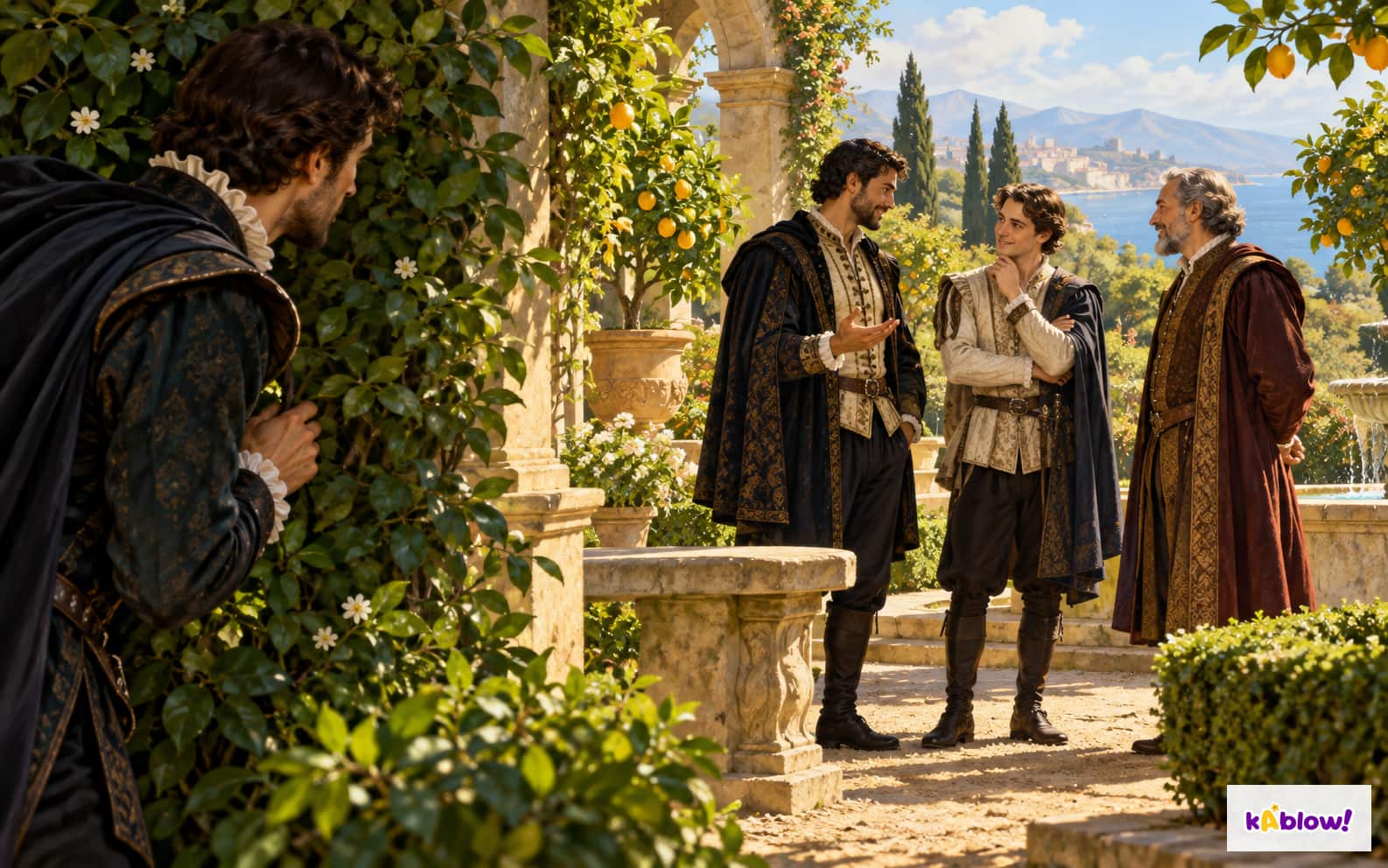
Dramatic irony in the garden
슬라이드
Sign up free to view the lesson slides
Step through every slide for this topic — plus flashcards and revision notes — with a free account.