
Weimar and Nazi Germany: life in Nazi Germany
플레이하며 배우기
이 문제들을 풀어 에너지를 얻은 뒤 낚시하고 탐험하세요. 계정이 필요 없어요.
교육자를 위해: Weimar and Nazi Germany: life in Nazi Germany(History, Period Study)을(를) 위한 바로 쓸 수 있는 수업 슬라이드, 복습 노트 — 수업에 사용하거나, 학습자들이 실시간 게임으로 즐기는 인터랙티브 클래스 활동으로 진행하세요.
수업 노트
Women and the family
- The regime promoted a restrictive domestic ideal often summarised through an older phrase, Kinder, Küche, Kirche. Marriage loans and motherhood awards were selective, operating through racist, hereditary and social criteria; they were not benefits offered equally to every woman. The Mother’s Cross was instituted in 1938, with awards from 1939 and thresholds of four, six and eight children for its grades.
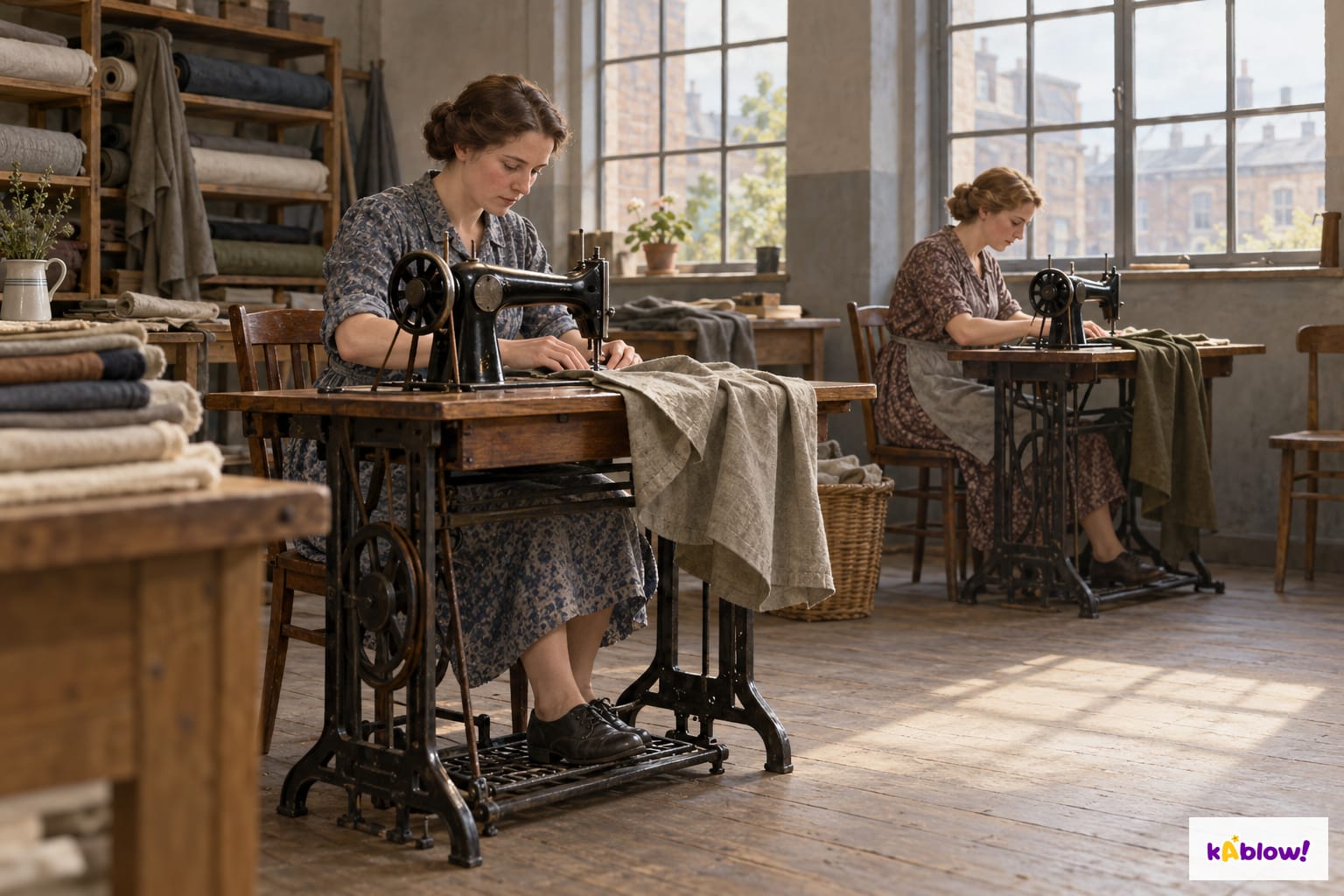
- Many women continued paid work, while restrictions on professions and pressure to leave some jobs coexisted with labour demands. Women’s experiences differed by occupation, class, race as defined by the regime and political circumstances. Women could participate in persecution, resist it or become victims; no one domestic image captures all lives.
- Lebensborn was founded by the SS in late 1935 to provide maternity, financial and related support for selected mothers and children. Its racial-value claims were false ideology. During war it also became complicit in kidnapping foreign children; it should not be presented as neutral welfare or a sensationalised universal breeding programme.
Ideals and lived work could conflict
Young people
- Schools and youth organisations promoted obedience, antisemitism, militarism and pseudoscientific racial ideas. Teachers and curricula faced ideological control; individual participation and response still varied.
- The wider Hitler Youth movement had age and gender sections. Boys aged about 10–14 belonged to the German Young People and 14–18 to the boys’ Hitler Youth branch; girls had corresponding younger and BDM sections. The 1936 law established a framework for incorporation and the March 1939 service regulations strengthened compulsion. Eligibility was discriminatory, excluding Jewish children and others.
- Activities, camps, sport, uniforms and peer pressure could attract some children, while coercion restricted alternatives. Some young people resisted or rejected official culture through varied groups, including Swing Youth and Edelweiss Pirates. Their activities changed over time and should not be treated as one uniform political programme.
Separate rules from experience
Work and the economy
- Schacht held central banking and economic posts while Göring took responsibility for the Four Year Plan in 1936. Their roles overlapped and conflicted; Schacht left the Economics Ministry in 1937 and the Reichsbank in 1939. The economy was not run by a simple succession of two sole managers.
- Rearmament, recovery, public works and service obligations contributed to employment changes. Conscription in 1935 and compulsory male labour service affected the labour force. Official statistics depend on definitions, registration and exclusions; avoid the blanket claim that every woman and Jew was omitted from every count. A falling total did not establish equal prosperity or free choice.
- Independent unions were destroyed and replaced by the DAF. Strength Through Joy offered leisure and some holidays, while Beauty of Labour promoted workplace facilities and appearance. Benefits existed alongside exclusion, control, costs to workers and loss of bargaining rights.
- Autarky meant a drive toward self-sufficiency for war preparation. Germany continued to need imports and faced resource problems; the aim was not fully achieved. Economic output and employment need to be assessed alongside rearmament priorities, coercion and persecution.
A figure or benefit needs context
Persecution
- Boycotts, intimidation and violence occurred from 1933, alongside exclusion from employment and public life. The April 1933 civil-service law had initial exemptions and later tightening; exclusion was a process, not the instant removal of every Jewish professional.
- The two Nuremberg Laws of September 1935 denied Jews full Reich citizenship and imposed racist restrictions on marriage and sexual relations. Implementing regulations later classified people through ancestry. These were discriminatory legal constructs, not valid biological divisions or proof of racial purity.
- The state-sponsored pogrom of 9–10 November 1938 attacked Jewish people, homes, businesses and synagogues across Germany and annexed territories. Nazi leaders exploited a diplomat’s shooting as a pretext. Hundreds died during and after the violence; the often repeated 91 is not a complete death toll. Around 30,000 men were arrested, with many sent to concentration camps. The regime imposed a billion-Reichsmark fine on the victim community and intensified dispossession and forced emigration.
- Roma and Sinti, gay men, disabled people, Jehovah’s Witnesses, political opponents and people branded asocial by the regime faced varied forms of persecution. Different groups were not treated through identical policies. Lesbians were treated differently from gay men but could face harassment or persecution on other grounds. Nazi labels should be identified critically rather than adopted as descriptions of people’s worth.
Escalation involved overlapping policies
Wartime escalation and genocide
- Forced sterilisation began under a 1933 law. In autumn 1939 Hitler authorised a programme of murdering disabled patients, backdating the authorisation to 1 September. The adult T4 killing operation developed in 1940; the euphemism euthanasia concealed murder, and related killing continued after its central programme’s formal halt in 1941.
- War and occupation enabled further deportation, forced labour, mass shootings and killing centres. The Holocaust was the systematic persecution and murder of six million European Jews by Nazi Germany and its allies and collaborators. The regime also persecuted and murdered millions of non-Jewish people through distinct but connected policies.
- This brief overview gives essential later context rather than a complete study of the Holocaust or every group’s experience. Trace decisions, institutions and perpetrators without making escalation appear inevitable or confusing the victims’ experiences with those of people included in the regime’s favoured national community.
Distinguish persecution and later escalation
슬라이드
연습 문제
무료 미리 보기 — 37개 중 8개 문제. 가입하면 전부 볼 수 있어요.
1.What was the boys’ branch of the Hitler Youth movement?
Easy- Aa Nazi organisation for boys
- Ba party for old men
- Ca school
- Dthe army
2.What did the DAF replace?
Easy- Athe army
- Bthe Church
- Cthe police
- Dtrade unions
3.What was the aim of the Four Year Plan (1936)?
Easy- Adisarmament
- Bdemocracy
- Cself-sufficiency and rearmament
- Dfree trade
4.What was Strength Through Joy?
Easy- Aa secret police
- Ba scheme offering leisure and holidays
- Ca prison
- Da party
5.Who led the Four Year Plan?
Easy- AHermann Goering
- BHimmler
- CRöhm
- DHess
6.What was Kristallnacht?
Easy- Aa holiday
- Ba battle
- Ca party meeting
- Dthe state-sponsored anti-Jewish pogrom of 9–10 November 1938
7.Which event did Nazi leaders use as a pretext for the November 1938 pogrom?
Easy- Aa strike
- Ba law
- Cthe shooting of a German diplomat in Paris
- Dthe Olympics
8.What were the Nuremberg Laws?
Easy- Alaws on the army
- Blaws depriving Jews of full Reich citizenship and restricting marriage and sexual relations
- Claws on schools
- Dlaws on trade
기출 문제
이 주제의 기출 문제 연습이 곧 나와요.
곧 출시