
Medicine on the Western Front 1914-18
플레이하며 배우기
이 문제들을 풀어 에너지를 얻은 뒤 낚시하고 탐험하세요. 계정이 필요 없어요.
교육자를 위해: Medicine on the Western Front 1914-18(History, Thematic Study: Medicine in Britain)을(를) 위한 바로 쓸 수 있는 수업 슬라이드, 복습 노트 — 수업에 사용하거나, 학습자들이 실시간 게임으로 즐기는 인터랙티브 클래스 활동으로 진행하세요.
수업 노트
The context
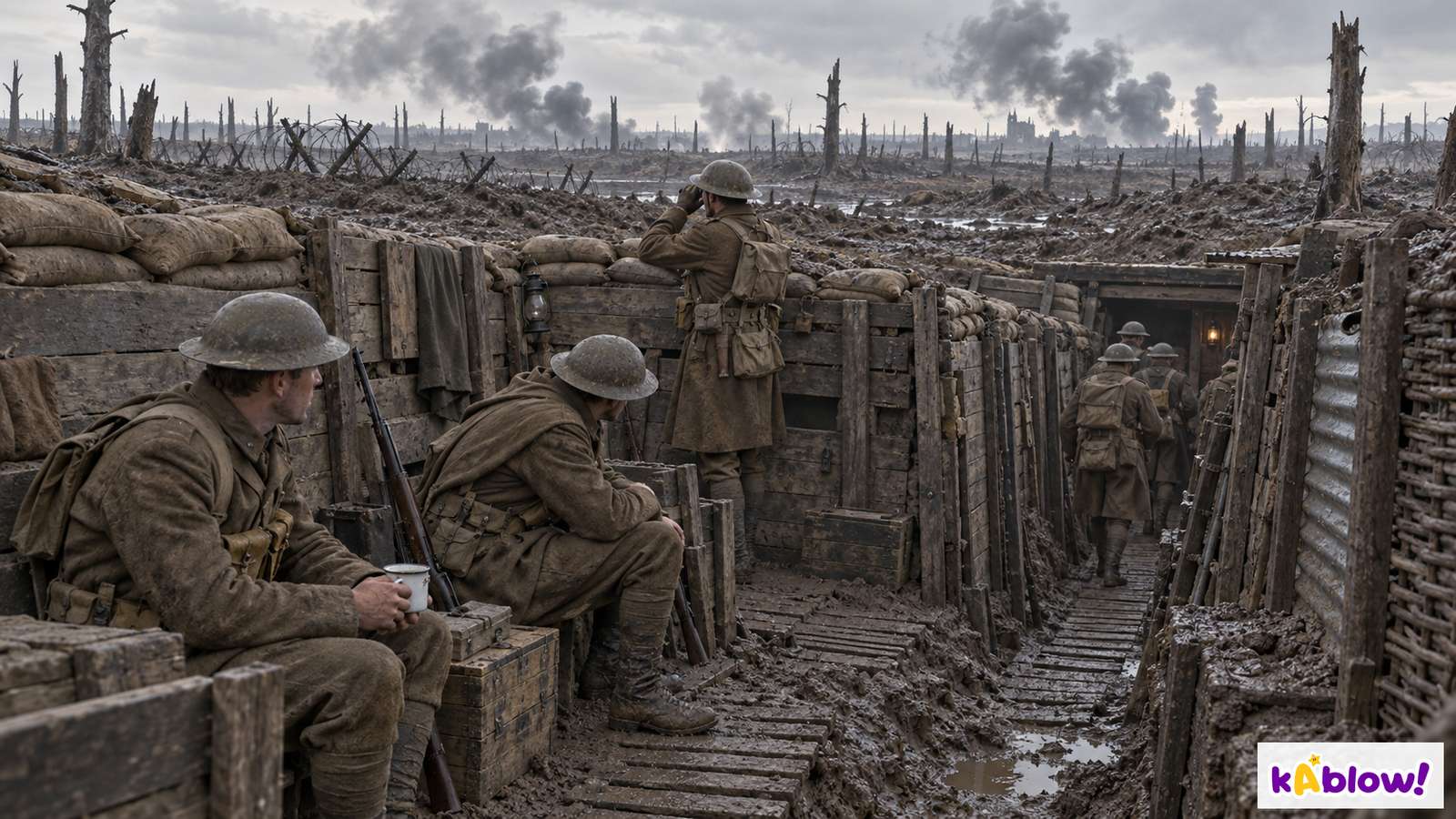
- The British sector lay in parts of France and Belgium, including Flanders. Shells, bullets and gas caused injuries, while wet and cold exposure, lice and disease also harmed health. The wider Western Front should not be reduced to Flanders alone.
- Damaged tissue could be contaminated by soil, clothing and debris; manured farmland contributed bacteria associated with tetanus and gas gangrene. Gas gangrene is a bacterial infection, distinct from chemical-weapon injury. Chlorine chiefly harmed breathing; mustard agent could damage eyes, skin and airways.
Conditions complicate care and evacuation
The evacuation chain
- Regimental Aid Posts usually provided early assessment and aid. Field dressings could be applied earlier, and some walking wounded made their own way. Stretcher-bearers and other transport services worked under fire, through difficult terrain and with limited capacity.
- Advanced and Main Dressing Stations provided further care and organised evacuation. Casualty Clearing Stations provided resuscitation and surgery, with capabilities and locations changing over time. Some serious cases bypassed earlier stages.
- Base hospitals farther from the front provided more treatment. Some casualties returned to duty; others travelled elsewhere, including Britain. Railways, barges, ambulances and ships connected services. The sequence is a useful overview, not a compulsory journey for every patient.
An overview of care, not one compulsory route
Treatments and developments
- Hugh Owen Thomas devised the splint before the war. Robert Jones promoted it for military fractures, and routine supply expanded by 1917. Immobilising a fractured femur limited movement and further damage during evacuation. Commonly quoted mortality percentages require a defined source and population; other improvements also contributed.
- X-rays helped locate bullets and fragments and assess injuries. Curie organised mobile radiology for French forces and trained personnel, while many other services used radiography. Availability varied; the technology did not replace surgery or cure infection.
- Sodium citrate reduced clotting. Preservative solutions, refrigeration, compatibility knowledge and delivery systems also mattered. Oswald Hope Robertson established a pioneering stored-blood depot in 1917; he was distinct from Lawrence Bruce Robertson, another important transfusion practitioner.
- Debridement removed dead or damaged tissue and contaminated material. Carrel–Dakin antiseptic wound care was another approach. Neither guaranteed that infection would be prevented; penicillin treatment was not available in this war.
- The Queen’s Hospital at Sidcup opened in 1917. Gillies worked with multidisciplinary and international teams on facial reconstruction; plastic surgery had earlier precedents and should not be described as invented by one man during the war.
- Shell shock covered varied disabling symptoms, including visible tremor or loss of speech as well as anxiety and nightmares. Doctors debated physical and psychological explanations; patients could face stigma and different treatments. Do not equate the entire historical category with one modern diagnosis.
Development includes practical delivery
Significance
- Urgent need, resources, large numbers of cases and teamwork accelerated some applications and developments, often building on pre-war knowledge. War also inflicted injury, trauma and disruption; its effects should not be described as universally beneficial.
- Evacuation delays, haemorrhage, infection, uneven facilities and overwhelming demand limited outcomes. Particular devices and techniques need to be assessed within the whole care system, not as sole causes of every improvement.
슬라이드
연습 문제
무료 미리 보기 — 33개 중 8개 문제. 가입하면 전부 볼 수 있어요.
1.What does RAP stand for?
Easy- ARegimental Aid Post
- BRapid Aid Point
- CRoyal Army Post
- DRegional Aid Place
2.What does CCS stand for?
Easy- ACentral Care Service
- BCorps Command Site
- CClinic Care Station
- DCasualty Clearing Station
3.What did the Thomas splint treat?
Easy- Agas
- Btrench foot
- Cbroken femurs
- Dhead wounds
4.What was trench foot?
Easy- Aa burn
- Ba painful foot condition from wet, cold conditions
- Ca bone fracture
- Da gas wound
5.What caused gas gangrene?
Easy- Abacteria from soil entering wounds
- Bgas masks
- Cvaccines
- Dtrench foot
6.What did sodium citrate do?
Easy- Acleaned wounds
- Bkilled bacteria
- Creduced pain
- Dacted as an anticoagulant, reducing clotting
7.Who established a pioneering stored-blood depot on the Western Front in 1917?
Easy- AGillies
- BFlorey
- CCaptain Oswald Hope Robertson
- DFleming
8.What was debridement?
Easy- Avaccination
- Bremoving dead or damaged tissue and contaminated material
- Cgiving blood
- DX-ray
기출 문제
이 주제의 기출 문제 연습이 곧 나와요.
곧 출시