Cell Structure & Size Of Specimens
Learn it by playing
Answer these questions to earn energy, then fish and explore. No account needed.
Lesson notes
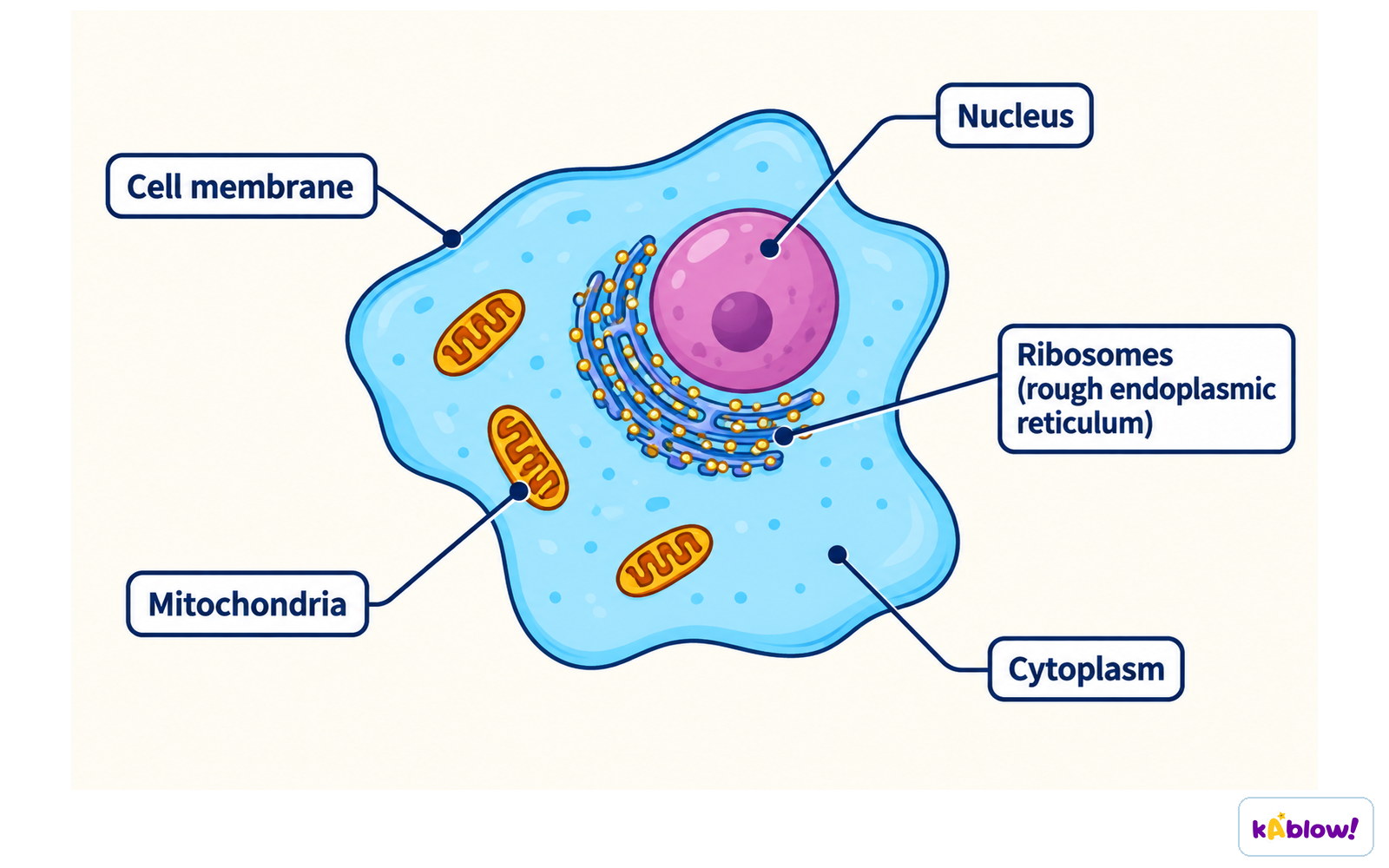
Animal Cell Structure
- Contains a nucleus with a distinct membrane.
- No cellulose cell wall.
- No chloroplasts (cannot photosynthesise).
- Carbohydrates stored as glycogen.
A typical animal cell
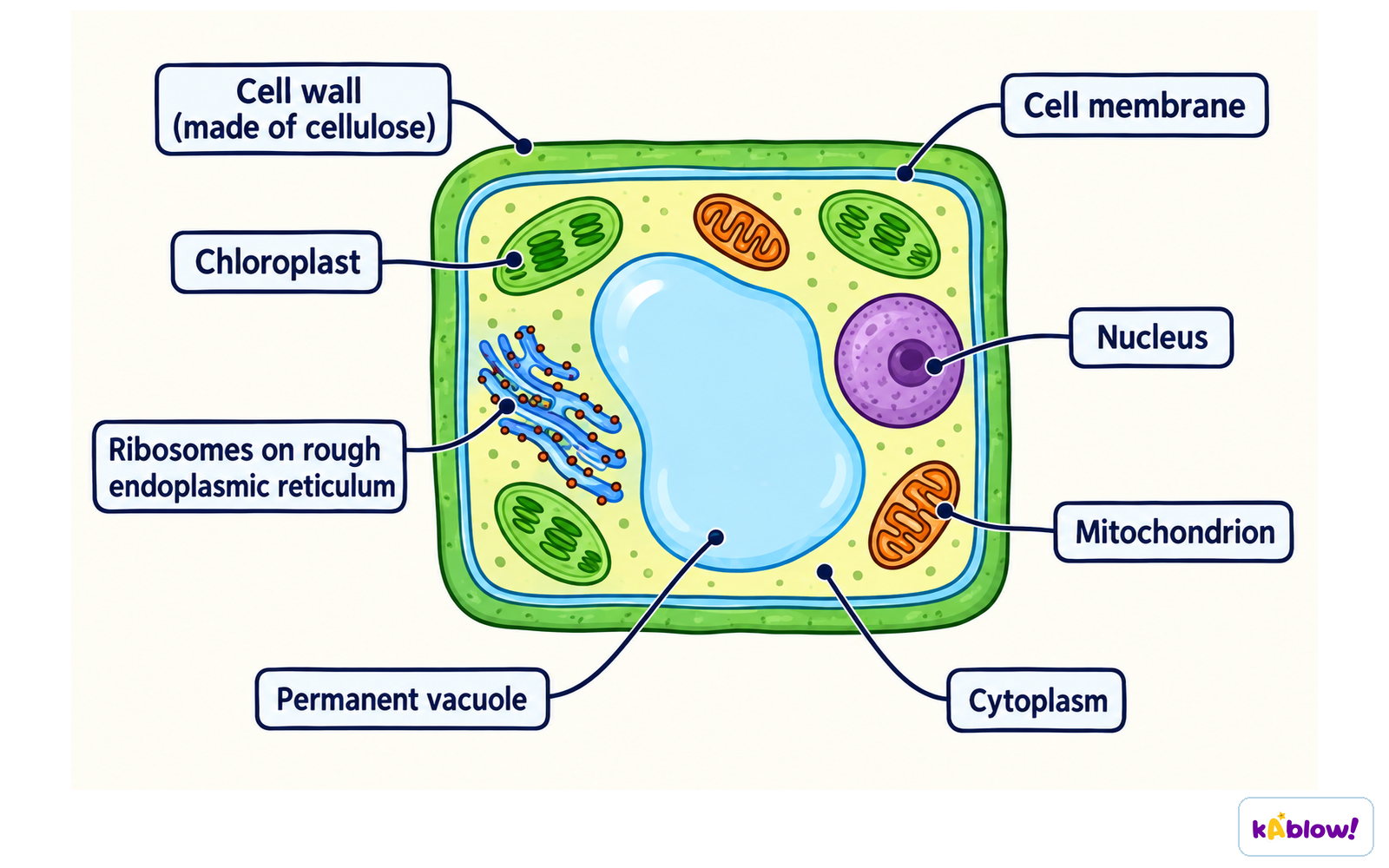
Plant Cell Structure
- Contains a nucleus with a distinct membrane.
- Cell wall made of cellulose.
- Contains chloroplasts for photosynthesis.
- Carbohydrates stored as starch or sucrose.
- Has a permanent vacuole containing cell sap.
A typical plant cell
Common Cell Structures & Functions
- Nucleus: contains DNA, controls cell activities.
- Cytoplasm: gel-like, site of chemical reactions.
- Cell membrane: controls entry/exit of substances.
- Ribosomes: site of protein synthesis.
- Mitochondria: site of aerobic respiration.
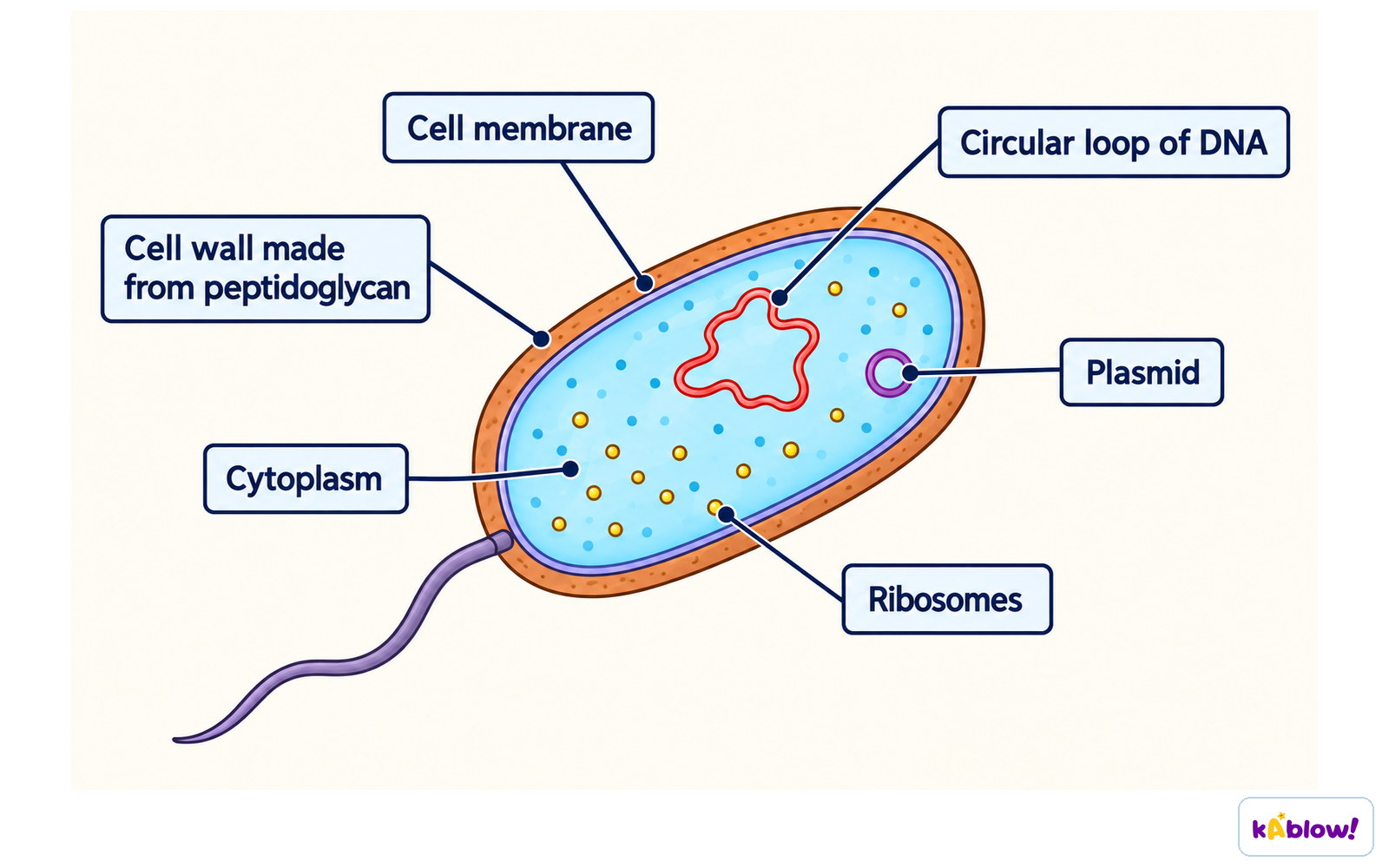
Bacterial Cell Structure
- Single-celled, microscopic prokaryotes.
- Cell wall made of peptidoglycan (not cellulose).
- No nucleus; circular chromosome of DNA floats in cytoplasm.
- May contain plasmids (small rings of extra DNA).
- No mitochondria or chloroplasts.
- Some have flagella for movement.
A typical bacterial cell
Specialised Cells
- Cells differentiate to perform specific functions.
- Examples in animals: ciliated cell, nerve cell, red blood cell, sperm cell.
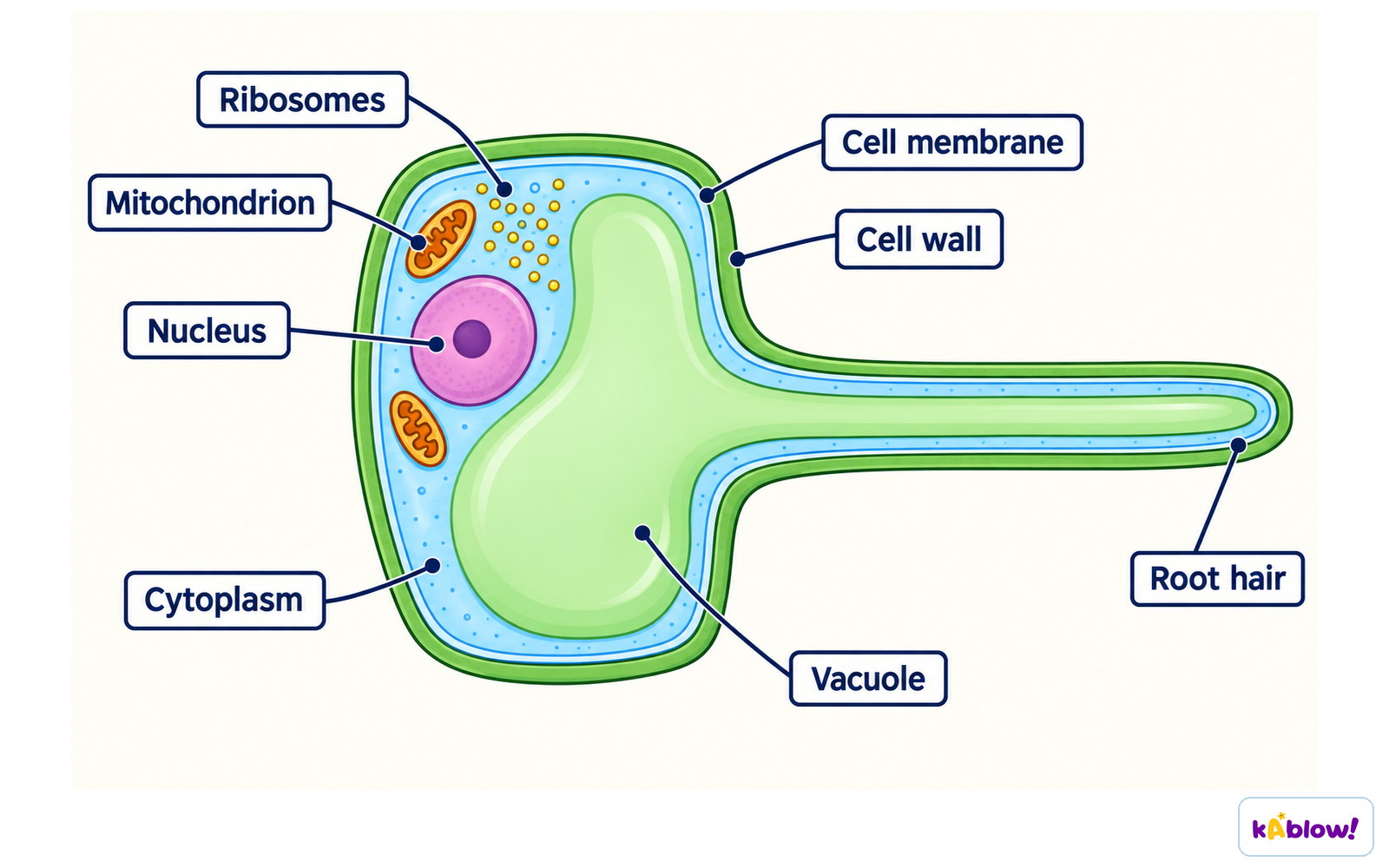
- Examples in plants: root hair cell, xylem vessel, palisade mesophyll cell.
Root hair cell
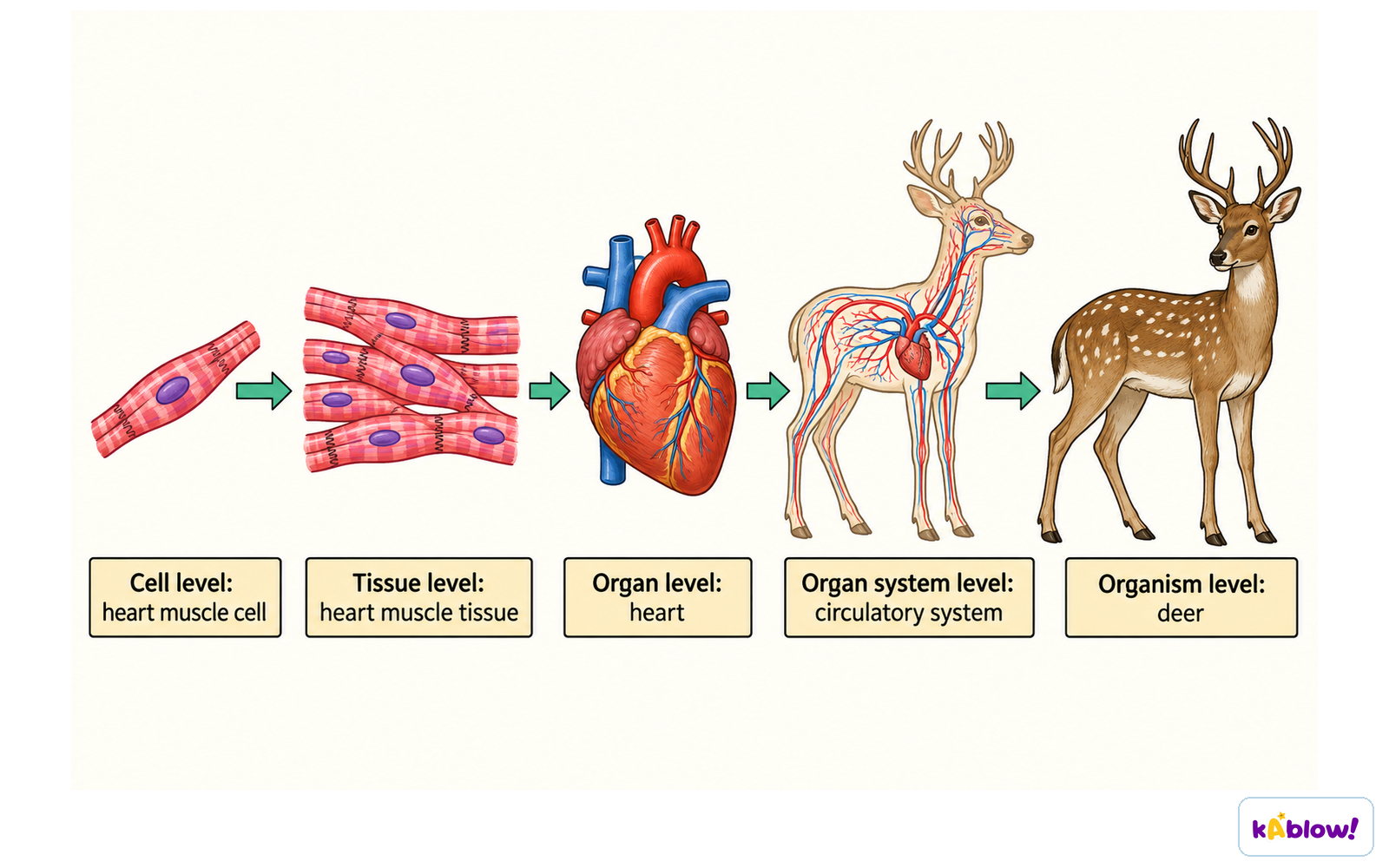
Levels of Organisation
- Cells → Tissues (group of similar cells) → Organs → Organ systems.
- Tissues are made of one type of cell.
Levels of organisation
Magnification Formula
- Magnification = Image size ÷ Actual size.
- Use the equation triangle: cover the value you need.
- Magnification has no units (e.g., ×3000).
- Always convert units to the same before calculating.
Converting Between Units (Extended)
- 1 mm = 1000 μm; 1 cm = 10,000 μm.
- Convert all measurements to the same unit before using the magnification formula.
- Example: leaf thickness 2000 μm = 2 mm; drawing 50 mm → magnification = 50/2 = ×25.
Slides
Sign up free to view the lesson slides
Step through every slide for this topic — plus flashcards and revision notes — with a free account.
Practice questions
Free preview — 8 of 51 questions. Sign up to see them all.
1.Which of the following structures is found in plant cells but not in animal cells?
Easy- ACell membrane
- BMitochondrion
- CChloroplast
- DNucleus
2.Which of the following is the function of the cell membrane?
Easy- ASite of protein synthesis
- BControls substances entering and leaving the cell
- CContains genetic material
- DSite of aerobic respiration
3.What is the function of ribosomes?
Easy- AProtein synthesis
- BPhotosynthesis
- CStorage of cell sap
- DControl of cell activities
4.Which of the following is found in bacteria but not in animal or plant cells?
Easy- ACell wall
- BPlasmid
- CRibosome
- DCytoplasm
5.The image of a cell is 20 mm long. The actual cell is 0.02 mm long. What is the magnification?
Medium- A×1000
- B×100
- C×0.001
- D×10
6.A student measures the image of a mitochondrion as 6 mm. The magnification is ×30 000. What is the actual size of the mitochondrion?
Medium- A0.0002 mm
- B0.2 mm
- C0.02 mm
- D0.002 mm
7.Which of the following is the correct order of levels of organisation in a multicellular organism, from simplest to most complex?
Easy- ACell → tissue → organ → organ system → organism
- BTissue → cell → organ → organ system → organism
- CCell → organ → tissue → organ system → organism
- DOrgan → tissue → cell → organ system → organism
8.Which of the following is a specialised cell in animals?
Easy- ARoot hair cell
- BPalisade mesophyll cell
- CSperm cell
- DXylem cell
Unlock all 51 questions & more
Create a free account to see every question, the slides, flashcards and revision notes for this topic.