Characteristics, Classification & Features Of Organisms
Learn it by playing
Answer these questions to earn energy, then fish and explore. No account needed.
Lesson notes
Characteristics of Living Organisms (MRS GREN)
- Movement: an action causing a change of position or place.
- Respiration: chemical reactions breaking down nutrient molecules to release energy.
- Sensitivity: ability to detect stimuli and make appropriate responses.
- Growth: permanent increase in size and dry mass (cell number/size).
- Reproduction: processes that make more of the same kind of organism.
- Excretion: removal of toxic metabolic wastes and excess substances.
- Nutrition: intake of materials for energy, growth and development.
Concept & Uses of Classification Systems
- A species is a group of organisms that can reproduce to produce fertile offspring.
- Linnaeus developed the binomial system: scientific name = Genus (capital) + species (lowercase), e.g.×Homo sapiens×.
- Hierarchy: Kingdom, Phylum, Class, Order, Family, Genus, Species (mnemonic: King Philip Came Over For Grand's Spaghetti).
- Dichotomous keys use paired statements to identify organisms by their features.
- Modern classification uses DNA sequencing; more similar base sequences = more closely related.
Linnaeus's system of classification
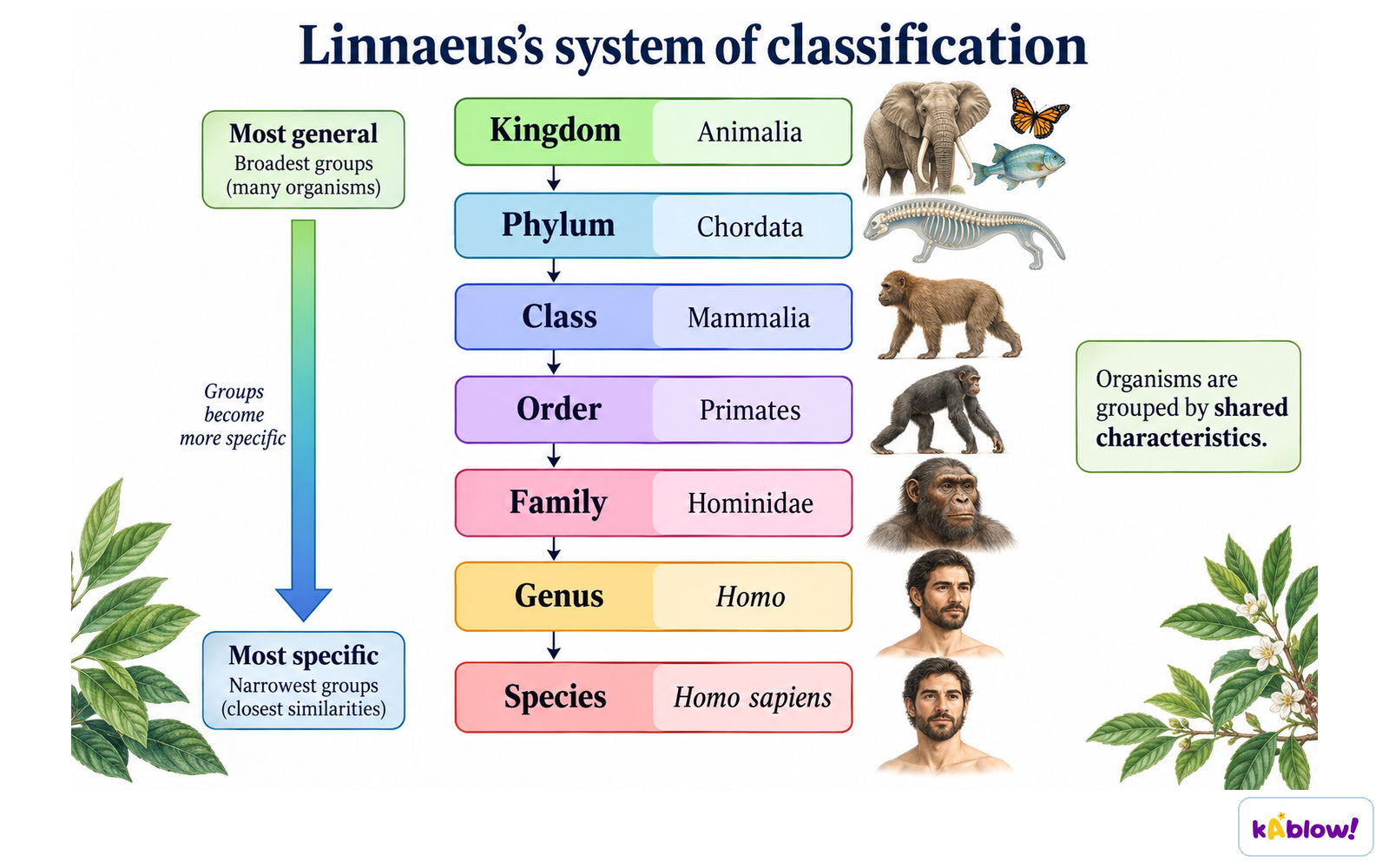
The Five Kingdoms
- Animals: multicellular, no cell walls/chloroplasts, feed on organic substances.
- Plants: multicellular, cellulose cell walls, chloroplasts, feed by photosynthesis.
- Fungi: usually multicellular, cell walls not cellulose, saprophytic/parasitic nutrition.
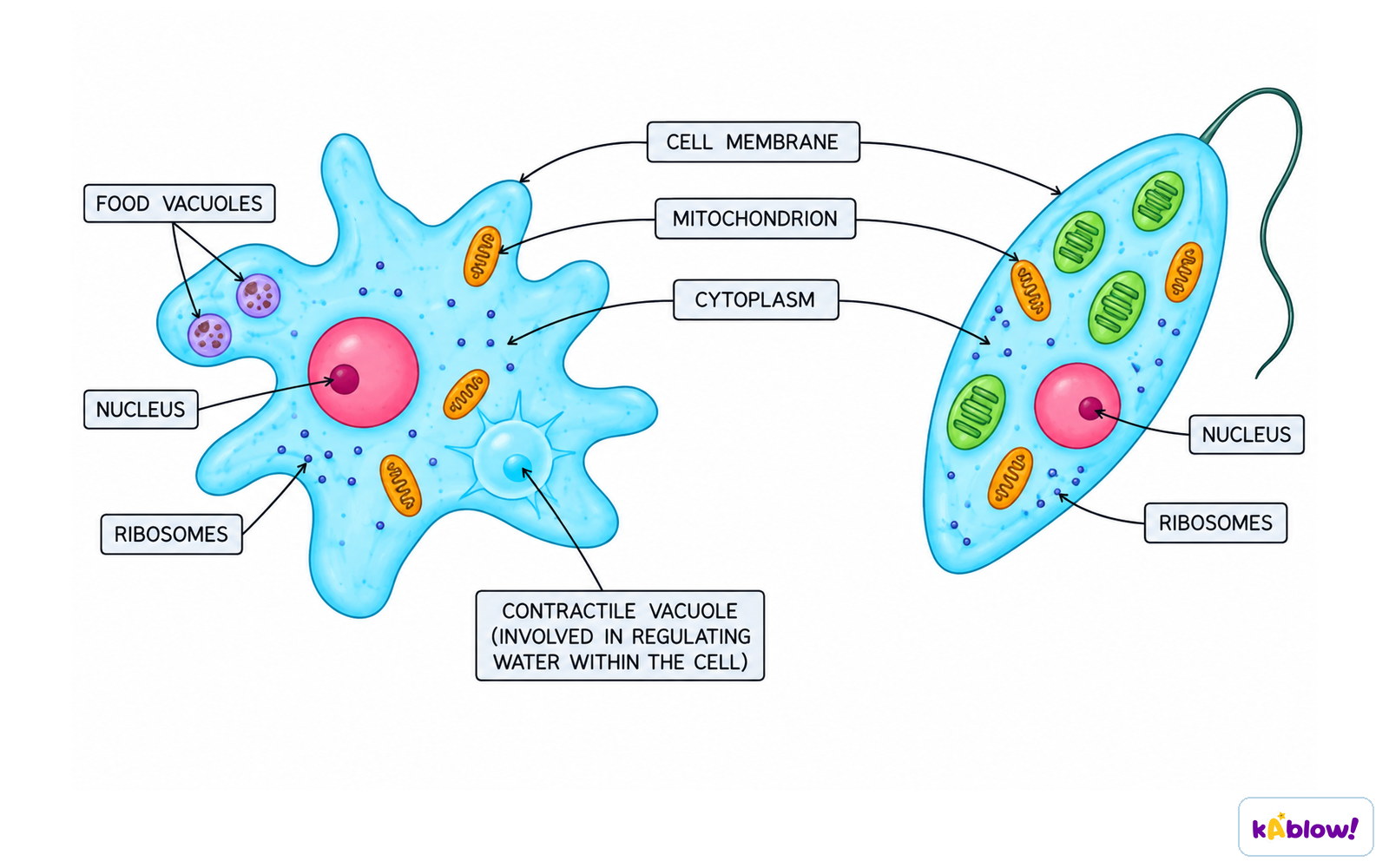
- Protoctists: mostly unicellular, some have chloroplasts, varied nutrition.
- Prokaryotes (bacteria): unicellular, cell walls not cellulose, no nucleus or mitochondria.
Two examples of protoctist cells
Features of Animals – Vertebrates
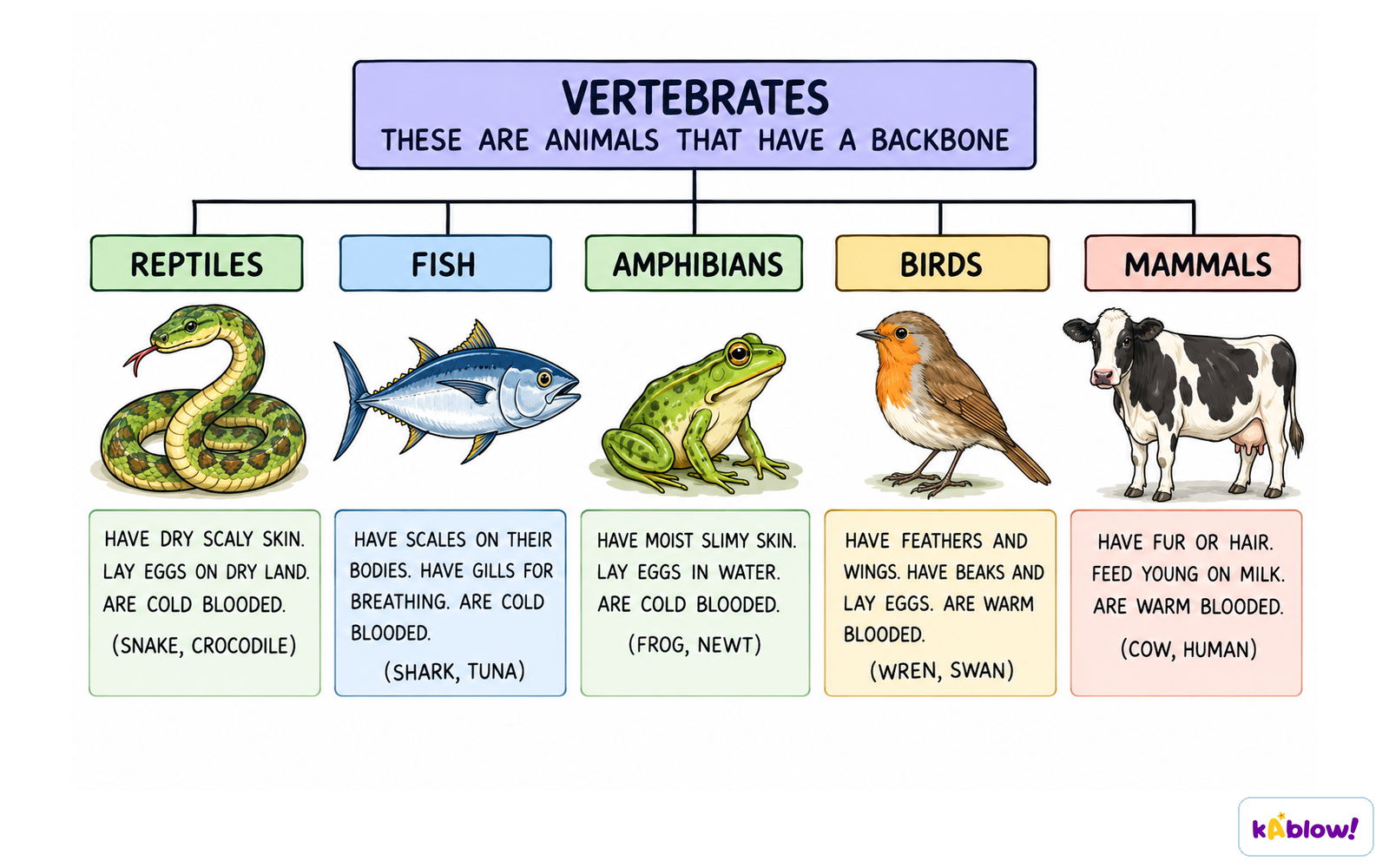
- All vertebrates have a backbone.
- Fish: scales, gills, lay eggs in water.
- Amphibians: moist skin, gills as larvae/lungs as adults, lay eggs in water.
- Reptiles: dry scaly skin, lungs, lay eggs on land.
- Birds: feathers, wings, beak, lay eggs with hard shells.
- Mammals: fur/hair, mammary glands, external ears (pinnas), give birth to live young.
Classification of vertebrates
Features of Animals – Invertebrates (Arthropods)
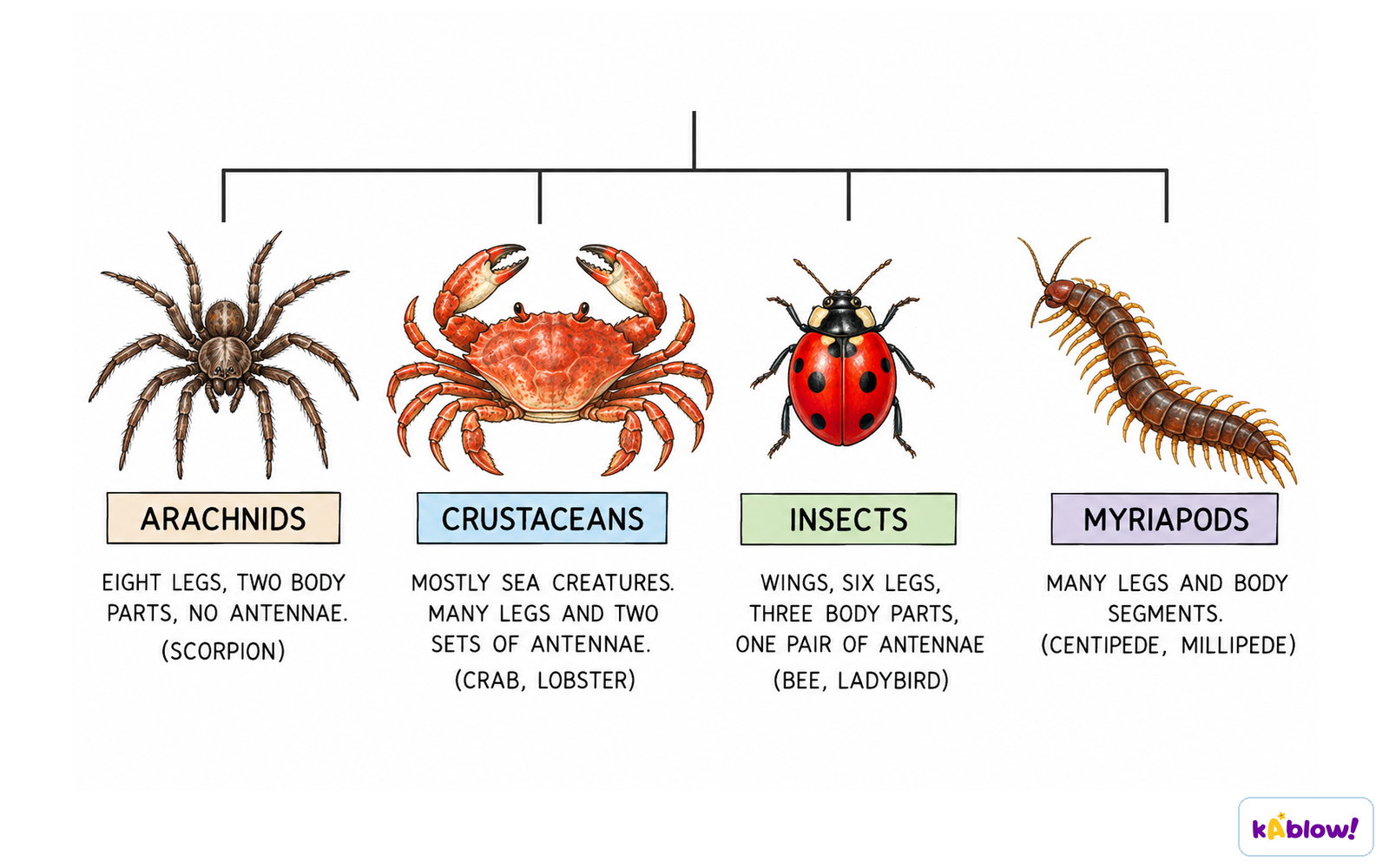
- Invertebrates lack a backbone; arthropods have jointed legs and segmented bodies.
- Myriapods: many body segments, 1 or 2 pairs of legs per segment.
- Insects: 3 body parts, 3 pairs of legs, 1 pair of antennae, often 2 pairs of wings.
- Arachnids: 2 body parts, 4 pairs of legs, no antennae.
- Crustaceans: 2 pairs of antennae, variable legs, often have a carapace.
Classification of arthropods
Features of Plants (Extended)
- Plants contain chlorophyll for photosynthesis.
- Ferns: leaves called fronds, reproduce by spores on underside of fronds.
- Flowering plants: reproduce by flowers and seeds; seeds inside ovary.
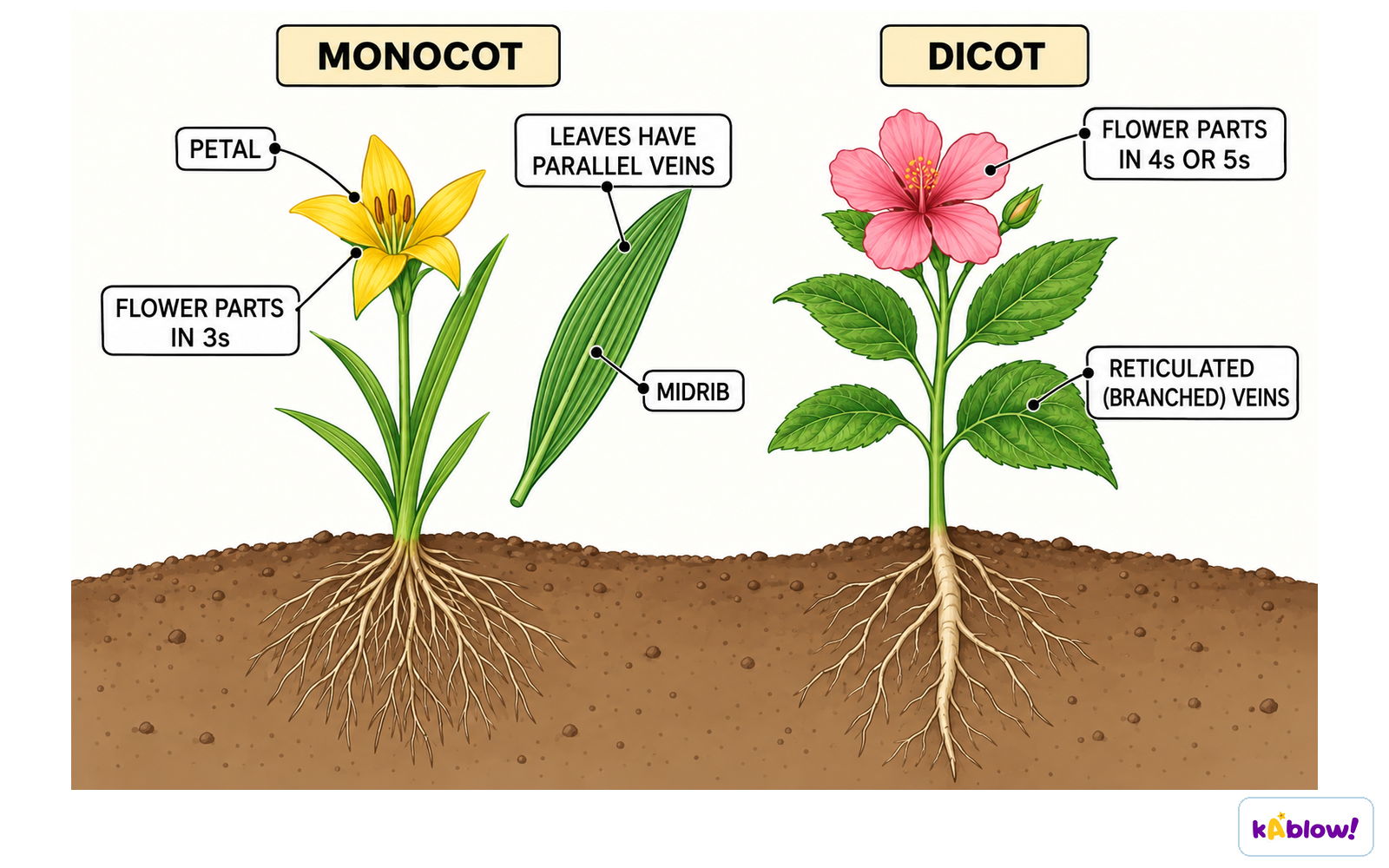
- Monocotyledons: petals in multiples of 3, parallel leaf veins, narrow grass-like leaves.
- Dicotyledons: petals in multiples of 4 or 5, reticulated leaf veins, broad leaves.
Monocotyledon and dicotyledon plant features
Viruses (Extended)
- Viruses are not considered living; they do not carry out MRS GREN.
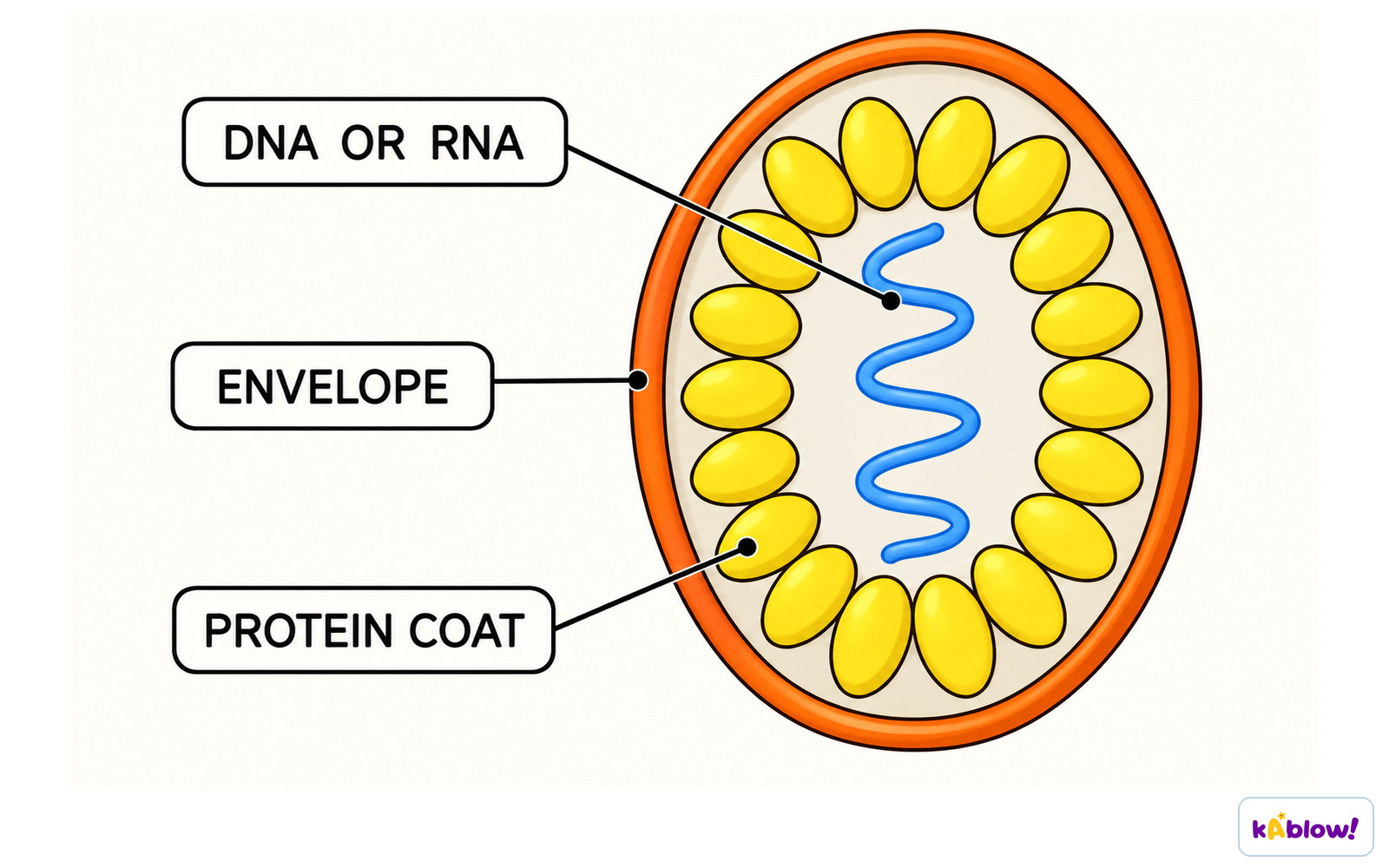
- They consist of genetic material (RNA or DNA) inside a protein coat.
- They replicate by taking over a host cell's metabolic pathways.
Structure of a typical virus
Slides
Sign up free to view the lesson slides
Step through every slide for this topic — plus flashcards and revision notes — with a free account.
Practice questions
Free preview — 8 of 46 questions. Sign up to see them all.
1.Which characteristic of living organisms is defined as 'the chemical reactions that break down nutrient molecules in living cells to release energy for metabolism'?
Easy- ARespiration
- BNutrition
- CExcretion
- DGrowth
2.What is the correct order of classification from the broadest to the most specific group?
Easy- AKingdom, Phylum, Class, Order, Family, Genus, Species
- BKingdom, Class, Phylum, Order, Family, Genus, Species
- CSpecies, Genus, Family, Order, Class, Phylum, Kingdom
- DPhylum, Kingdom, Class, Order, Family, Genus, Species
3.The scientific name for the house mouse is Mus musculus. To which genus does it belong?
Easy- AMus
- Bmusculus
- CMammal
- DVertebrate
4.Which of the following is NOT a characteristic of all living organisms?
Easy- APhotosynthesis
- BMovement
- CExcretion
- DReproduction
5.A new organism is discovered. It is unicellular, has a nucleus, and feeds on organic matter. To which kingdom does it most likely belong?
Medium- AProtoctista
- BProkaryotae
- CFungi
- DAnimalia
6.Which group of vertebrates has moist skin and spends part of its life in water?
Easy- AAmphibians
- BReptiles
- CFish
- DMammals
7.Two species have very similar DNA base sequences. What does this indicate?
Medium- AThey are closely related and share a recent common ancestor.
- BThey are not related at all.
- CThey belong to the same species.
- DThey have identical physical features.
8.Which of the following is a feature of all arthropods?
Medium- ASegmented body
- BSix legs
- CTwo pairs of antennae
- DExoskeleton made of chitin
Unlock all 46 questions & more
Create a free account to see every question, the slides, flashcards and revision notes for this topic.