Properties, Uses & Alloys Of Metals
Learn it by playing
Answer these questions to earn energy, then fish and explore. No account needed.
Lesson notes
Physical Properties of Metals
- Metals are good conductors of heat and electricity due to delocalised electrons that move through the structure.
- Metals are malleable (can be hammered into shapes) and ductile (can be drawn into wires) because layers of positive ions can slide over each other.
- Metals have high melting and boiling points because of strong metallic bonding (electrostatic attraction between positive ions and delocalised electrons).
- Most metals are solids at room temperature (except mercury).
- Metals are sonorous (make a ringing sound when struck).
Metallic bonding in aluminium
Chemical Properties of Metals
- Metals react with water (cold or steam) to produce a metal hydroxide/oxide and hydrogen.
- Metals react with dilute acids to produce a salt and hydrogen gas.
- Metals react with oxygen to form metal oxides.
- The reactivity series ranks metals based on their reactions with water, acid, and oxygen.
Uses of Aluminium
- Aluminium is used for aeroplane bodies because of its low density and high strength-to-weight ratio.
- Aluminium is used for overhead power cables because it is a good electrical conductor and has low density.
- Aluminium is used for food cans because it is non-toxic and resistant to corrosion (forms a protective oxide layer).
Uses of Copper
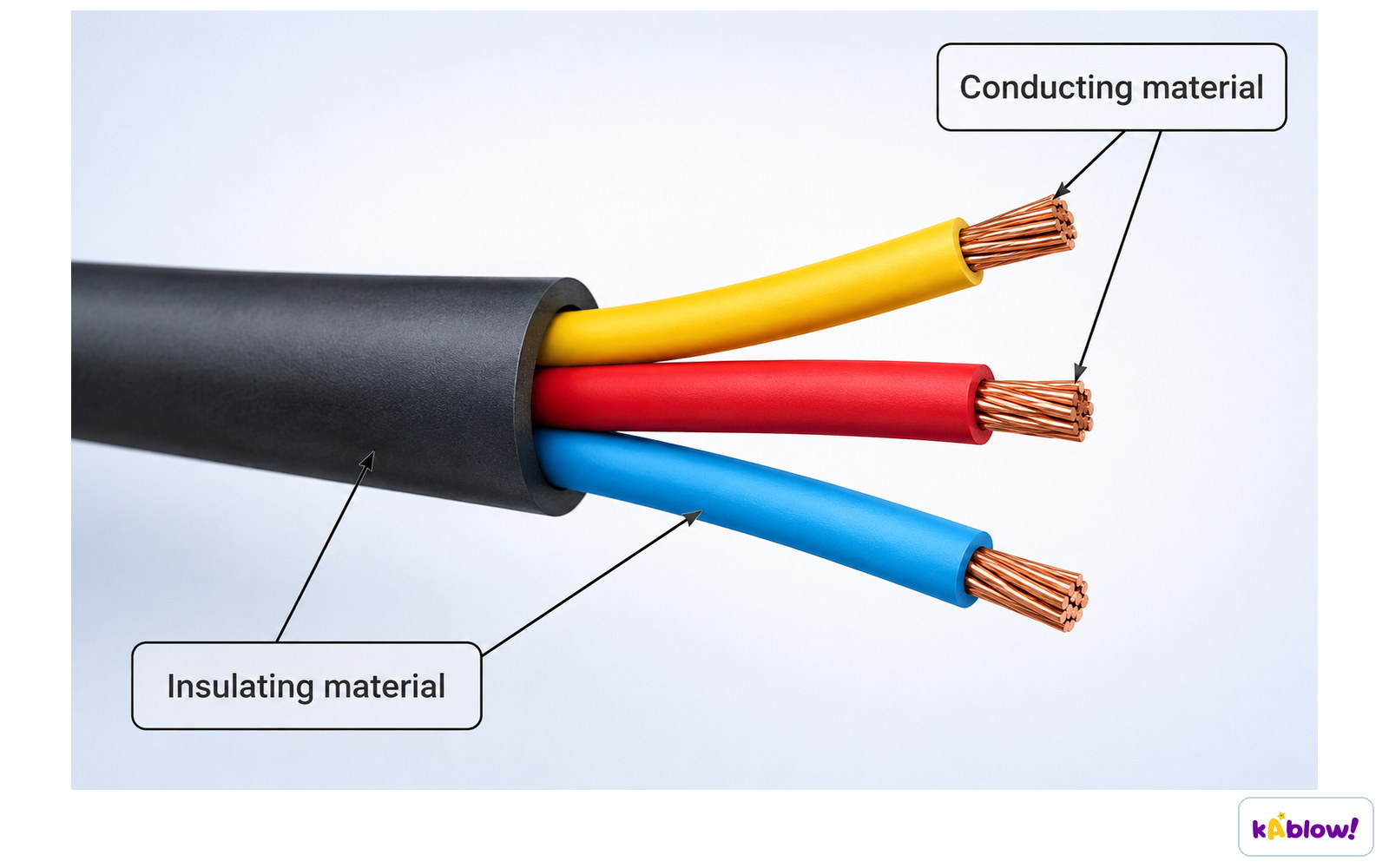
- Copper is used for electrical wiring because it is a very good conductor of electricity and is ductile.
- Copper is used for pots and pans because it is a good conductor of heat, unreactive, and malleable.
- Copper is used for water pipes because it is non-toxic, unreactive with water, and malleable.
Structure of an electrical cable
What is an Alloy?
- An alloy is a mixture of a metal with other elements (often other metals, but may include non-metals).
- Alloys are not compounds; they are physical mixtures.
- Alloys have different properties from their constituent metals, often being stronger, harder, or more resistant to corrosion.
Examples of Alloys
- Brass is an alloy of copper and zinc; it is stronger than either metal and used in musical instruments, ornaments, and door knobs.
- Stainless steel is an alloy of iron with chromium, nickel, and carbon; it is hard and resistant to rusting, used in cutlery.
- Iron with tungsten is extremely hard and resistant to high temperatures.
- Aluminium with copper, manganese, and silicon is stronger but still low density, ideal for aircraft bodies.
Structure of Alloys (Extended Tier)
- Pure metals have a regular arrangement of positive ions in layers surrounded by a sea of delocalised electrons.
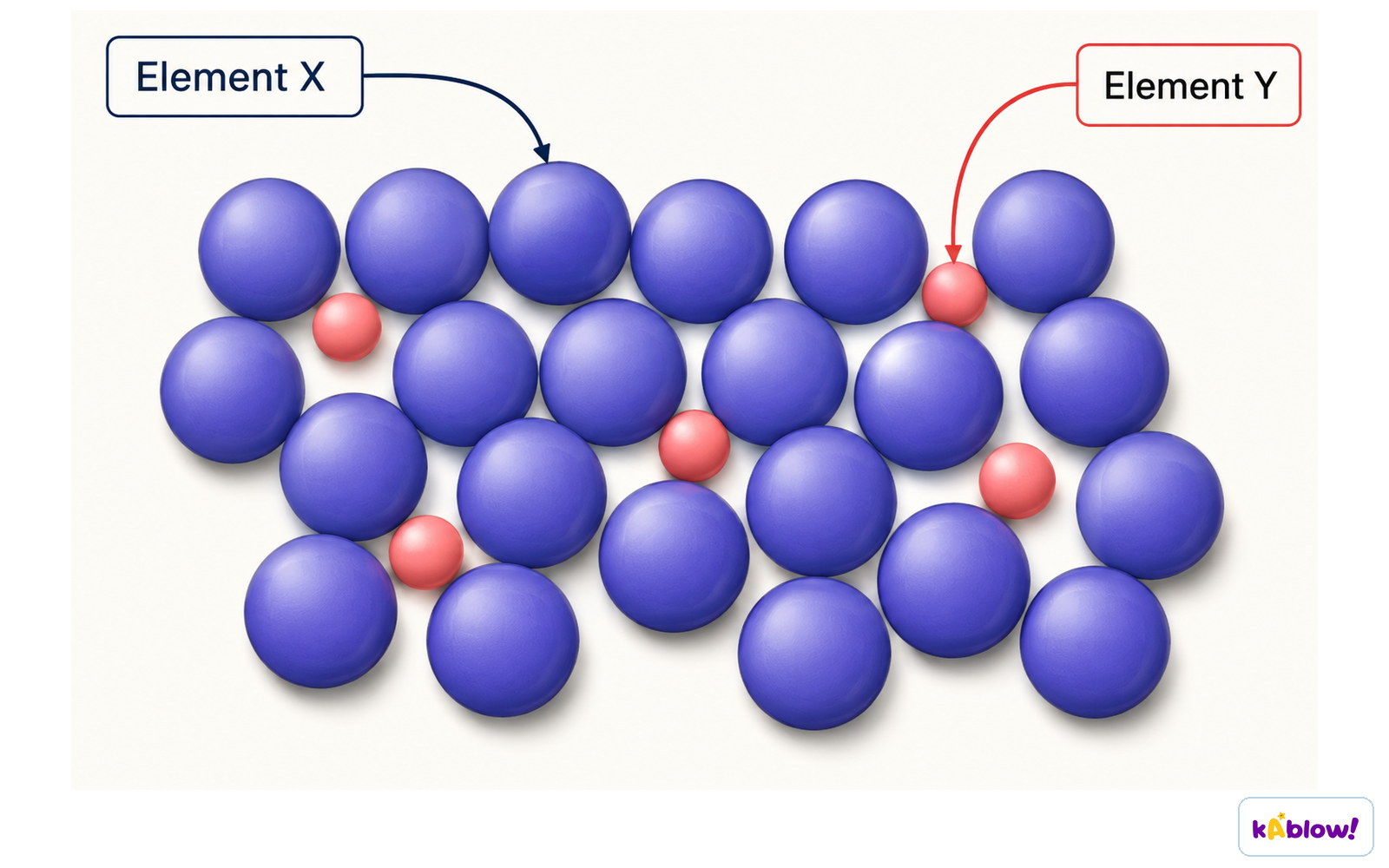
- In an alloy, atoms of different sizes distort the regular lattice, creating an irregular arrangement.
- The distortion makes it harder for layers to slide over each other, so alloys are generally harder and stronger than pure metals.
Structure of an alloy
Slides
Sign up free to view the lesson slides
Step through every slide for this topic — plus flashcards and revision notes — with a free account.
Practice questions
Free preview — 8 of 37 questions. Sign up to see them all.
1.Which of the following is a physical property of metals?
Easy- AThey are brittle when solid.
- BThey are good conductors of electricity.
- CThey have low melting points.
- DThey are non-ductile.
2.What is the main reason metals are malleable?
Medium- AThe atoms are arranged in a regular lattice that can slide.
- BThe delocalised electrons allow layers to slide over each other.
- CThe strong metallic bonds prevent any movement.
- DThe atoms are covalently bonded in a rigid structure.
3.What is an alloy?
Easy- AA pure metal element.
- BA compound of two metals.
- CA mixture of a metal with other elements.
- DA non-metal combined with oxygen.
4.Which of the following is an alloy of copper and zinc?
Easy- AStainless steel
- BBronze
- CBrass
- DSolder
5.Why are alloys generally harder than pure metals?
Medium- AAlloys have a regular arrangement of atoms that is easier to slide.
- BAlloys contain atoms of different sizes that distort the layers, making sliding harder.
- CAlloys have more delocalised electrons than pure metals.
- DAlloys have weaker metallic bonds than pure metals.
6.Which metal is commonly used for electrical wiring due to its high conductivity and ductility?
Easy- AAluminium
- BCopper
- CIron
- DGold
7.Which of the following is a use of aluminium based on its low density?
Easy- AFood cans
- BElectrical wiring
- CAeroplane bodies
- DCutlery
8.Which statement about the structure of an alloy is correct?
Easy- AIt has a regular arrangement of identical atoms.
- BIt has an irregular arrangement of atoms of different sizes.
- CIt has a regular arrangement of atoms of different sizes.
- DIt has an irregular arrangement of identical atoms.
Unlock all 37 questions & more
Create a free account to see every question, the slides, flashcards and revision notes for this topic.