Reproduction In Plants And Humans
Learn it by playing
Answer these questions to earn energy, then fish and explore. No account needed.
Lesson notes
Asexual Reproduction
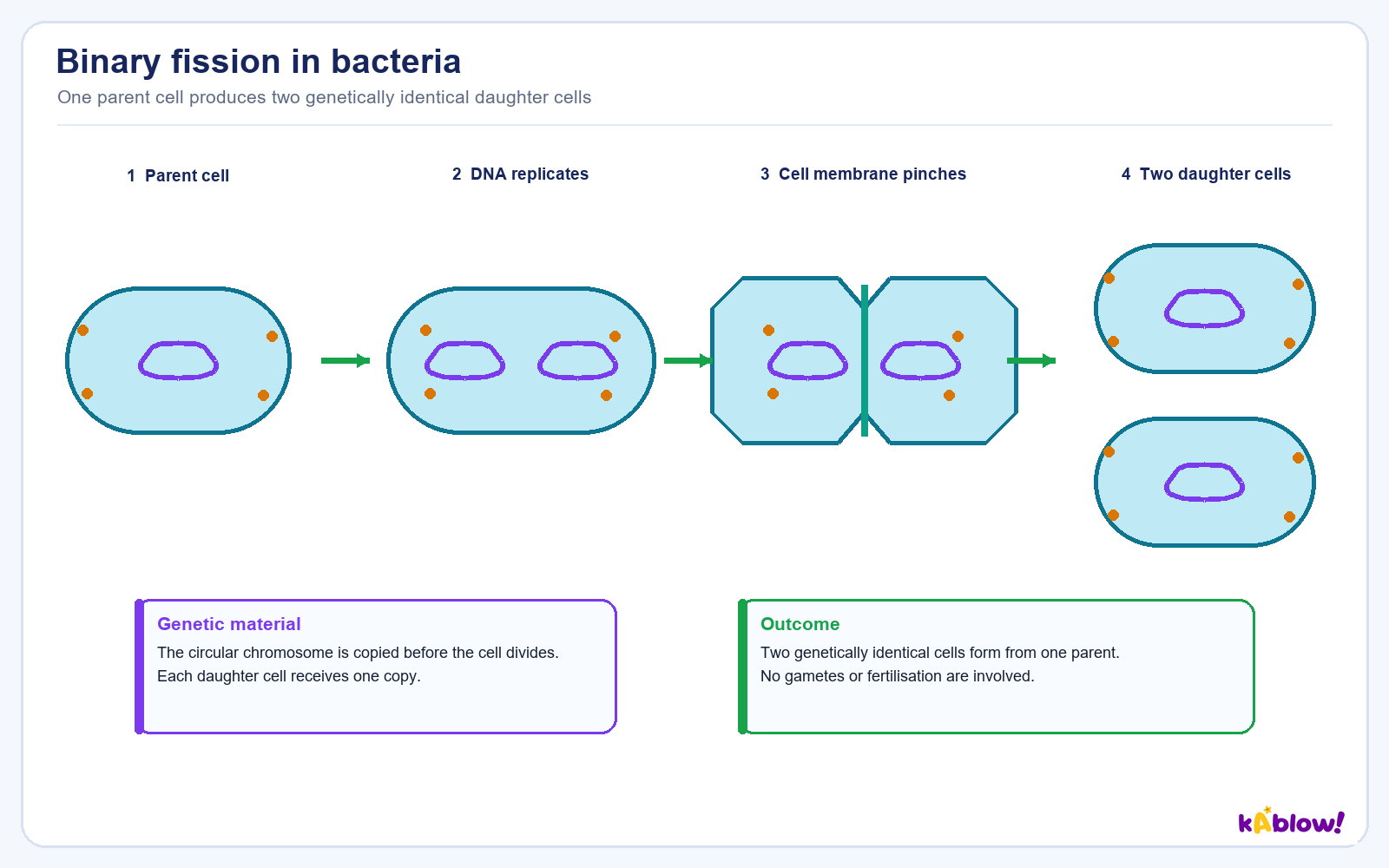
- Asexual reproduction does not involve sex cells or fertilisation.
- Only one parent is required; offspring are genetically identical (clones).
- Examples: bacteria (binary fission), plants (bulbs, tubers, runners).
- Advantage in crops: desirable traits (high yield, disease resistance) are preserved.
Binary fission in bacteria
Sexual Reproduction
- Sexual reproduction involves fusion of nuclei of two gametes to form a zygote.
- Offspring are genetically different from each other and from parents.
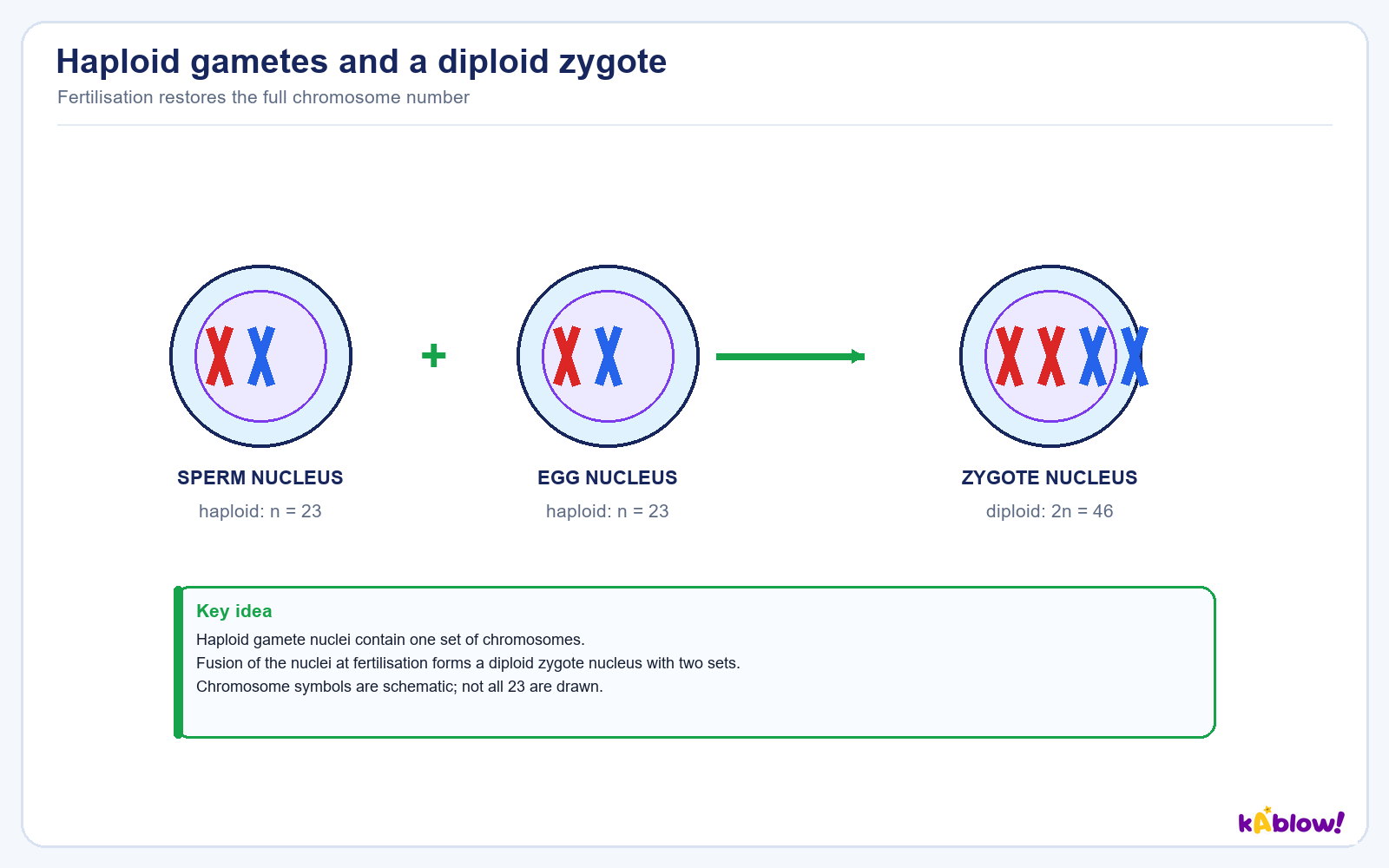
- Gamete nuclei are haploid (half chromosome number; in humans, 23).
- Zygote nucleus is diploid (full chromosome number; in humans, 23 pairs).
- Sexual reproduction increases genetic variation in a population.
Haploid and diploid cells
Sexual Reproduction in Plants
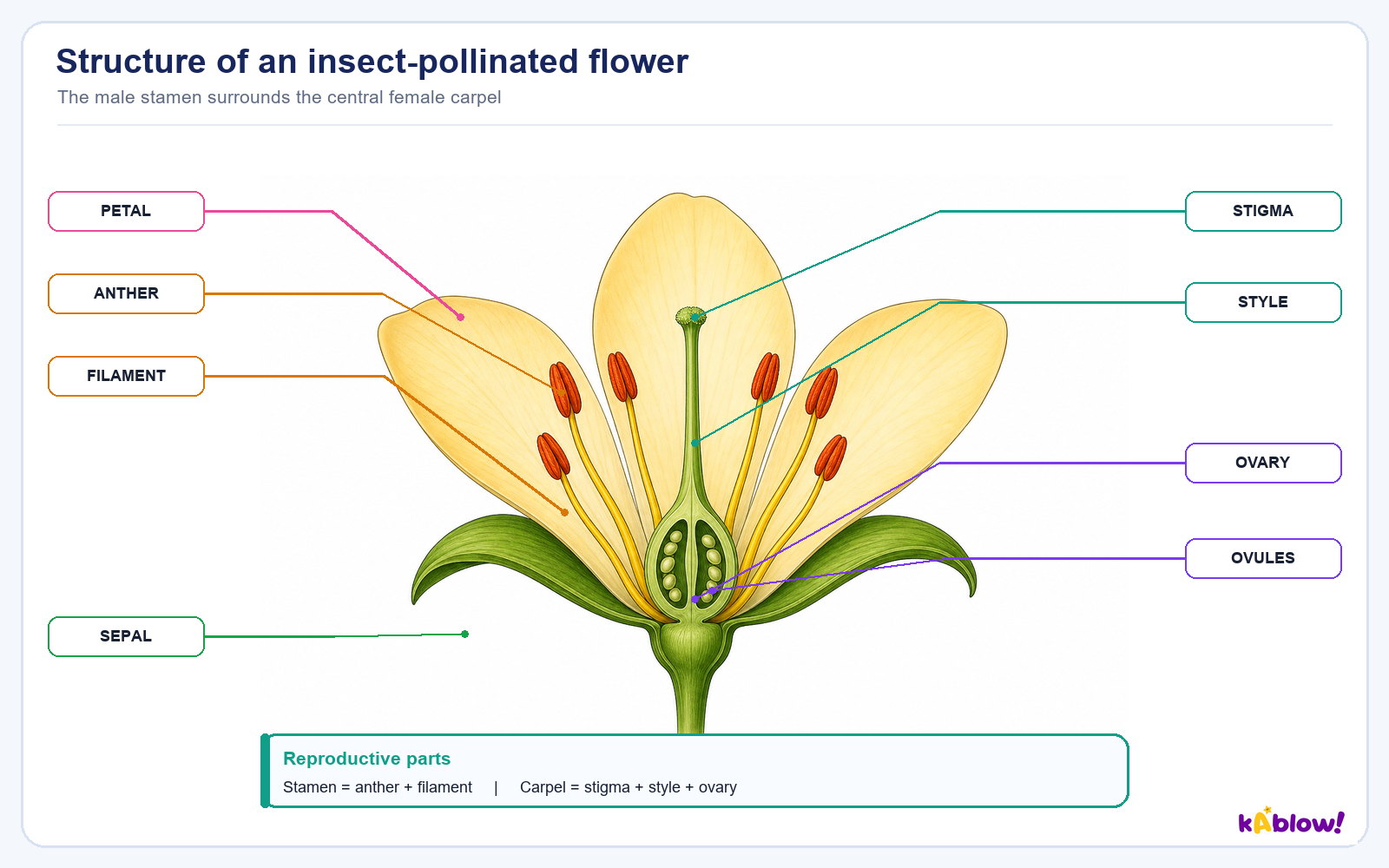
- Flowers are the reproductive organs; male parts produce pollen (male gamete), female parts contain ovules (female gamete).
- Pollination is transfer of pollen from anther to stigma; can be insect or wind.
- Fertilisation occurs when a pollen nucleus fuses with an ovule nucleus, forming a zygote that develops into a seed.
- Insect-pollinated flowers: large, scented petals, sticky pollen, nectar guides.
- Wind-pollinated flowers: small, dull petals, long filaments, feathery stigmas, light pollen.
- Germination requires water, oxygen, and suitable temperature; carbon dioxide is not needed.
Structure of an insect-pollinated flower
Sexual Reproduction in Humans
- Male reproductive system: testes produce sperm; sperm duct, seminal vesicle, urethra, penis.
- Female reproductive system: ovaries produce eggs; oviduct (fallopian tube), uterus, cervix, vagina.
- Fertilisation occurs in the oviduct; sperm and egg nuclei fuse to form a zygote.
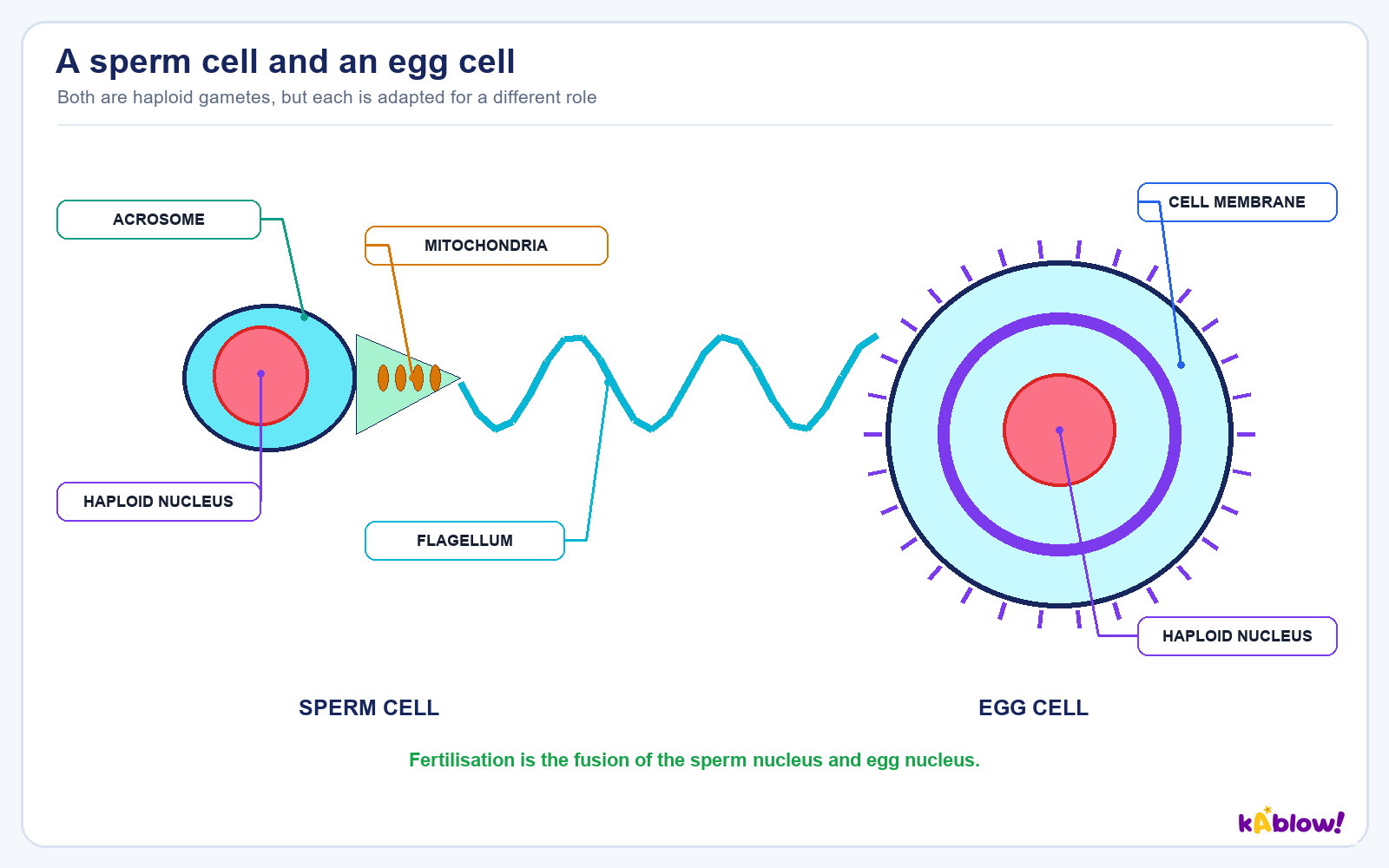
- Sperm adapted: tail for movement, many mitochondria for energy, acrosome for penetrating egg.
- Egg adapted: large cytoplasm with nutrients, jelly coat to prevent multiple sperm entry.
A sperm cell and an egg cell
Sexual Hormones in Humans
- Testosterone (male) and oestrogen (female) control secondary sexual characteristics during puberty.
- Female secondary characteristics: breast development, widening of hips, onset of menstruation.
- Male secondary characteristics: deepening of voice, growth of facial/body hair, muscle growth.
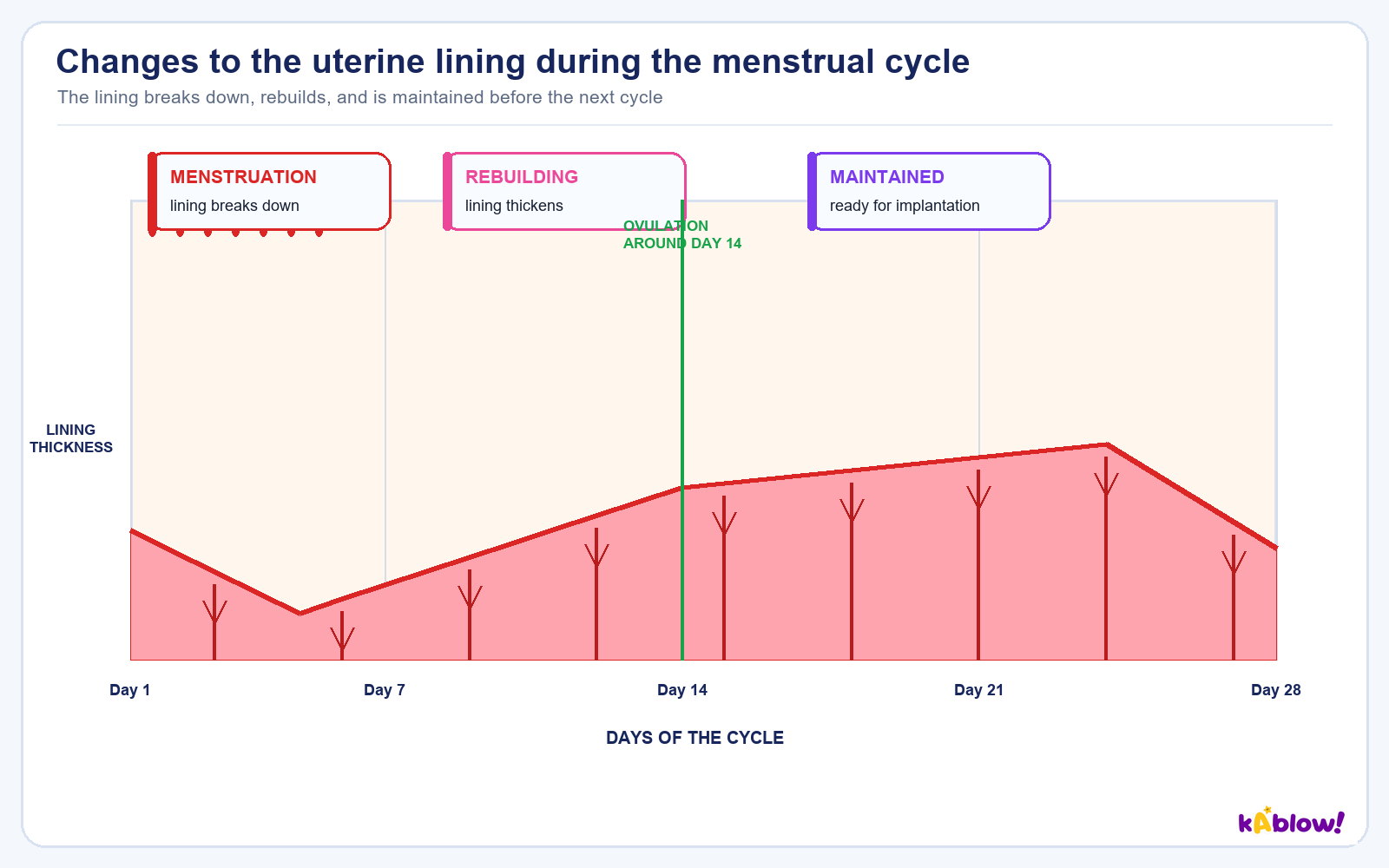
- The menstrual cycle averages 28 days; ovulation occurs around day 14.
- If fertilisation does not occur, the uterus lining breaks down (menstruation).
Changes to the uterine lining during the menstrual cycle
Sexually Transmitted Infections
- STIs are passed via exchange of body fluids during unprotected sex.
- HIV is a viral STI that attacks the immune system, leading to AIDS.
- HIV spreads through unprotected sex, sharing needles, blood transfusions, mother to fetus/breastfeeding.
- Prevention: use condoms, get tested, avoid needle sharing, screen during pregnancy.
Slides
Sign up free to view the lesson slides
Step through every slide for this topic — plus flashcards and revision notes — with a free account.
Practice questions
Free preview — 8 of 56 questions. Sign up to see them all.
1.Which of the following is a characteristic of asexual reproduction?
Easy- AInvolves fusion of gametes
- BOffspring are genetically identical to the parent
- CRequires two parents
- DIncreases genetic variation
2.Name the process by which bacteria reproduce asexually.
Easy3.Which part of a flower contains the female gamete?
Easy- AAnther
- BStigma
- COvule
- DFilament
4.Complete the sentence: In sexual reproduction, the fusion of the nuclei of two gametes forms a ______.
EasyIn sexual reproduction, the fusion of the nuclei of two gametes forms a ____.
5.Pollination is the transfer of pollen from an anther to a stigma.
EasyTrue or false?
6.State two adaptations of wind-pollinated flowers.
Medium7.How many chromosomes are present in a human sperm cell?
Easy- A23
- B21
- C27
- D25
8.Where does fertilisation occur in the human female reproductive system?
Easy- AOvary
- BUterus
- COviduct
- DVagina
Unlock all 56 questions & more
Create a free account to see every question, the slides, flashcards and revision notes for this topic.