Chemical Change And Rate Of Reaction
Learn it by playing
Answer these questions to earn energy, then fish and explore. No account needed.
Lesson notes
Physical & Chemical Changes
- Physical changes do not produce new substances; they are easy to reverse (e.g., melting, dissolving).
- Chemical changes form new substances with different properties; they are difficult to reverse.
- Signs of chemical change include: colour change, temperature change, effervescence (fizzing), and formation of a precipitate.
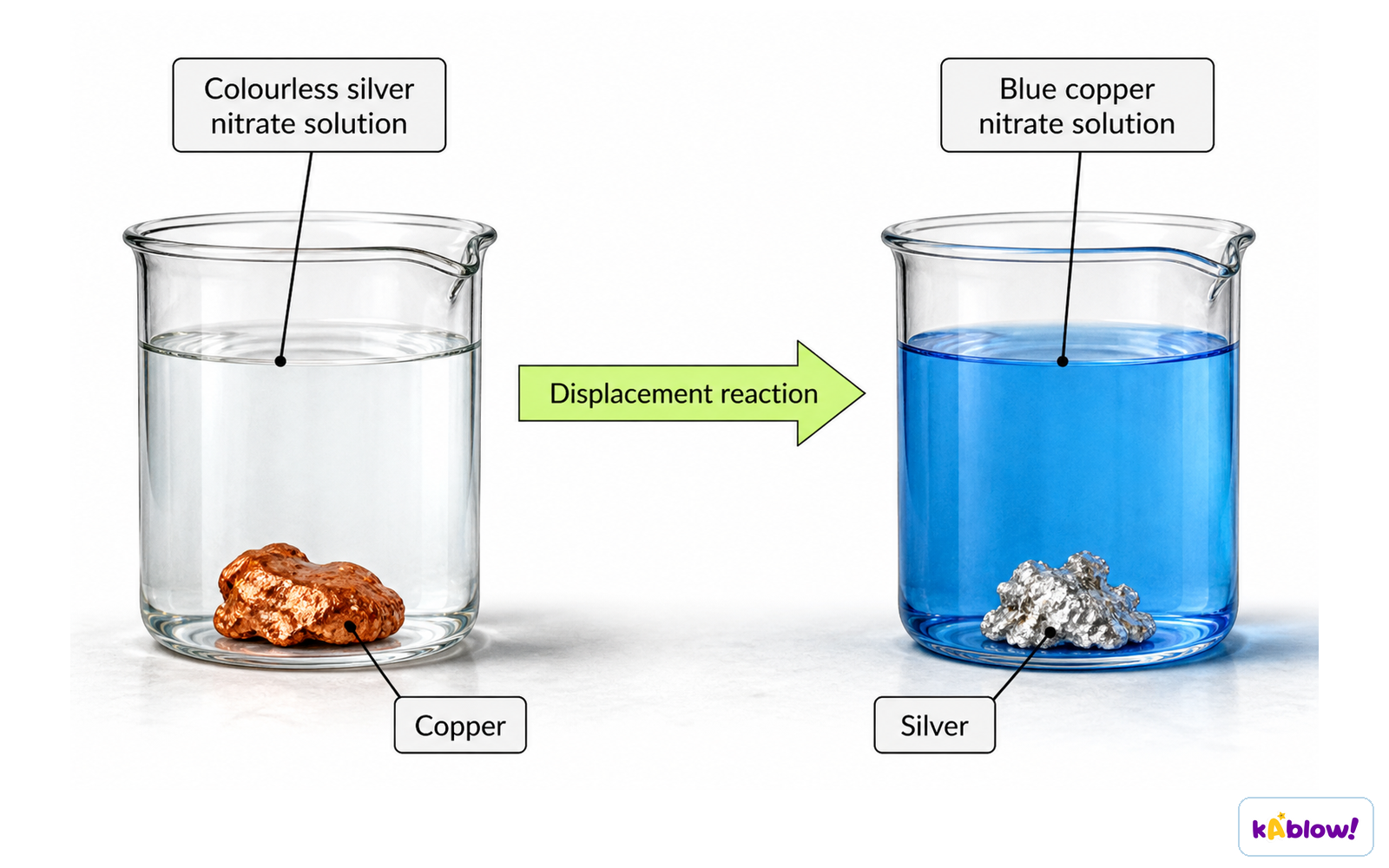
- Example: Copper displaces silver from silver nitrate – solid changes from orange-brown to silver, solution from colourless to blue.
- Exothermic reactions release heat (e.g., calcium oxide + water); endothermic reactions absorb heat (e.g., dissolving ammonium chloride in water).
The metal displacement reaction of silver and copper
Rates of Reaction Factors
- Rate of reaction is affected by: concentration (or pressure for gases), surface area of solids, temperature, and catalysts.
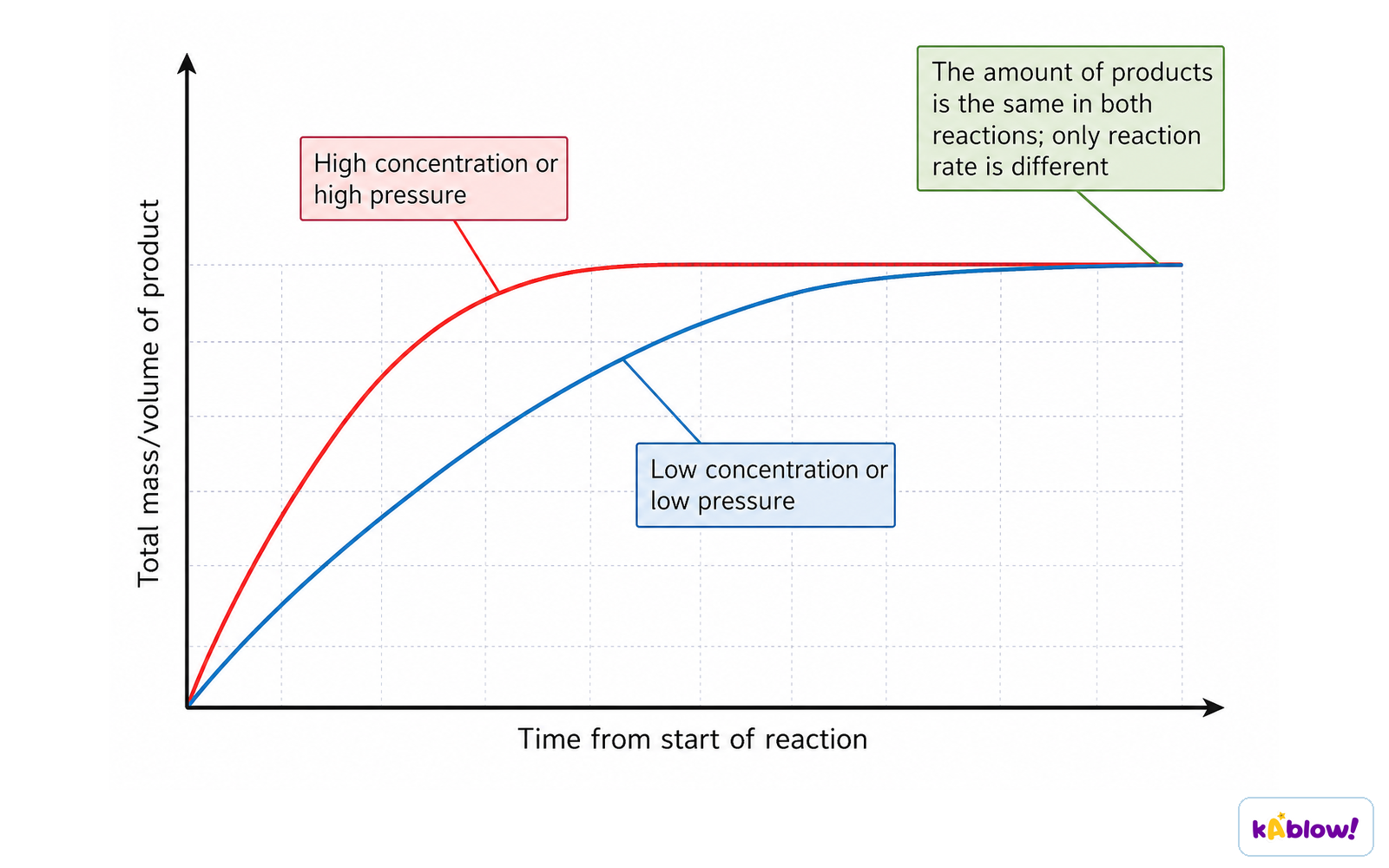
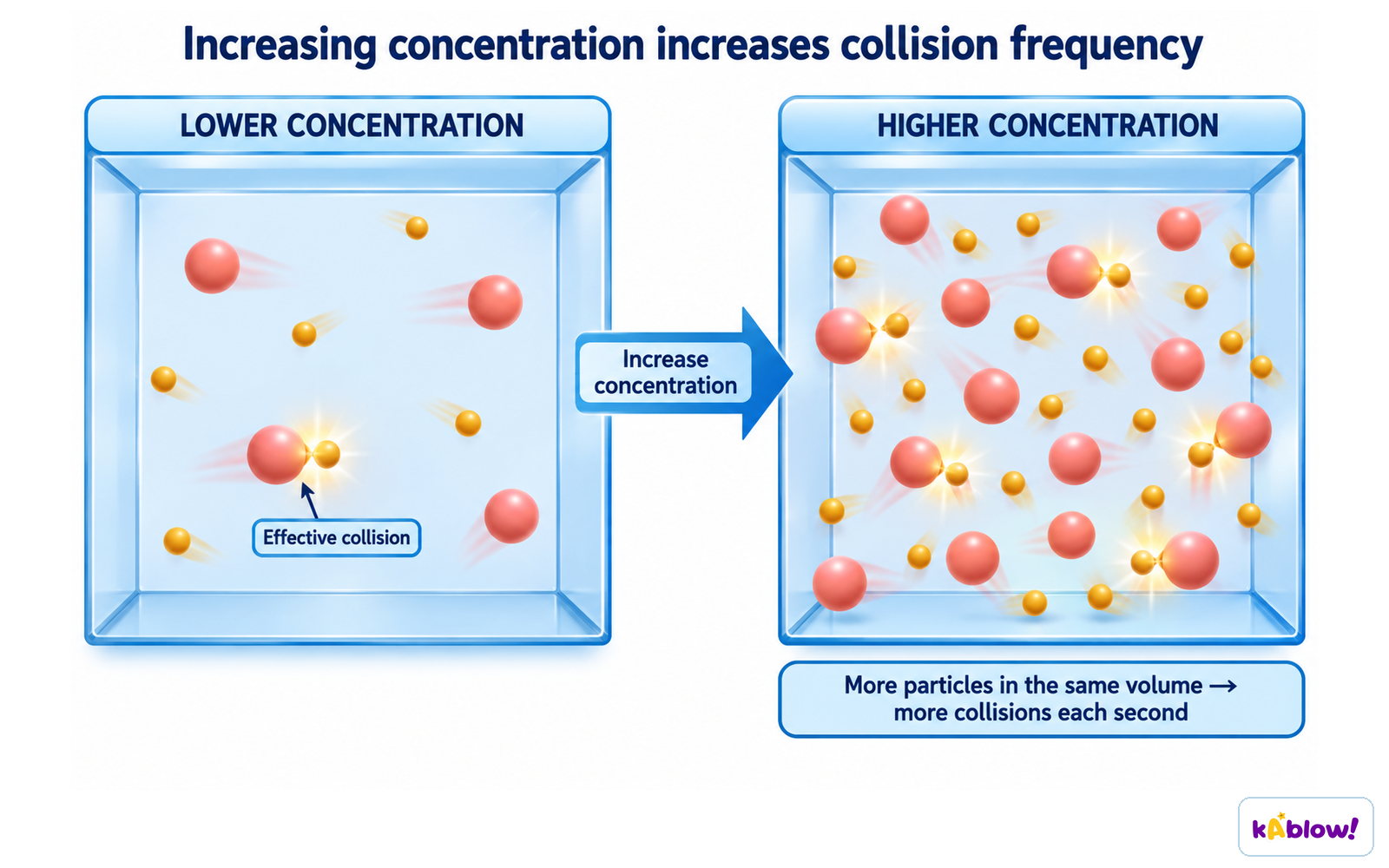
- Higher concentration/pressure → more particles per volume → more collisions per second → faster rate.
- Higher surface area (e.g., powder vs. lumps) → more exposed particles → more collisions per second → faster rate.
- Higher temperature → particles have more kinetic energy → more frequent and energetic collisions → faster rate.
- Catalyst speeds up reaction without being consumed; it provides an alternative pathway with lower activation energy.
Graph showing the effect of concentration on rate of reaction
Collision Theory (Extended)
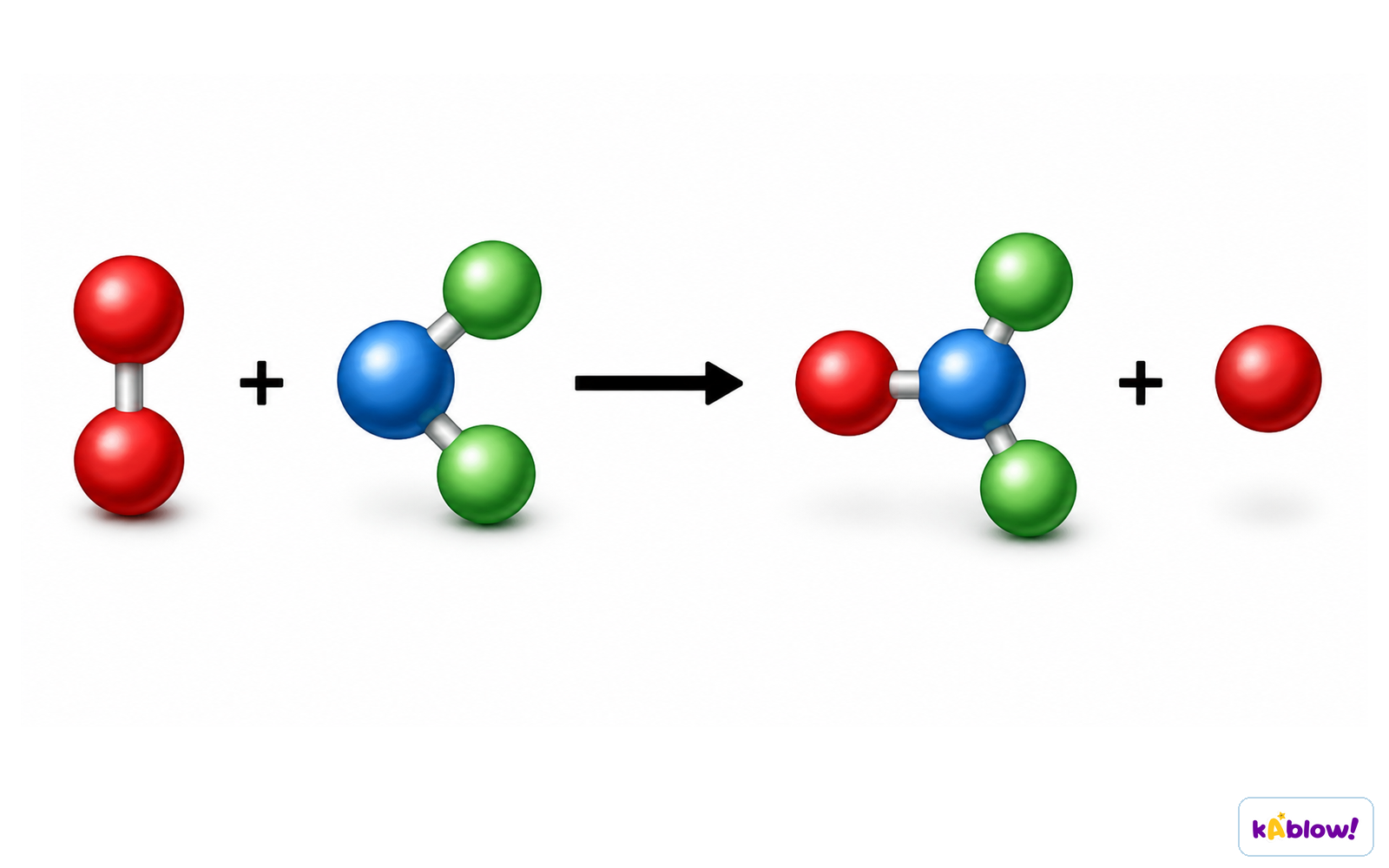
- For a reaction to occur, particles must collide with sufficient energy (≥ activation energy) and correct orientation.
- Successful collisions lead to product formation; unsuccessful collisions result in particles bouncing apart.
- Rate depends on: number of particles per volume, collision frequency, kinetic energy, and activation energy.
- Increasing concentration, pressure, surface area, or temperature increases the number of successful collisions per second.
- Catalysts lower activation energy, so a greater proportion of collisions are successful.
A successful collision
Explaining Rates Using Collision Theory (Extended)
- Concentration: More particles per unit volume → more collisions per second → faster rate.
- Pressure: Same number of particles in smaller volume → more collisions per second → faster rate.
- Surface area: More exposed area → more collisions per second → faster rate.
- Temperature: Particles gain kinetic energy → more collisions and a higher proportion with energy ≥ activation energy → rate increases significantly (≈doubles per 10 °C rise).
- Catalyst: Lowers activation energy → more particles have sufficient energy → more successful collisions per second.
Diagram showing the effect of increasing concentration
Investigating the Rate of a Reaction
- Rate can be measured by how quickly reactants are used up or products are formed (e.g., gas volume, mass loss, colour change).
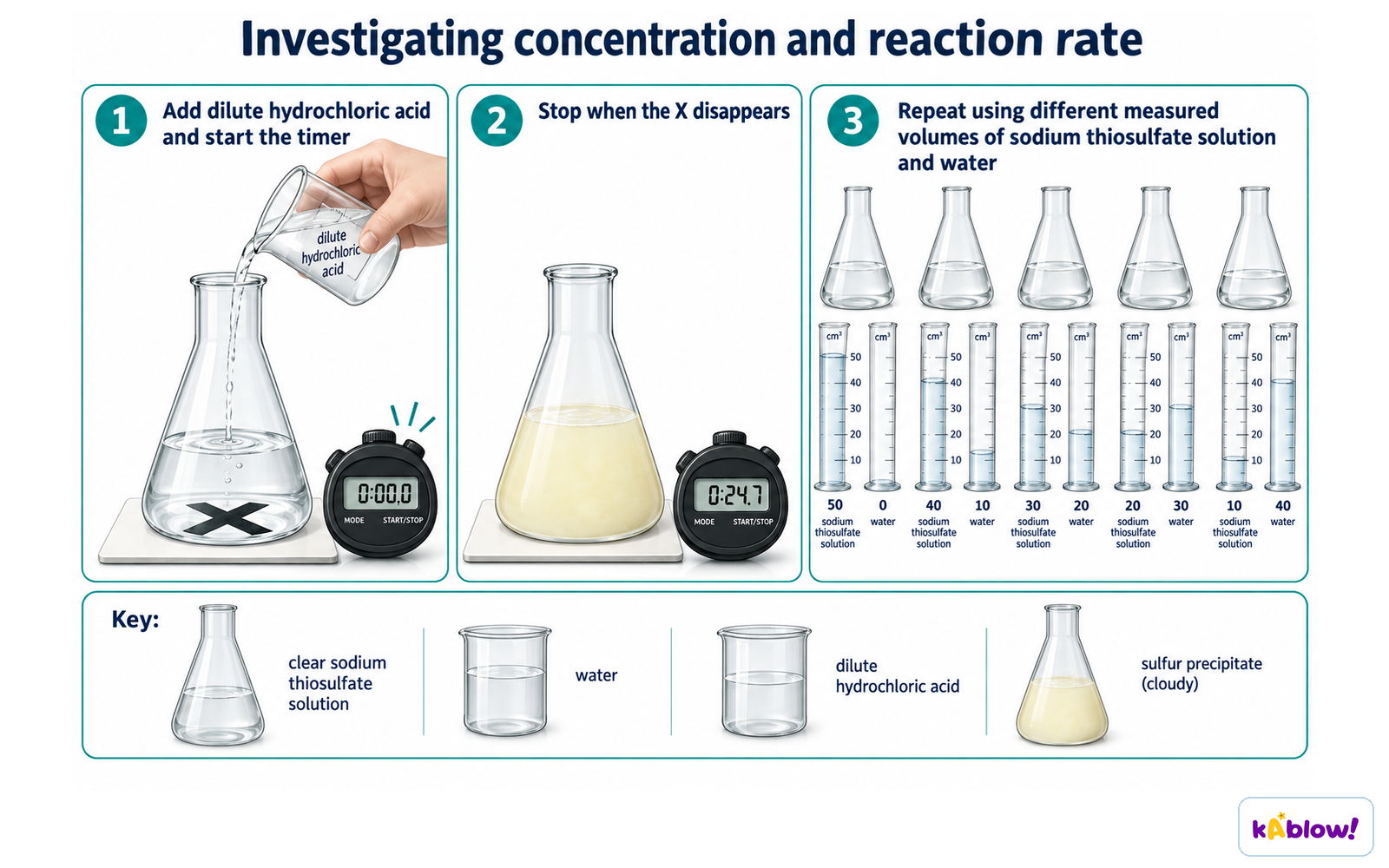
- Sodium thiosulfate + acid: measure time for a cross to disappear; higher concentration → shorter time.
- Magnesium + acid: collect gas by downwards displacement; smaller Mg pieces (larger surface area) → faster rate.
- Temperature effect: heat acid in water bath, add Mg, time until Mg disappears; higher temperature → faster rate.
- Catalyst effect: hydrogen peroxide decomposition with MnO₂ catalyst; measure oxygen volume; catalyst increases rate.
Diagram showing the apparatus needed to investigate the effect of concentration on the rate of reaction
Interpreting Data
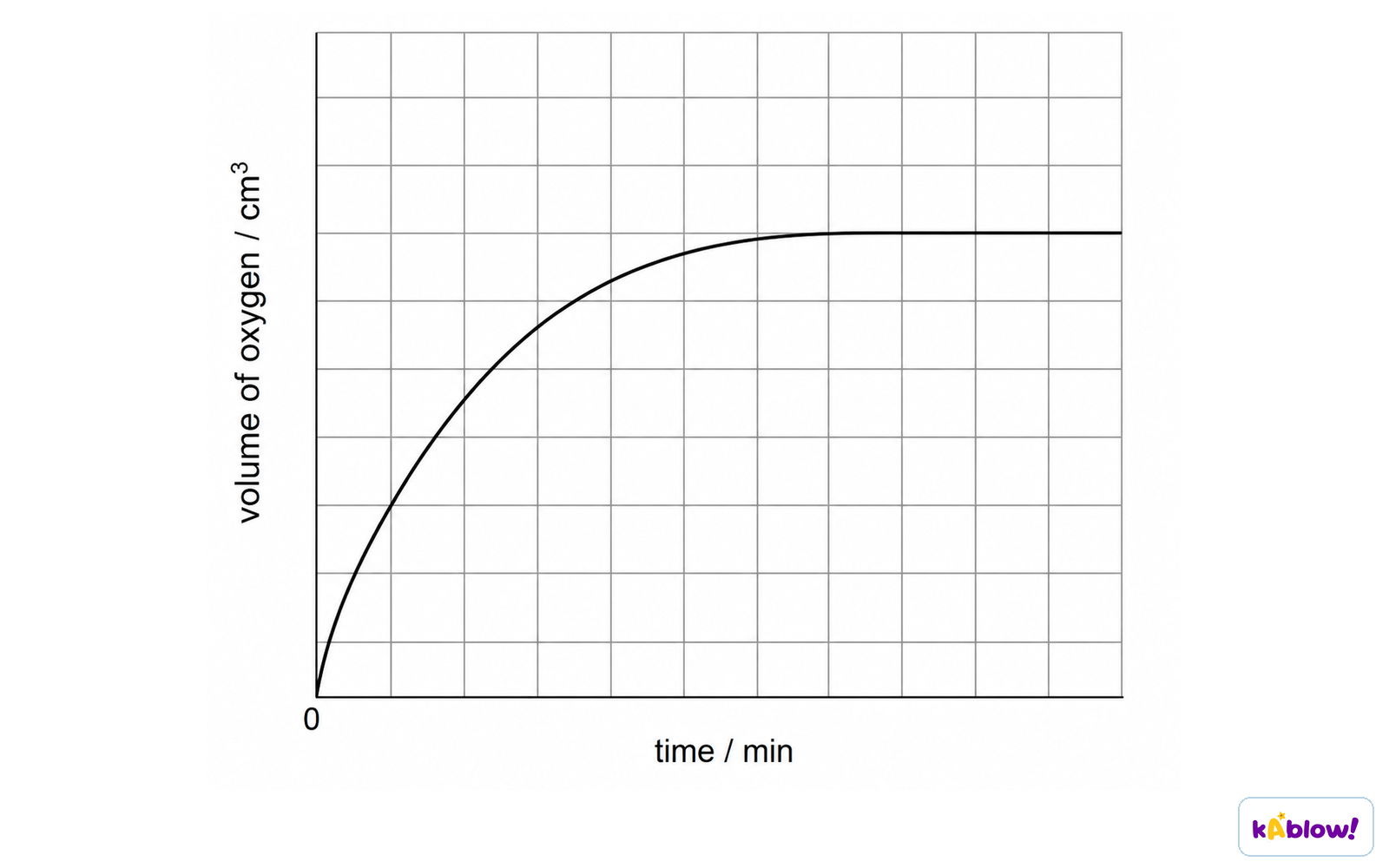
- Rate is fastest at the start (steepest gradient) because reactant concentration is highest.
- As reaction proceeds, rate decreases (gradient becomes less steep) until reactants are used up (line becomes horizontal).
- The limiting reactant determines the final amount of product; excess reactant does not increase product yield.
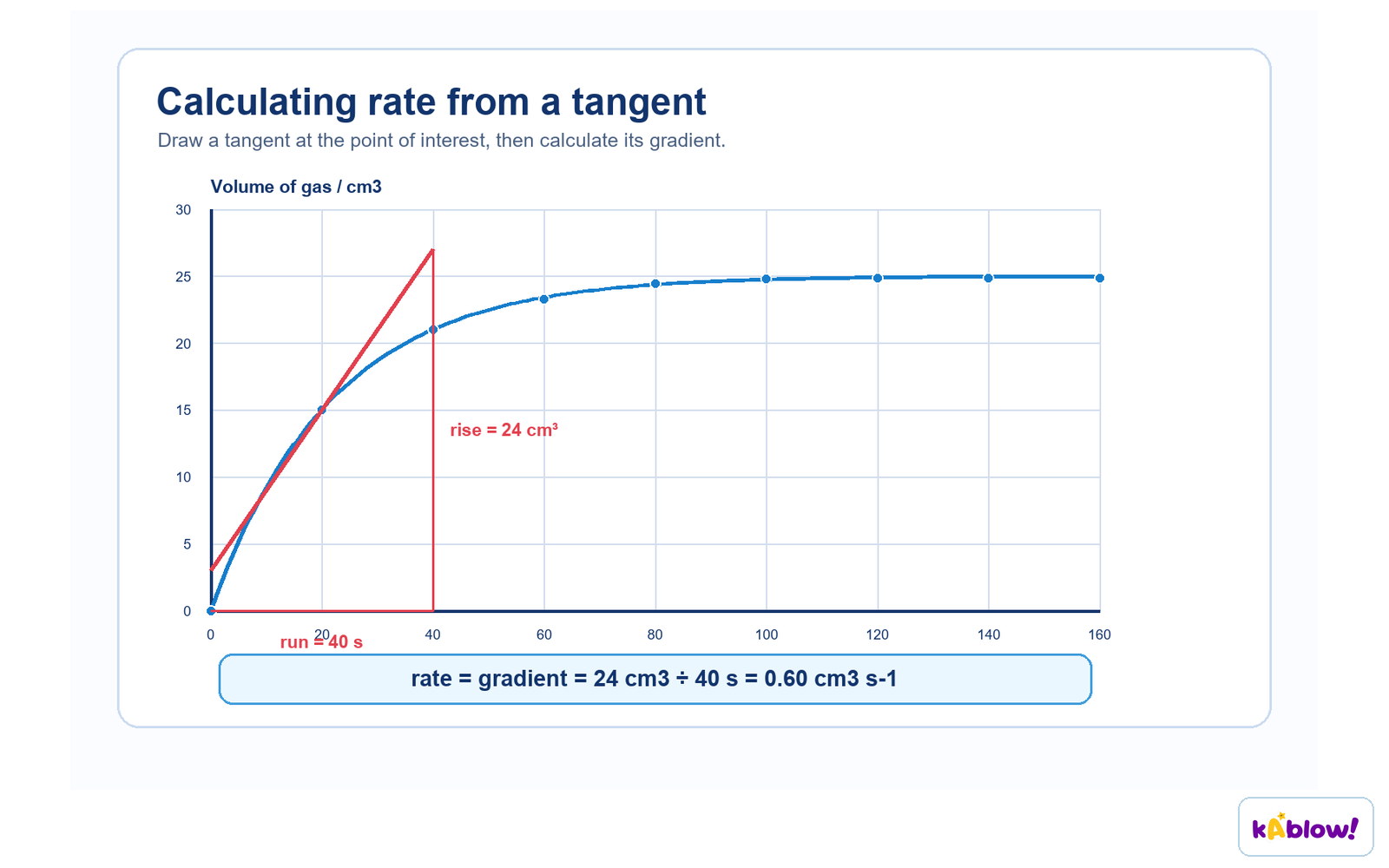
- To find rate at a specific time, draw a tangent to the curve and calculate its gradient: rate = Δy/Δx.
- Graphs of volume vs. time or mass vs. time show a curve that levels off when reaction stops.
Calculating the rate of reaction from a tangent
Slides
Sign up free to view the lesson slides
Step through every slide for this topic — plus flashcards and revision notes — with a free account.
Practice questions
Free preview — 8 of 57 questions. Sign up to see them all.
1.Which of the following is a sign of a chemical change?
Easy- AMelting of ice
- BDissolving sugar in water
- CEffervescence (fizzing)
- DBoiling water
2.A catalyst is consumed during a chemical reaction.
EasyTrue or false?
3.State two factors that affect the rate of a chemical reaction.
Easy4.The rate of a reaction approximately doubles for every 10 °C rise in temperature. If the rate at 20 °C is 2.0 cm³/s, what is the approximate rate at 40 °C?
Medium- A8
- B10
- C7
- D9
5.Complete the sentence using the correct word.
EasyA catalyst provides an alternative reaction pathway with a ____ activation energy.
6.Match each factor to its effect on the rate of reaction.
Medium- Increasing temperature
- Increasing concentration
- Adding a catalyst
- Increases frequency and energy of collisions
- Increases number of particles per unit volume
- Lowers activation energy
7.Arrange the following steps in the correct order to investigate the effect of concentration on the rate of reaction using sodium thiosulfate and hydrochloric acid.
Medium- Add hydrochloric acid to the flask and start the stopwatch.
- Draw a cross on paper and place it under the flask.
- Measure 50 cm³ of sodium thiosulfate solution into a flask.
- Stop the stopwatch when the cross is no longer visible.
- Repeat with different concentrations of sodium thiosulfate.
8.In the reaction between magnesium and hydrochloric acid, which change would increase the rate of reaction the most?
Medium- AUsing magnesium ribbon instead of powder
- BDecreasing the temperature from 30 °C to 20 °C
- CUsing 1.0 mol/dm³ acid instead of 0.5 mol/dm³ acid
- DAdding a catalyst
Unlock all 57 questions, flashcards & more
Create a free account to see every question, the slides, flashcards and revision notes for this topic.