Formulae And Relative Masses
Learn it by playing
Answer these questions to earn energy, then fish and explore. No account needed.
Lesson notes
Formulae
- Elements are represented by chemical symbols from the Periodic Table.
- Seven elements exist as diatomic molecules (H₂, N₂, O₂, F₂, Cl₂, Br₂, I₂).
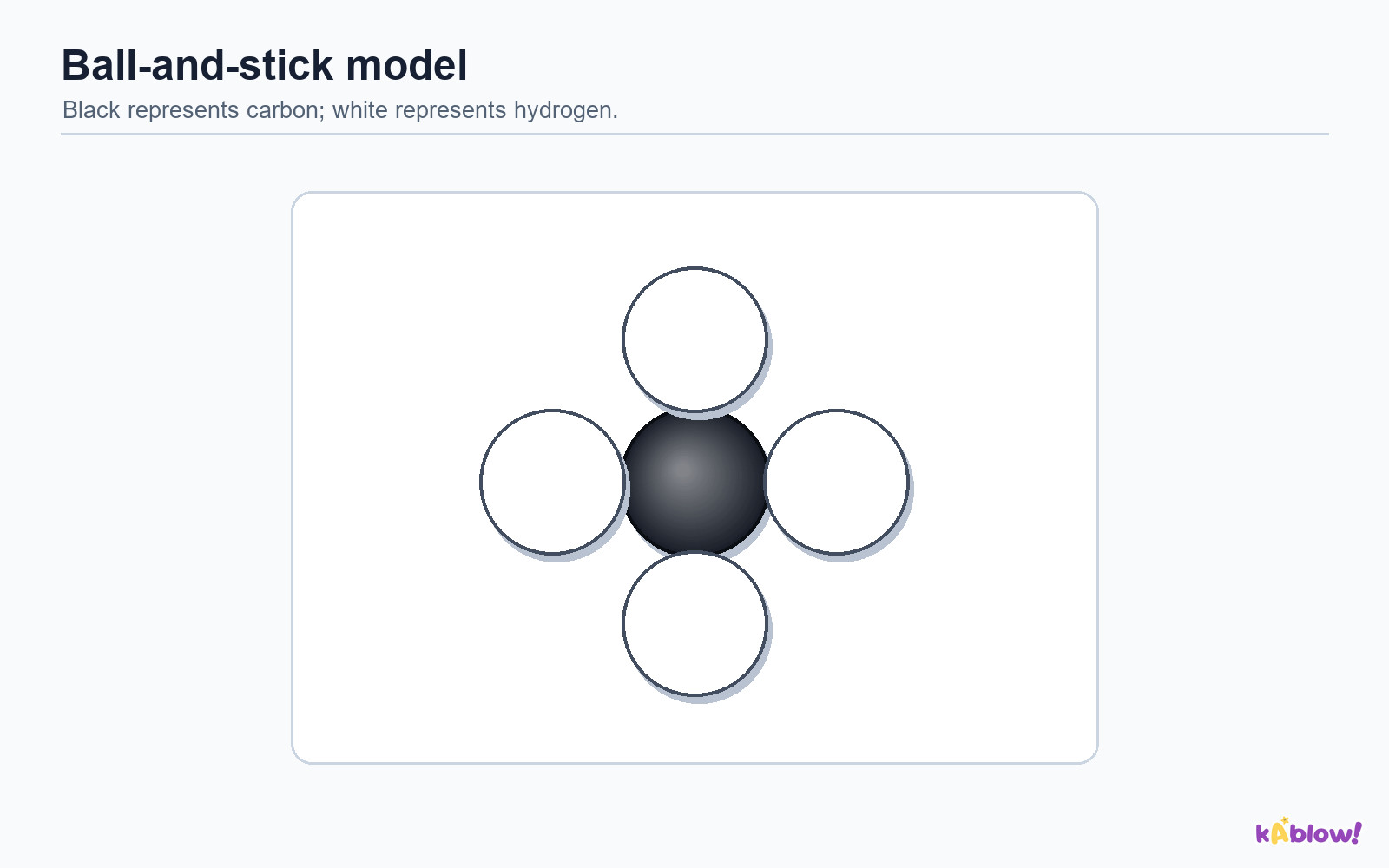
- A molecular formula shows the type and number of atoms in a molecule (e.g., H₂O, CH₄).
- Ionic compounds are formed from metals and non-metals; the formula must have no overall charge.
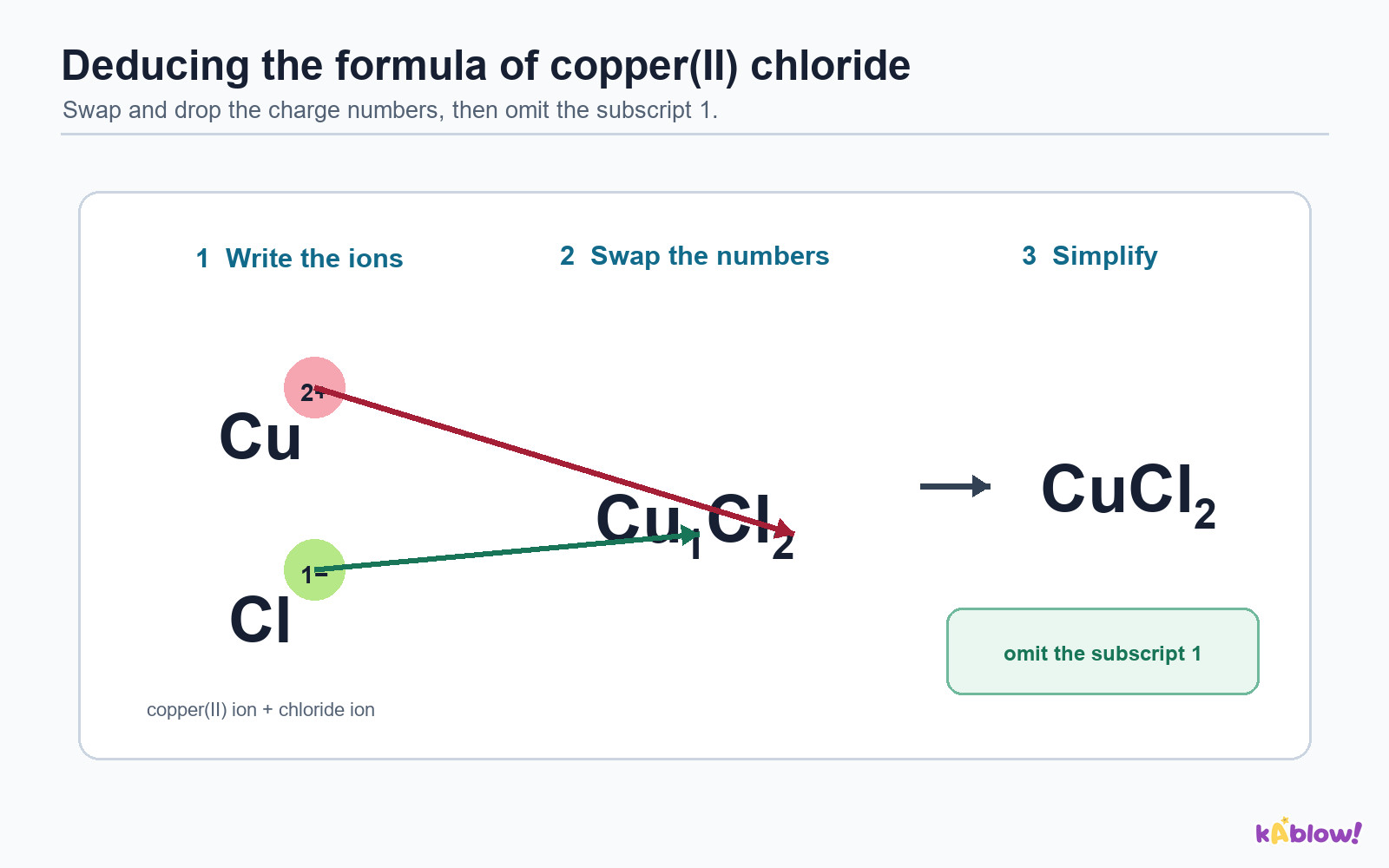
- Use the swap-and-drop method to determine the formula when ions have different charges (e.g., Cu²⁺ and Cl⁻ → CuCl₂).
- Common polyatomic ions: carbonate CO₃²⁻, sulfate SO₄²⁻, hydroxide OH⁻, nitrate NO₃⁻, ammonium NH₄⁺.
Swap-and-drop method for copper(II) chloride
Writing Equations
- Word equations show reactants → products using full chemical names.
- Symbol equations use chemical formulae and must be balanced to satisfy conservation of mass.
- Include state symbols: (s) solid, (l) liquid, (g) gas, (aq) aqueous.
- Balance by adjusting coefficients in front of formulae; never change subscripts.
- Ionic equations show only the species that change; spectator ions are removed.
- Example: 2Al(s) + 3Cl₂(g) → 2AlCl₃(s) is a balanced symbol equation.
Relative Atomic Mass (Aᵣ)
- Relative atomic mass (Aᵣ) compares the mass of an atom to 1/12 the mass of carbon-12.
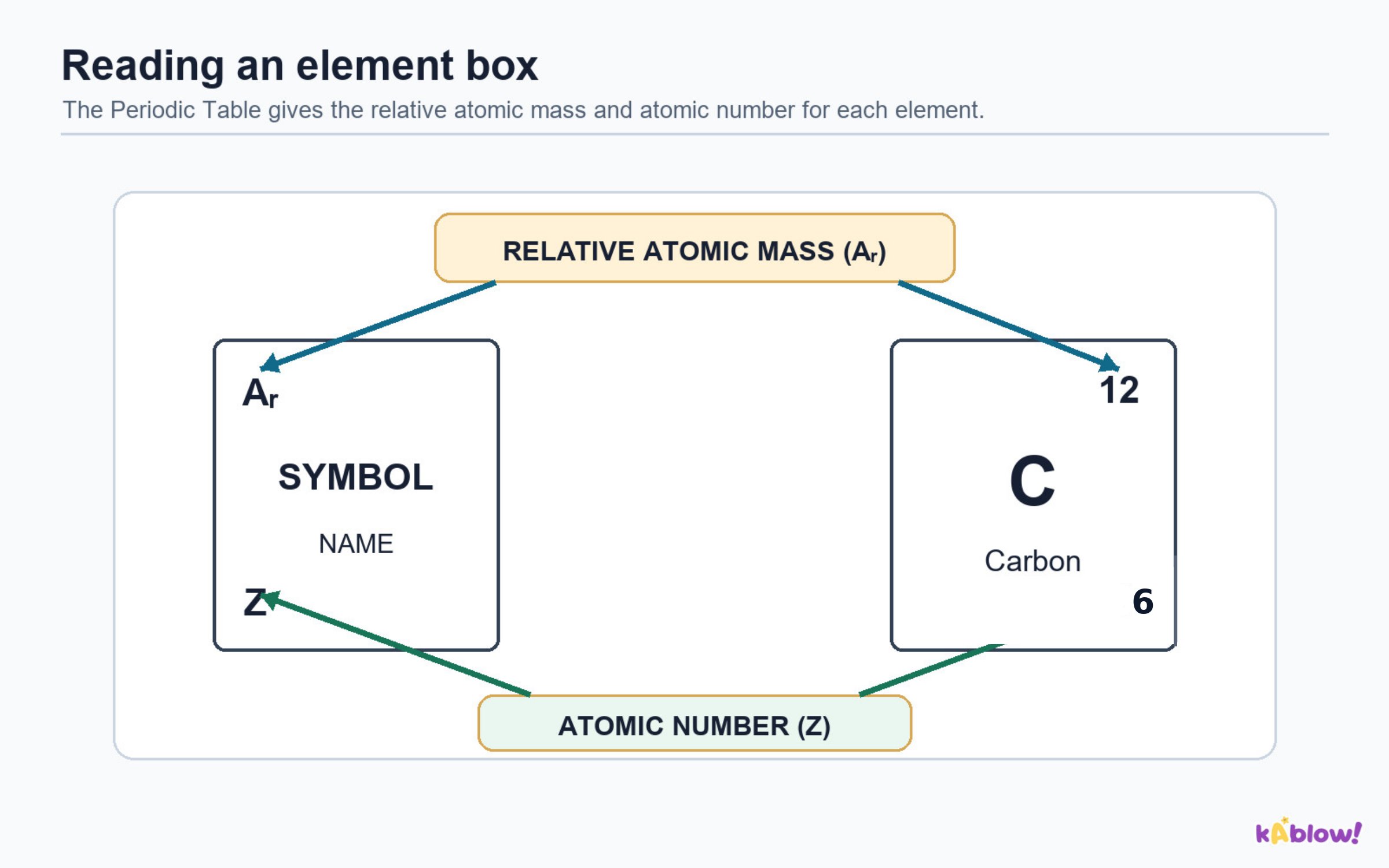
- Aᵣ values are found on the Periodic Table (e.g., H=1, C=12, O=16).
- Carbon-12 is the standard with a fixed mass of 12 units.
Key for chemical symbols on the Periodic Table
Relative Formula Mass (Mᵣ)
- Relative formula mass (Mᵣ) is the sum of the Aᵣ of all atoms in a formula.
- For molecules, it is called relative molecular mass.
- Calculate Mᵣ by multiplying each Aᵣ by the number of atoms and adding them (e.g., H₂O: 2×1 + 16 = 18).
- Examples: NaCl = 58.5, Ca(OH)₂ = 74, (NH₄)₂SO₄ = 132.
Reacting Masses
- Conservation of mass: total mass of reactants = total mass of products.
- Use balanced equations and Mᵣ to calculate masses of reactants and products.
- Example: 2Ca + O₂ → 2CaO: 80 g Ca reacts with 32 g O₂ to give 112 g CaO.
- Mass ratios are fixed; doubling the reactant mass doubles the product mass.
Slides
Sign up free to view the lesson slides
Step through every slide for this topic — plus flashcards and revision notes — with a free account.
Practice questions
Free preview — 8 of 43 questions. Sign up to see them all.
1.Which of the following elements exists as a diatomic molecule?
Easy- AHelium
- BChlorine
- CCarbon
- DSulfur
2.What is the molecular formula of water?
Easy3.Calculate the relative formula mass of calcium hydroxide, Ca(OH)2. (Ar: Ca=40, O=16, H=1)
Medium- A81
- B67
- C74
- D88
4.Complete the sentence.
EasyIn a balanced chemical equation, the total mass of reactants equals the total mass of products due to the law of ____.
5.The relative atomic mass of carbon is 12.
EasyTrue or false?
6.Match each ion to its formula.
Easy- Hydroxide
- Sulfate
- Ammonium
- OH-
- SO42-
- NH4+
7.Arrange the following steps for writing an ionic equation in the correct order.
Medium- Replace ionic compounds with component ions
- Write the full balanced symbol equation
- Remove spectator ions
8.Calculate the mass of carbon dioxide produced when 32 g of methane (CH4) burns completely in excess oxygen. (Ar: H=1, C=12, O=16) CH4 + 2O2 → CO2 + 2H2O
Hard- A97
- B106
- C88
- D79
Unlock all 43 questions, flashcards & more
Create a free account to see every question, the slides, flashcards and revision notes for this topic.