Energy Work And Power
Learn it by playing
Answer these questions to earn energy, then fish and explore. No account needed.
Lesson notes
Energy Stores & Transfers
- Energy is a property stored or transferred, measured in joules (J).
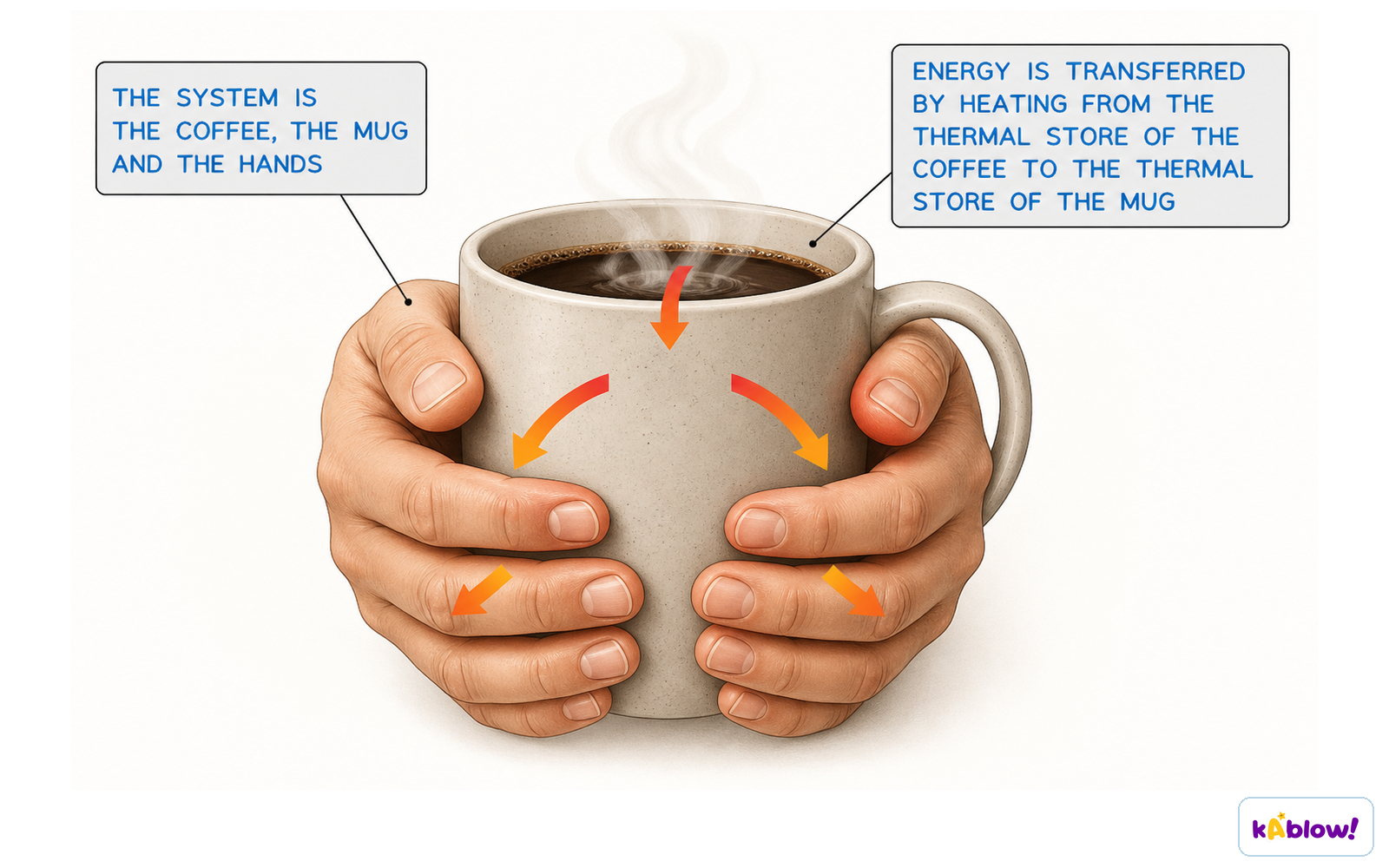
- A system is an object or group of objects; a change in a system involves energy transfer.
- Energy stores include: kinetic, gravitational potential, elastic, magnetic, electrostatic, chemical, nuclear, thermal.
- Energy transfer pathways: mechanical (force), electrical (charge flow), heating (particle collision), radiation (electromagnetic waves).
- Example: a battery powering a torch transfers energy electrically from the chemical store of the battery to the thermal store of the bulb.
Energy transfer by heating from a hot coffee mug to cold hands
Kinetic Energy
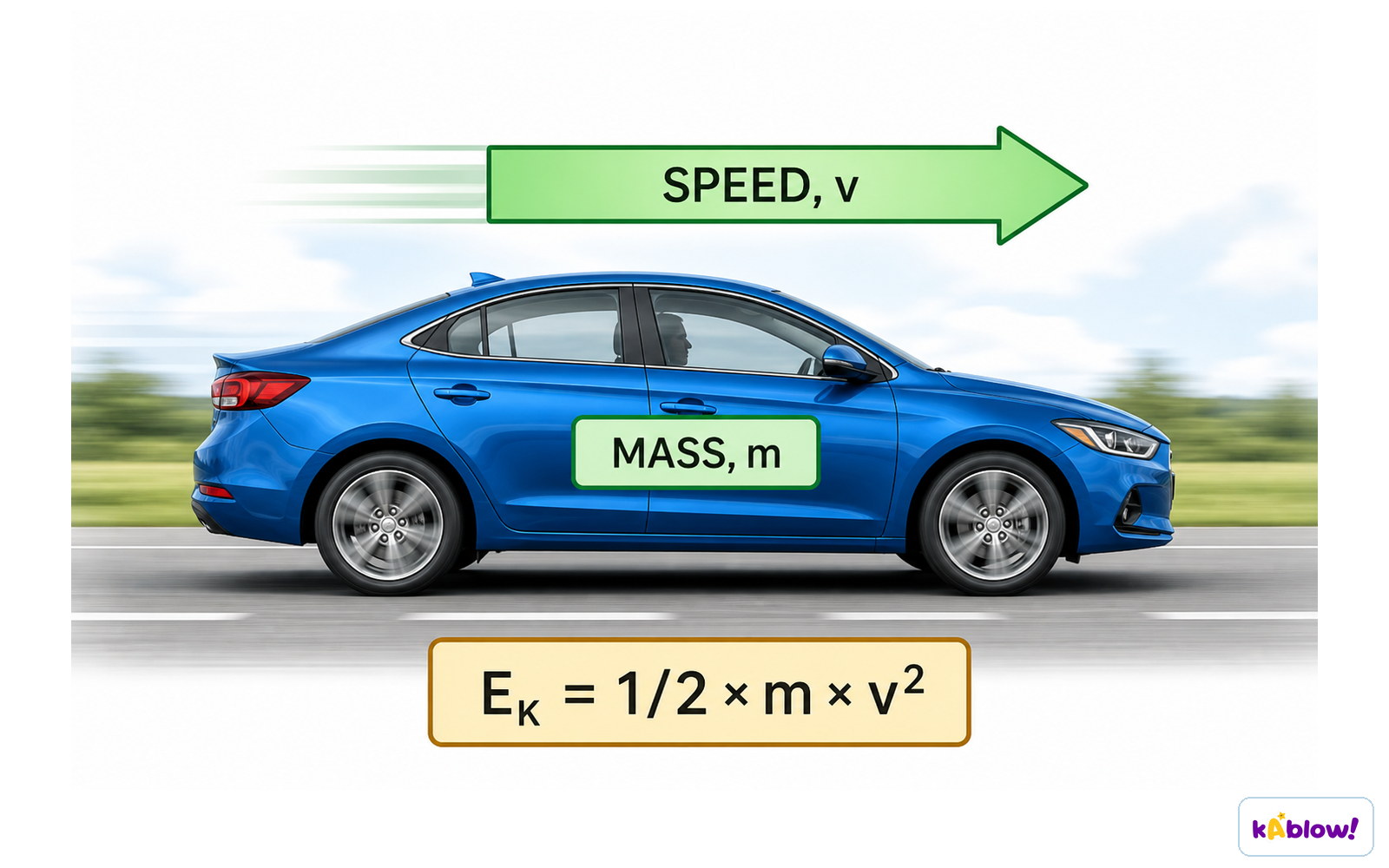
- Kinetic energy is the energy an object has due to its mass and speed: Ek = \frac{1}{2}mv2.
- Kinetic energy is directly proportional to mass (Ek \propto m) and to the square of speed (Ek \propto v2).
- Doubling speed quadruples kinetic energy; doubling mass doubles kinetic energy.
- Always square the speed when calculating Ek.
Kinetic energy of a moving car
Gravitational Potential Energy
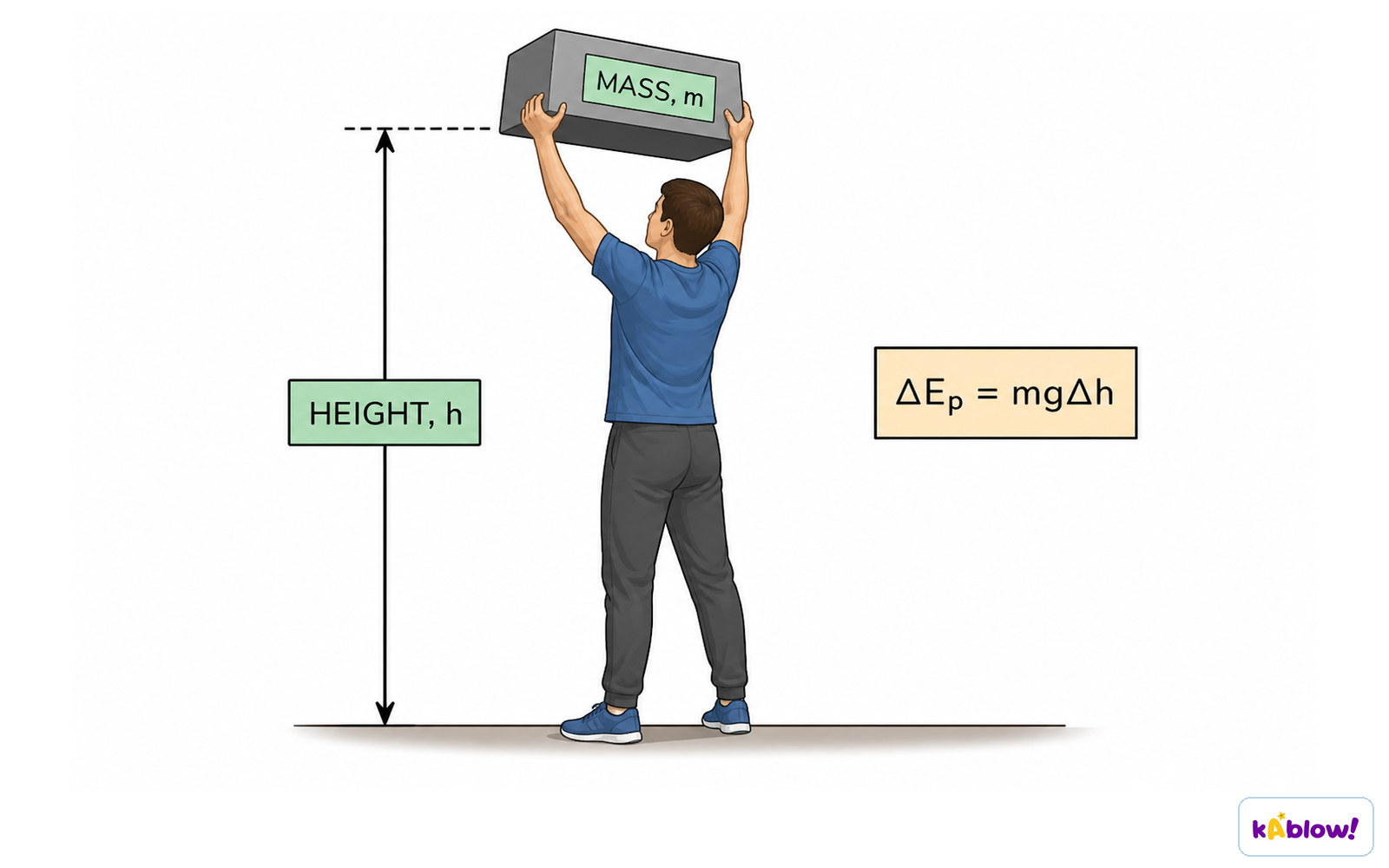
- Gravitational potential energy is the energy an object has due to its height in a gravitational field: \Delta Ep = mg\Delta h.
- Work is done against weight to lift an object, transferring energy to its gravitational potential store.
- Gravitational field strength on Earth is g = 9.8\,\text{N/kg}.
- Round final answers to the lowest number of significant figures in the input values.
Gravitational potential energy of a lifted mass
Conservation of Energy
- Energy cannot be created or destroyed, only transferred from one store to another.
- In a closed system, total energy is constant: total energy in = total energy out.
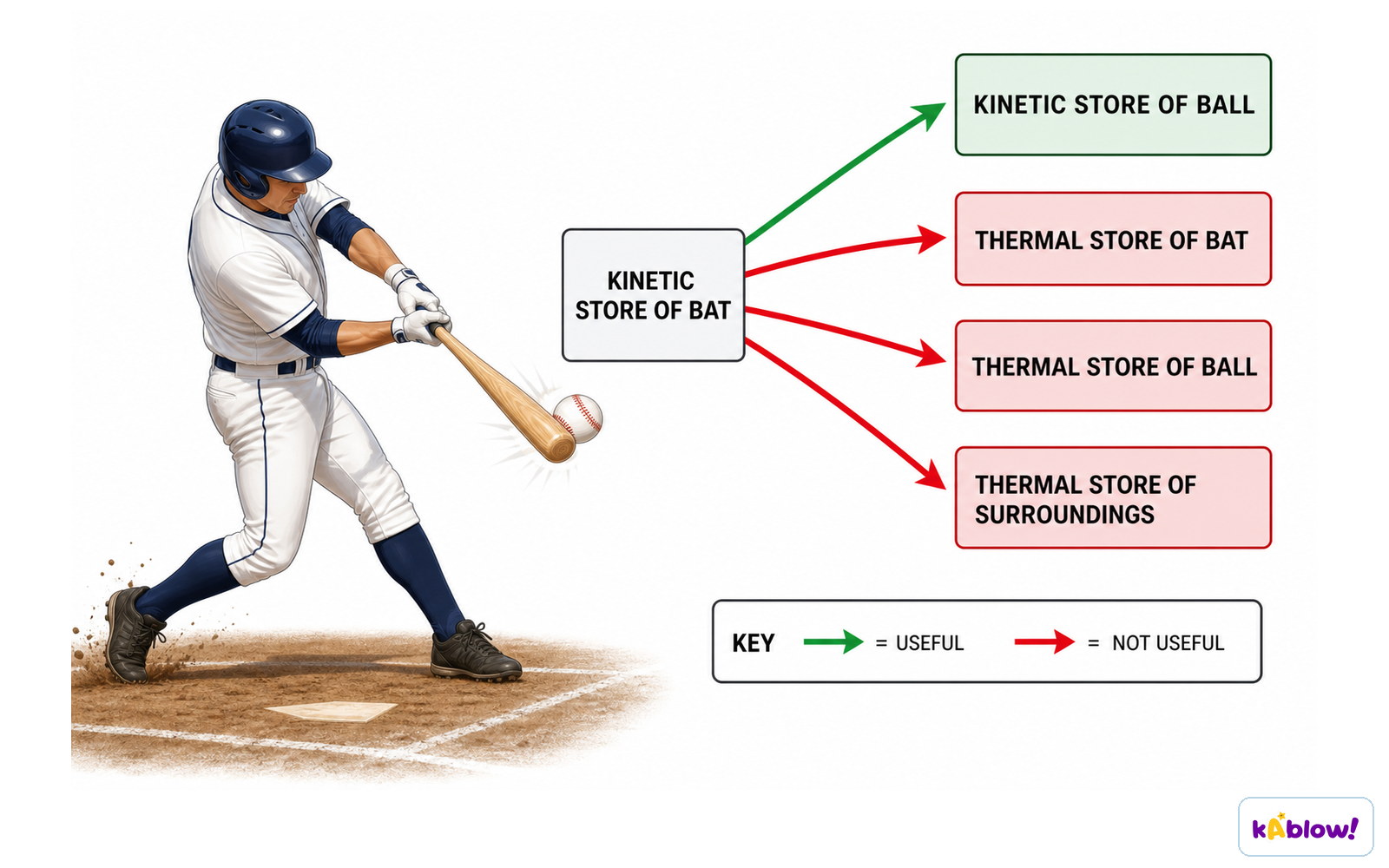
- Dissipated energy is spread out to the surroundings (often as thermal energy) and is usually wasted.
- Energy flow diagrams show stores (labels) and transfers (arrows); the total energy is conserved.
Conservation of energy: a bat hitting a ball
Work Done
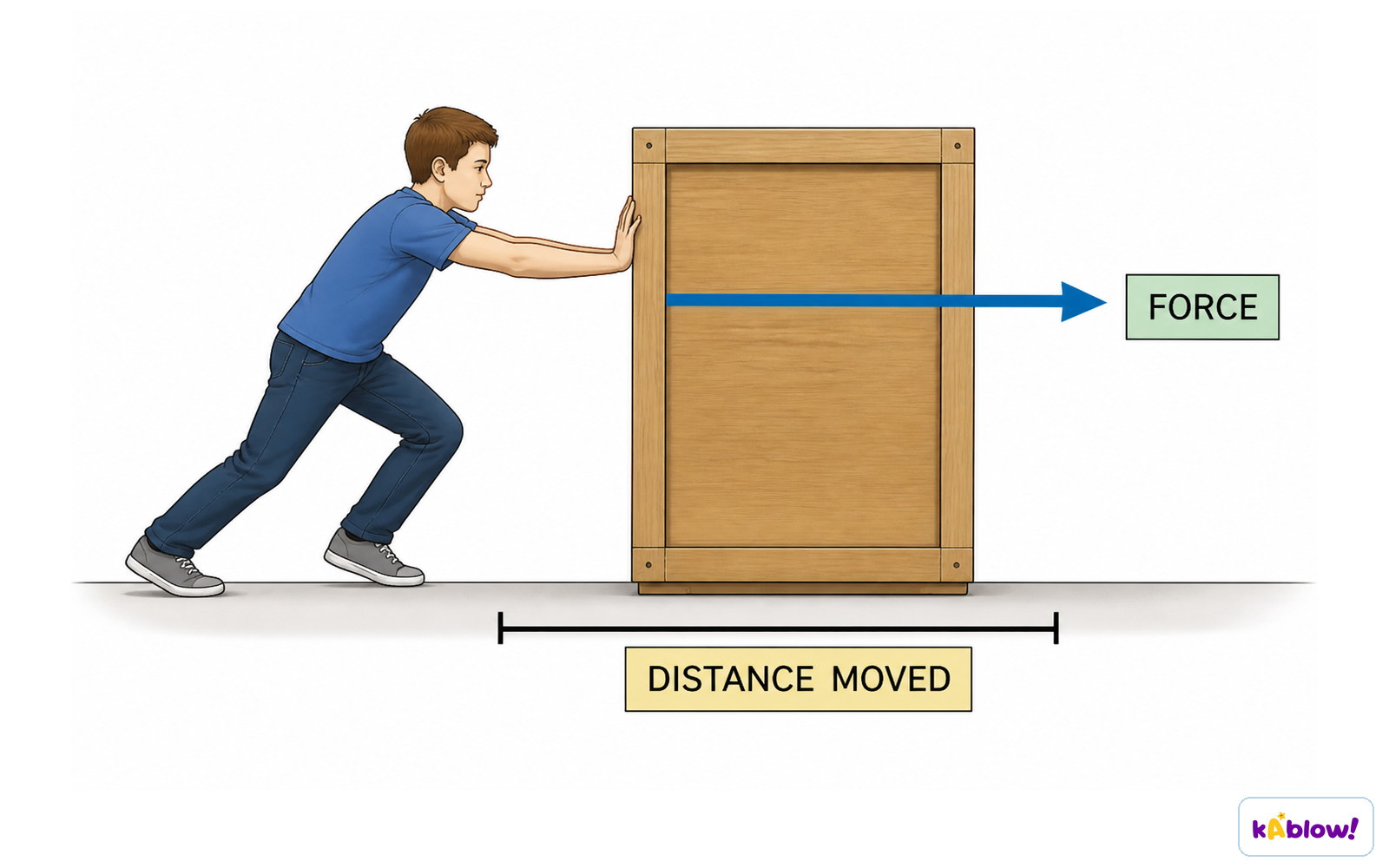
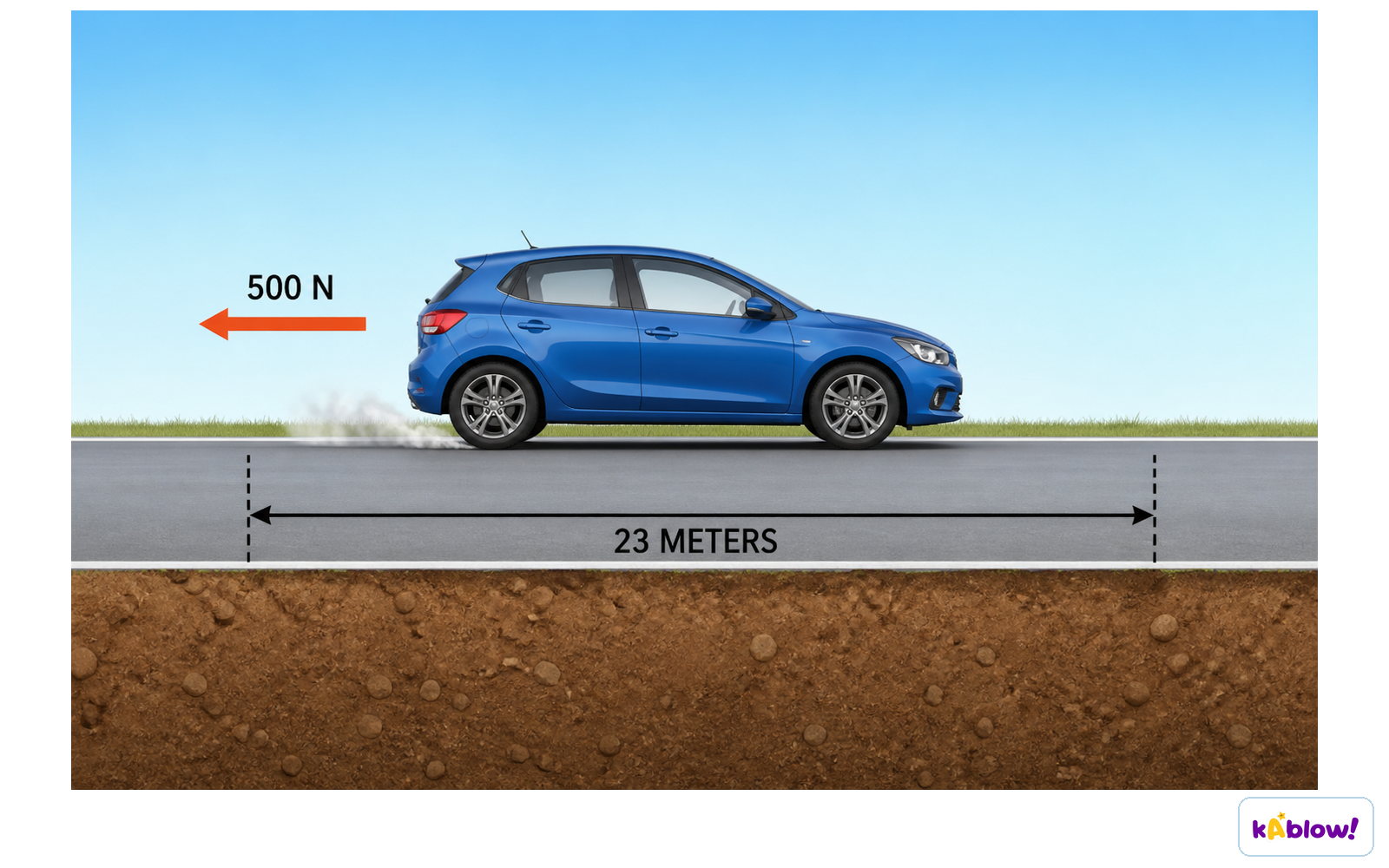
- Work is done when a force moves an object over a distance in the direction of the force: W = Fd = \Delta E.
- Work done and energy transferred are equivalent: 1 N m = 1 J.
- No work is done if the object does not move (e.g., pushing against a wall).
- Example: a bird flying does work against air resistance (drag).
Work done pushing a box
Power
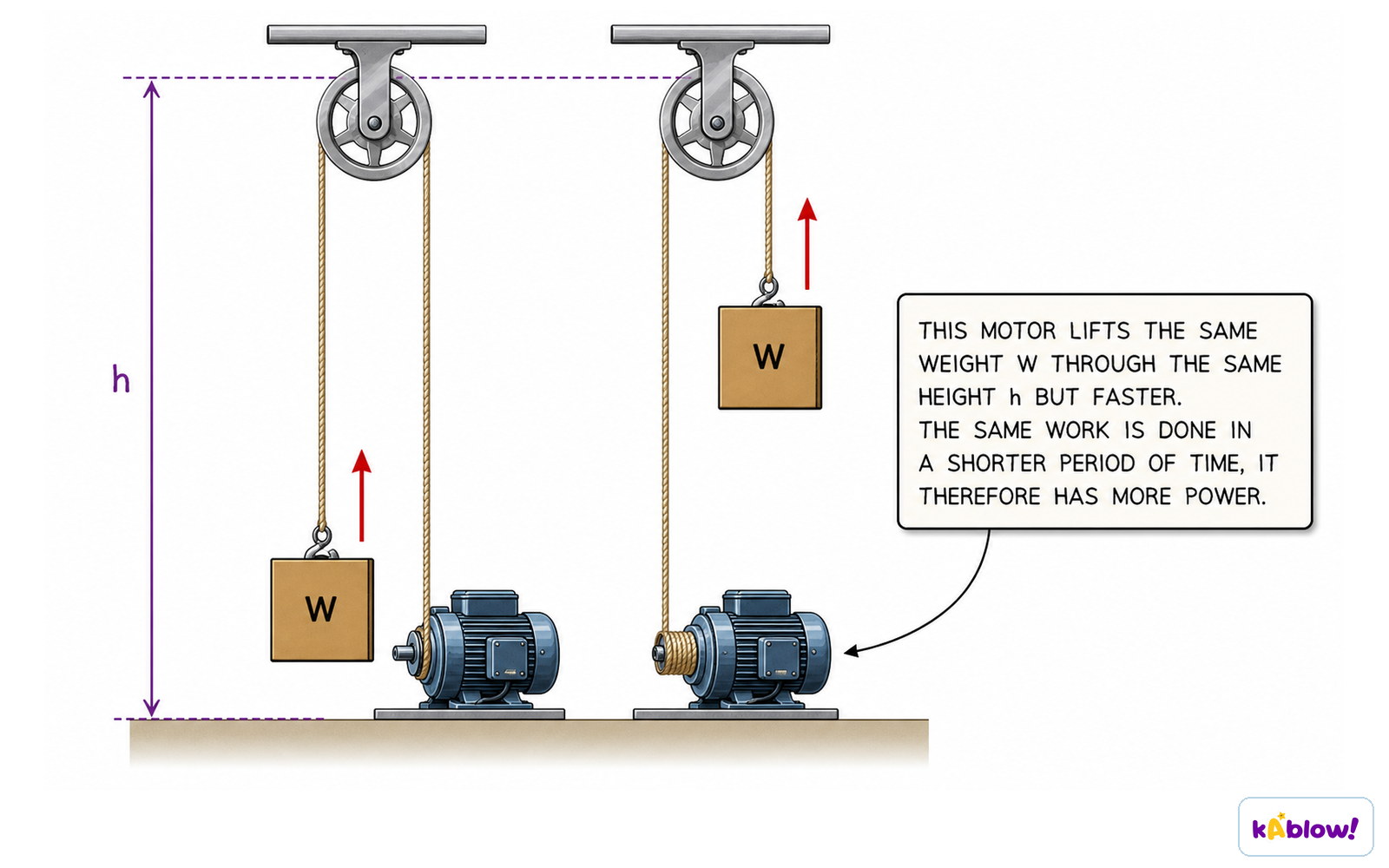
- Power is the rate of work done or energy transferred: P = \frac{W}{t} = \frac{\Delta E}{t}.
- Power is measured in watts (W); 1 W = 1 J/s.
- Common power ratings: torch 1 W, light bulb 100 W, large power station 10 GW.
- A more powerful machine does the same work in less time.
Two motors lifting the same weight at different speeds
Efficiency
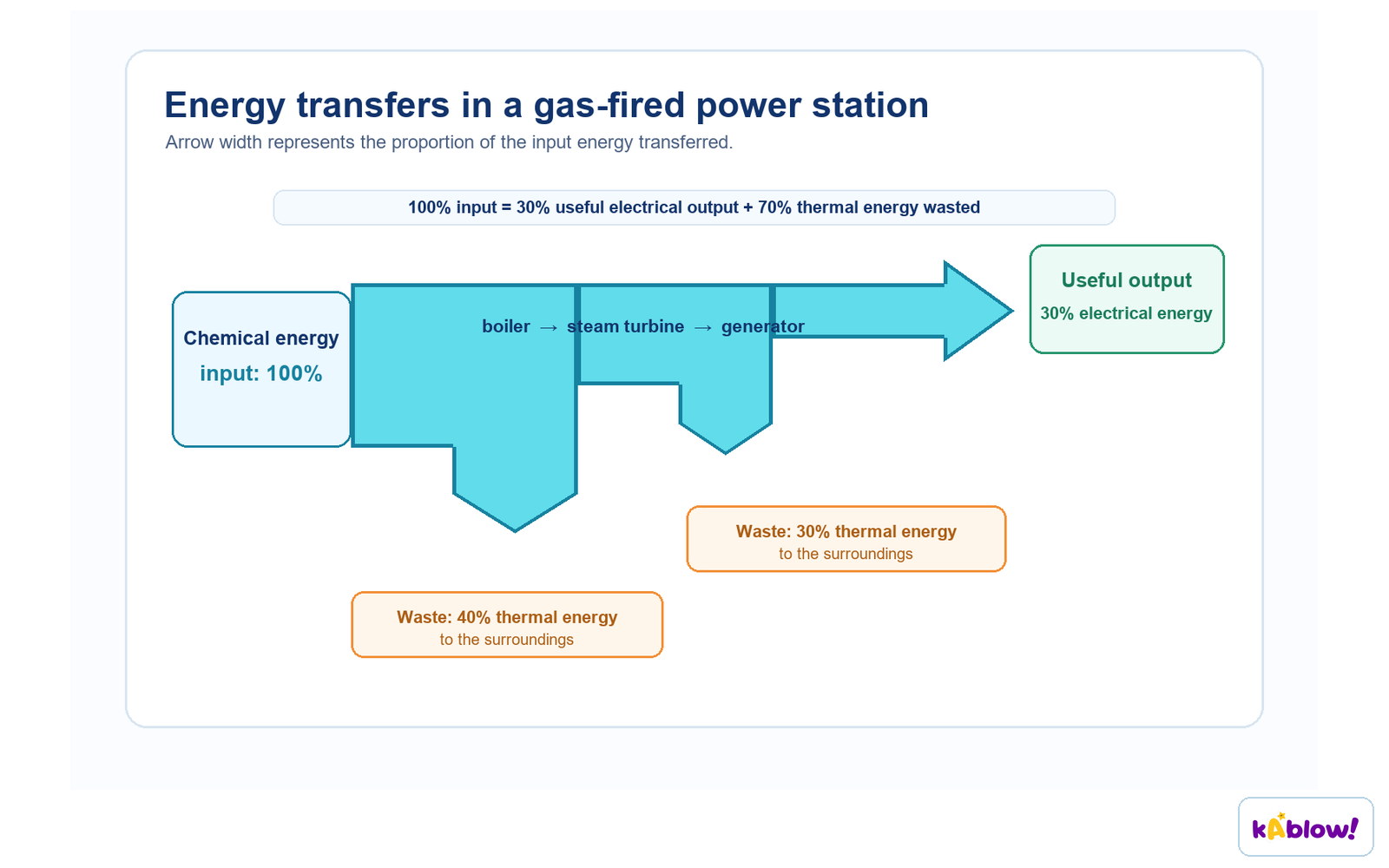
- Efficiency is the ratio of useful energy (or power) output to total energy (or power) input.
- Efficiency = (useful energy output / total energy input) × 100%.
- Efficiency = (useful power output / total power input) × 100%.
- Efficiency has no units; it can be a decimal (0–1) or percentage (0–100%).
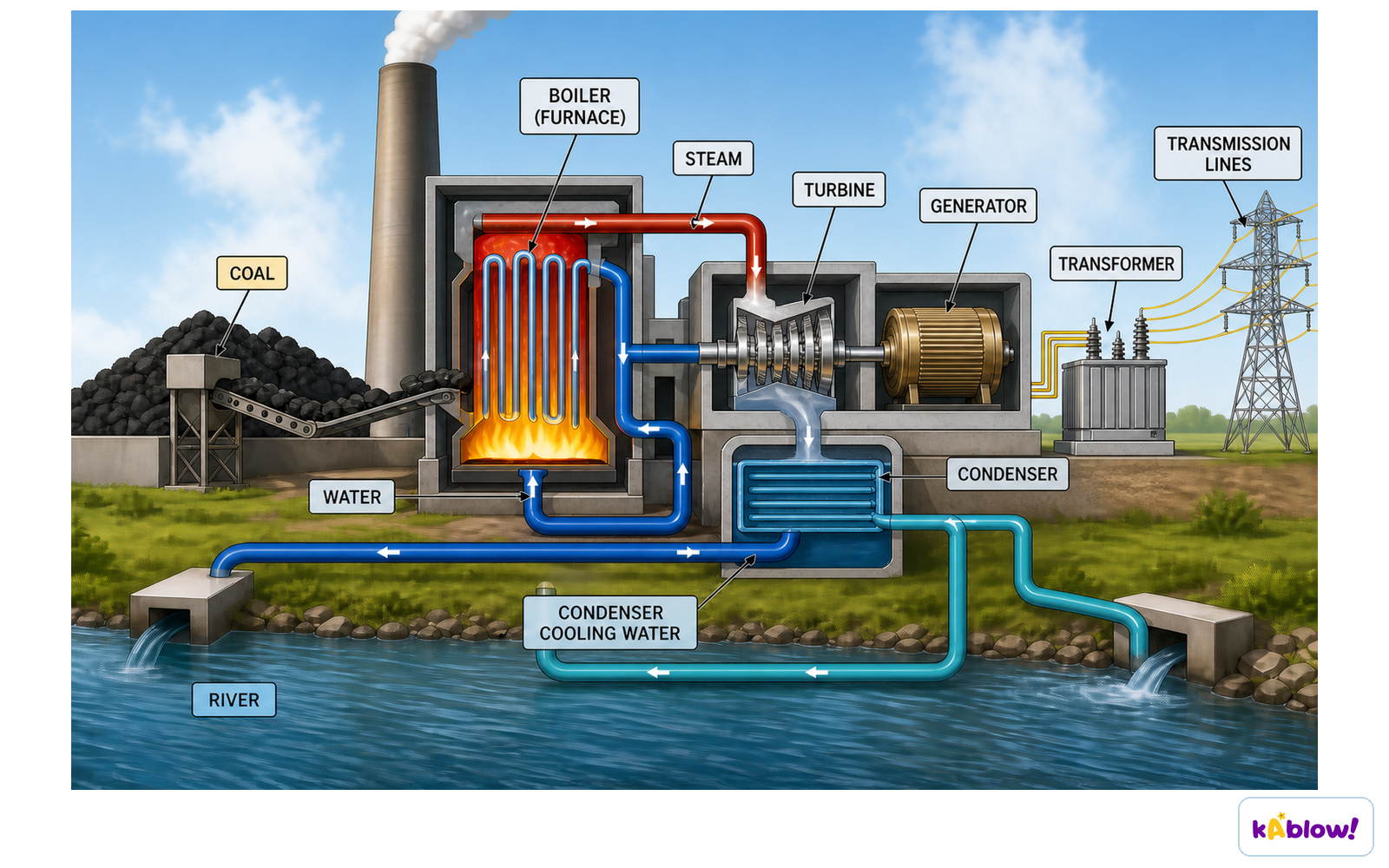
- Example: a typical thermal power station is about 30% efficient; 70% of energy is wasted.
Sankey diagram of a gas-fired power station
Energy Resources
- Solar cells convert sunlight directly into electricity (photovoltaic effect); solar panels heat water using infrared radiation.
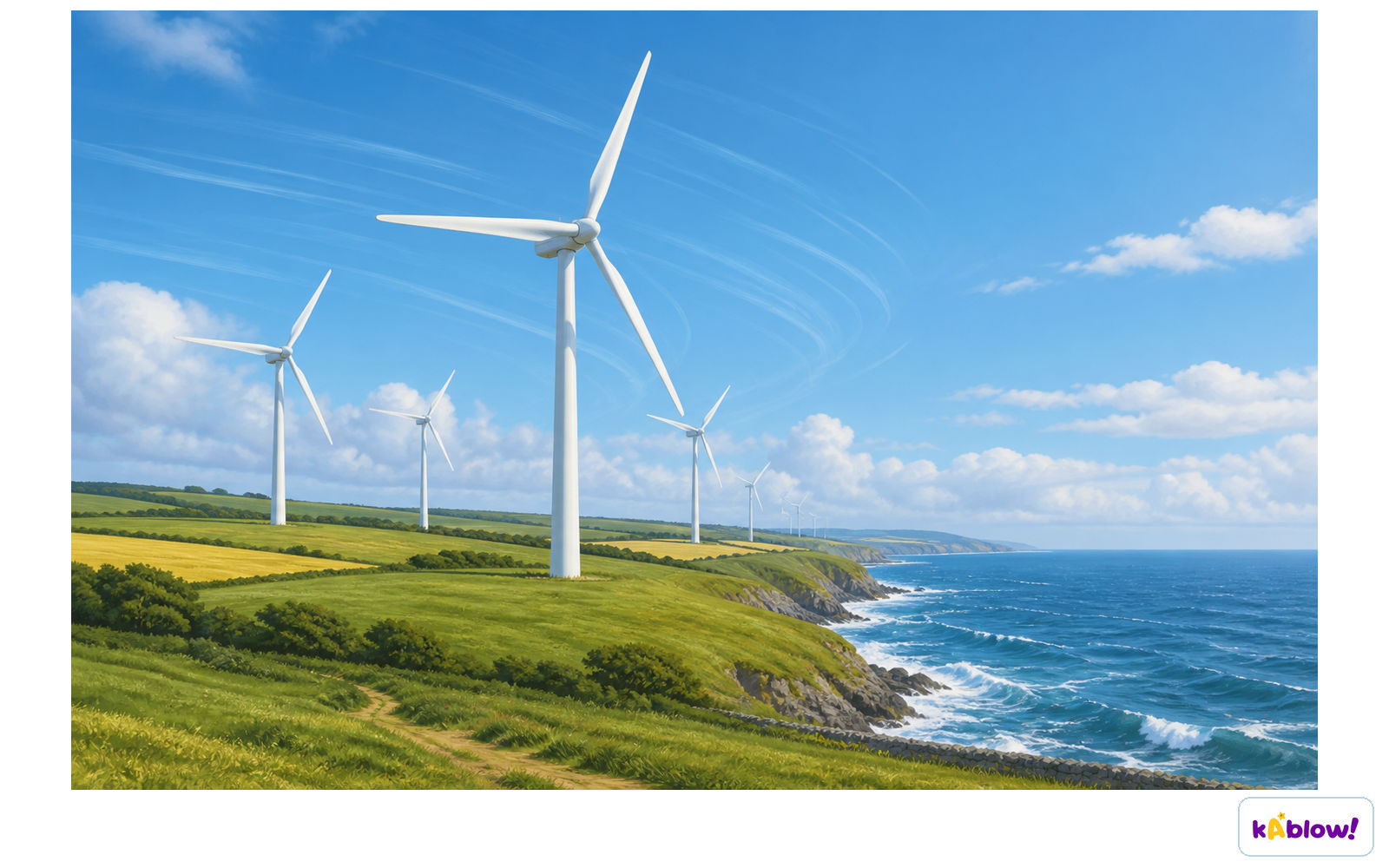
- Wind turbines transfer kinetic energy of wind to electricity; efficiency ~50%.
- Fossil fuels (coal, oil, gas) are non-renewable; burning releases CO₂ and SO₂.
- Biofuels are renewable and carbon-neutral in principle, but have lower energy density.
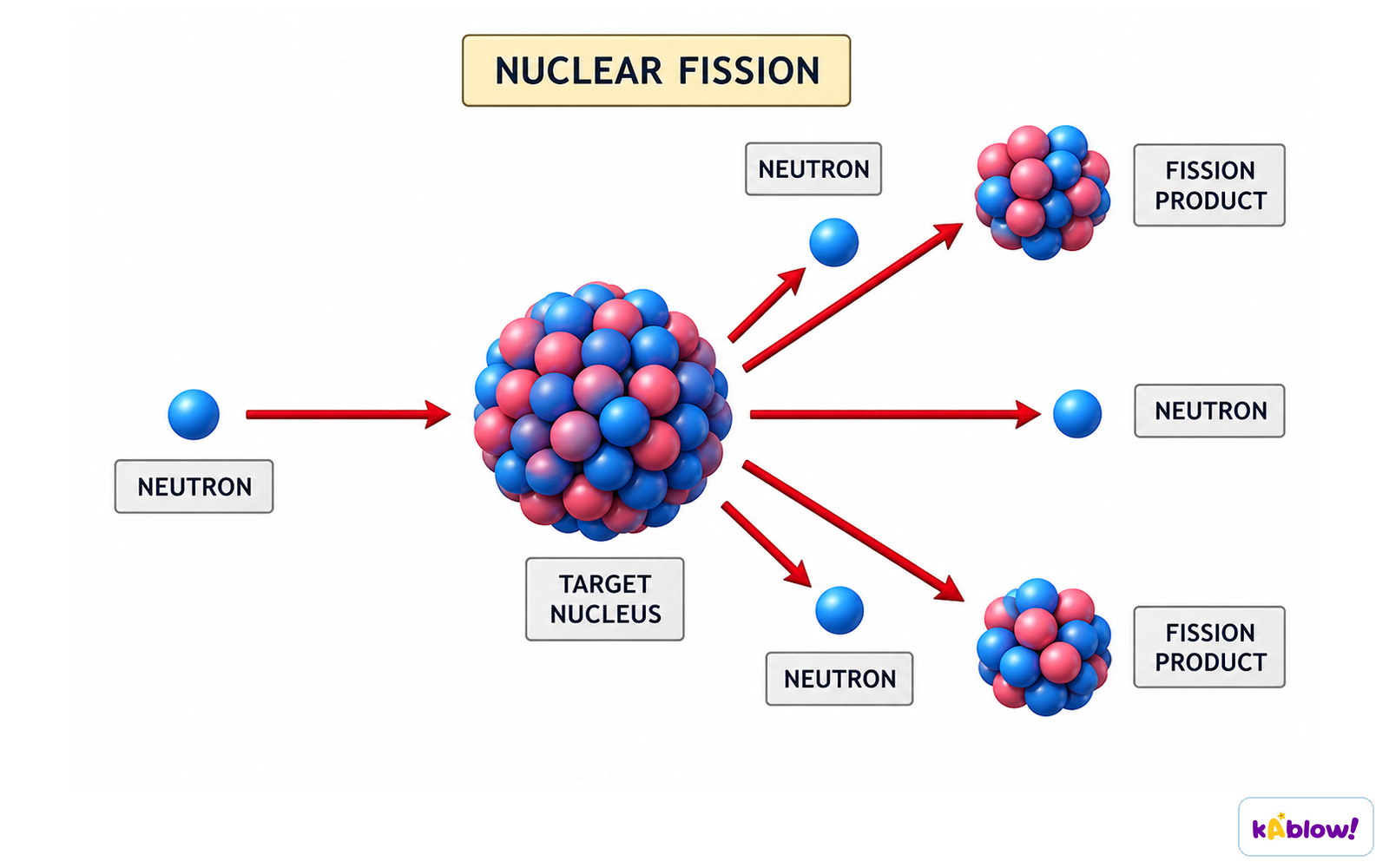
- Nuclear fission splits large nuclei to release energy; used in power stations.
- Hydroelectric, wave, and tidal power use water movement to turn turbines.
- Geothermal energy uses heat from Earth's core; renewable but location-dependent.
Wind turbines on a coastal wind farm
Nuclear Fission & Fusion
- Nuclear fission: splitting a large nucleus into two smaller nuclei, releasing energy.
- Nuclear fusion: joining two small nuclei to form a larger nucleus, releasing huge energy (occurs in stars).
- Fission is used in nuclear power stations; fusion requires extremely high temperatures and pressures.
Nuclear fission of a target nucleus
Slides
Sign up free to view the lesson slides
Step through every slide for this topic — plus flashcards and revision notes — with a free account.
Practice questions
Free preview — 8 of 56 questions. Sign up to see them all.
1.Which of the following is a correct unit for energy?
Easy- Ajoule
- Bwatt
- Cnewton
- Dmetre
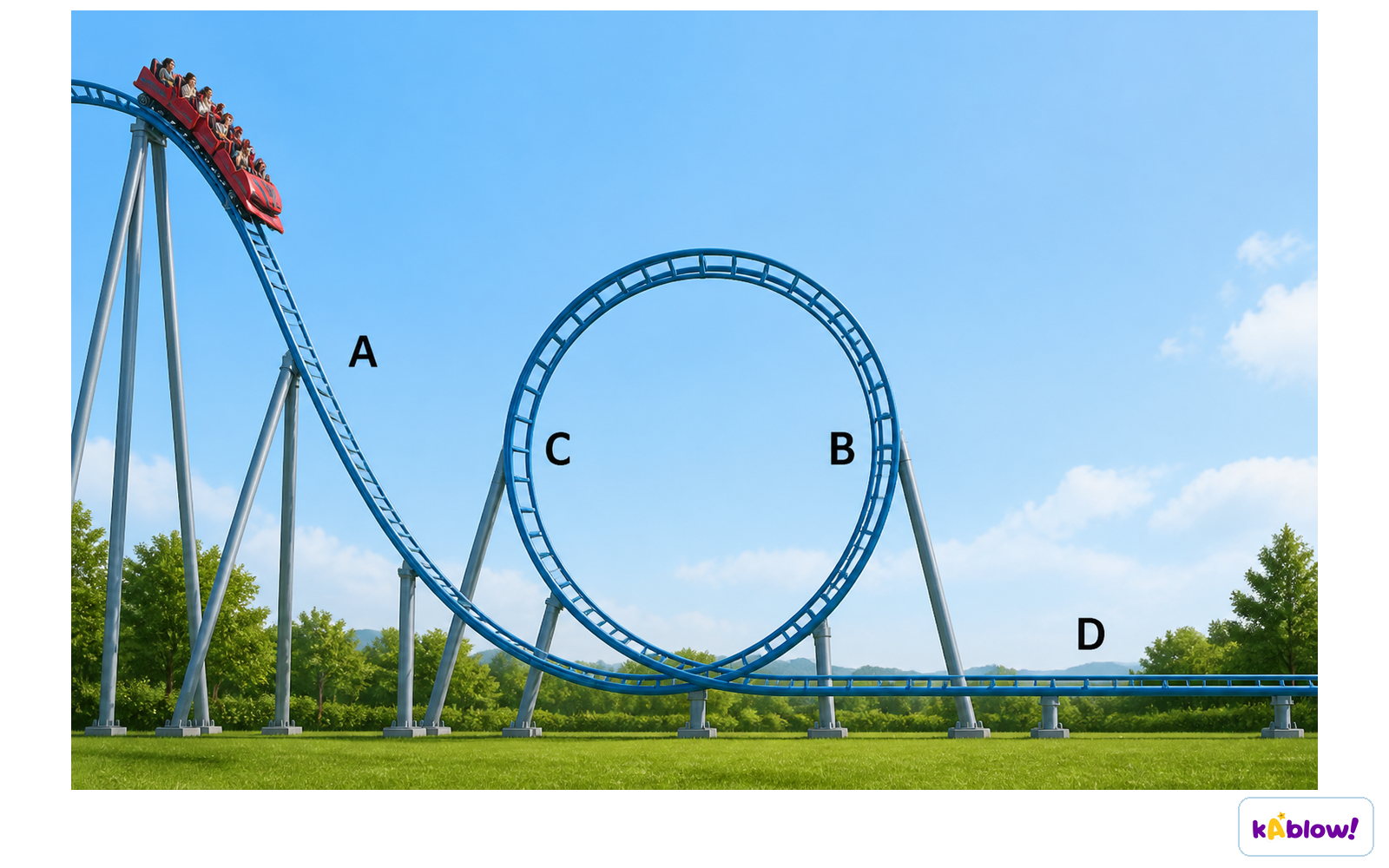
2.A ball is dropped from a height. As it falls, what happens to its gravitational potential energy and kinetic energy?
Easy- Agravitational potential energy increases, kinetic energy decreases
- Bgravitational potential energy decreases, kinetic energy increases
- Cboth gravitational potential energy and kinetic energy increase
- Dboth gravitational potential energy and kinetic energy decrease
3.State the principle of conservation of energy.
Easy4.Complete the sentence about power.
EasyPower is the rate at which ____ is done or energy is transferred.
5.Name one energy resource that does not come from the Sun.
Easy6.An electric motor has an efficiency of 35%. It lifts a 7.2 kg load through 5 m in 3 s. What is the power input to the motor? (g = 9.8 N/kg)
Hard- A117.6 W
- B336 W
- C352.8 W
- D100.8 W
7.Explain the difference between nuclear fission and nuclear fusion.
Medium8.Which energy store is associated with a moving object?
Easy- Akinetic
- Bgravitational potential
- Cchemical
- Delastic potential
Unlock all 56 questions & more
Create a free account to see every question, the slides, flashcards and revision notes for this topic.