Kinetic Particle Model Of Matter
Learn it by playing
Answer these questions to earn energy, then fish and explore. No account needed.
Lesson notes
States of Matter
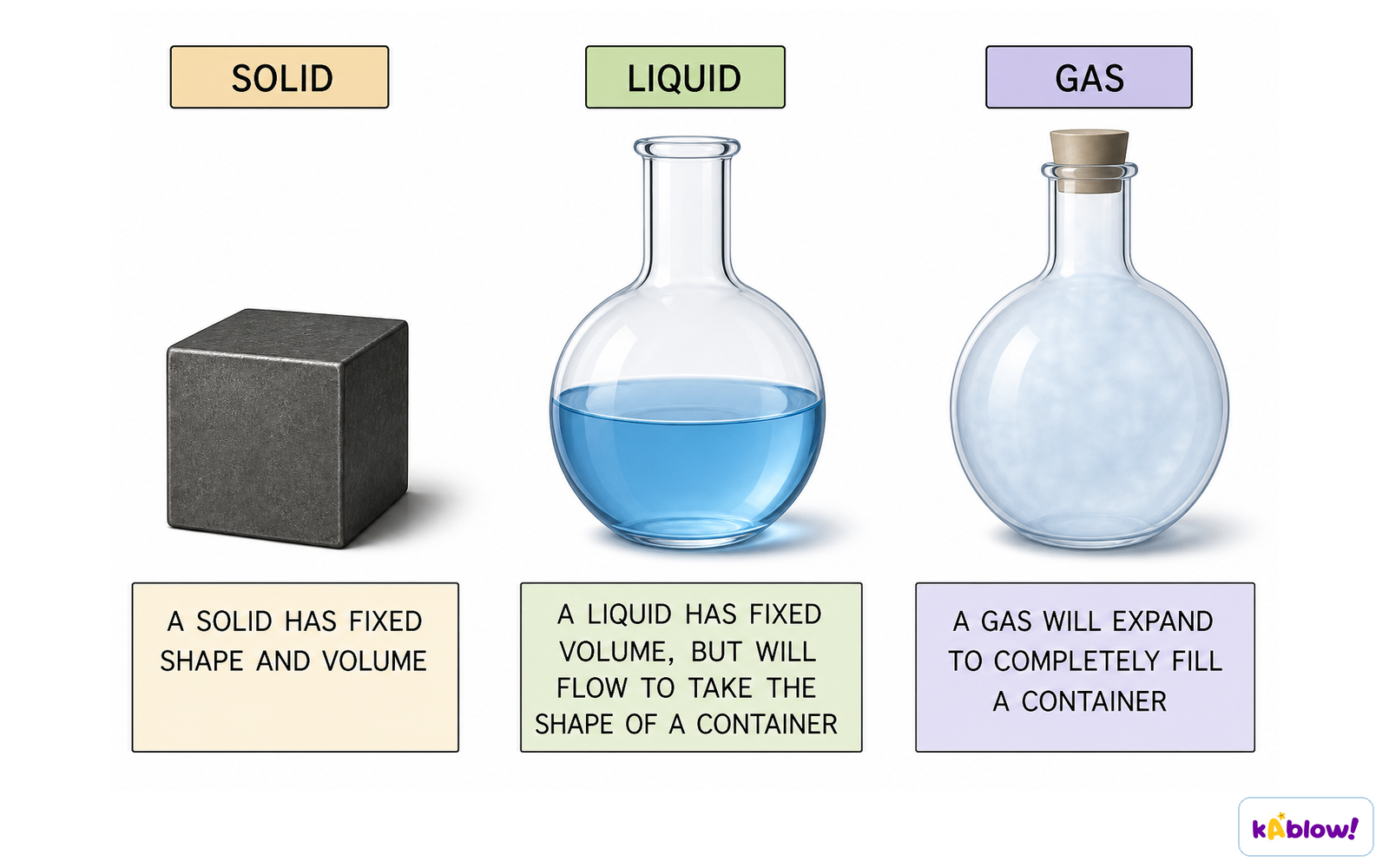
- Solids have a definite shape and volume; cannot flow; not compressible.
- Liquids have no definite shape but a definite volume; can flow; not compressible.
- Gases have no definite shape or volume; can flow; highly compressible.
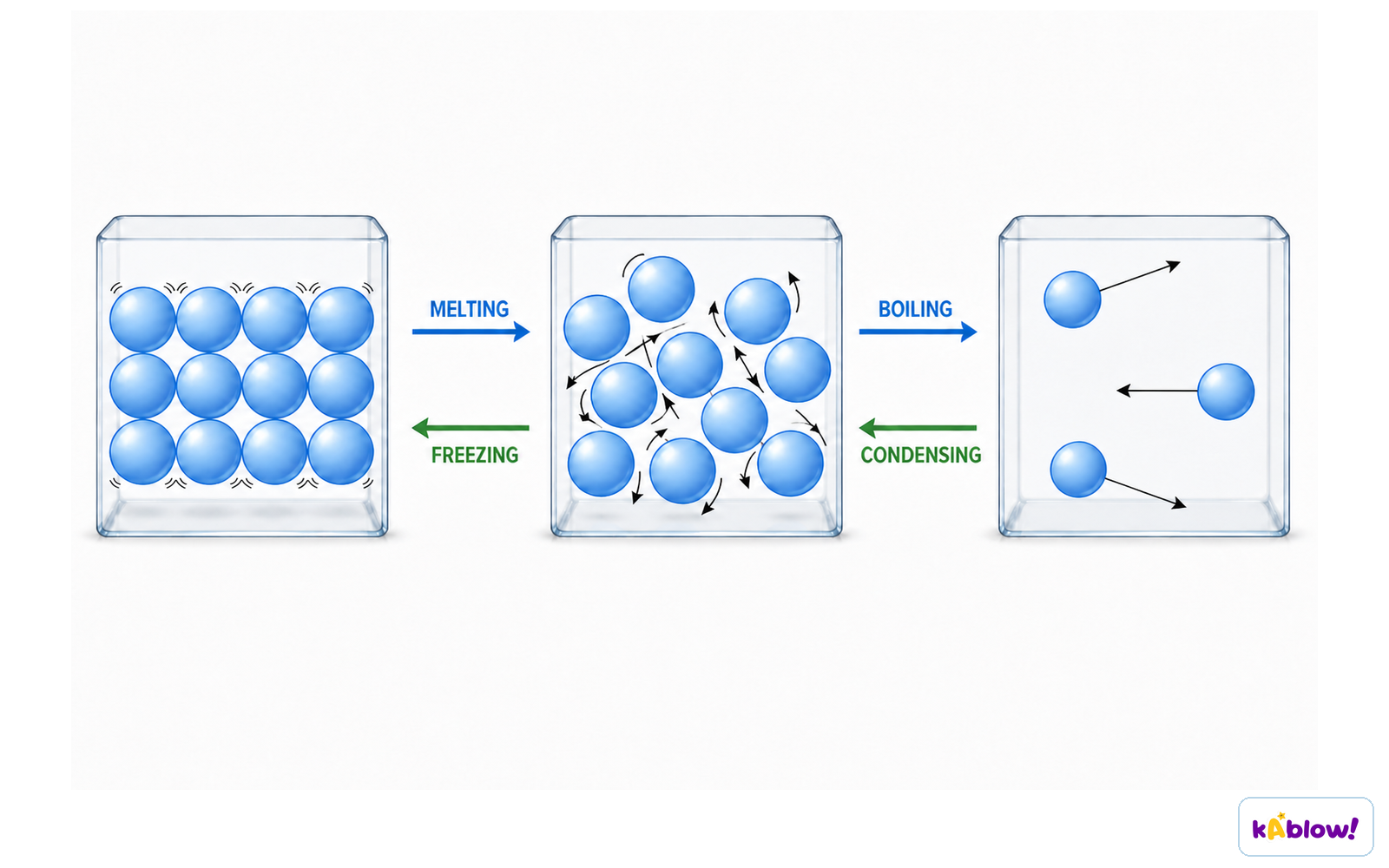
- Changes of state are physical changes (reversible); mass and number of molecules remain constant.
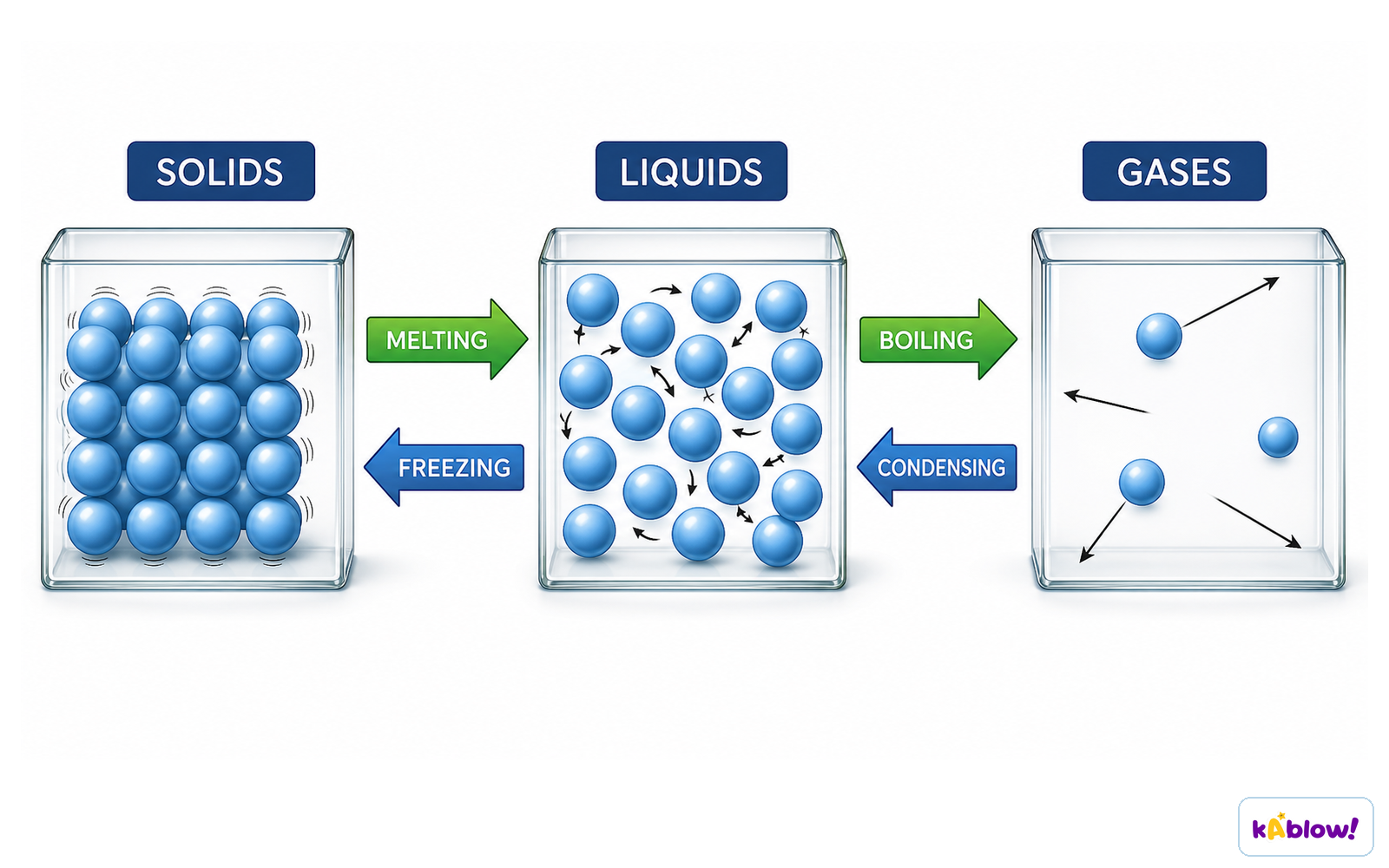
- Melting: solid → liquid; freezing: liquid → solid.
- Boiling/evaporating: liquid → gas; condensing: gas → liquid.
The three states of matter
Molecular Matter – Particle Arrangement & Motion
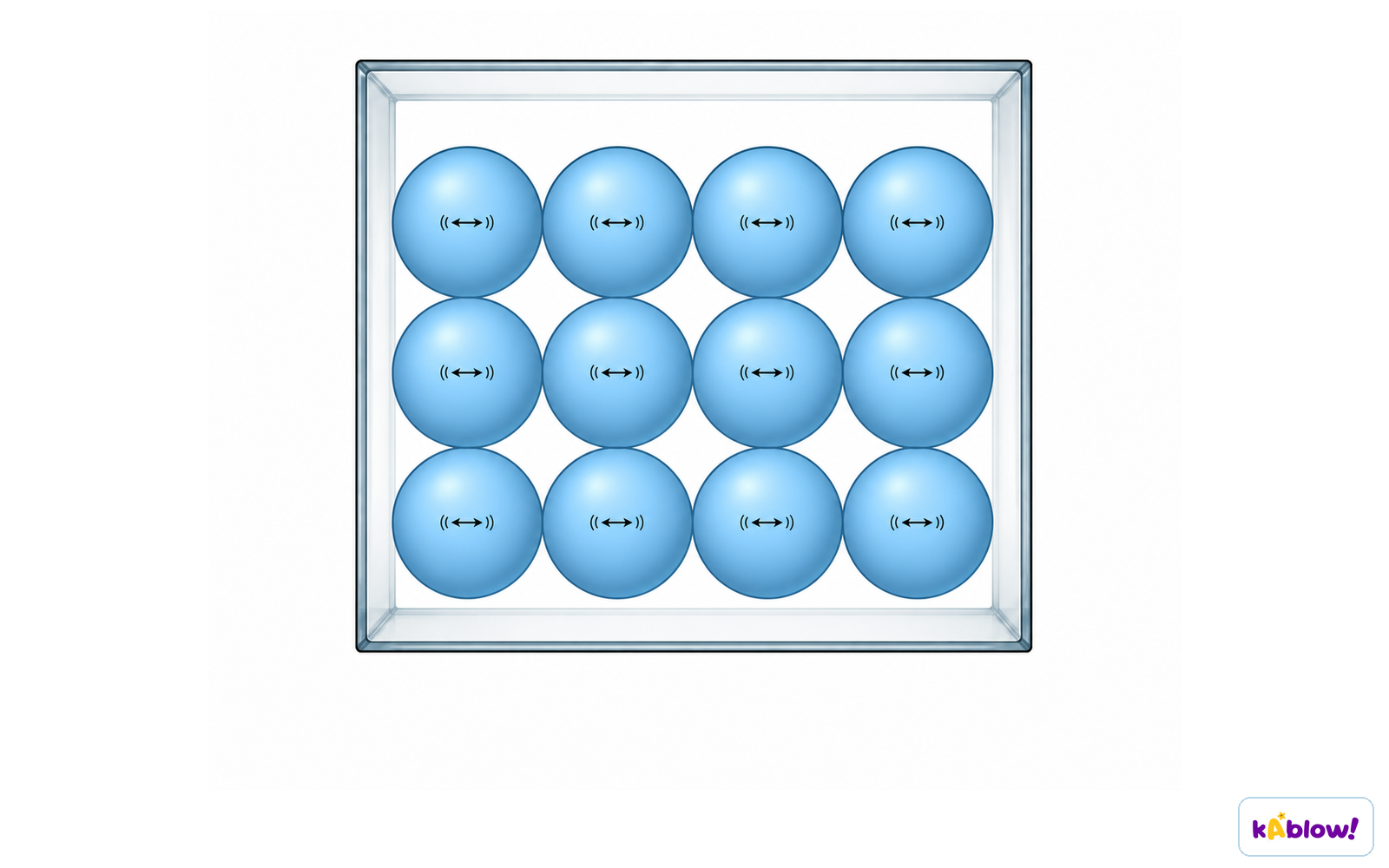
- In a solid, particles are closely packed in a regular pattern and vibrate about fixed positions.
- In a liquid, particles are close but randomly arranged; they can slide past each other.
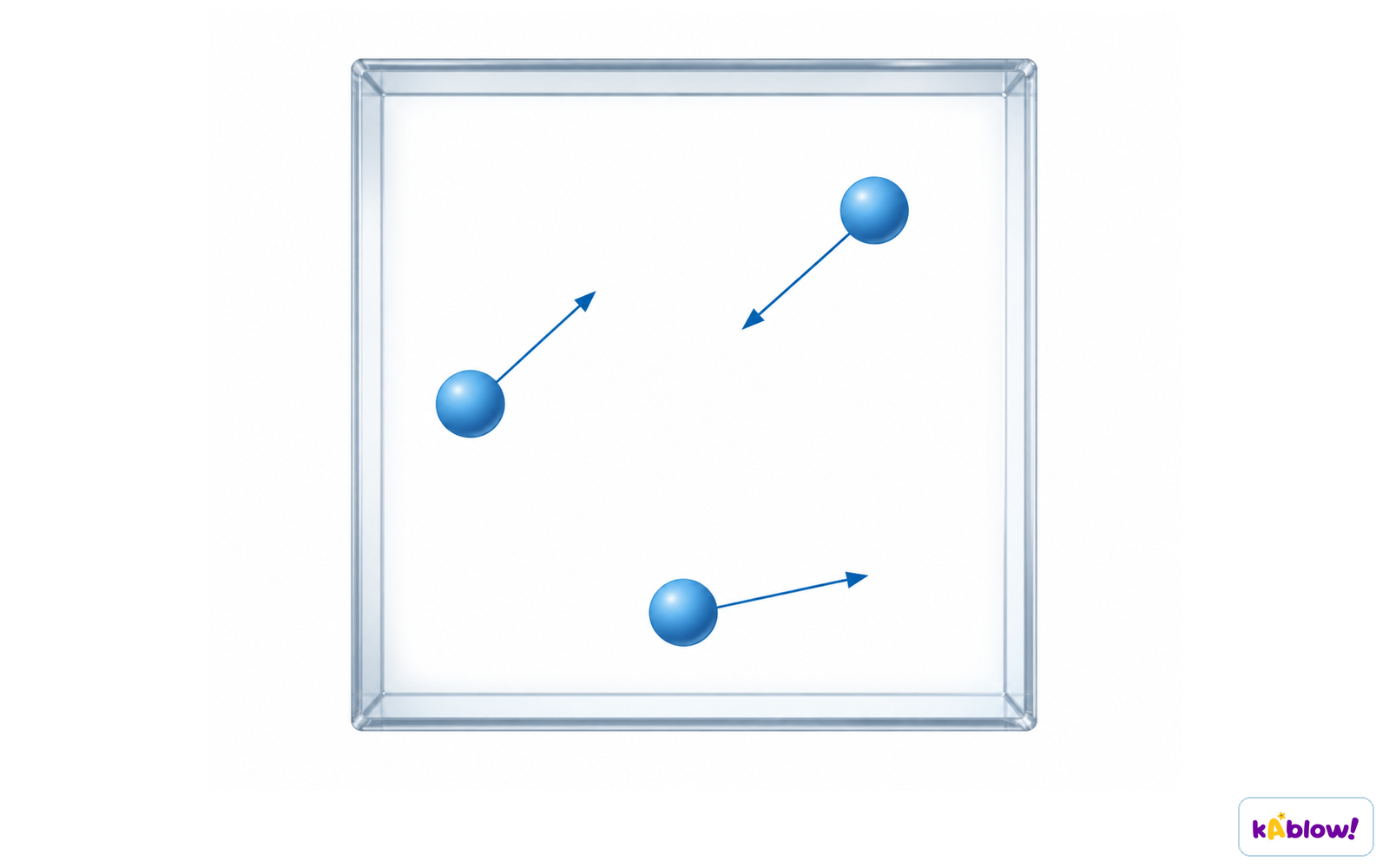
- In a gas, particles are widely spaced (~10× apart in each direction) and move rapidly and randomly.
- Density: solid (high), liquid (medium), gas (low).
- Intermolecular forces are strongest in solids, weaker in liquids, and negligible in gases.
- Particles in a gas have the highest kinetic energy; in a solid the lowest.
Particle arrangement and motion in solids, liquids and gases
Temperature & Pressure
- Increasing temperature increases the average speed and kinetic energy of particles.
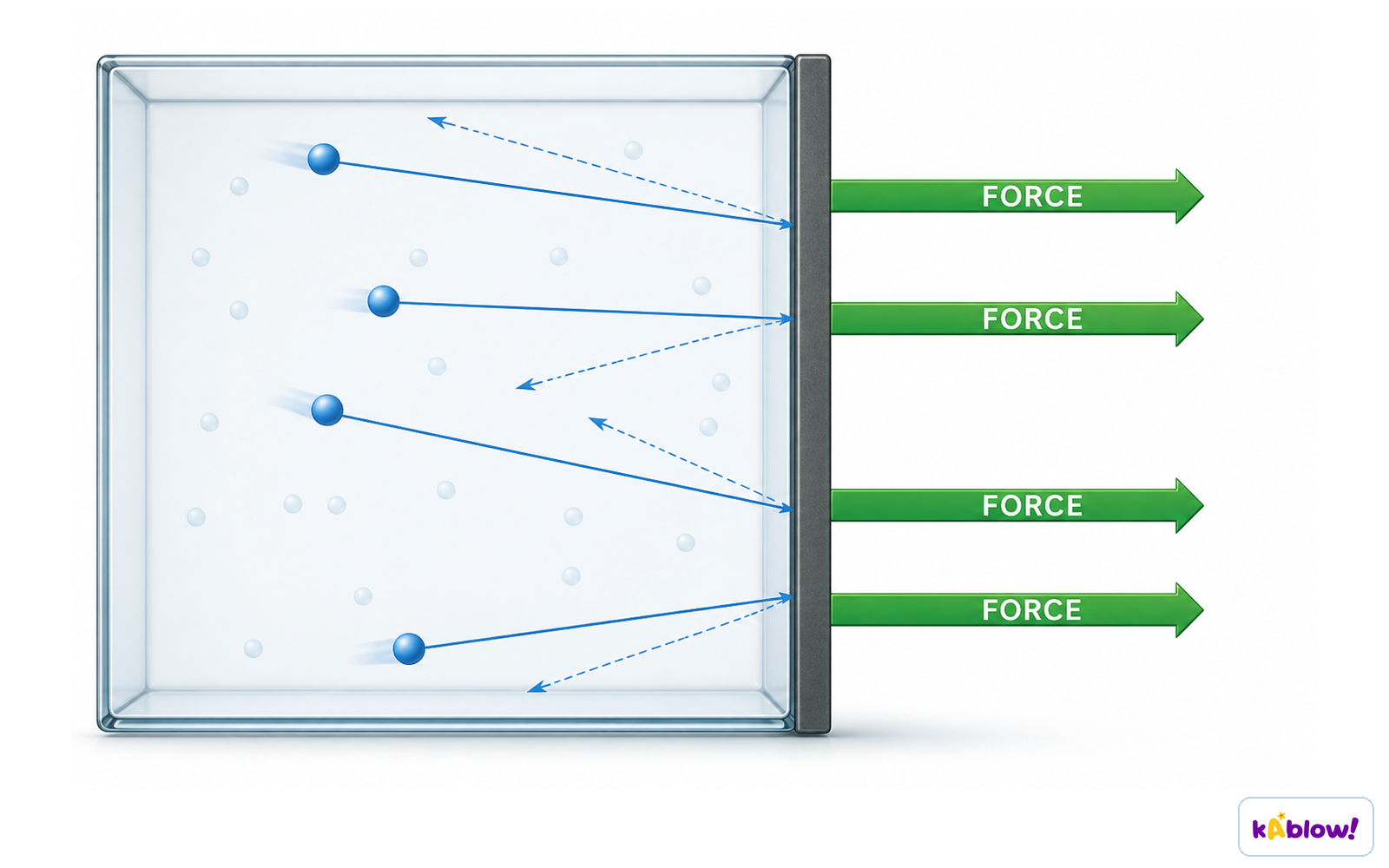
- Gas pressure is defined as force per unit area: p = \frac{F}{A} .
- Pressure arises from collisions of gas particles with container walls, producing a force perpendicular to the wall.
- At constant volume, higher temperature → more frequent and forceful collisions → higher pressure.
Gas particles colliding with a container wall
Brownian Motion
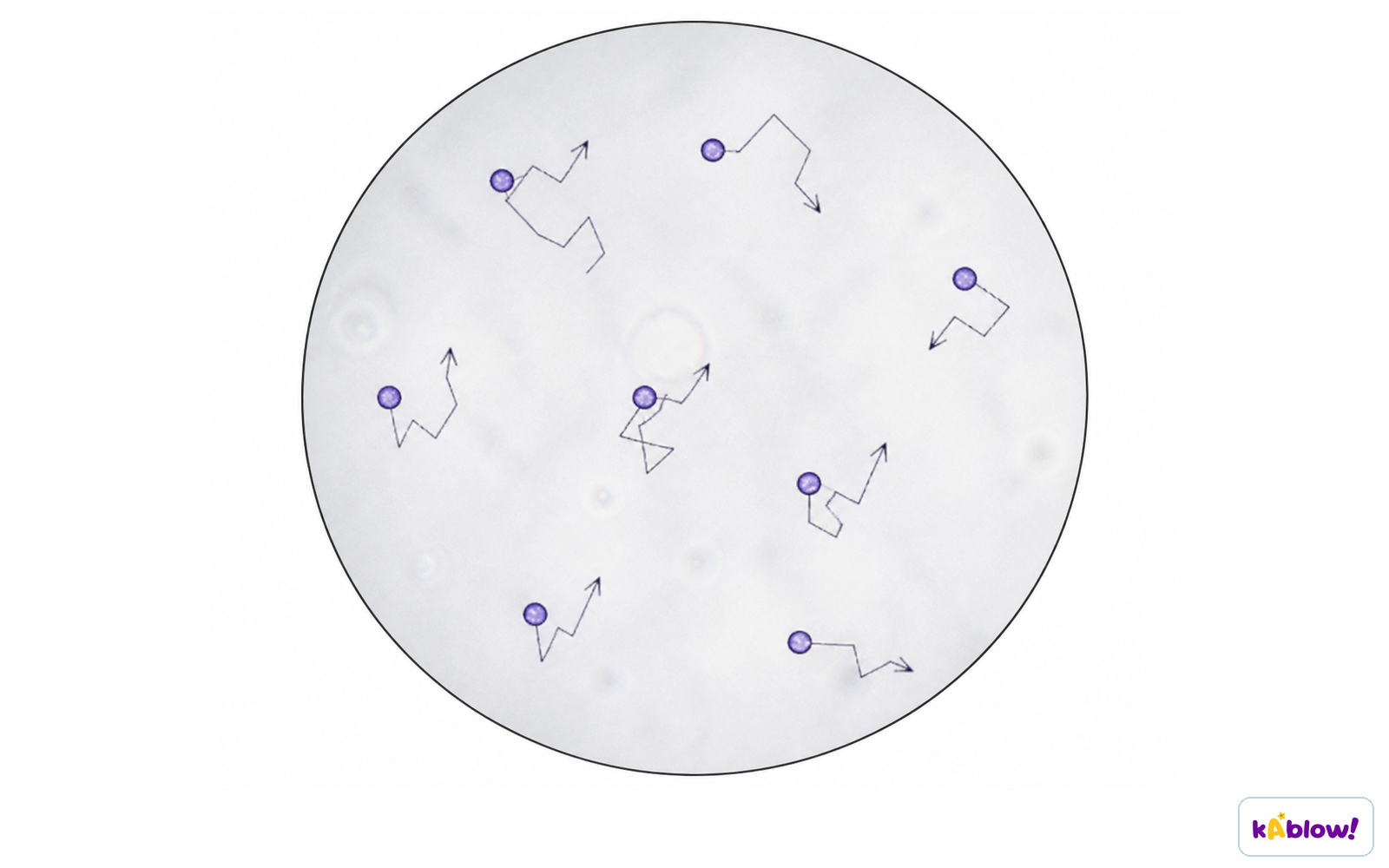
- Brownian motion is the random, erratic movement of visible particles (e.g., pollen, smoke) suspended in a fluid.
- It is caused by collisions with invisible, fast-moving atoms or molecules of the fluid.
- Each collision gives the visible particle a small nudge, changing its speed and direction randomly.
- This provides evidence for the kinetic theory of matter – that all matter is made of moving particles.
Brownian motion
The Gas Laws (Extended Tier Only)
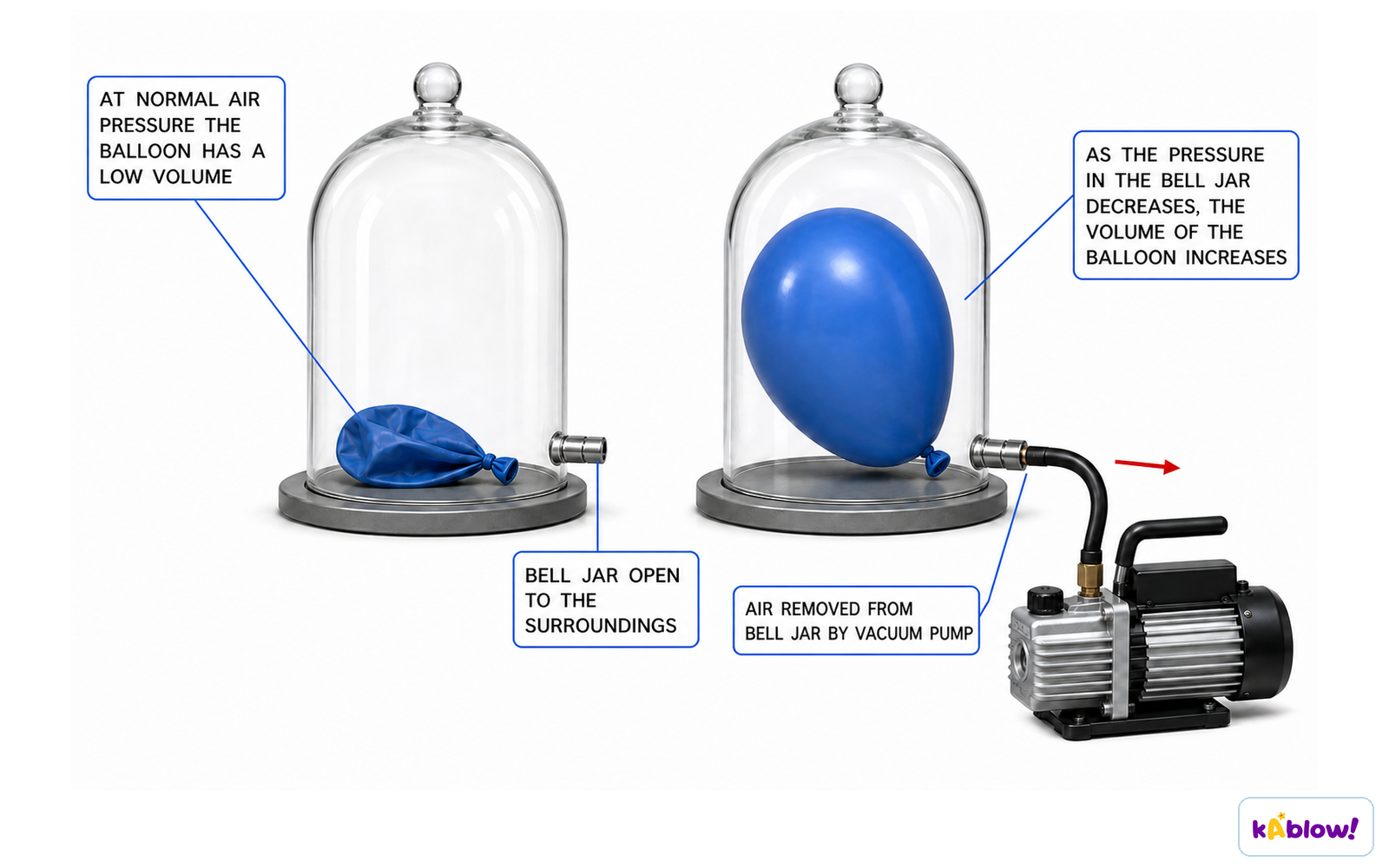
- Boyle’s Law: at constant temperature, pressure p is inversely proportional to volume V ( pV = constant).
- Compressing a gas (decrease volume) increases pressure because particles hit walls more often.
- Pressure–Temperature Law: at constant volume, pressure is directly proportional to absolute temperature ( p \propto T ).
- Heating a gas at constant volume increases particle speed, leading to more frequent and forceful collisions → pressure rises.
Boyle's Law demonstration
Slides
Sign up free to view the lesson slides
Step through every slide for this topic — plus flashcards and revision notes — with a free account.
Practice questions
Free preview — 8 of 59 questions. Sign up to see them all.
1.What causes the motion of smoke particles when viewed through a microscope?
Easy- AThe smoke particles are attracted to each other.
- BThe smoke particles vibrate because they are warm.
- CSmaller air particles are colliding with the smoke particles.
- DThe microscope is vibrating slightly, making the smoke particles appear to move.
2.A sealed piston is used to expand a gas at constant temperature. What happens to the density and pressure of the gas?
Medium- ADensity stays the same, pressure stays the same
- BDensity increases, pressure decreases
- CDensity decreases, pressure stays the same
- DDensity decreases, pressure decreases
3.Which state of matter has molecules that are very close together in fixed positions, vibrating about these positions?
Easy- ASolid
- BLiquid
- CGas
- DPlasma
4.Air is trapped inside a cylinder of fixed volume. The temperature of the air is increased. Which graph shows the correct relationship between pressure and temperature?
Medium- AA straight line through the origin (pressure proportional to temperature)
- BA curve increasing with decreasing gradient
- CA horizontal line (pressure constant)
- DA curve decreasing with increasing gradient
5.A beaker of water at its boiling point (100 °C) is heated so that liquid becomes gas at the same temperature. Which row correctly compares the liquid and gas phases?
Medium- AAverage distance between particles: same; Average speed: same
- BAverage distance: greater in liquid; Average speed: greater in gas
- CAverage distance: greater in gas; Average speed: greater in liquid
- DAverage distance: greater in gas; Average speed: same
6.A sealed plastic drinks bottle is left in sunshine on a warm day. What happens to the average speed of air molecules and the pressure inside?
Medium- ASpeed increases, pressure increases
- BSpeed increases, pressure decreases
- CSpeed decreases, pressure increases
- DSpeed decreases, pressure decreases
7.In an experiment, tiny pollen grains are suspended in water and observed under a microscope. They appear as small bright dots moving randomly. What is the correct explanation?
Medium- AThe bright dots are water molecules being hit by other water molecules.
- BThe bright dots are water molecules vibrating due to thermal kinetic energy.
- CThe bright dots are pollen grains being hit many times per second by water molecules.
- DThe bright dots are pollen grains vibrating due to their thermal kinetic energy.
8.A syringe half filled with air is sealed and the plunger pulled out slowly at constant temperature. What happens to the pressure and the speed of air molecules?
Medium- APressure stays the same, speed stays the same
- BPressure increases, speed decreases
- CPressure decreases, speed stays the same
- DPressure decreases, speed decreases
Unlock all 59 questions & more
Create a free account to see every question, the slides, flashcards and revision notes for this topic.