Simple Phenomena Of Magnetism
Learn it by playing
Answer these questions to earn energy, then fish and explore. No account needed.
Lesson notes
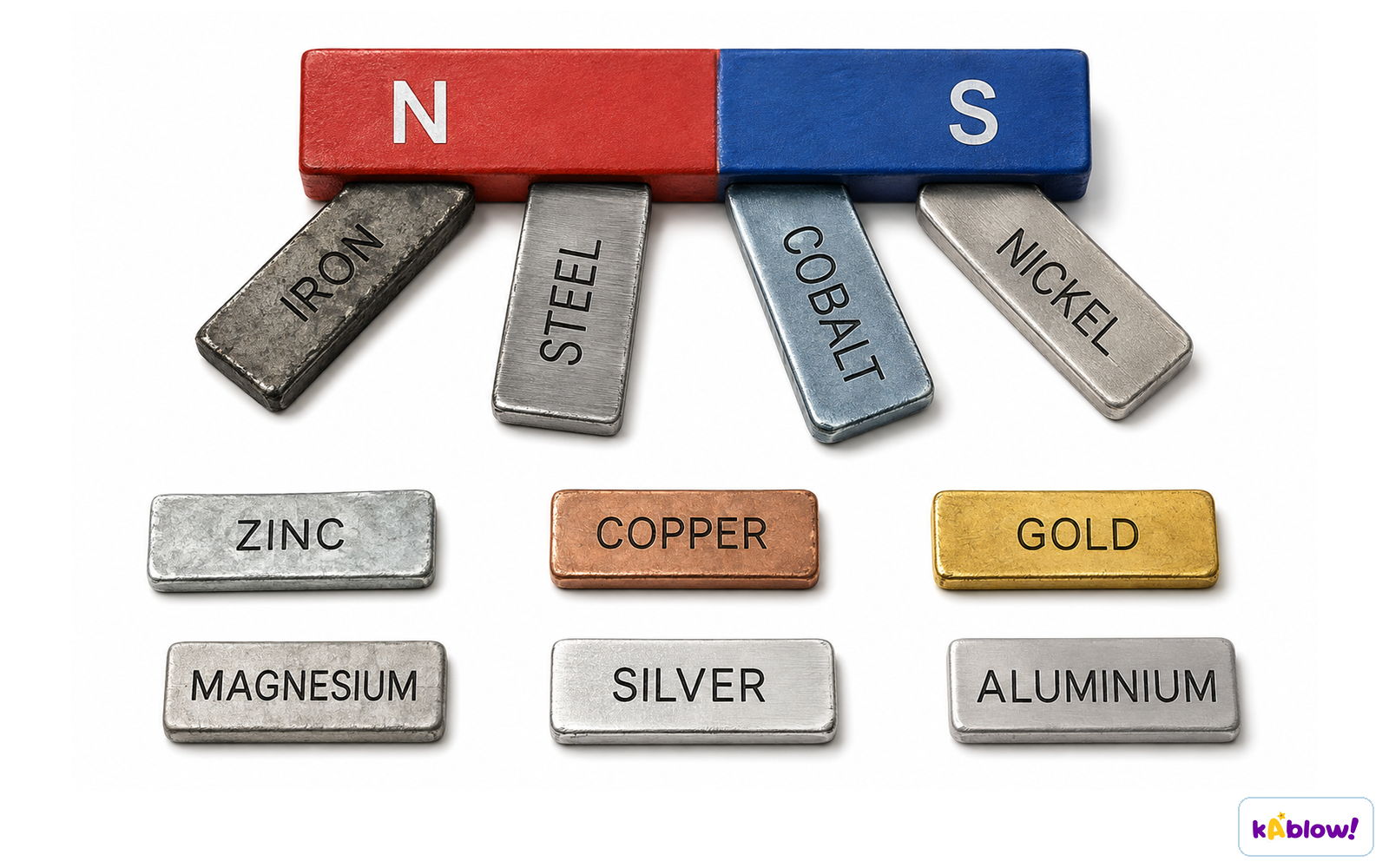
Magnetic and Non-Magnetic Materials
- Only iron, cobalt, nickel, and steel (an alloy containing iron) are magnetic.
- Magnetic materials are attracted to a magnet; non-magnetic materials are not.
- A magnetic material (not a magnet) is attracted to both poles of a permanent magnet.
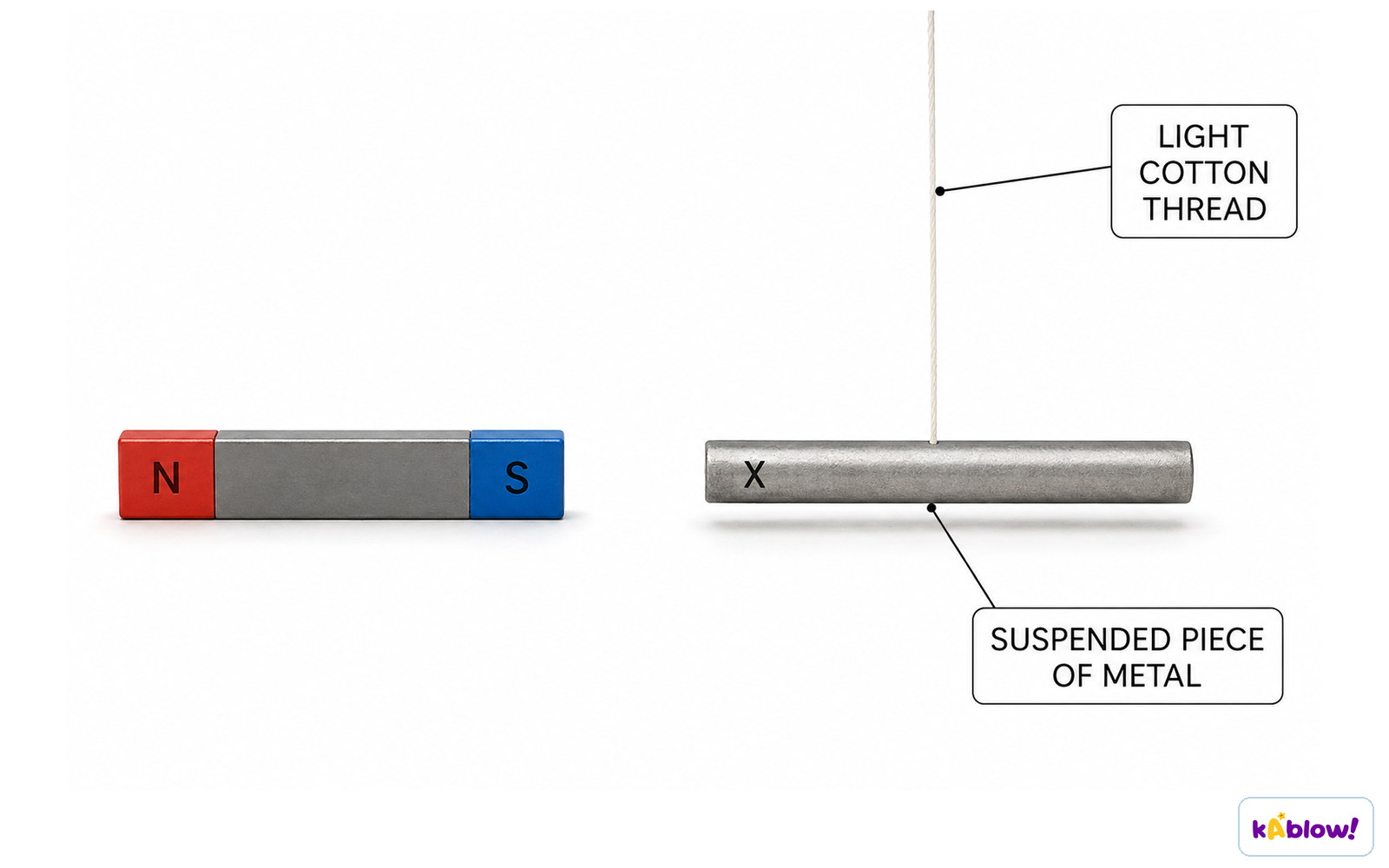
- To test a material: if repelled by a known magnet, it is a magnet; if attracted, it is a magnetic material; if neither, it is non-magnetic.
Magnetic materials
Forces Between Magnetic Poles
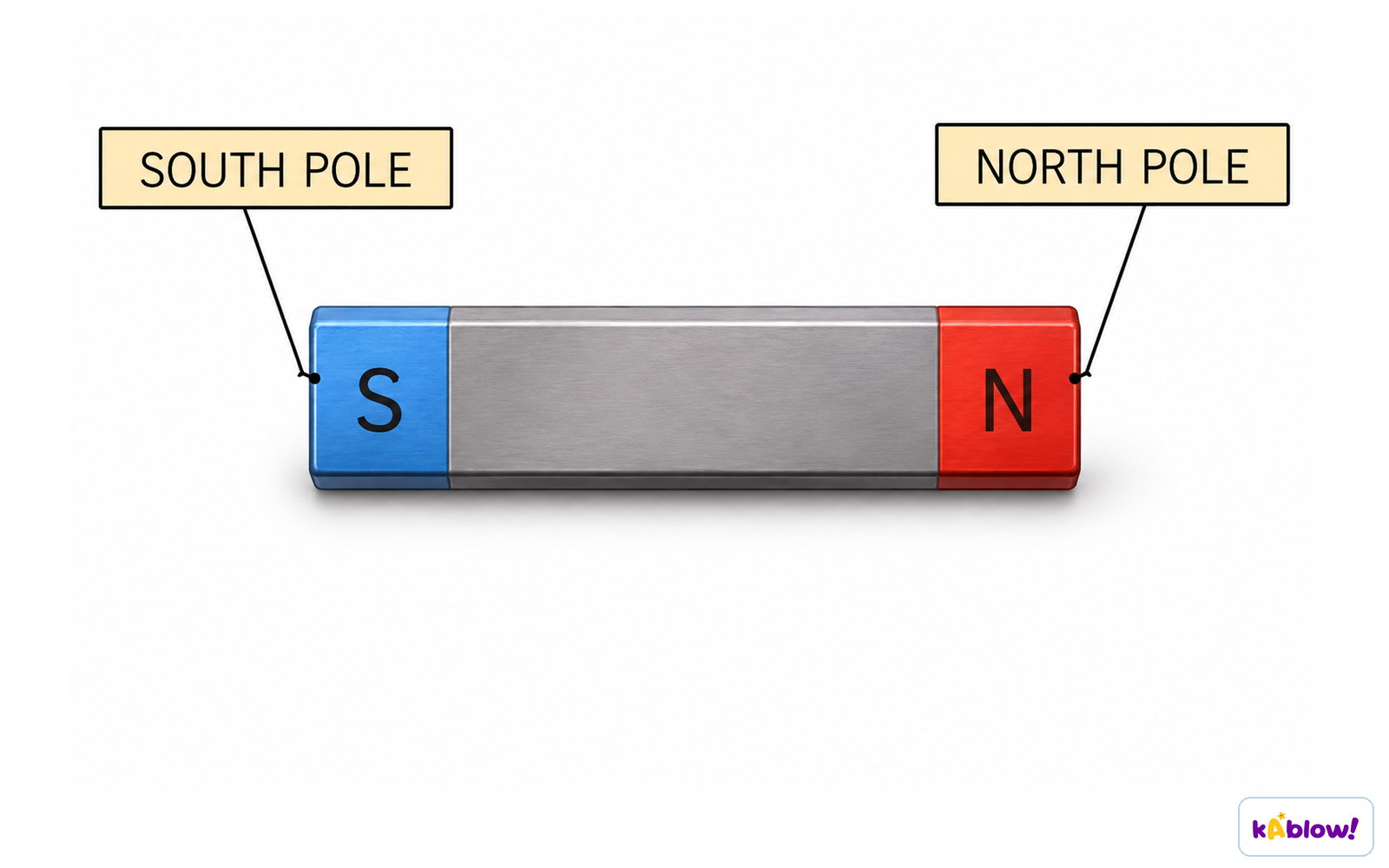
- Every magnet has a north pole and a south pole; magnetic forces are strongest at the poles.
- Like poles repel: north–north or south–south push apart.
- Opposite poles attract: north–south pull together.
- The force between a magnet and a magnetic material is always attractive due to induced magnetism.
Poles of a Magnet
Induced Magnetism
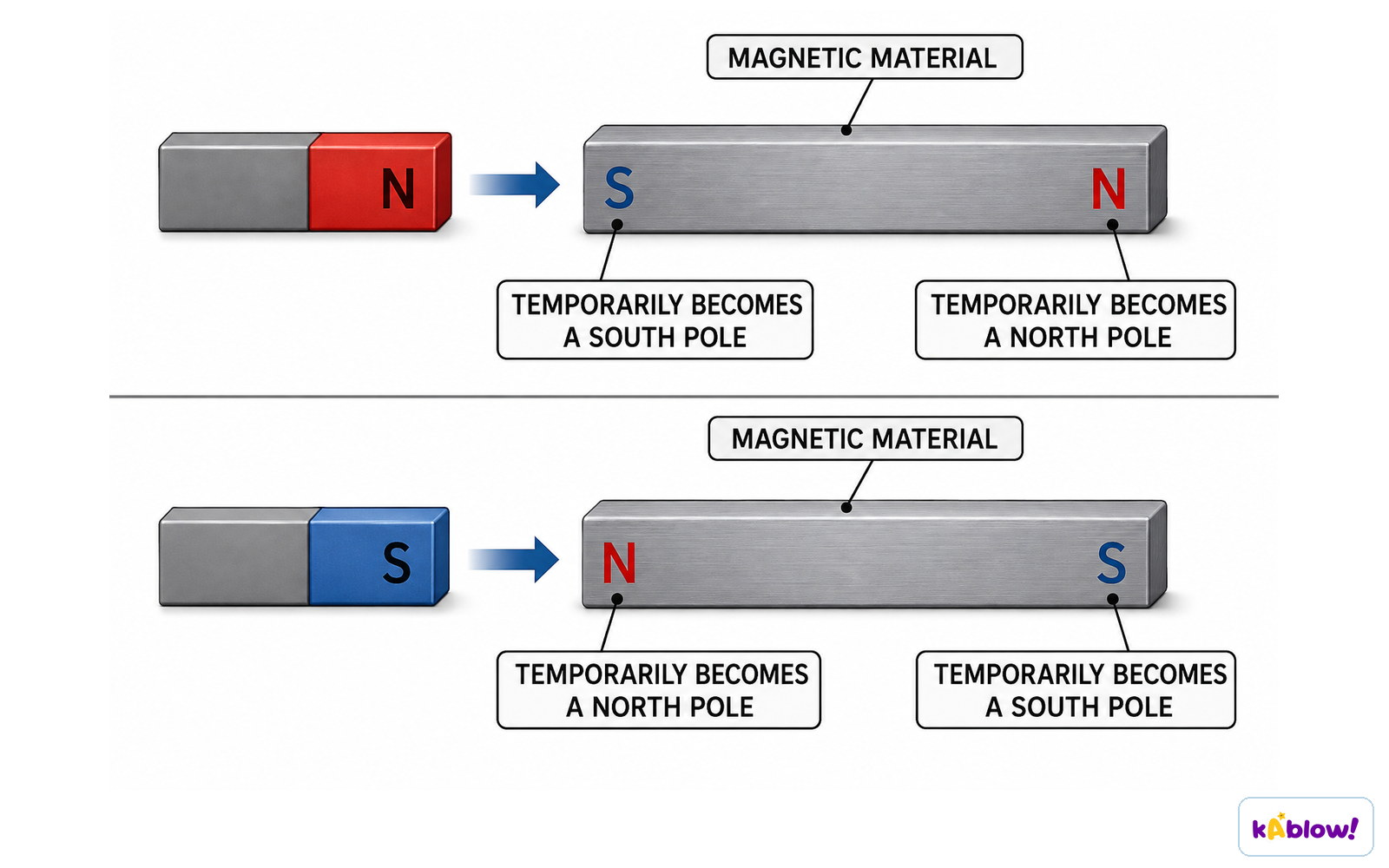
- An induced magnet is a material (e.g., soft iron) that becomes a magnet temporarily in a magnetic field.
- The end of the material nearest the magnet acquires the opposite pole to the magnet’s pole.
- When removed from the field, the material loses its magnetism quickly.
- Induced magnetism always causes attraction between the magnet and the material.
Inducing magnetism in a magnetic material
Permanent and Temporary Magnets
- Permanent magnets (e.g., steel) produce their own magnetic field and do not lose magnetism easily.
- Temporary (induced) magnets (e.g., soft iron) are magnetic only while in an external field.
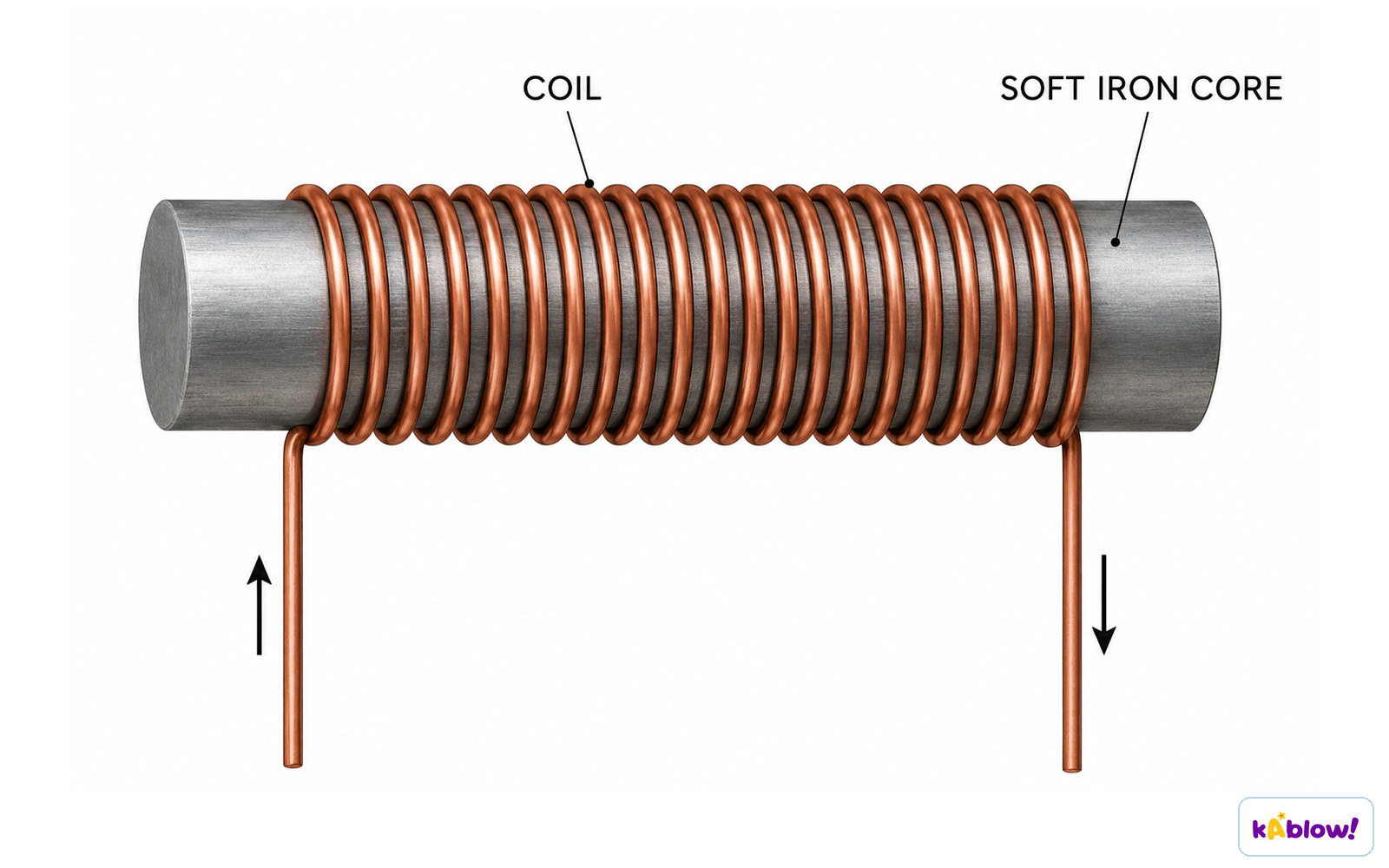
- An electromagnet consists of coils of wire around a soft iron core; it can be switched on/off.
- Strength of an electromagnet can be increased by: increasing current, increasing number of turns, or adding a soft iron core.
Electromagnet diagram
Uses of Magnets
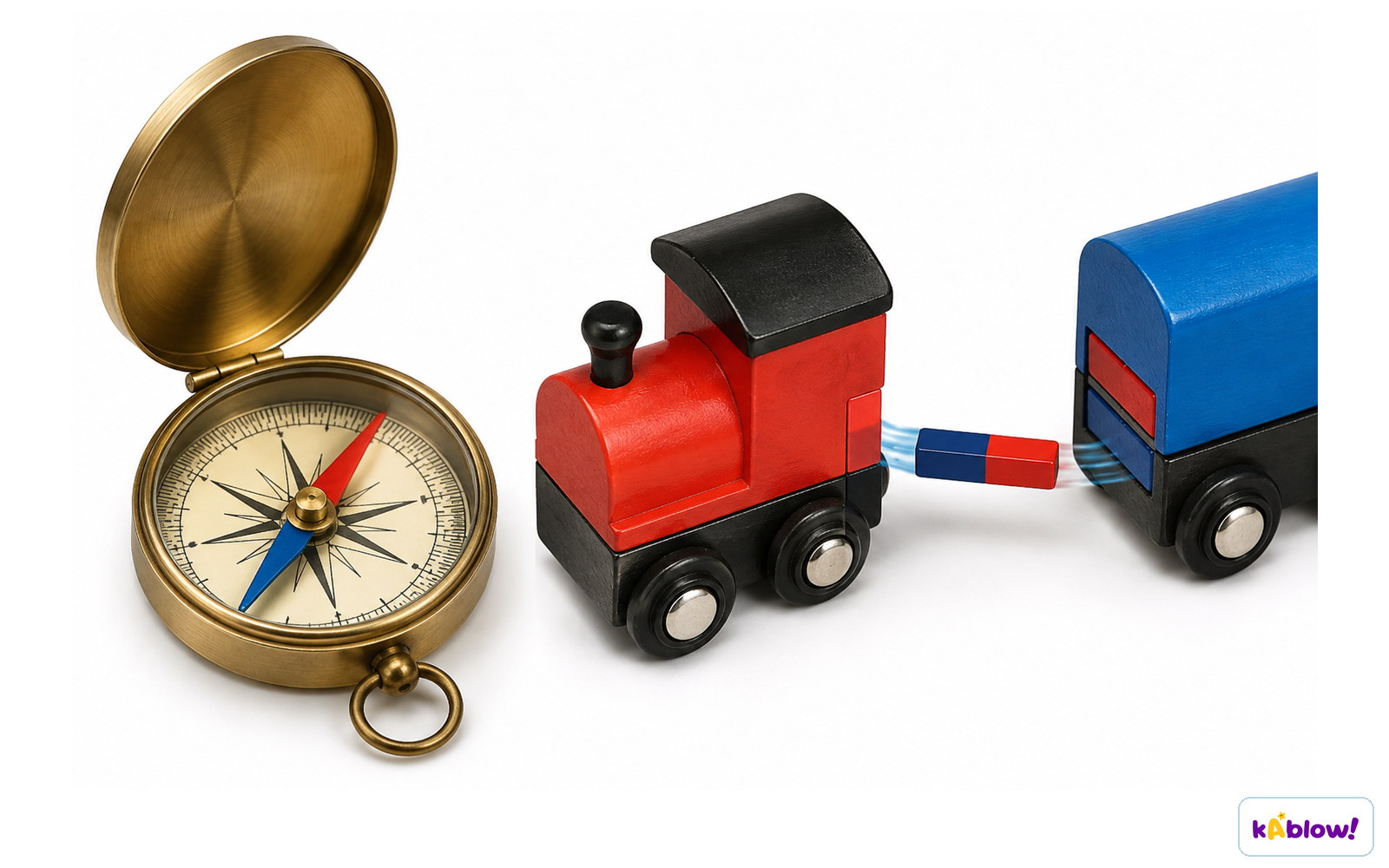
- Permanent magnets are used in compasses, fridge magnets, toys, and school experiments.
- Electromagnets are used in MRI scanners, speakers, recycling (lifting scrap metal), and Mag-Lev trains.
Uses of permanent magnets
Magnetic Fields
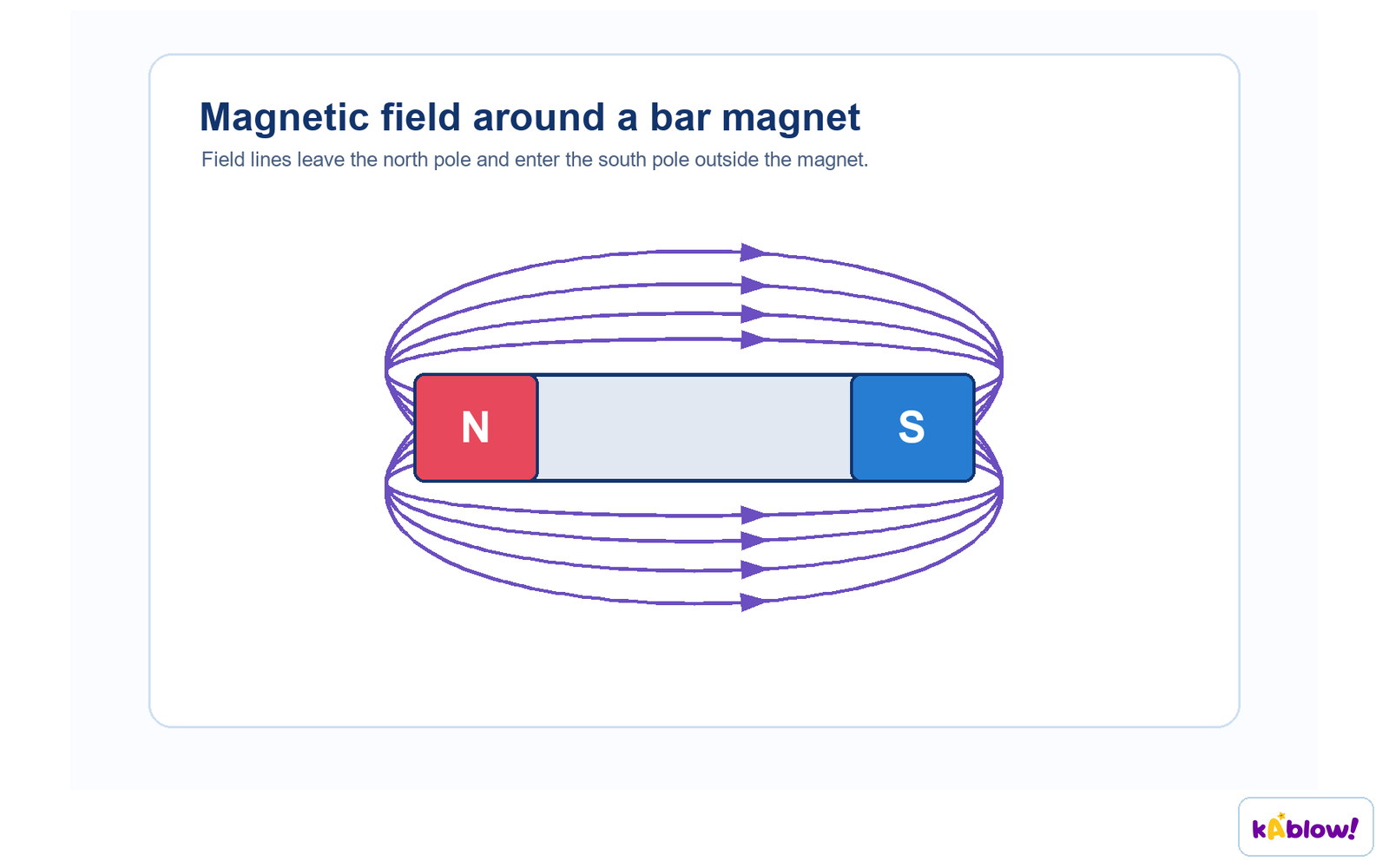
- A magnetic field is a region where a magnetic pole experiences a force.
- Field lines go from north to south; arrows show the direction of force on a north pole.
- Field is strongest at the poles (lines are closer together) and weakens with distance (lines spread out).
- The direction of the field at a point is the direction of the force on a north pole placed there.
The magnetic field around a bar magnet
Slides
Sign up free to view the lesson slides
Step through every slide for this topic — plus flashcards and revision notes — with a free account.
Practice questions
Free preview — 8 of 50 questions. Sign up to see them all.
1.Which of the following metals is magnetic?
Easy- ACopper
- BAluminium
- CNickel
- DZinc
2.Two magnets are brought close together. The north pole of one magnet is placed near the north pole of the other magnet. What happens?
Easy- AThey attract each other
- BThey repel each other
- CNo force is exerted
- DThey become demagnetised
3.A bar magnet is brought near a piece of metal. The metal is attracted to the magnet. Which of the following could be the metal?
Easy- AAluminium
- BCopper
- CSteel
- DZinc
4.Magnetic materials are attracted to both poles of a permanent magnet.
EasyTrue or false?
5.An induced magnet can be switched on and off.
MediumTrue or false?
6.State the two magnetic metals (other than steel).
Easy7.Explain why a magnetic material is always attracted to a magnet, regardless of which pole is held close to it.
Medium8.Complete the sentence:
EasyLike magnetic poles ____ and opposite magnetic poles ____.
Unlock all 50 questions & more
Create a free account to see every question, the slides, flashcards and revision notes for this topic.