Sound
Learn it by playing
Answer these questions to earn energy, then fish and explore. No account needed.
Lesson notes
Sound Waves
- Sound waves are produced by vibrating sources.
- A medium is required to transmit sound; sound cannot travel through a vacuum.
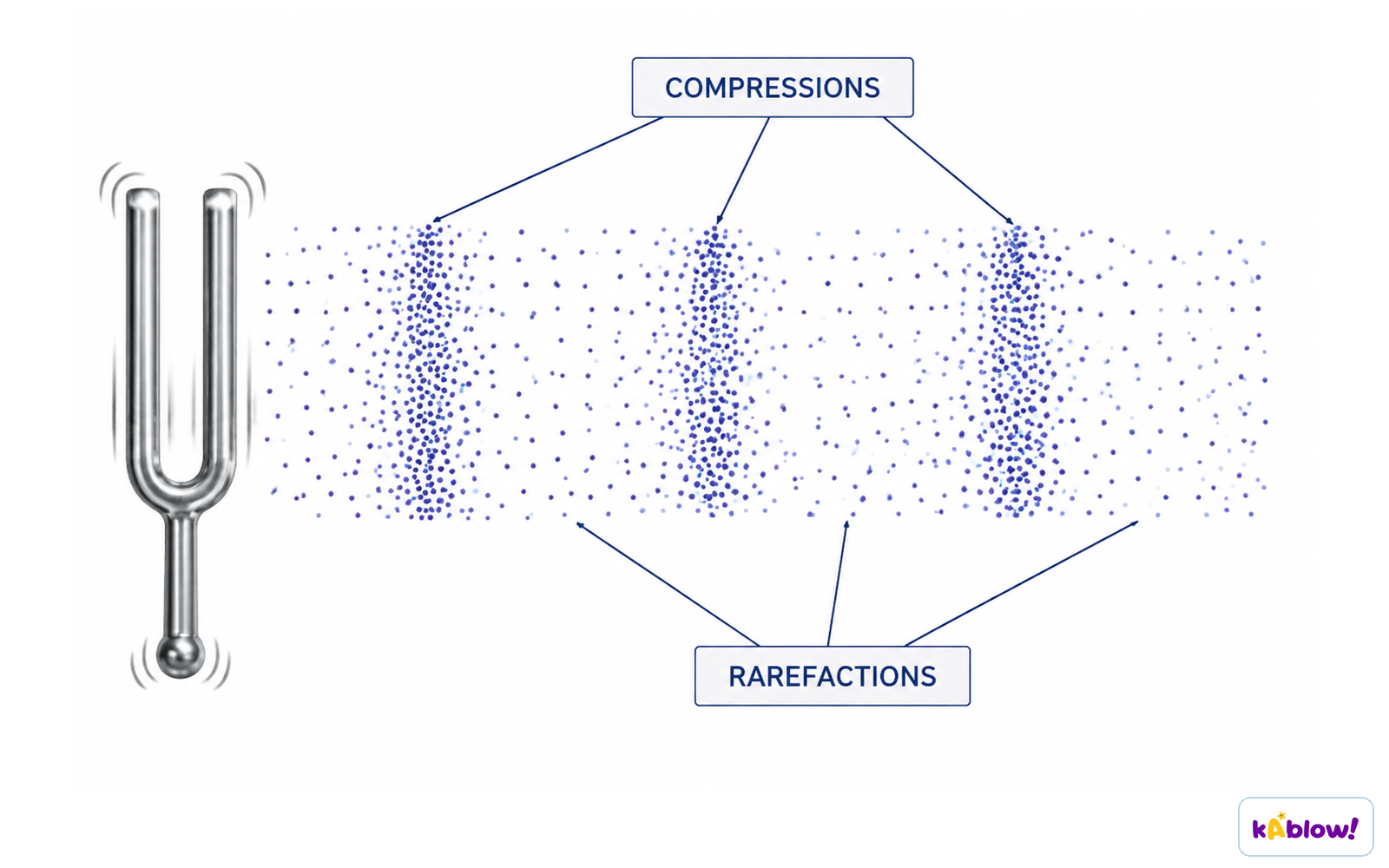
- Sound waves are longitudinal waves consisting of compressions (high pressure) and rarefactions (low pressure).
- When a sound wave meets a solid, the vibrations are transferred to the solid (e.g., can shatter glass).
Compressions and rarefactions
Measuring the Speed of Sound
- Speed of sound in air ≈ 340 m/s; fastest in solids (~5000 m/s), slowest in gases.
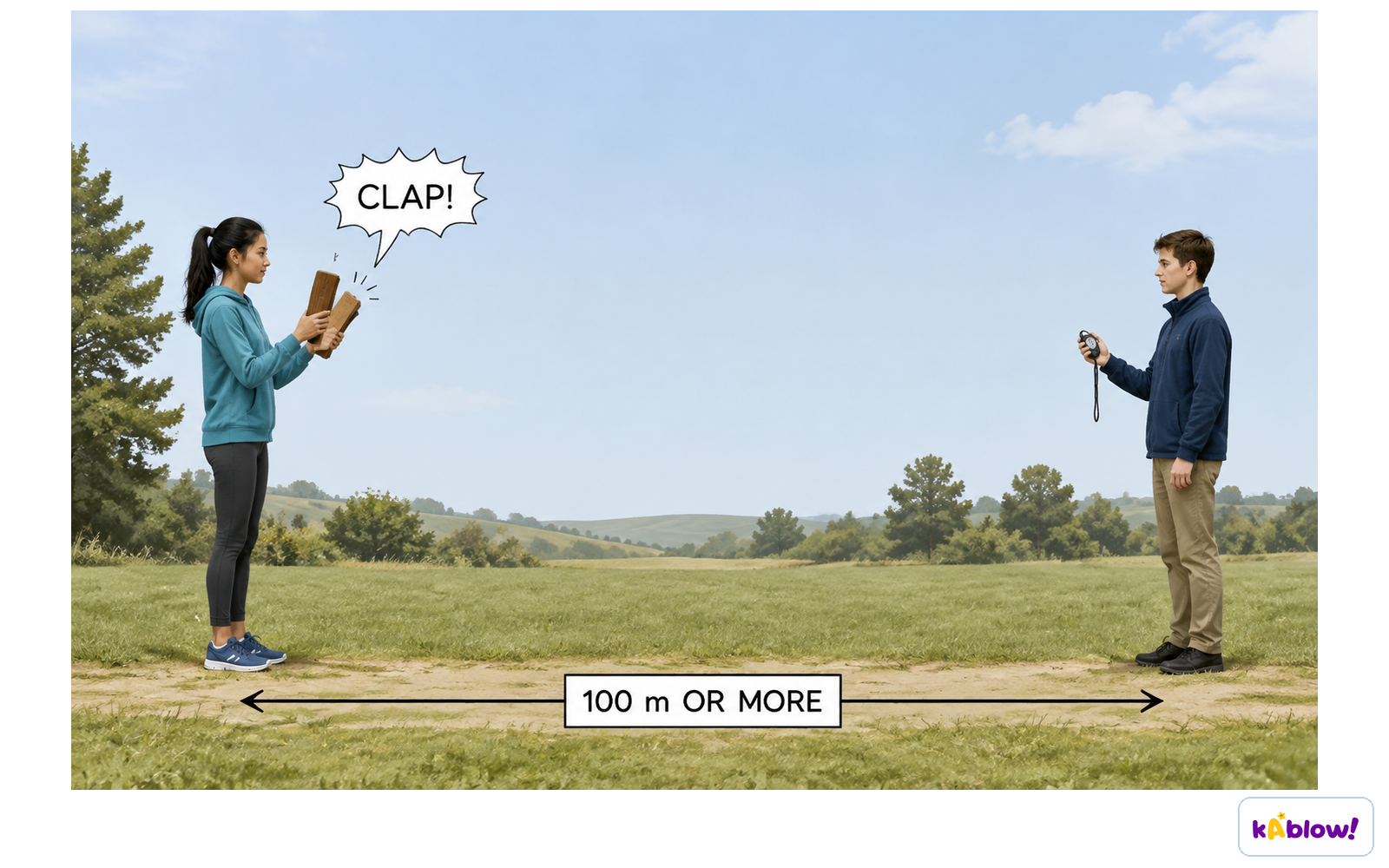
- Experiment 1: Two people at measured distance (e.g., 100 m); one bangs blocks, other starts stopwatch on sight and stops on sound. Repeat and average time.
- Experiment 2: Two microphones connected to an oscilloscope placed ~2 m apart; clap near first mic; oscilloscope measures time difference between mic signals.
- Speed = distance / time. Experiment 2 is more accurate because timing is automatic.
- Random errors in Experiment 1 due to reaction time; use larger distances and repeat readings to reduce error.
Measuring the speed of sound between two points
Pitch and Loudness
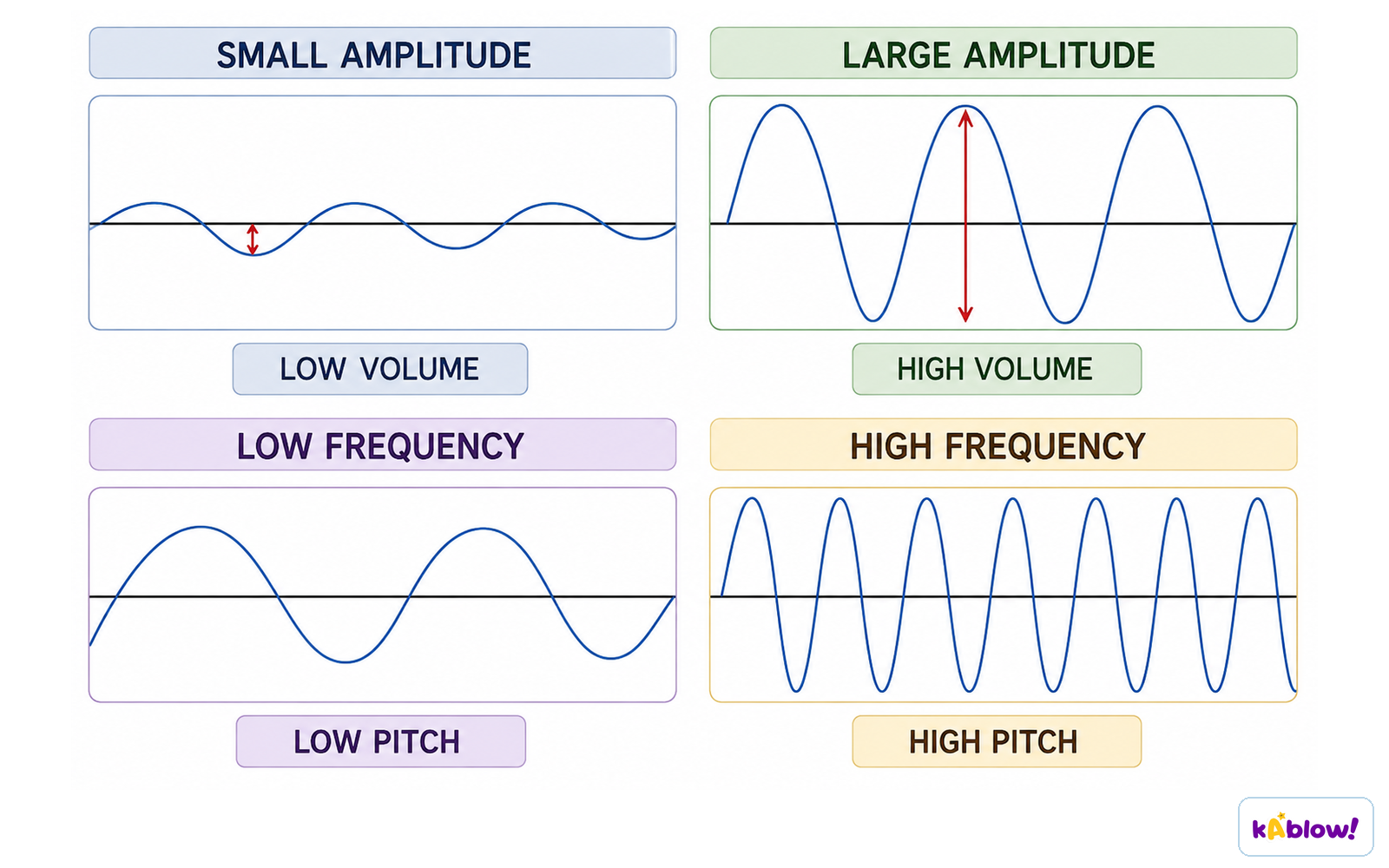
- Frequency determines pitch: high frequency → high pitch; low frequency → low pitch.
- Amplitude determines loudness: large amplitude → loud sound; small amplitude → quiet sound.
- Sound waves reflect off hard surfaces; the reflected sound is called an echo.
Pitch and amplitude of a sound wave
Ultrasound
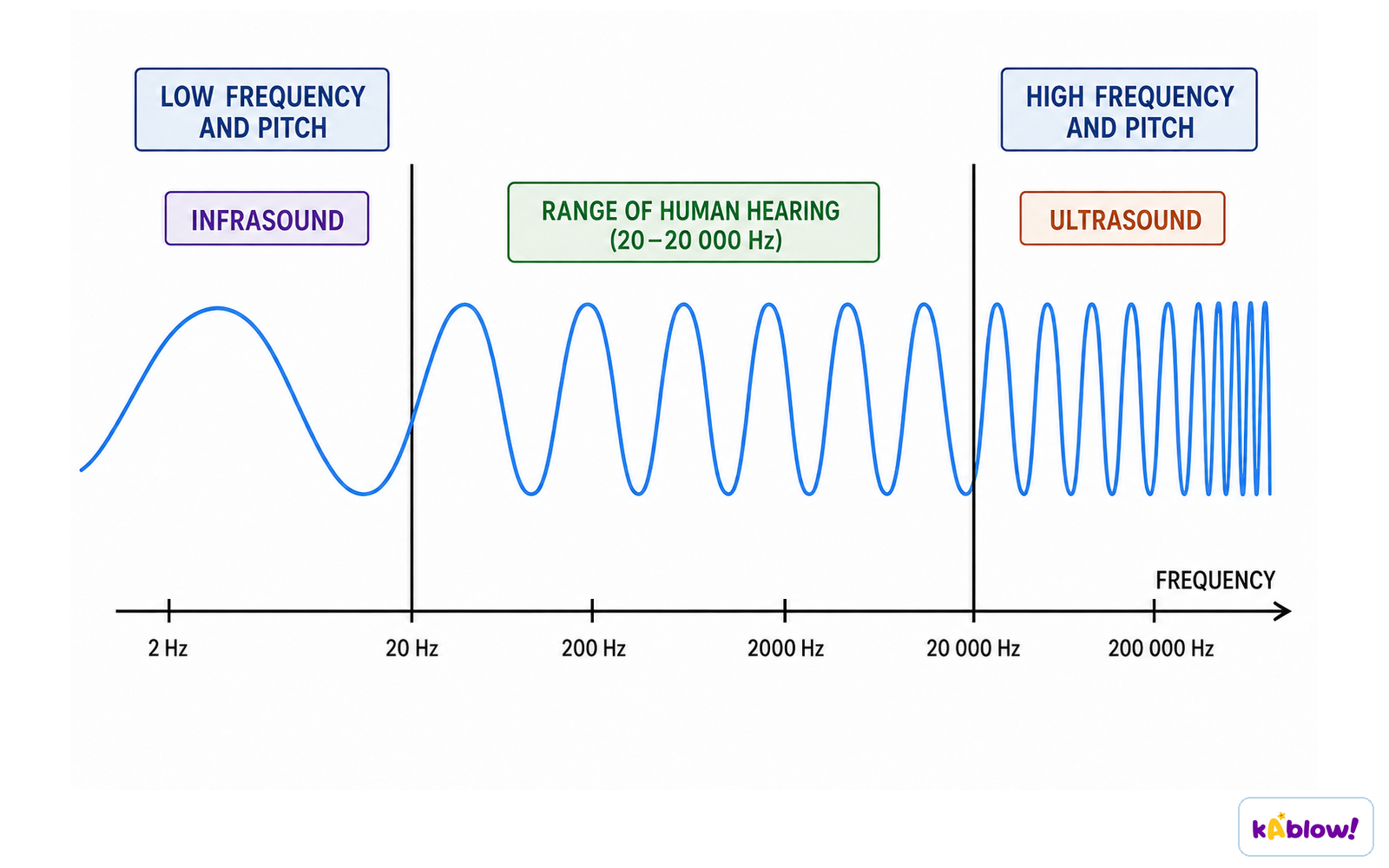
- Human hearing range: 20 Hz to 20 kHz (decreases with age).
- Ultrasound is sound with frequency higher than 20 kHz.
- Ultrasound is used in medical imaging (e.g., sonograms) and industrial testing.
Frequencies of ultrasound
Slides
Sign up free to view the lesson slides
Step through every slide for this topic — plus flashcards and revision notes — with a free account.
Practice questions
Free preview — 8 of 52 questions. Sign up to see them all.
1.What type of wave is a sound wave?
Easy- ATransverse
- BLongitudinal
- CElectromagnetic
- DStationary
2.Sound waves can travel through a vacuum.
EasyTrue or false?
3.Complete the sentence.
EasySound waves consist of regions of higher pressure called ____ and regions of lower pressure called ____.
4.State the approximate range of frequencies audible to humans.
Easy5.Which of the following materials does sound travel fastest through?
Easy- AAir
- BWater
- CSteel
- DVacuum
6.A sound wave with a high frequency has a low pitch.
EasyTrue or false?
7.Match each term to its correct description.
Medium- Amplitude
- Frequency
- Wavelength
- Determines loudness
- Determines pitch
- Distance between compressions
8.Arrange the following media in order of increasing speed of sound (slowest first).
Easy- Gas
- Liquid
- Solid
Unlock all 52 questions & more
Create a free account to see every question, the slides, flashcards and revision notes for this topic.