Transfer Of Thermal Energy
Learn it by playing
Answer these questions to earn energy, then fish and explore. No account needed.
Lesson notes
Demonstrating Conduction
- Good thermal conductors (e.g., aluminium, copper) transfer heat easily; insulators (e.g., wool, cardboard) transfer heat poorly.
- Tiles feel colder than a rug at the same temperature because tiles conduct heat away from the foot faster.
- In the wood–metal rod experiment, paper over metal stays unburnt because metal conducts heat away; paper over wood chars because wood insulates.
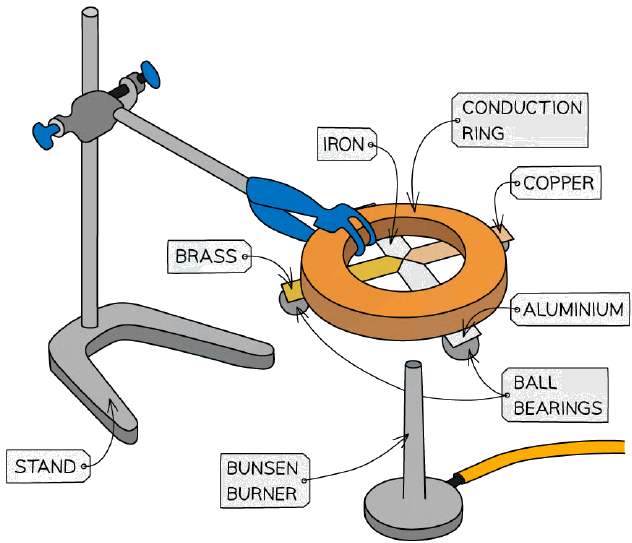
- Relative conductivity of metals can be compared by timing when wax melts and ball bearings drop from metal strips heated at a common centre.
Apparatus for demonstrating conduction with a conduction ring and Bunsen burner
Thermal Conduction (Extended)
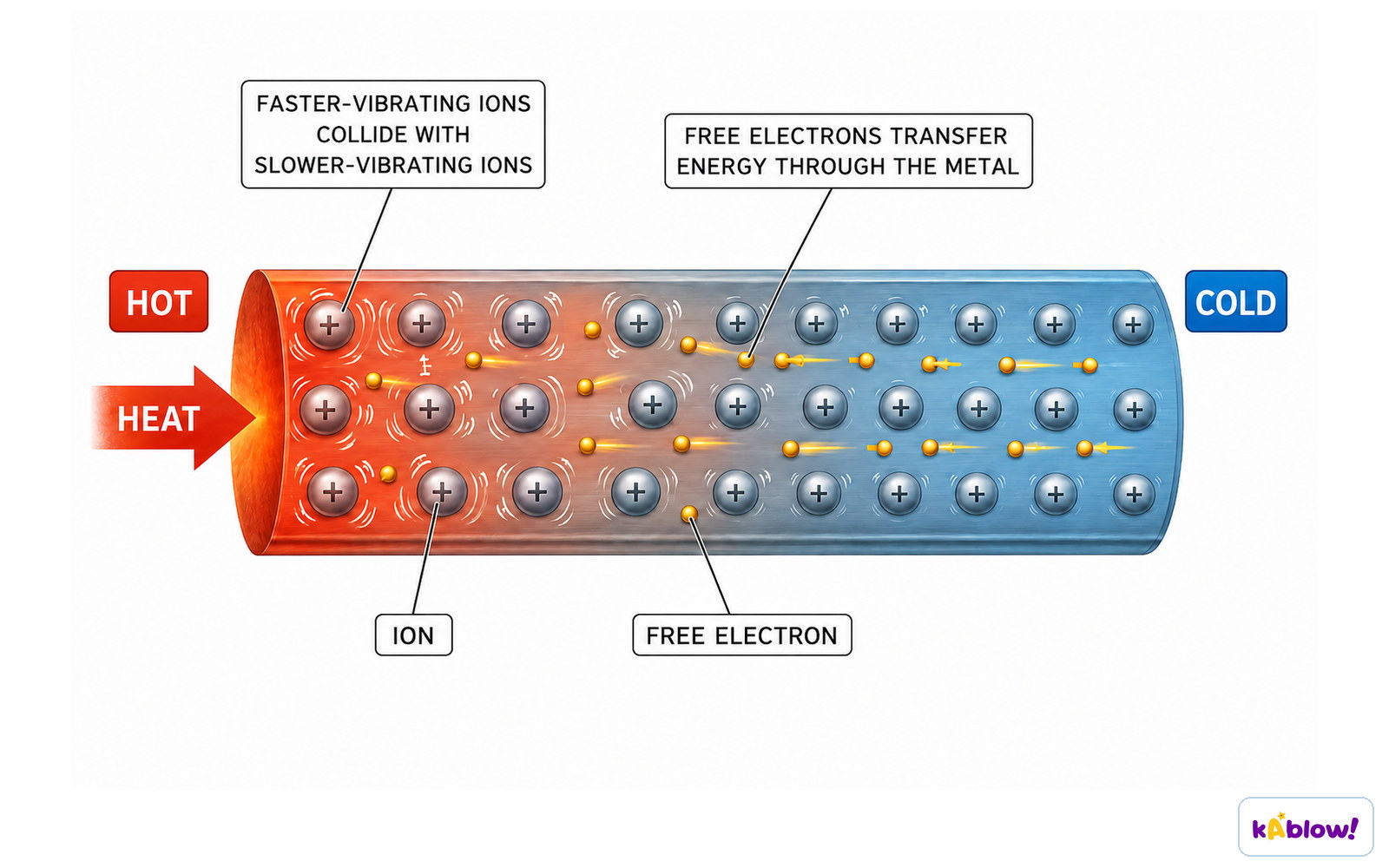
- Conduction in solids occurs via atomic vibrations and, in metals, via free electron collisions.
- Metals are the best conductors because they have many free electrons that transfer energy rapidly.
- Liquids and gases are poor conductors because particles are too far apart or slide past each other, hindering vibration transfer.
- Thermal conductivity varies widely among materials; conductors are typically metals with delocalised electrons.
Conduction in a metal via atomic vibrations and free electron collisions
Convection
- Convection is the main heat transfer method in fluids (liquids and gases); it cannot occur in solids.
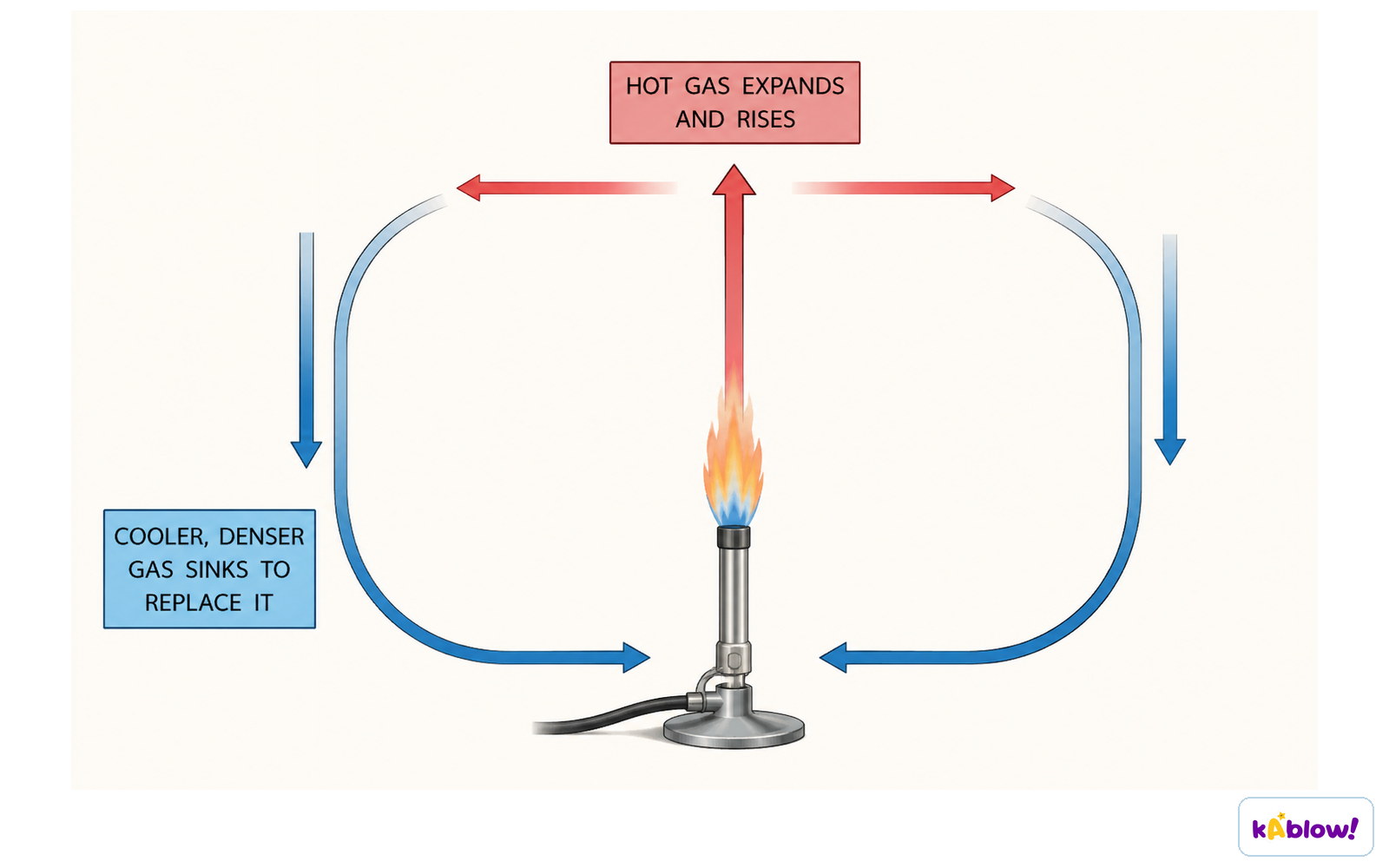
- Heating a fluid causes it to expand, become less dense, and rise; cooler fluid sinks, creating a convection current.
- Cooling a fluid makes it contract, become denser, and sink, also driving a convection current.
- A convection current can be demonstrated using potassium permanganate crystals in water: the purple dye reveals the rising and falling motion.
Convection current from a fire
Radiation
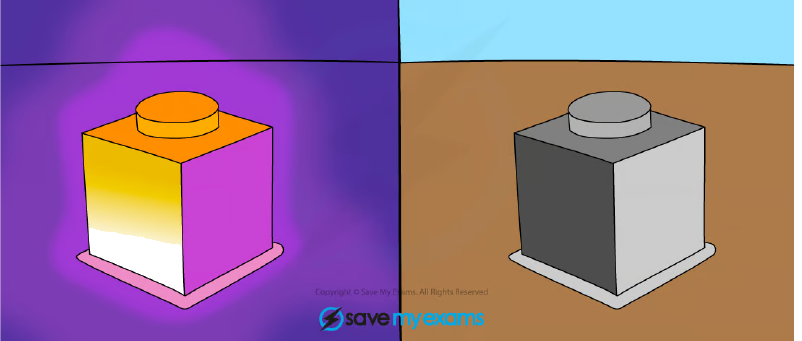
- All objects emit thermal radiation (infrared); hotter objects emit more.
- Thermal radiation can travel through a vacuum (e.g., from the Sun to Earth).
- Black/dull surfaces are good absorbers and good emitters of radiation; white/shiny surfaces are poor absorbers and poor emitters.
- At thermal equilibrium, an object absorbs and emits radiation at the same rate, so its temperature remains constant.
Hot object emitting thermal radiation vs. cooler object
The Greenhouse Effect
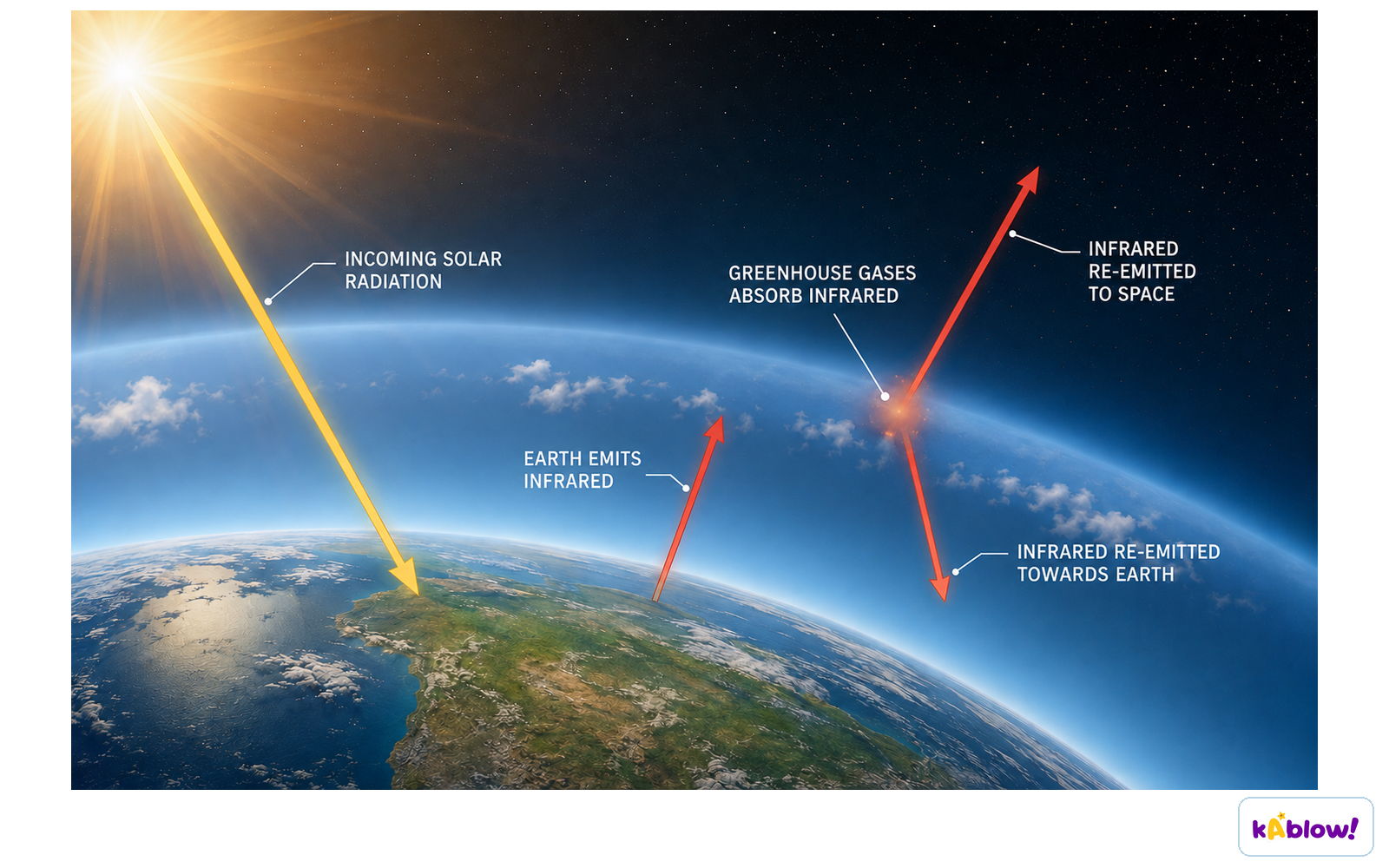
- Without an atmosphere, Earth's average surface temperature would be about −18 °C.
- Greenhouse gases (e.g., CO₂, water vapour, methane) absorb and re-emit longer-wavelength infrared radiation from Earth, trapping heat.
- This process keeps Earth warm enough for life; increasing greenhouse gases raises the rate of radiation absorbed, leading to global warming.
The greenhouse effect
Investigating IR Radiation
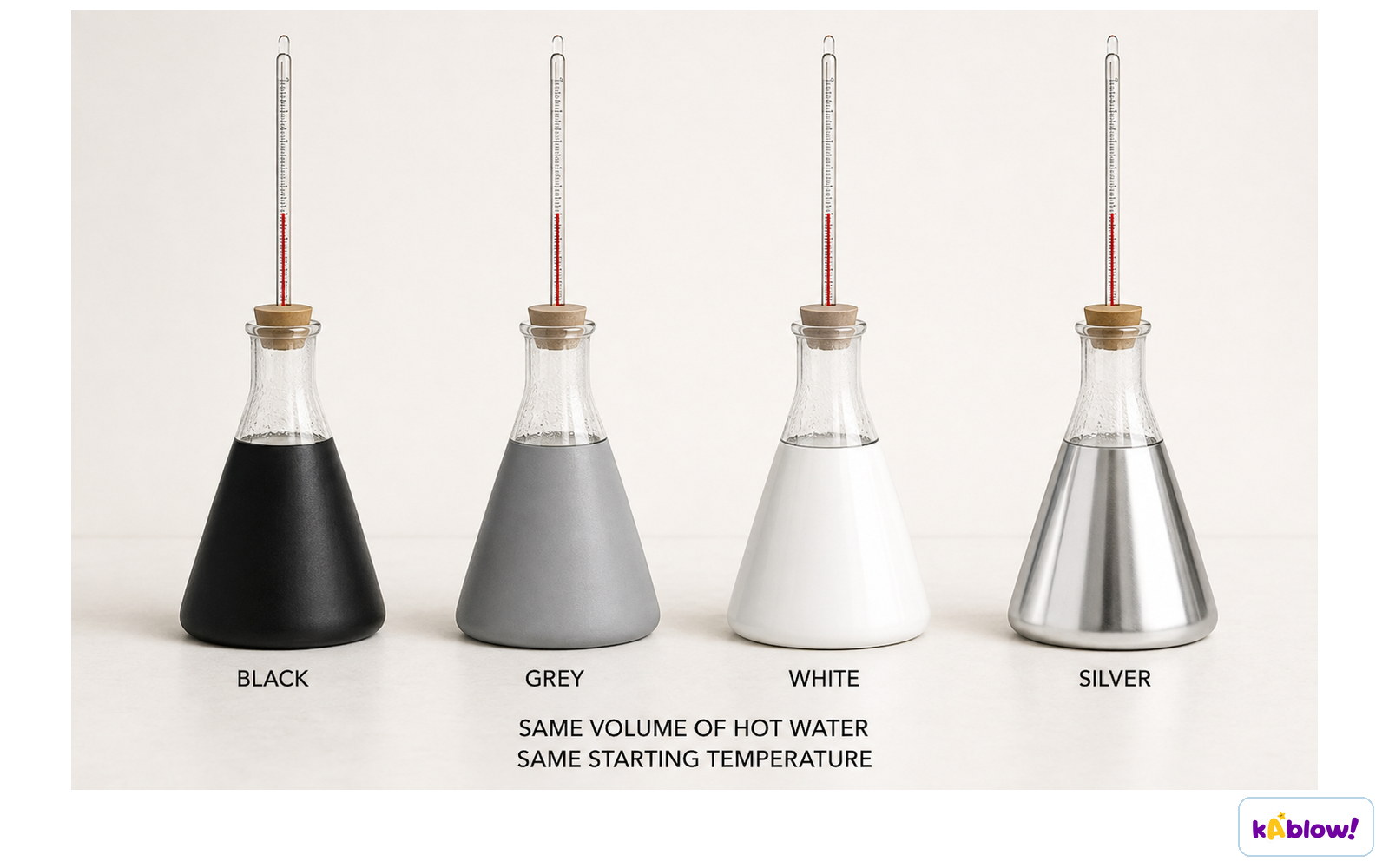
- Experiment: use identical flasks painted black, grey, white, and silver, filled with hot water at the same initial temperature.
- Measure temperature at regular intervals (e.g., every 30 s for 10 min).
- The black flask cools fastest (best emitter); the silver flask cools slowest (poorest emitter).
- Plot temperature vs. time; the curves show that surface colour affects the rate of infrared emission.
Different coloured flasks for investigating infrared radiation
Consequences of Thermal Energy Transfer
- Conduction applications: metal pans heat food quickly; plastic handles insulate; double-glazed windows use trapped air as an insulator.
- Convection applications: room radiators heat air which rises and circulates; steam rises from hot drinks.
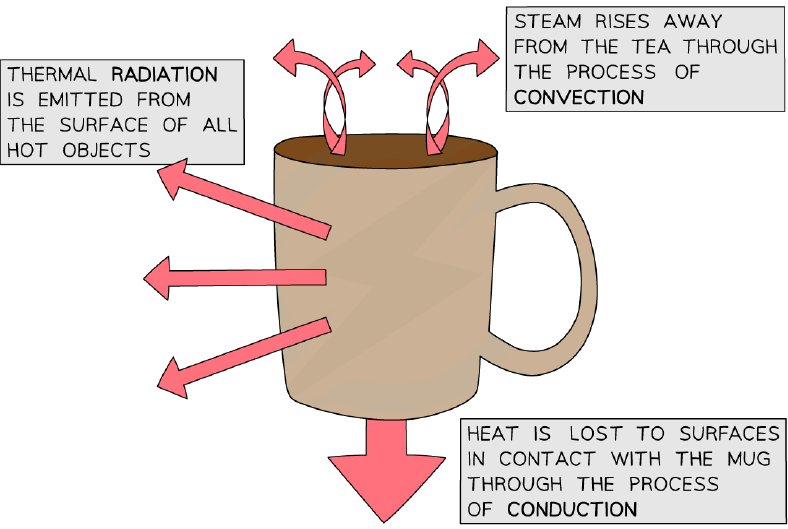
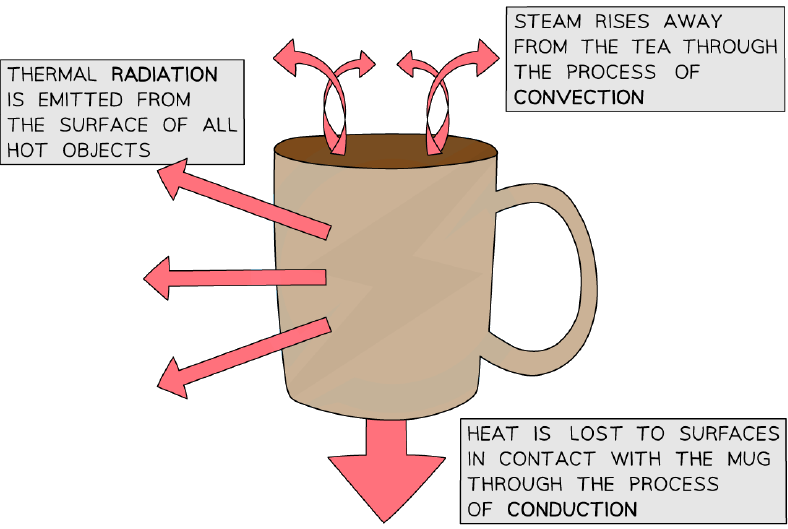
- Complex transfers: a hot drink loses heat by conduction through the cup, convection from the surface, and radiation from the cup's sides.
- A car radiator uses conduction from engine to liquid, then to radiator, and radiation from the dark, large-surface-area radiator to air.
Heat transfer processes from a hot mug of tea
Slides
Sign up free to view the lesson slides
Step through every slide for this topic — plus flashcards and revision notes — with a free account.
Practice questions
Free preview — 8 of 36 questions. Sign up to see them all.
1.Which of the following is the main method of thermal energy transfer in solids?
Easy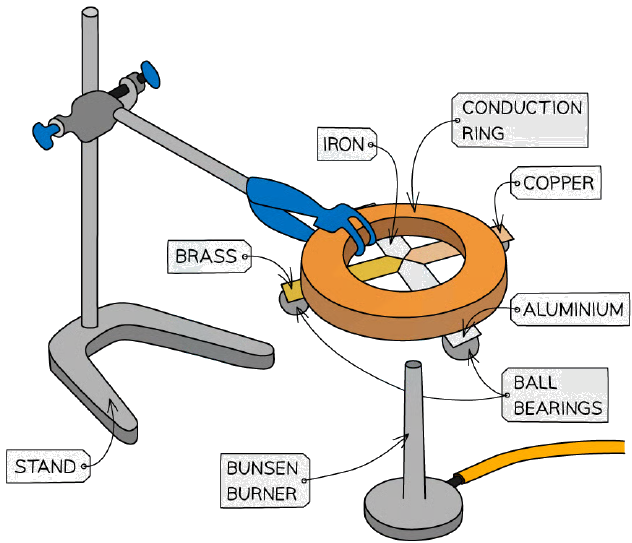
- AConduction
- BConvection
- CRadiation
- DEvaporation
2.Thermal radiation is part of which electromagnetic spectrum?
Easy- AVisible light
- BInfrared
- CUltraviolet
- DMicrowave
3.In the experiment comparing conduction in wood and metal, a rod made of half wood and half metal is wrapped in paper and heated at the join. What is observed?
Easy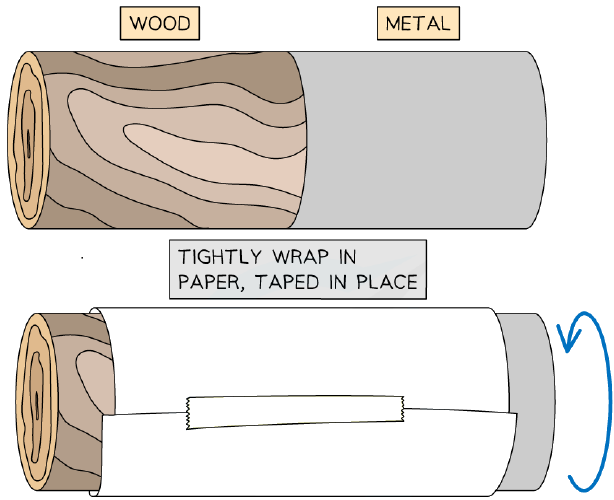
- AThe paper chars only where it touches the metal
- BThe paper chars only where it touches the wood
- CThe paper chars evenly across both materials
- DThe paper does not char at all
4.Which of the following is a greenhouse gas that contributes to the greenhouse effect?
Easy- AOxygen
- BNitrogen
- CCarbon dioxide
- DHydrogen
5.In the investigation of infrared radiation using flasks painted different colours, which flask is expected to cool the fastest?
Easy- ABlack flask
- BWhite flask
- CSilver flask
- DDull grey flask
6.Convection currents in fluids are caused by changes in:
Easy- ATemperature and density
- BPressure and volume
- CColour and texture
- DMass and weight
7.Which of the following is a good thermal insulator?
Easy- ACopper
- BAluminium
- CWool
- DIron
8.A student places one foot on a tile floor and the other on a rug in the same room. The tile feels colder because:
Medium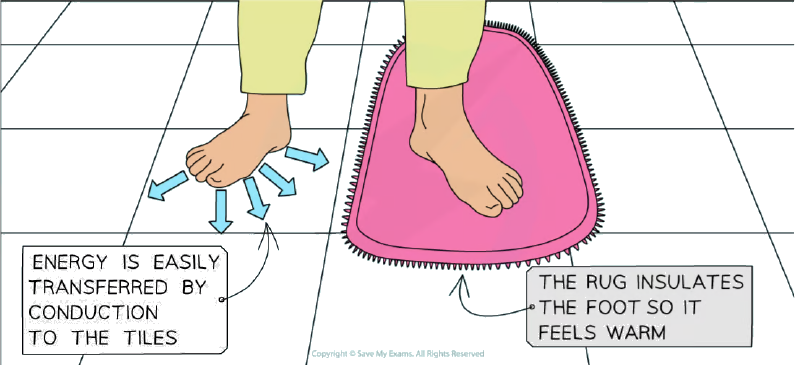
- AThe tile is at a lower temperature than the rug
- BThe tile conducts heat away from the foot faster than the rug
- CThe rug radiates heat towards the foot
- DThe tile has a higher specific heat capacity
Unlock all 36 questions & more
Create a free account to see every question, the slides, flashcards and revision notes for this topic.