Bioaccumulation
Learn it by playing
Answer these questions to earn energy, then fish and explore. No account needed.
Lesson notes
Definition of Bioaccumulation
- Bioaccumulation is the process by which toxic substances build up in the tissues of organisms over time.
- Toxic substances include pesticides, heavy metals (e.g., mercury, lead), and other pollutants.
- These toxins enter the environment through air, water, or soil.
- Once in an ecosystem, toxins move through the food chain and become more concentrated in animals higher up.
Example: Mercury
- Mercury is a heavy metal released from industrial processes like coal burning.
- In aquatic ecosystems, mercury is absorbed by plankton.
- Small fish eat plankton and accumulate mercury in their bodies.
- Larger fish (e.g., tuna, trout) eat smaller fish, increasing mercury concentration.
- Top predators (including humans) can have dangerously high mercury levels, leading to neurological disorders.
Pollutants accumulate in organisms and can become more concentrated at successive feeding levels. This increase along a food chain is biomagnification.
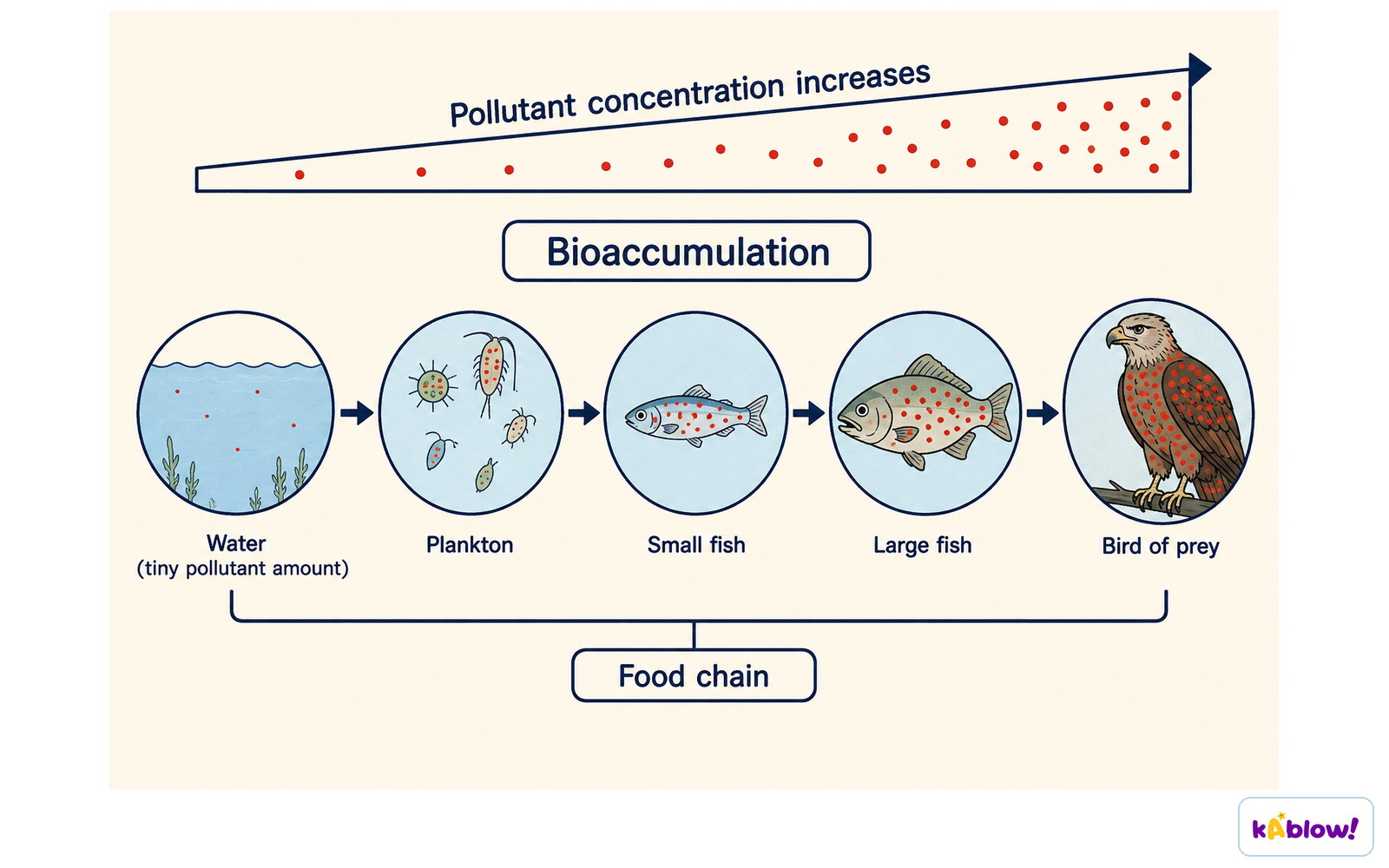
Example: DDT
- DDT was a pesticide used extensively in agriculture.
- It accumulated in the environment, especially in aquatic ecosystems.
- Small organisms absorbed DDT; it became highly concentrated in birds of prey (e.g., eagles, ospreys).
- High DDT levels caused birds to lay eggs with very thin shells, which often broke before hatching.
- This led to a significant decline in bird populations, and DDT was banned in many countries.
Preventing Bioaccumulation
- Reduce the release of harmful chemicals and pollutants into the environment.
- Use less toxic alternatives to pesticides.
- Enforce stricter regulations on industrial waste.
- Ensure proper disposal of toxic materials.
Key Points
- Bioaccumulation leads to higher toxin concentrations in organisms at higher trophic levels.
- Human activities (e.g., industry, agriculture) contribute to the release of toxins.
- Health risks include neurological disorders (mercury) and reproductive failure (DDT).
- NHS advises limiting tuna consumption to 2 steaks per week due to mercury bioaccumulation.
Energy pyramid showing bioaccumulation: toxin concentration increases at higher trophic levels.
Slides
Sign up free to view the lesson slides
Step through every slide for this topic — plus flashcards and revision notes — with a free account.
Practice questions
Free preview — 8 of 55 questions. Sign up to see them all.
1.What is bioaccumulation?
Easy- AThe increase in concentration of a toxic substance in the tissues of organisms over time
- BThe breakdown of toxic substances in the environment
- CThe movement of organisms from one habitat to another
- DThe process by which organisms produce toxins
2.Which of the following is an example of a toxic substance that can bioaccumulate?
Easy- AOxygen
- BWater
- CMercury
- DCarbon dioxide
3.Bioaccumulation occurs when toxic substances build up in which part of an organism?
Easy- AThe digestive system only
- BThe tissues
- CThe fur or feathers
- DThe external environment
4.A small fish in a polluted river absorbs 2 units of a toxin. If a larger fish eats 10 of these small fish, how many units of toxin does the larger fish accumulate?
Medium- A2 units
- B10 units
- C20 units
- D12 units
5.A top predator in a food chain eats 15 animals, each with 10 units of toxin. How many units of the toxin does the predator accumulate from eating these animals?
Medium- A10 units
- B15 units
- C150 units
- D25 units
6.Why is it advised that adults eat no more than 2 tuna steaks per week?
Easy- ATuna is low in protein
- BTuna may contain high levels of mercury due to bioaccumulation
- CTuna is difficult to digest
- DTuna is an endangered species
7.Why was the pesticide DDT banned in many countries?
Easy- AIt was ineffective against insects
- BIt caused birds to lay eggs with thin shells that broke easily
- CIt increased crop yields too much
- DIt was too expensive to produce
8.Which of the following best explains why top predators are most affected by bioaccumulation?
Medium- AThey eat only plants
- BThey are at the highest trophic level and accumulate toxins from all lower levels
- CThey have larger bodies that produce more toxins
- DThey are exposed to toxins directly from the environment
Unlock all 55 questions, flashcards & more
Create a free account to see every question, the slides, flashcards and revision notes for this topic.