Energy stores
Learn it by playing
Answer these questions to earn energy, then fish and explore. No account needed.
Lesson notes
Energy Stores Overview
- Energy is not a physical thing we can see or touch.
- Different objects store energy in different energy stores.
- There are eight main energy stores: thermal, kinetic, gravitational potential, elastic potential, chemical, nuclear, magnetic potential, and electrostatic potential.
Thermal Energy Store
- Any object with a temperature has a thermal energy store.
- The higher the temperature, the more energy in the thermal store.
- Examples: hot cup of tea, hot bath water, hot radiator.
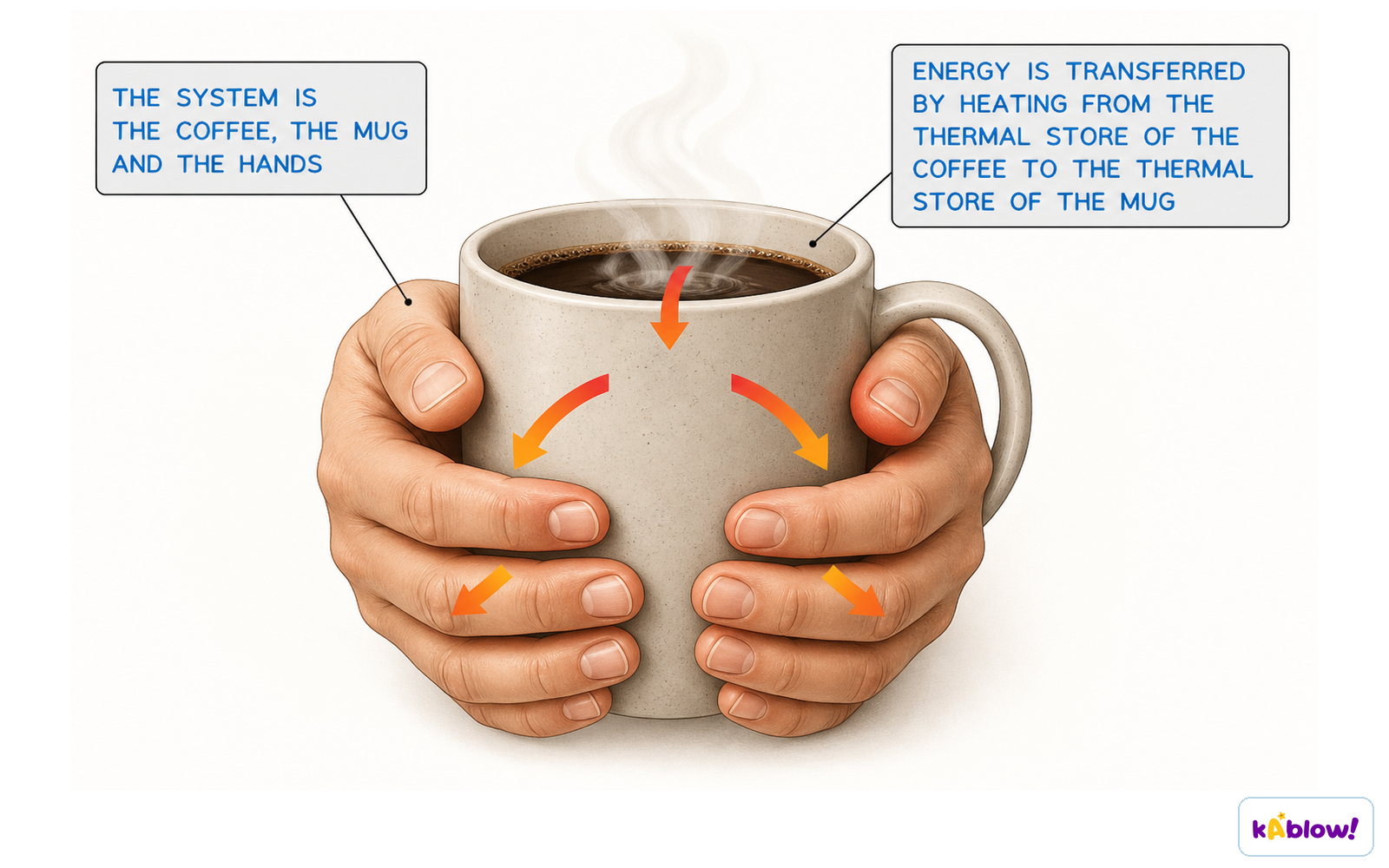
Energy is transferred by heating from the hot coffee, to the mug, to the hands
Kinetic Energy Store
- Any moving object has a kinetic energy store.
- The faster the movement, the more energy in the kinetic store.
- Examples: moving car, train, person walking or running.
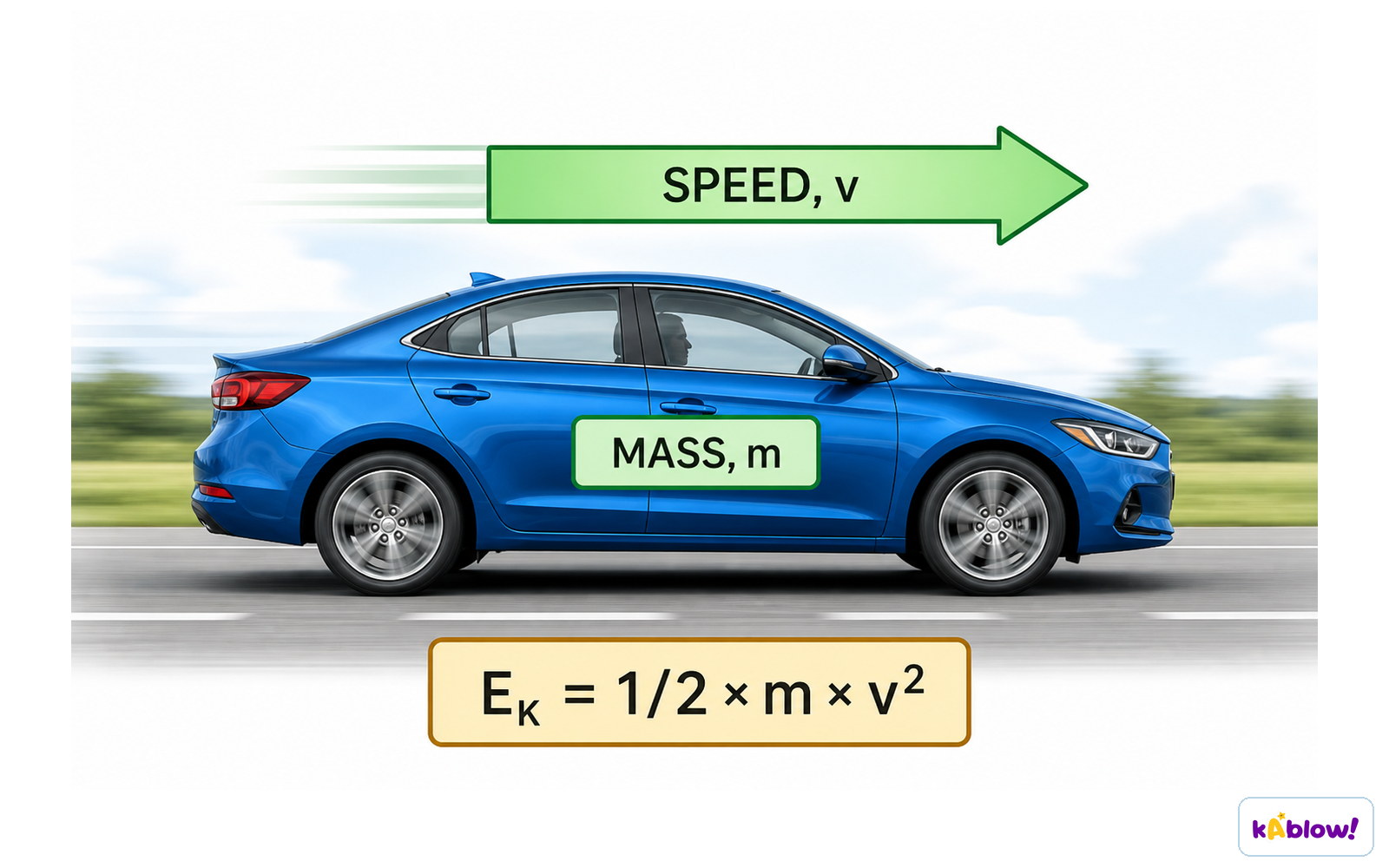
A moving car has energy in its kinetic store: Eₖ = ½ × m × v².
Gravitational Potential Energy Store
- Objects at a height above the ground have gravitational potential energy.
- The larger the height, the more energy in this store.
- Examples: book on a high shelf, bird on a high branch.
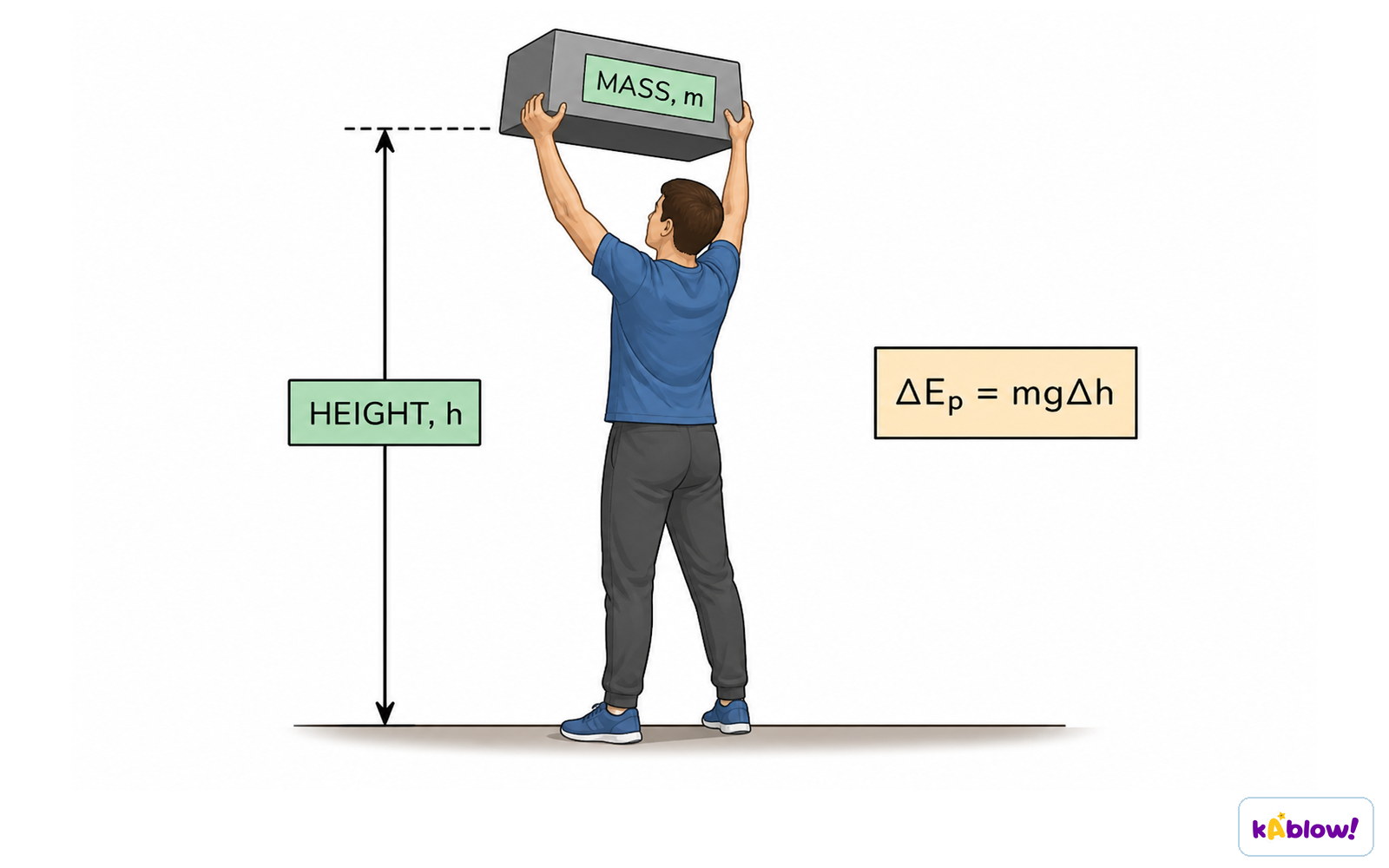
Energy is transferred to an object's gravitational store as it is lifted through a height: ΔEp = mgΔh.
Elastic Potential Energy Store
- Objects like springs or elastic bands stretched or compressed store elastic potential energy.
- The greater the extension or compression, the larger the energy store.
- Examples: stretched elastic band, spring, hair tie.
Chemical Energy Store
- Different chemicals store energy in their chemical energy store.
- Examples: food, fuel, batteries.
Nuclear Energy Store
- Energy stored in the nucleus of an atom is in the nuclear energy store.
- Examples: uranium or plutonium fuel in nuclear power plants.
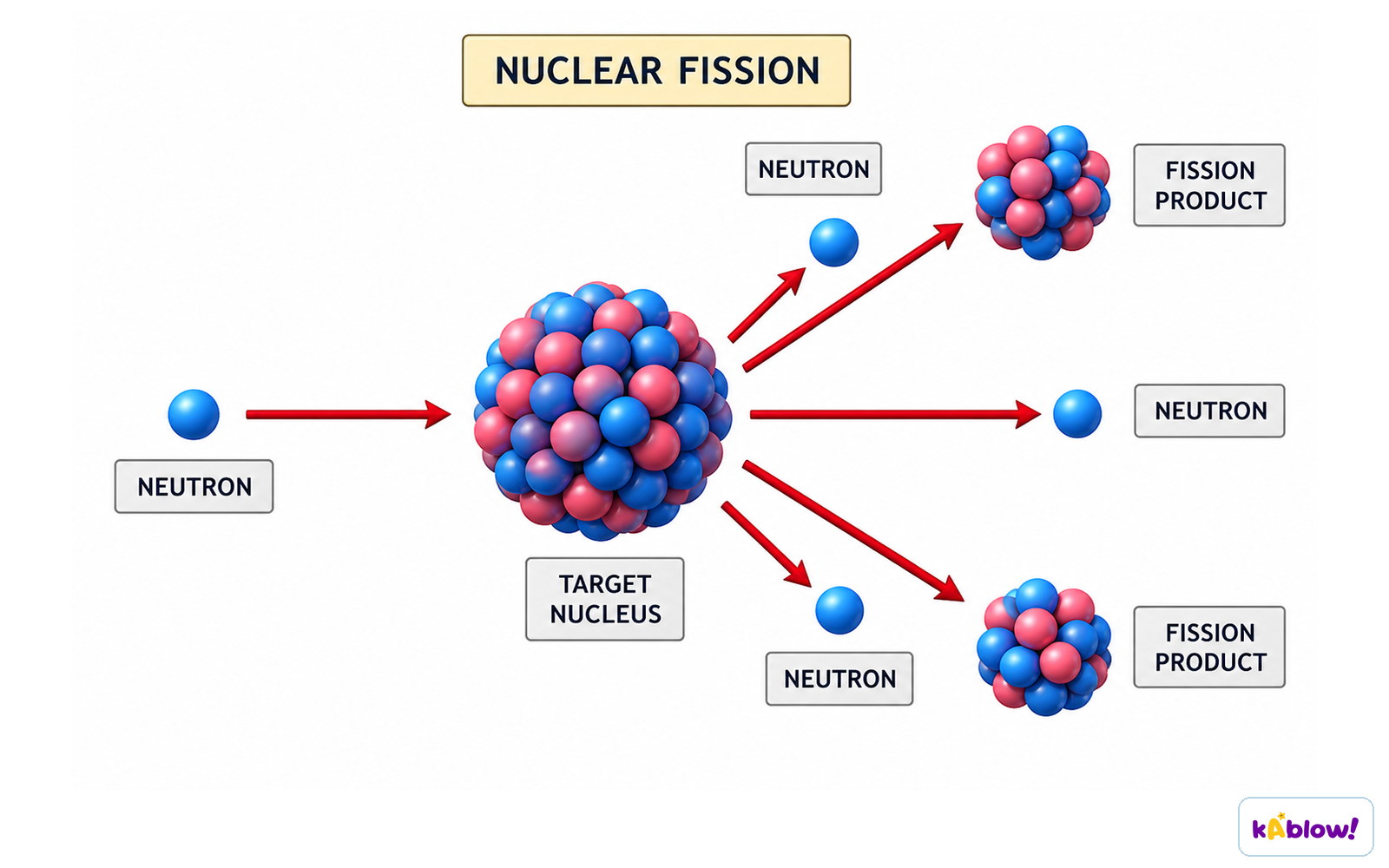
In nuclear fission, a neutron strikes a target nucleus, which splits into two smaller nuclei and releases further neutrons
Magnetic and Electrostatic Potential Energy Stores
- Magnetic potential: two magnets held close together store energy.
- Electrostatic potential: charges close together (e.g., protons, electrons) store energy.
Eight energy stores
Slides
Sign up free to view the lesson slides
Step through every slide for this topic — plus flashcards and revision notes — with a free account.
Practice questions
Free preview — 8 of 57 questions. Sign up to see them all.
1.A helicopter is stationary and hovering above the ground. Which energy store does the helicopter have?
Easy- AGravitational potential
- BKinetic
- CElastic potential
- DNuclear
2.A helicopter starts to move forwards. Which additional energy store does it now have?
Easy- AKinetic
- BThermal
- CChemical
- DMagnetic potential
3.While flying, the engine of a helicopter becomes warm. Which energy store has increased in the engine?
Easy- AThermal
- BKinetic
- CChemical
- DNuclear
4.A helicopter uses kerosene fuel. Which energy store does kerosene have?
Easy- AChemical
- BKinetic
- CThermal
- DNuclear
5.A person bungee jumping falls from a bridge. What happens to their gravitational potential energy store as they fall?
Easy- AIt decreases
- BIt increases
- CIt stays the same
- DIt is converted to elastic potential only
6.As a bungee jumper falls, they accelerate and get faster. What happens to their kinetic energy store?
Easy- AIt increases
- BIt decreases
- CIt stays the same
- DIt is converted to gravitational potential
7.At the bottom of a bungee jump, the bungee cord stretches. What happens to its elastic potential energy store?
Easy- AIt increases
- BIt decreases
- CIt stays the same
- DIt is converted to kinetic
8.A remote-controlled car has a battery that powers it. Which energy store does the battery have?
Easy- AChemical
- BKinetic
- CThermal
- DNuclear
Unlock all 57 questions, flashcards & more
Create a free account to see every question, the slides, flashcards and revision notes for this topic.