Sorting algorithms: bubble, insertion and merge sort
Aprenda jogando
Responda a estas perguntas para ganhar energia, depois pesque e explore. Sem precisar de conta.
Para educadores: slides de aula, resumos de revisão prontos para usar de Sorting algorithms: bubble, insertion and merge sort (Computer Science, Algorithms) — use na sua aula ou rode o tópico como atividade interativa de turma que seus aprendizes jogam como um jogo ao vivo.
Sorted data is easier to search (binary search) and to display. Sorting algorithms put items in order (ascending or descending).
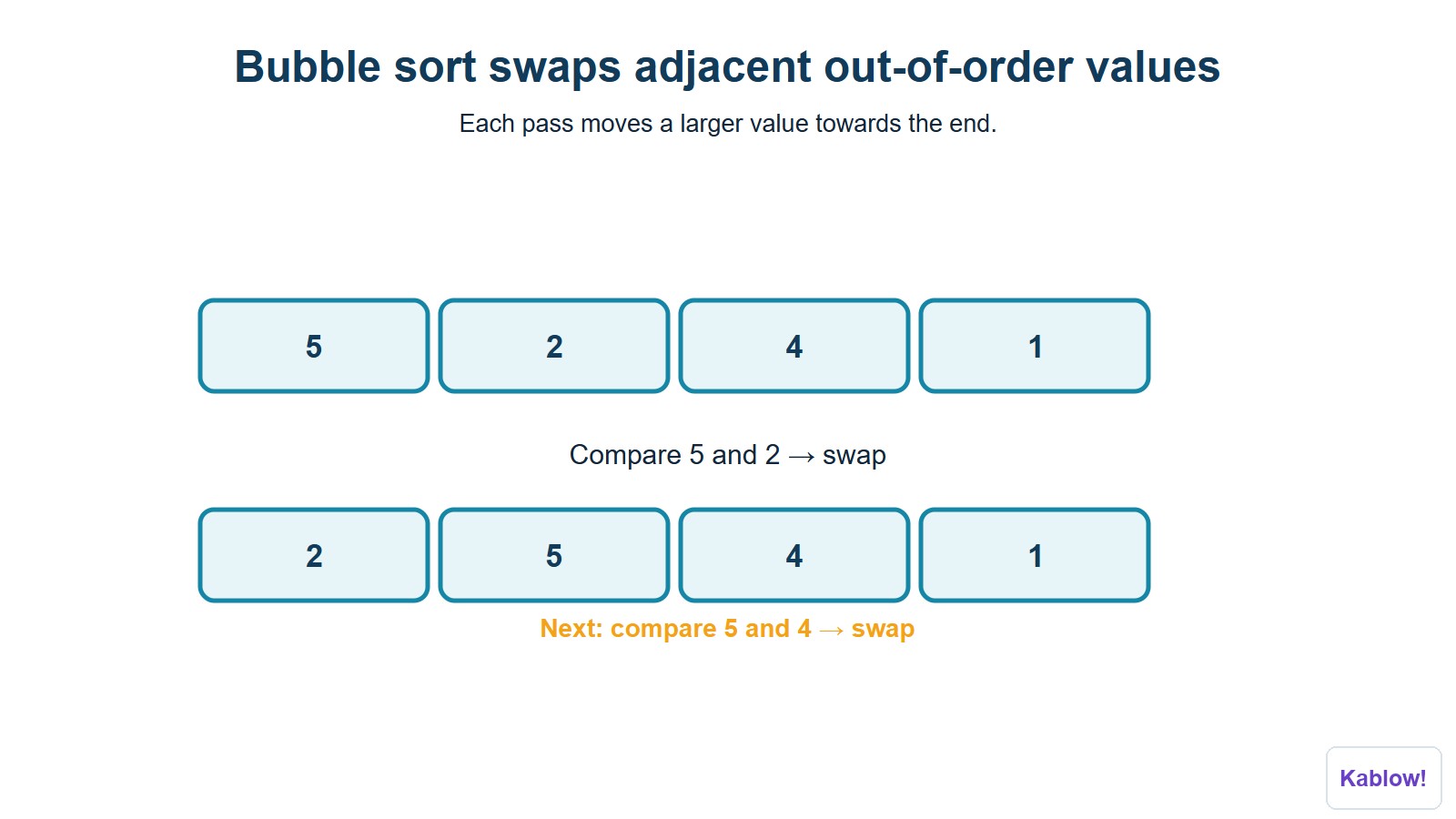
Bubble sort
Repeatedly compare adjacent pairs and swap them if they are in the wrong order. After each pass the largest unsorted item "bubbles" to the end. Stop when a complete pass makes no swaps.
Example: 5, 2, 4 → compare 5 and 2, swap: 2, 5, 4 → compare 5 and 4, swap: 2, 4, 5. A further pass has no swaps, so it stops.
Simple but slow for large lists.
Bubble sort
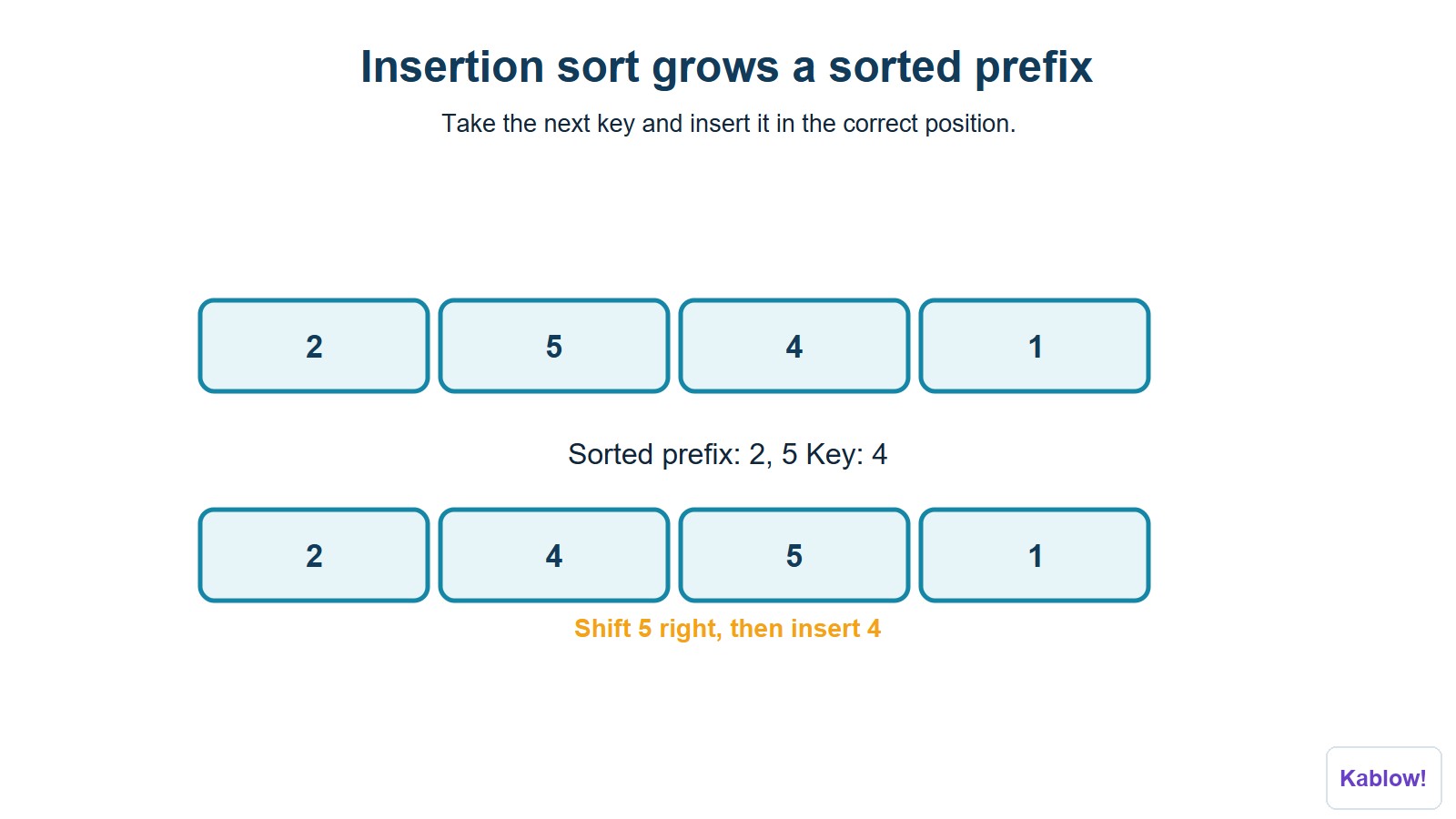
Insertion sort
Treat the first item as sorted. Take the next item and insert it into the correct position among the sorted items by shifting larger items right. Repeat until all items are sorted.
Efficient for small or nearly sorted lists.
Insertion sort
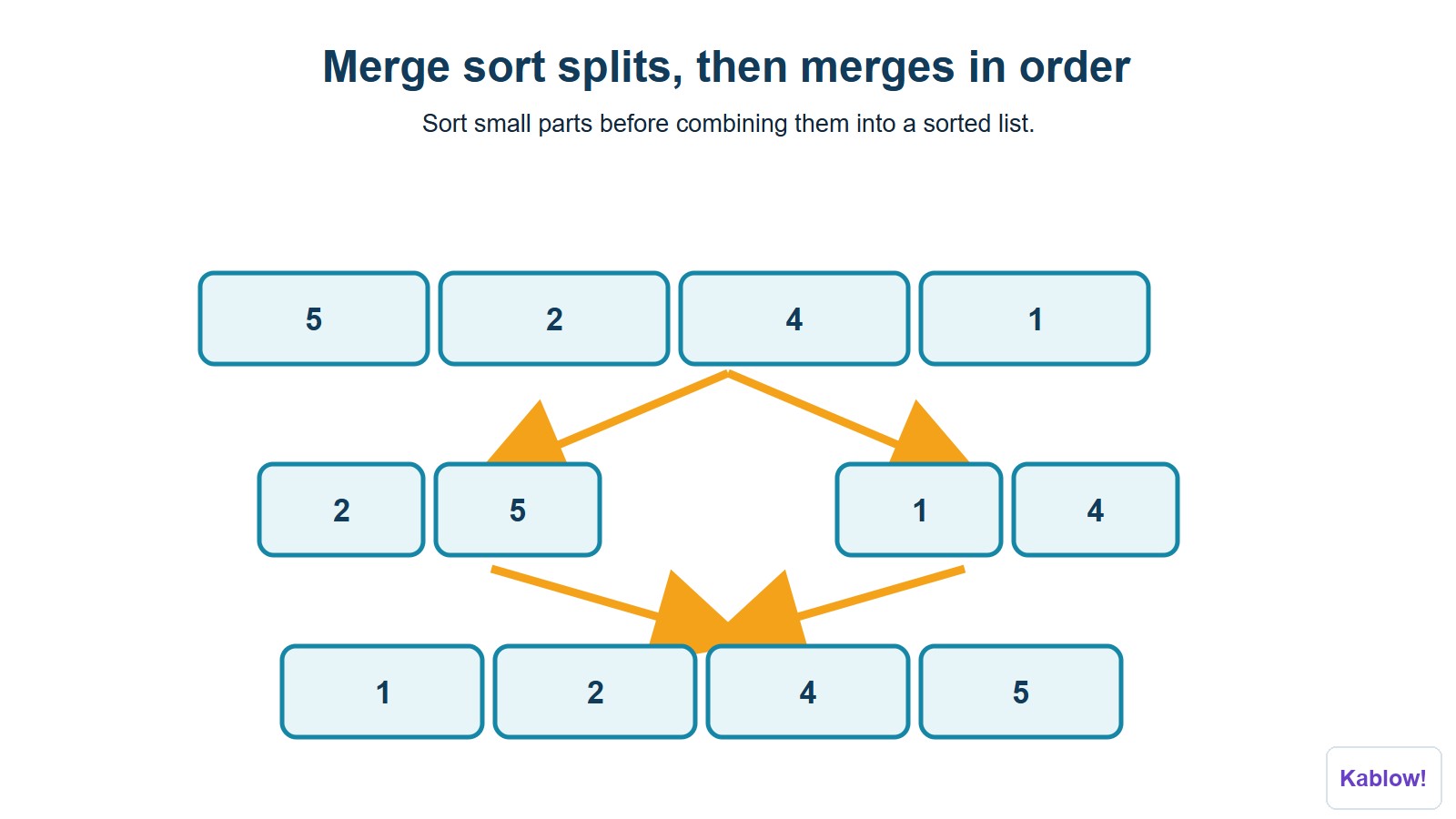
Merge sort
A divide and conquer algorithm: split the list into halves repeatedly until each part has one item, then merge the parts back together in order.
Much faster for large lists but uses more memory, and it is more complex.
Merge sort
Comparing
Bubble: simple, slow. Insertion: good for small lists. Merge: fast, memory-hungry.
Slides
Sign up free to view the lesson slides
Step through every slide for this topic — plus flashcards and revision notes — with a free account.