
Network security and cyber threats
Aprenda jogando
Responda a estas perguntas para ganhar energia, depois pesque e explore. Sem precisar de conta.
Para educadores: slides de aula, resumos de revisão prontos para usar de Network security and cyber threats (Computer Science, Networks and Security) — use na sua aula ou rode o tópico como atividade interativa de turma que seus aprendizes jogam como um jogo ao vivo.
Notas de aula
Threats
- Malware: malicious software including viruses, worms, trojans, ransomware and spyware.
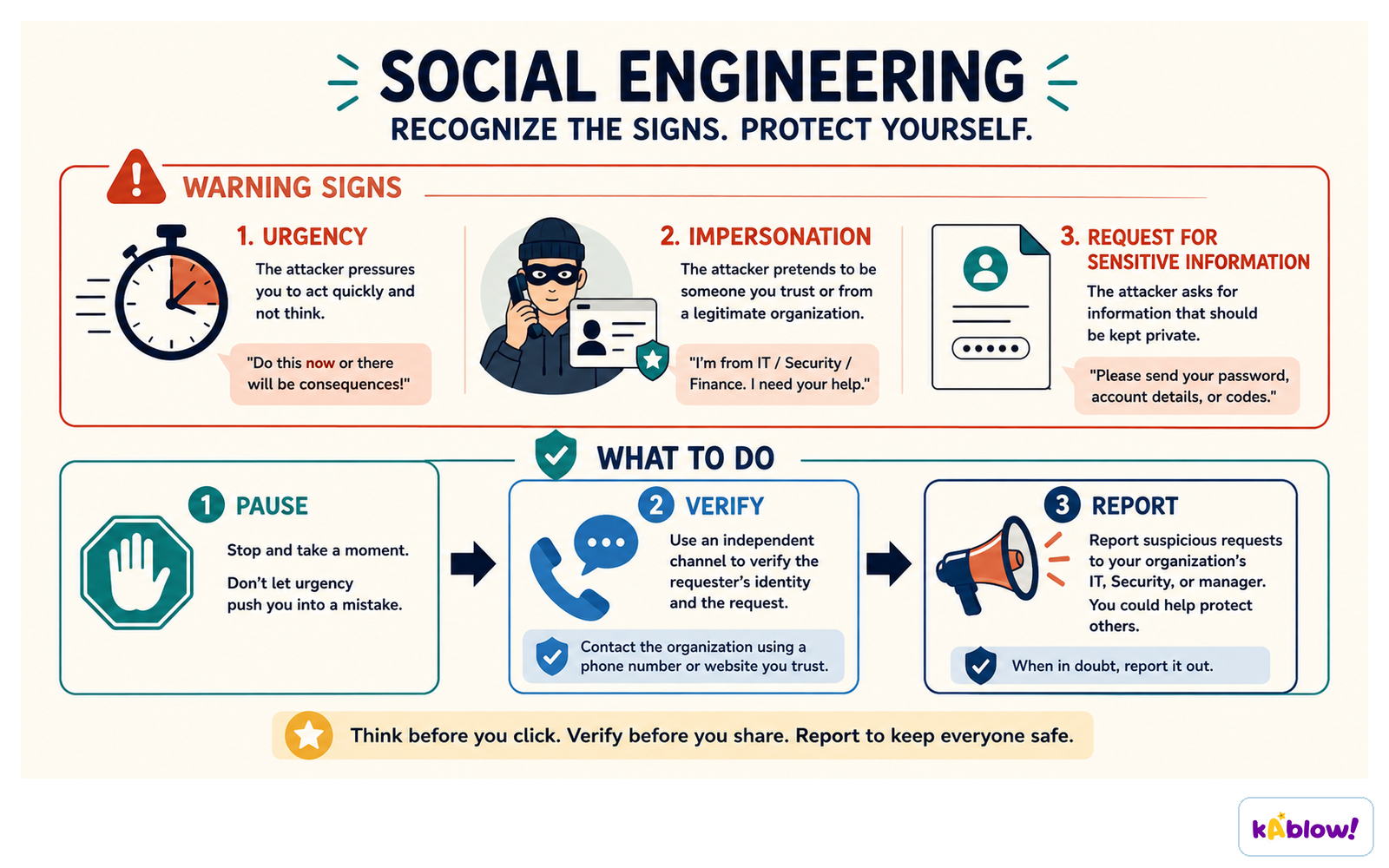
- Phishing: fake emails or websites to trick people into giving personal details. Social engineering (blagging, pretexting) tricks people rather than systems.
- Brute-force attack: trying many passwords until one works. Denial of service (DoS/DDoS): flooding a server so it cannot respond. SQL injection: inserting code into forms to access databases. Data interception and eavesdropping; insider threat; weak passwords; unpatched software.
Recognising social engineering
Defences
- Firewalls filter network traffic. Anti-malware software. Encryption scrambles data so only authorised users can read it. Strong passwords and authentication (two-factor). Access levels limit what users can do. Penetration testing (ethical hacking). Regular updates (patches). Backups. User education.
Encryption
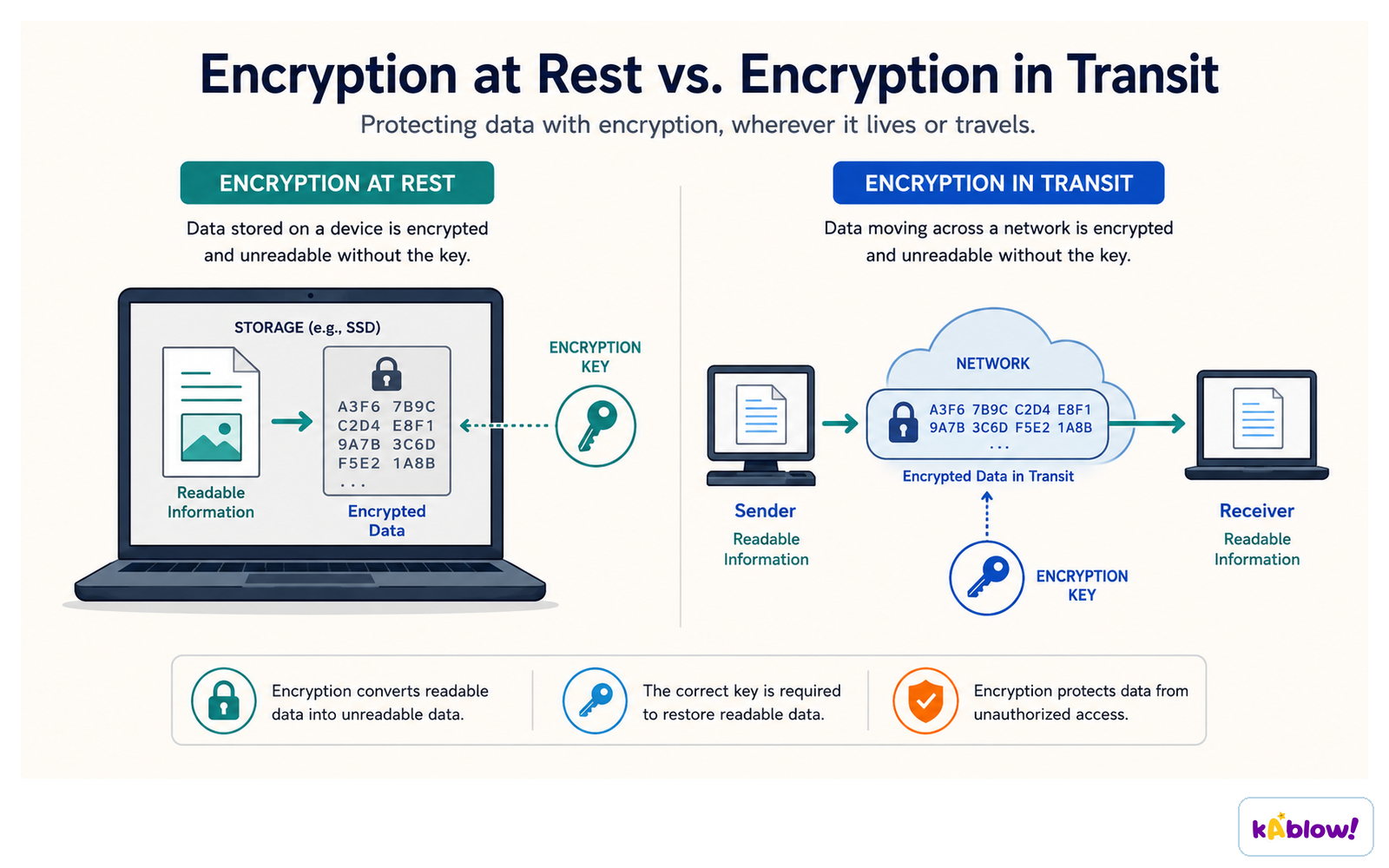
- Encryption transforms plaintext into ciphertext using a cryptographic algorithm and key. The appropriate decryption key recovers plaintext; symmetric and asymmetric schemes handle keys differently.
- HTTPS uses TLS to protect communication in transit and authenticate the server. Encryption alone does not prevent deletion, denial of service or a deceptive website.
Encryption at rest and in transit
Why security matters
- Protects personal data, finances and systems; legal duties (data protection law).
Slides
Sign up free to view the lesson slides
Step through every slide for this topic — plus flashcards and revision notes — with a free account.
Questões de prática
Prévia grátis — 8 de 34 perguntas. Cadastre-se para ver todas.
1.What is malware?
Easy- Amalicious software
- Ba type of hardware
- Ca protocol
- Da language
2.What is a virus?
Easy- Amalware that attaches to files and spreads
- Ba firewall
- Ca router
- Da cable
3.What is phishing?
Easy- Atricking people into revealing information
- Bflooding a server
- Cguessing passwords
- Dcopying files
4.What is a firewall?
Easy- Aa system that filters network traffic using rules
- Ba device that detects fires
- Ca program that only sorts files
- Da cable carrying network signals
5.What does anti-malware do?
Easy- Adetects and removes malicious software
- Bcreates malware deliberately
- Cincreases monitor resolution
- Dreplaces every network password
6.What is a brute-force attack?
Easy- Atrying many passwords until one works
- Bsending fake emails
- Cflooding a server
- Dstealing a router
7.What is a DDoS attack?
Easy- Amany computers flood a server with requests
- Ba password guess
- Ca fake email
- Da database trick
8.What is SQL injection?
Easy- Auntrusted input changes a database command
- Ba program replicates by attaching to files
- Ca router forwards a packet
- Da password is changed by its owner
Unlock all 34 questions & more
Crie uma conta grátis para ver todas as perguntas, os slides, flashcards e resumos de revisão deste tópico.
Provas anteriores
A prática com provas anteriores deste tópico chega em breve.
Em breve