
Elizabethan England: exploration and the Armada
Aprenda jogando
Responda a estas perguntas para ganhar energia, depois pesque e explore. Sem precisar de conta.
Para educadores: slides de aula, resumos de revisão prontos para usar de Elizabethan England: exploration and the Armada (History, British Depth Study) — use na sua aula ou rode o tópico como atividade interativa de turma que seus aprendizes jogam como um jogo ao vivo.
Notas de aula
Exploration and colonisation
- Voyages combined varying aims: trade, plunder, religious ambitions, rivalry, knowledge and colonial claims. Investors shared risks through arrangements such as chartered companies. The Muscovy Company dates to 1555; the East India Company’s charter in 1600 belongs to later Elizabethan context. New navigation did not remove danger or make expansion peaceful.
- Hawkins’s voyage beginning in 1562 captured and trafficked enslaved Africans to Spanish colonial markets. English participation in enslavement existed earlier. Drake participated in slave-trading ventures as well as raiding and completed a circumnavigation in 1577–80. Wealth and prestige must be assessed alongside violence, coercion and the interests of those harmed.
- Raleigh sponsored Roanoke expeditions rather than personally settling the island. Ralph Lane led the 1585 military colony, while John White governed the 1587 settlement. Roanoke is in present-day North Carolina; Virginia was then used by English promoters for a broader claimed region. Indigenous peoples already lived there and had their own interests and relationships.
- White returned for supplies in 1587 but only reached Roanoke again in 1590. He found the settlement abandoned and Croatoan carved as a destination message. Relocation is plausible, but the fate of all colonists is not established. Supply failures, English decisions, violence and changing Indigenous relationships require explanation; later empire was not an inevitable outcome.
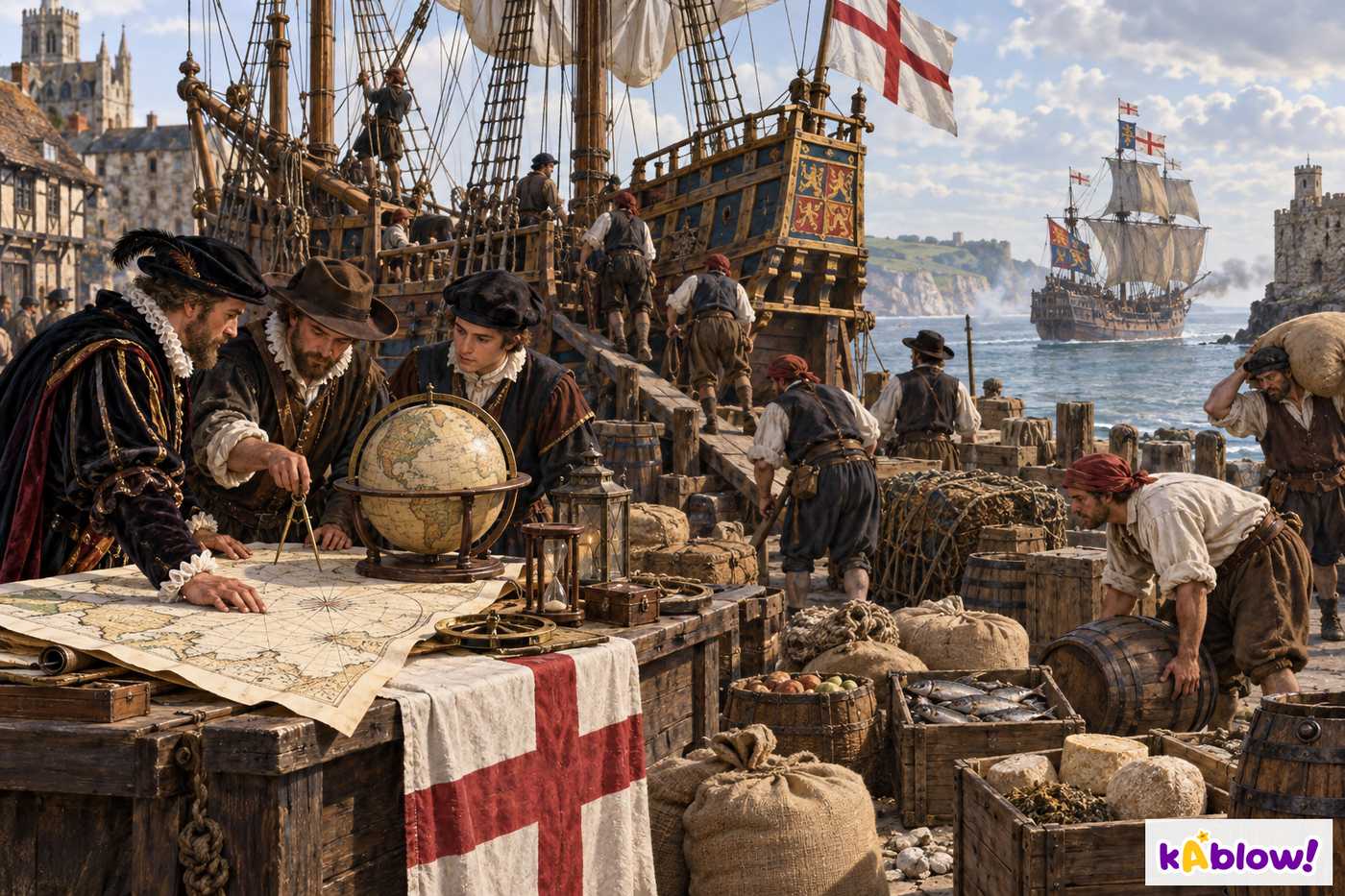
Voyages required investment and preparation
Causes of the Spanish Armada
- Philip’s project combined a challenge to Elizabeth’s rule with religious and strategic aims. English help to Dutch resistance and attacks on Spanish shipping and colonies intensified rivalry. Planning began in 1585; Mary’s execution and Drake’s Cadiz raid in 1587 therefore cannot be treated as its original starting point.
- Mary’s death removed a particular rival claimant and intensified hostility, rather than ending every Catholic succession possibility. The Cadiz raid damaged or destroyed ships and supplies and delayed preparations. Distinguish long-term rivalry, decisions, escalation and disruption when explaining causes.
Separate origins from later escalation
The Armada, 1588
- Around 130 vessels under Medina Sidonia sailed to support an invasion involving Parma’s army in the Netherlands. Howard commanded the English fleet with experienced subordinates including Drake. Communication, transport, timing and Dutch naval pressure complicated the combined Spanish operation. Fleet totals included different kinds of vessels and should not be compared as if every ship had equal fighting power.
- The Armada reached Calais, where English fireships disrupted its anchorage before Gravelines. In England’s Julian calendar the fireship night was 28–29 July and Gravelines 29 July; Gregorian dates are 7–8 August and 8 August. These are alternative dates for the same events, not separate attacks.
- Gunfire, sailing tactics, damage and failure to link securely with Parma helped defeat the operation. Winds constrained movement into the North Sea; a homeward route around Scotland and Ireland exposed damaged and poorly supplied ships to severe storms. Distinguish failure to invade from the scale of later maritime losses.
- Elizabeth’s Tilbury address was to land forces after the Gravelines action while invasion fears persisted. Its famous text survives through later transmission and cannot explain an earlier naval result. The defeat became a focus of royal and national propaganda, but did not end the war or instantly establish permanent English naval supremacy.
The campaign had distinct stages
Slides
Sign up free to view the lesson slides
Step through every slide for this topic — plus flashcards and revision notes — with a free account.
Questões de prática
Prévia grátis — 8 de 33 perguntas. Cadastre-se para ver todas.
1.In which year did Philip II’s famous Armada attempt an invasion of England?
Easy- A1588
- B1558
- C1603
- D1485
2.Who was king of Spain in 1588?
Easy- ACharles V
- BFerdinand
- CHenry VIII
- DPhilip II
3.Where was the Roanoke colony?
Easy- AAfrica
- BIndia
- CRoanoke Island in present-day North Carolina
- Dthe Caribbean
4.What was a joint-stock company?
Easy- Aa prison
- Ba business where investors share risk and profit
- Ca navy
- Da church
5.What was the 'Lost Colony'?
Easy- Athe 1587 Roanoke settlement found abandoned when White returned in 1590
- BJamestown
- CCalais
- DCadiz
6.What did John Hawkins undertake on the voyage that began in 1562?
Easy- Afound Roanoke
- Bfought the Armada
- Cfounded the Globe
- Dcapturing and trafficking enslaved Africans across the Atlantic for sale
7.What did Drake do at Cadiz in 1587?
Easy- Afound treasure
- Bmade peace
- Cburned Spanish ships
- Dsurrendered
8.Why did Elizabeth help the Dutch?
Easy- Athey were Spanish
- Bto support resistance to Spanish power and protect English strategic interests
- Cthey were Catholics
- Dthey paid her
Unlock all 33 questions & more
Crie uma conta grátis para ver todas as perguntas, os slides, flashcards e resumos de revisão deste tópico.
Provas anteriores
A prática com provas anteriores deste tópico chega em breve.
Em breve