
Crime and punishment in 18th and 19th century Britain
Aprenda jogando
Responda a estas perguntas para ganhar energia, depois pesque e explore. Sem precisar de conta.
Para educadores: slides de aula, resumos de revisão prontos para usar de Crime and punishment in 18th and 19th century Britain (History, Thematic Study: Crime and Punishment) — use na sua aula ou rode o tópico como atividade interativa de turma que seus aprendizes jogam como um jogo ao vivo.
Notas de aula
Crime and the Bloody Code
- The Bloody Code was an accumulated body of capital statutes, with more than 200 offences by the early nineteenth century under common counts. Many protected property. The 1723 Black Act imposed severe penalties on specified activities associated with disguise, poaching and attacks on property; not every poaching case had the same legal elements.
- Capital liability did not mean inevitable execution. Pardons, reprieves, verdicts, prosecution choices and transportation affected outcomes. Reformers criticised cruelty, unequal application and doubtful deterrence. Law, sentence and punishment carried out must be investigated separately.
- Smuggling, poaching and robbery had different economic and social contexts. Turpin was executed in 1739 for horse theft; his later highwayman legend is not identical to the indictment. Swing protests in 1830 reflected wages and insecure livelihoods as well as opposition to machinery. Rebecca protests in 1839–43 targeted Welsh tolls amid wider hardship.
- The Tolpuddle six were convicted in 1834 over unlawful oaths and sentenced to transportation. Union organisation was the political context, but membership alone was not the charge. Public campaigning helped obtain pardons in 1836. Avoid equating all labour protest with an identical offence.
Law, sentence and outcome could differ
Policing
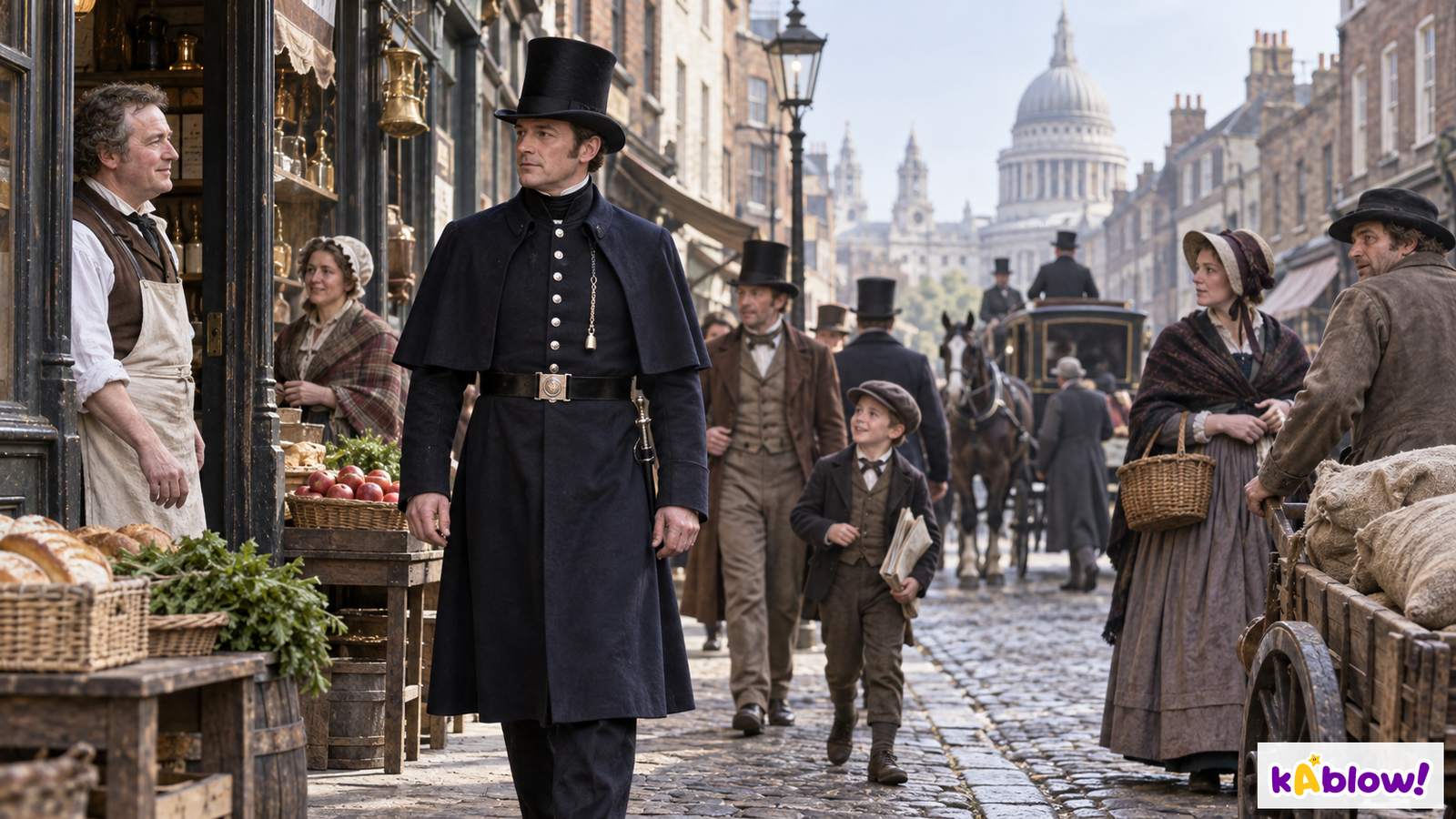
- Parish constables and watchmen predated paid specialist work such as Henry Fielding’s Bow Street organisation in 1749, developed further by John Fielding. Glasgow established a professional force in 1800. The Met’s creation in 1829 was a major development, not the first policing anywhere in Britain.
- Peel promoted a paid, organised preventive force for London. Commissioners and officers implemented it amid debate about cost, liberty and control. The City of London retained separate arrangements. Fear of crime, recorded crime and actual offending are not interchangeable measures.
- The 1856 County and Borough Police Act required police provision across England and Wales; Scotland’s framework was separate. The Metropolitan Detective Branch began in 1842 and was replaced by CID in 1878. This was a history of expansion and reorganisation, not one man creating a national force in a single step.
Patrol and public contact were part of policing
Punishments
- Transportation removed convicted people overseas under coercive conditions. The American War of Independence disrupted the earlier route, with hulks authorised in 1776. The First Fleet left in 1787 and reached Australia in 1788. Hulks were decommissioned prison ships, often with severe conditions, not necessarily rotting wrecks.
- Australian destinations stopped receiving convicts at different times. Penal-servitude legislation in the 1850s curtailed transportation as a sentence before the final arrival in Western Australia in 1868. Cost, criticism, colonial opposition and alternative prisons contributed to change.
- Nineteenth-century reforms removed the death penalty from many offences. By 1861 few capital offences remained, but the claim that only murder and treason qualified is false: piracy with violence and arson in royal dockyards also remained capital in law. Ending public executions in 1868 changed the setting, not the existence of execution.
Distinguish legal change from final practice
Why changes occurred
- Population growth, urbanisation, economic pressures and changing opportunities affected concerns about crime. Changes in definitions, reporting and police activity also affected recorded totals. Do not assume every rise in records measures the same rise in underlying offending.
- Reform combined investigation, campaigning, legislation, funding and implementation. Local variation, institutional resistance and competing beliefs about deterrence and rehabilitation complicated change. Neither one reformer nor one social development explains every outcome.
Prison reform and disciplinary regimes
- Howard inspected and criticised prison conditions, and Fry campaigned particularly for women prisoners’ treatment and education. Peel initiated the 1823 Gaols Act to improve standards. Their contributions differed and worked alongside other campaigners, officials and local implementation.
- Pentonville opened in 1842 using separation, intended to prevent communication and encourage reform. Extreme isolation caused serious psychological harm. Silent association, used elsewhere before 1842, allowed prisoners to work together under a ban on communication. Hard labour could accompany different regimes.
- Do not assume one universal switch from separate to silent systems. Penal ideals and actual practice varied by prison and date. Assess intended reform, deterrence and control against evidence of conditions and prisoners’ experiences.
Prison systems and reform had different aims
Slides
Sign up free to view the lesson slides
Step through every slide for this topic — plus flashcards and revision notes — with a free account.
Questões de prática
Prévia grátis — 8 de 33 perguntas. Cadastre-se para ver todas.
1.Who founded the Metropolitan Police?
Easy- ASir Robert Peel
- BHenry Fielding
- CJohn Howard
- DElizabeth Fry
2.Which nickname referred to Robert Peel’s first name?
Easy- ARunners
- BCharleys
- CRedcoats
- DBobbies
3.Who founded the Bow Street Runners?
Easy- AJohn Howard
- BElizabeth Fry
- CHenry Fielding
- DRobert Peel
4.What was transportation?
Easy- Afines
- Bsending convicts to colonies
- Cbuilding railways
- Dmoving prisons
5.Where did the Tolpuddle Martyrs get sent?
Easy- AAustralia
- BAmerica
- CFrance
- DIreland
6.What was Pentonville Prison famous for?
Easy- Athe silent system only
- Bbeing a hulk
- Cbeing a workhouse
- Dthe separate system
7.What did Elizabeth Fry campaign for?
Easy- Atransportation
- Bhulks
- Cbetter conditions for women prisoners
- Dthe death penalty
8.What did John Howard do?
Easy- Aled a riot
- Binvestigated and criticised prison conditions
- Ccreated the police
- Dended transportation
Unlock all 33 questions & more
Crie uma conta grátis para ver todas as perguntas, os slides, flashcards e resumos de revisão deste tópico.
Provas anteriores
A prática com provas anteriores deste tópico chega em breve.
Em breve