
Flowcharts and pseudocode
விளையாடிக் கற்றுக்கொள்ளுங்கள்
ஆற்றல் சம்பாதிக்க இந்த கேள்விகளுக்குப் பதிலளியுங்கள், பின்னர் மீன் பிடித்து ஆராயுங்கள். கணக்கு தேவையில்லை.
பாட குறிப்புகள்
Flowcharts
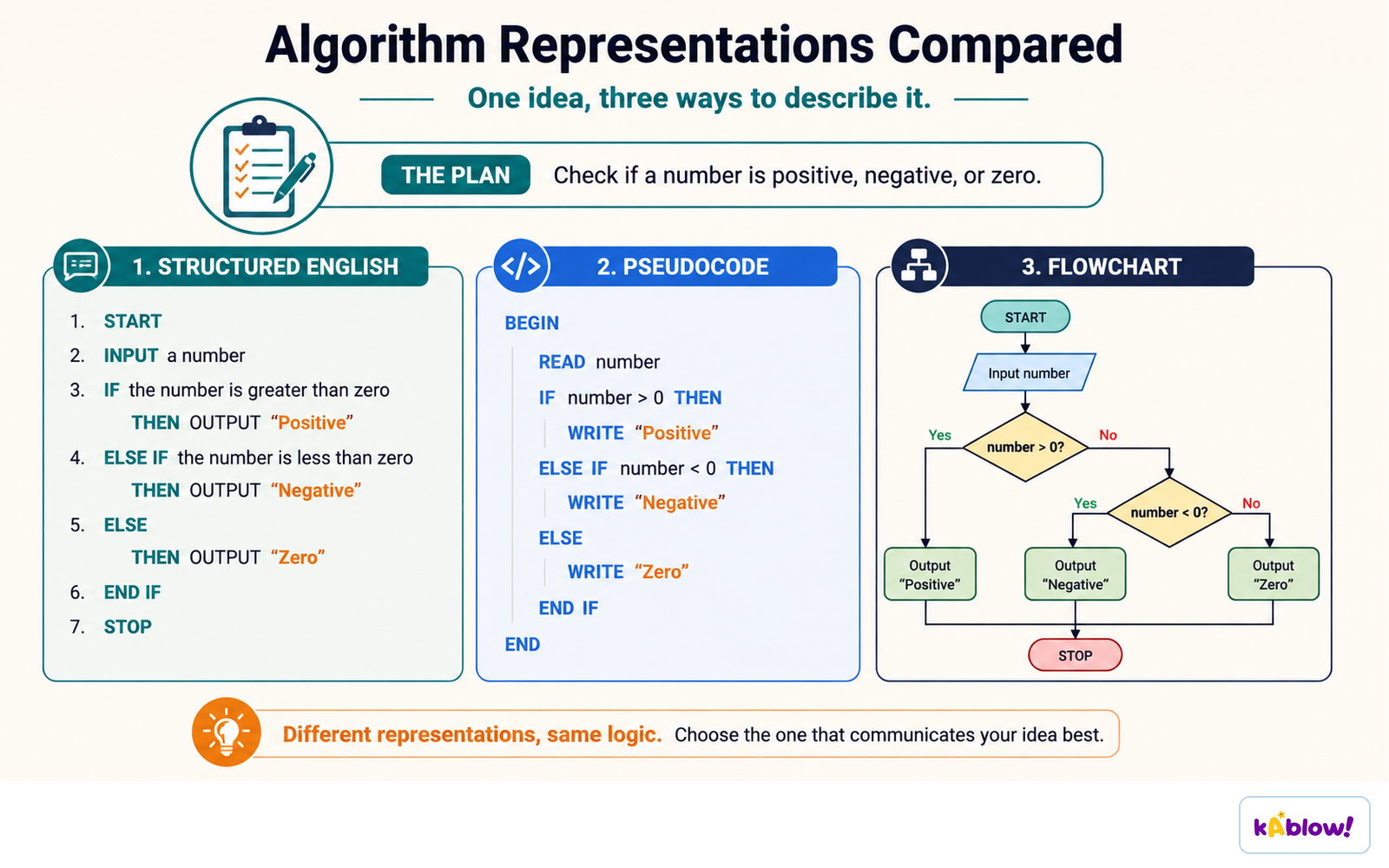
- A flowchart is a diagram of an algorithm. Standard symbols: terminator (rounded box, start/end), process (rectangle), decision (diamond, with yes/no or true/false branches), input/output (parallelogram) and arrows showing flow.
- Rules: one start, at least one end, one arrow in and out of each process; decisions have two exits.
Read, test and report
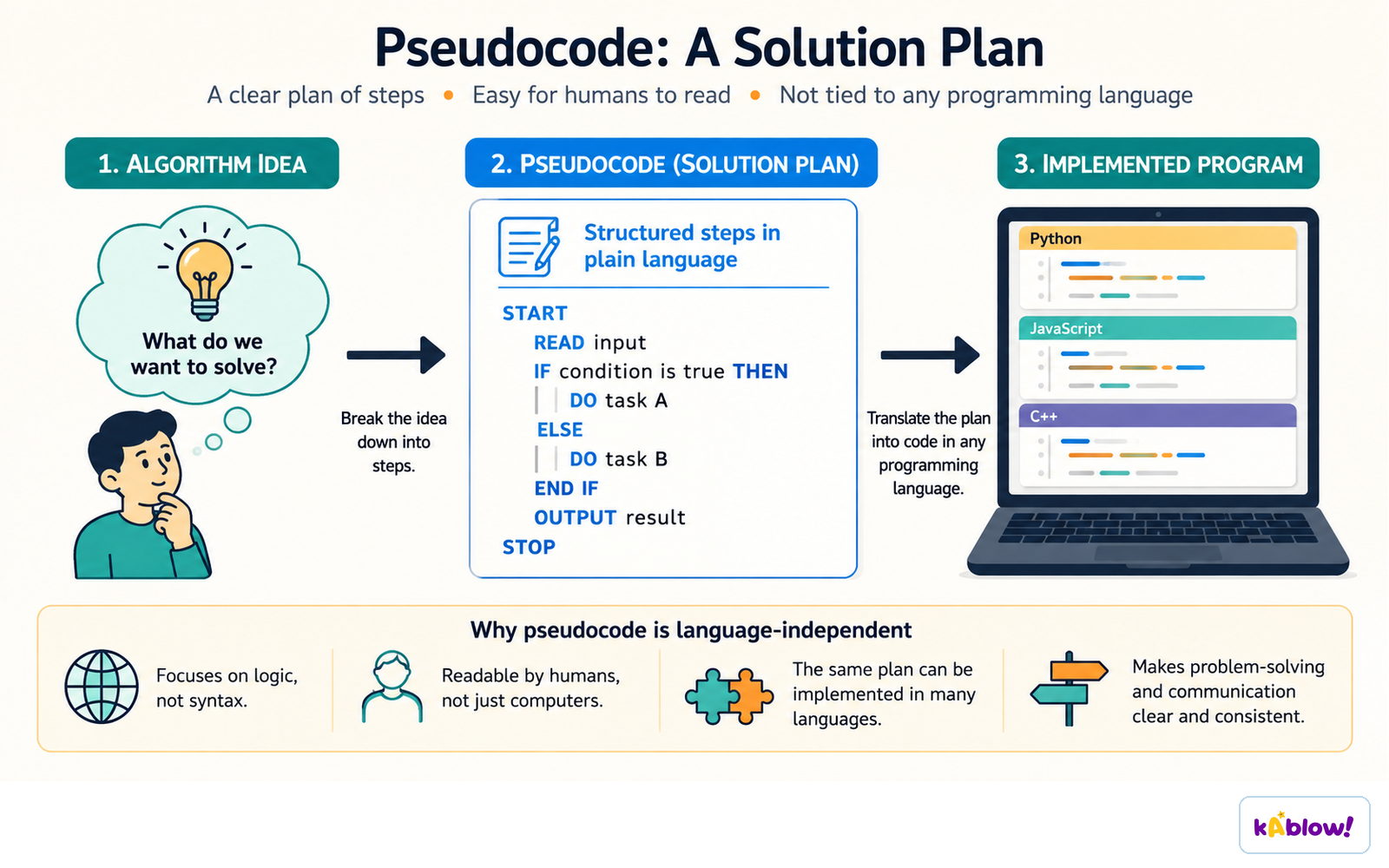
Pseudocode
- Pseudocode is a structured, language-independent way to write algorithms. It is not a real language but uses programming-like keywords such as INPUT, OUTPUT, IF ... THEN ... ELSE ... ENDIF, WHILE ... ENDWHILE, FOR ... NEXT.
- Example: age = INPUT; IF age ≥ 18 THEN OUTPUT "Adult" ELSE OUTPUT "Minor" ENDIF.
Planning with pseudocode
Converting between forms
- Translate the algorithm’s meaning, not just its appearance: decision nodes can express IF branches or loop conditions.
- A loop-back edge indicates repetition. Preserve initialisation, the condition, updates and both possible exits when changing representation.
Algorithm representations
Trace tables
- A trace table records the values of variables as an algorithm runs, showing the output and helping to find logic errors.
Why use them?
- They help plan before coding, communicate with others and test logic.
ஸ்லைடுகள்
Sign up free to view the lesson slides
Step through every slide for this topic — plus flashcards and revision notes — with a free account.
பயிற்சி கேள்விகள்
இலவச முன்னோட்டம் — 33-இல் 8 கேள்விகள். அனைத்தையும் பார்க்க பதிவு செய்யவும்.
1.What is a flowchart?
Easy- Aa diagram showing the steps of an algorithm
- Ba type of program
- Ca database
- Da network
2.What is pseudocode?
Easy- Aa way of writing algorithms using programming-like statements
- Ba real language
- Ca diagram
- Da hardware part
3.Which symbol marks start and end?
Easy- Aterminator
- Bdecision
- Cprocess
- Dinput
4.Which symbol is used for a calculation?
Easy- Aprocess rectangle
- Bdiamond
- Cparallelogram
- Doval
5.What does an arrow show?
Easy- Athe direction of flow
- Bthe value
- Cthe error
- Dthe end
6.What is the output? total = 3 + 4 OUTPUT total
Easy- A7
- B34
- C3
- D4
7.What is the output? x = 5 IF x > 3 THEN OUTPUT "big" ELSE OUTPUT "small" ENDIF
Easy- Abig
- Bsmall
- C5
- Dnothing
8.Using inclusive FOR bounds and a step of one, which header repeats its body five times?
Easy- AFOR i = 1 TO 5
- BIF i = 5
- CINPUT i
- DOUTPUT i
Unlock all 33 questions & more
இந்த தலைப்பிற்கான ஒவ்வொரு கேள்வியையும், ஸ்லைடுகளையும், ஃப்ளாஷ் கார்டுகளையும் மற்றும் திருப்புதல் குறிப்புகளையும் பார்க்க இலவச கணக்கை உருவாக்கவும்.