
Fieldwork: planning, collecting and presenting data
விளையாடிக் கற்றுக்கொள்ளுங்கள்
ஆற்றல் சம்பாதிக்க இந்த கேள்விகளுக்குப் பதிலளியுங்கள், பின்னர் மீன் பிடித்து ஆராயுங்கள். கணக்கு தேவையில்லை.
கல்வியாளர்களுக்கு: Fieldwork: planning, collecting and presenting data (Geography, Geographical Skills)-க்கான தயாரான பாட ஸ்லைடுகள், திருப்புதல் குறிப்புகள் — உங்கள் பாடத்தில் அவற்றைப் பயன்படுத்தவும், அல்லது கற்பவர்கள் நேரலை விளையாட்டாக விளையாடும் ஊடாடும் வகுப்பு செயல்பாடாக தலைப்பை இயக்கவும்.
பாட குறிப்புகள்
The enquiry process
- Start with an answerable geographical question and relevant concepts. A hypothesis is a testable prediction, while an enquiry may instead pose an open question. Identify variables, scale, locations and evidence before choosing equipment.
- Plan methods, collect and present data, analyse, conclude and evaluate; revisit decisions when conditions or evidence require it. Exam-board fieldwork requirements vary. For AQA 8035, the specified programme includes two enquiries in contrasting environments with primary data and physical and human understanding; a generic online lesson cannot substitute for a student’s own field experience.
Plan evidence around the enquiry
Primary and secondary data
- Primary evidence consists of first-hand observations collected for the current enquiry. Secondary evidence is existing material reused from another source or earlier collection, including published census results, maps, weather series or earlier field records. Format alone does not decide the category.
- Check date, location, definitions, units, method, purpose and uncertainty before combining sources. A new sketch based on direct observation is different from copying an existing map, and agreement between sources does not prove they are independent.
Sampling
- Define the target area or population and a usable sampling frame. Simple random selection gives each eligible unit an equal chance; use a random process rather than convenience. A random sample can still miss important variation, especially when small.
- Systematic selection uses a regular interval in space, time or numbered units, with an appropriate start. Check that it does not repeatedly coincide with a patterned feature. Stratified sampling selects within relevant groups; proportional allocation is common but is not the only possible justified design.
- A transect is a route or line, not an alternative that makes random or systematic selection impossible. Sampling along it can use different selection rules. Additional well-chosen observations can improve coverage and estimates but do not automatically remove bias or instrument error.
Selection and layout are different choices
Methods
- River measurements can include a defined channel width, vertical depth, local velocity and sediment size. Use consistent units and site records under approved supervised procedures. Flow-meter readings vary with position; a timed surface float estimates surface velocity rather than automatically measuring mean velocity or discharge.
- Beach profiles record a defined line of elevation or slope observations. Ranging poles and a clinometer require a consistent sighting procedure; record route, tide and other relevant conditions. Illustrations do not establish whether any real access or water-entry method is safe.
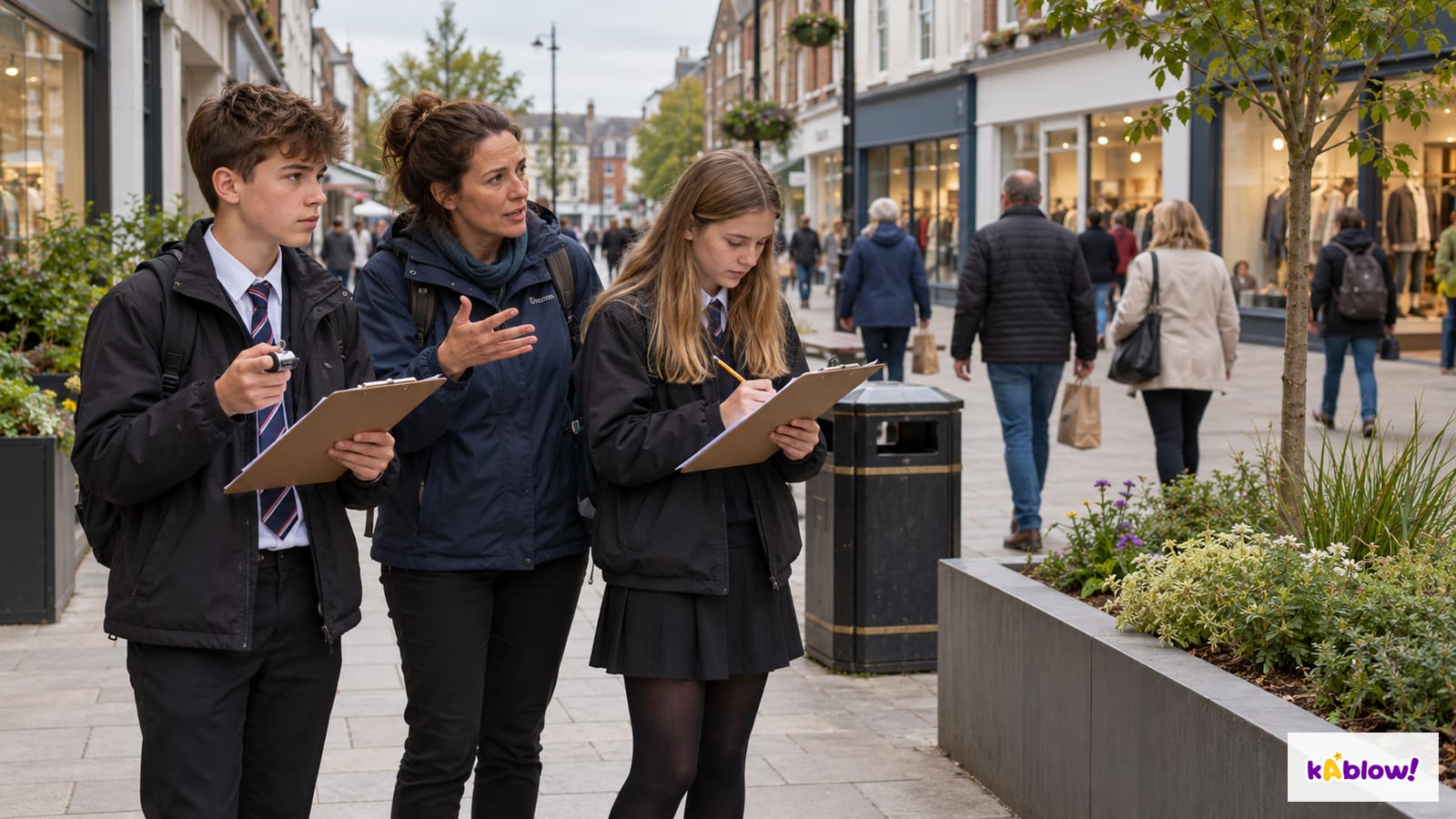
- Urban methods include timed pedestrian and traffic counts, environmental-quality scores, questionnaires and land-use mapping. Count duration, direction and observation boundaries must be defined. Quality scores involve judgement, so use clear criteria, pilot them and compare observers. A questionnaire can also study people’s experiences of a physical hazard; the enquiry variable determines its purpose.
Defined observations in an imagined street survey
Safety and ethics
- A hazard is a potential source of harm; risk considers likelihood and severity in context. Assess site access, water, tides, terrain, weather and traffic as relevant, then use approved controls, supervision and decisions about whether the activity can proceed. Review changing conditions; paperwork or a high-visibility jacket does not eliminate risk.
- Explain the purpose and use of survey data, respect informed voluntary participation and follow approved school procedures. Avoid unnecessary identifying details, pressure, intrusion or damage. Anonymous data do not identify participants; confidential identifiable records are a different arrangement requiring protection.
Risk and ethics require specific decisions
Presenting data
- Match the display to the variable and enquiry. Tables retain exact values; bar charts compare categories; line graphs may show ordered time changes; scatter graphs examine paired numerical associations. Label variables, units, keys, scale, place and date as appropriate.
- Maps show location and spatial pattern. Annotated field sketches and photographs select relevant observed features and distinguish description from interpretation. Do not use a decorative photograph as evidence for an unmeasured numerical trend, and do not assume a neat display removes bias.
Match a display to its data
ஸ்லைடுகள்
Sign up free to view the lesson slides
Step through every slide for this topic — plus flashcards and revision notes — with a free account.
பயிற்சி கேள்விகள்
இலவச முன்னோட்டம் — 33-இல் 8 கேள்விகள். அனைத்தையும் பார்க்க பதிவு செய்யவும்.
1.What is primary data?
Easy- Adata collected firsthand
- Bdata from a book
- Ccensus data
- Dmaps
2.What is secondary data?
Easy- Anew measurements made for the current enquiry
- Bnew observations made for the current enquiry
- Cnew responses collected for the current enquiry
- Dexisting data reused from another source or earlier collection
3.What is a hypothesis?
Easy- Aa map
- Ba graph
- Ca testable prediction
- Da conclusion
4.What defines simple random sampling from a specified sampling frame?
Easy- Athe biggest
- Beach item has an equal chance of selection
- Cchoosing the easiest
- Devery third item
5.What is systematic sampling?
Easy- Aselecting at regular intervals
- Brandom
- Cchoosing friends
- Dnone
6.What is stratified sampling?
Easy- Aselecting only whichever location is easiest to reach
- Bchoosing every fifth unit without reference to groups
- Casking only the researcher’s friends
- Ddividing the population into relevant groups and sampling within each
7.Which tool can measure shallow-water depth at an approved, supervised river site?
Easy- Aa compass
- Ba camera
- Ca ruler or metre stick
- Da thermometer
8.Which instrument measures slope angle?
Easy- Athermometer
- Bclinometer
- Cflow meter
- Dranging pole
Unlock all 33 questions & more
இந்த தலைப்பிற்கான ஒவ்வொரு கேள்வியையும், ஸ்லைடுகளையும், ஃப்ளாஷ் கார்டுகளையும் மற்றும் திருப்புதல் குறிப்புகளையும் பார்க்க இலவச கணக்கை உருவாக்கவும்.
முந்தைய தேர்வுகள்
இந்த தலைப்பிற்கான முந்தைய தேர்வு பயிற்சி விரைவில் வருகிறது.
விரைவில் வருகிறது