
Operating systems and software
Học bằng cách chơi
Trả lời những câu hỏi này để kiếm năng lượng, rồi câu cá và khám phá. Không cần tài khoản.
Dành cho nhà giáo dục: slide bài học, ghi chú ôn tập sẵn dùng cho Operating systems and software (Computer Science, Computer Systems) — dùng trong bài giảng của bạn, hoặc chạy chủ đề như một hoạt động lớp học tương tác để người học chơi như một trò chơi trực tiếp.
Ghi chú bài học
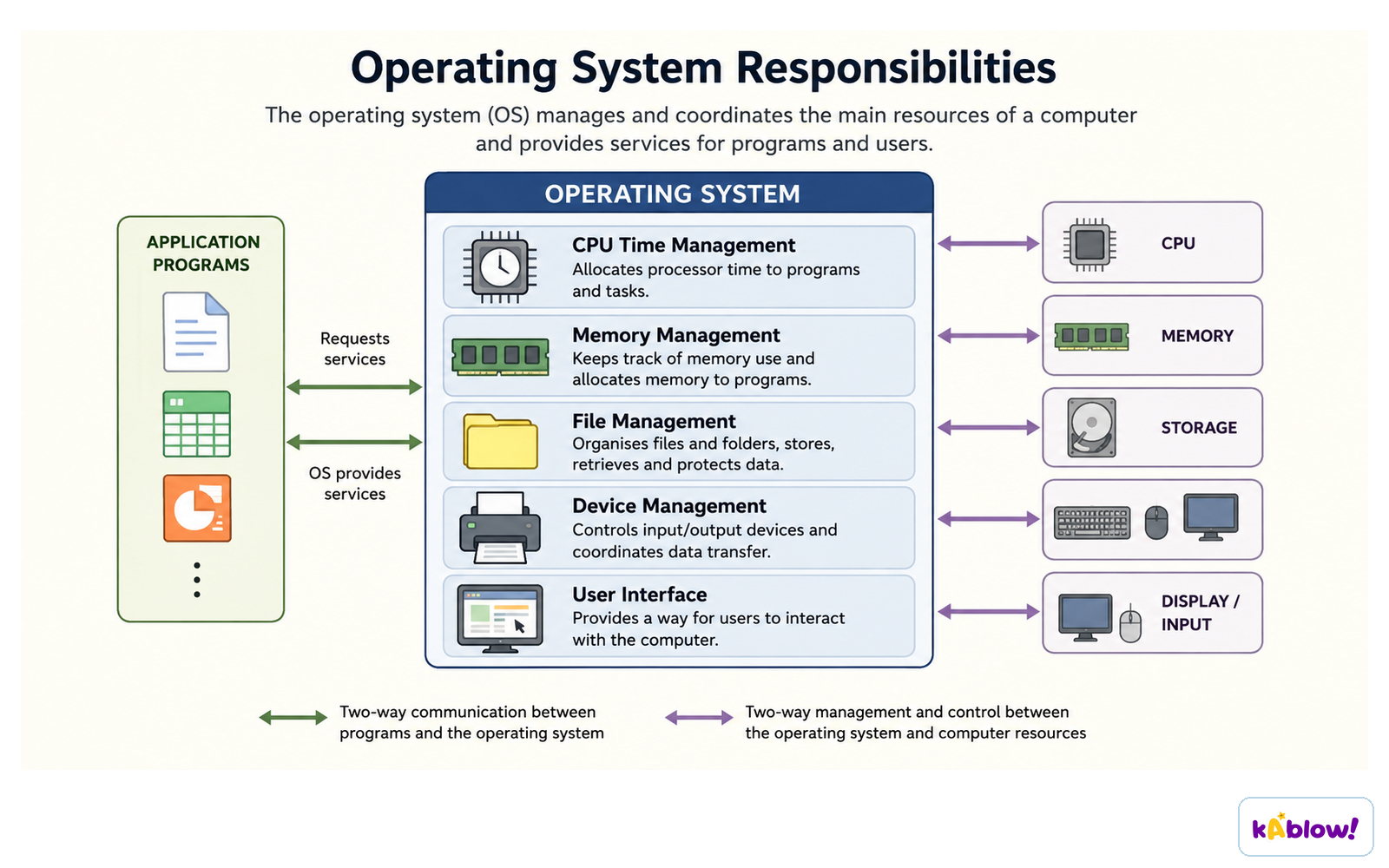
Operating systems (OS)
- An operating system manages the computer's hardware and provides services for software. Functions: user interface (GUI or command line), memory management, multitasking (process scheduling), file management, device management (drivers) and security (accounts, permissions).
- Examples: Windows, macOS, Linux, Android, iOS.
Operating system responsibilities
Types of software
- System software: OS and utility software (antivirus, backup, disk defragmenter, compression).
- Application software: performs tasks for users (word processor, web browser, games).
System and application software
Programming languages
- High-level languages use readable abstractions and can be implemented on different platforms; a suitable translator or runtime and libraries are still needed.
- Machine code and assembly are low-level and processor-specific. They permit close hardware control, but are harder to write and maintain.
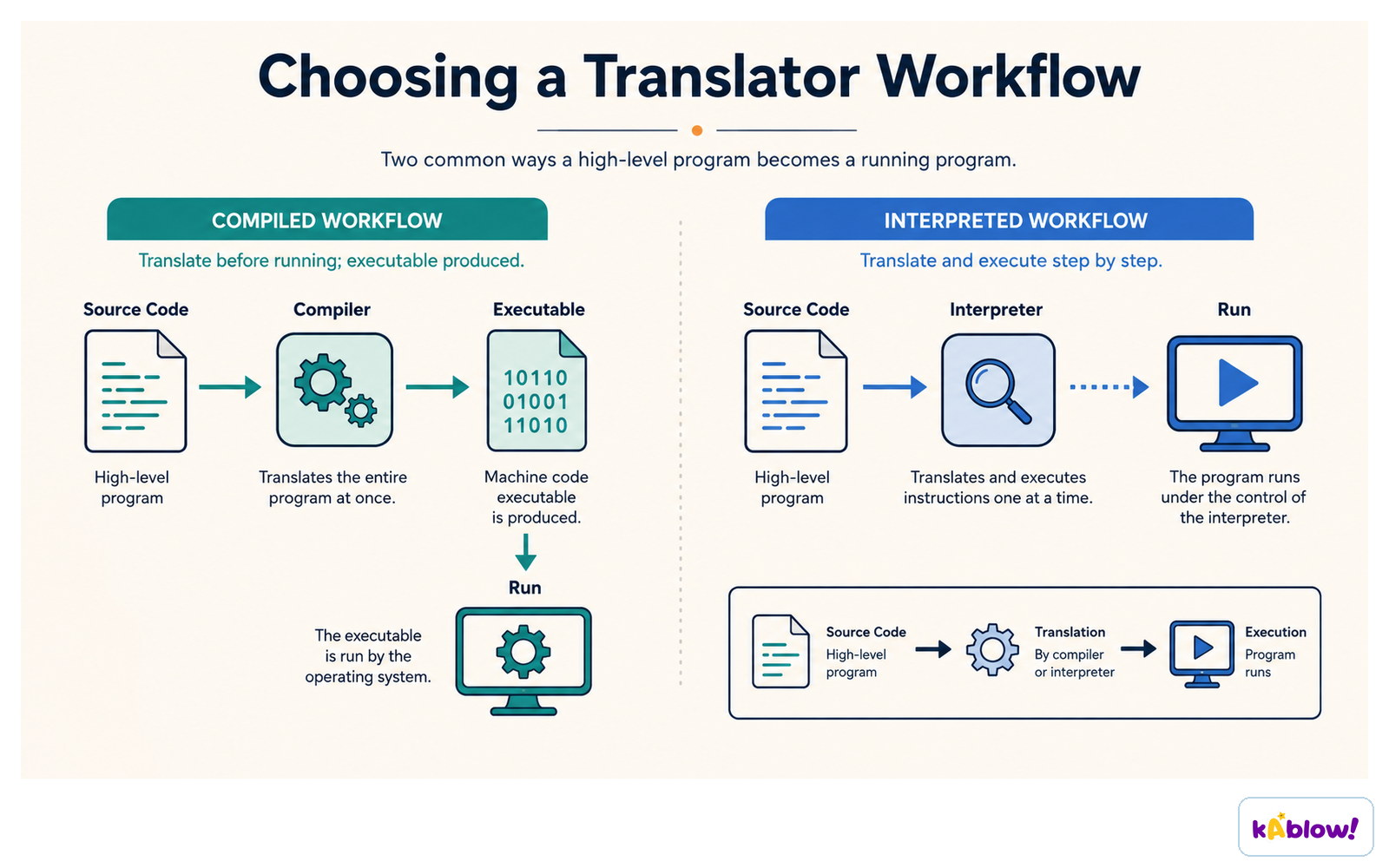
Translating and running source code
Translators
- In the simplified GCSE model, a compiler translates source before execution, often producing a native executable; an interpreter translates and executes as the program runs.
- An assembler translates assembly notation to machine code. Real systems may combine interpretation, bytecode and just-in-time compilation.
- Compiled code often runs faster, while interpretation can support interactive debugging; neither is a universal speed rule.
Open source vs proprietary
- Open-source licences provide source-code access and permissions to use, modify and redistribute under specified conditions.
- Proprietary licences reserve more control to the rights holder. Proprietary software may be paid or free; price alone does not determine the licence category.
Slide
Sign up free to view the lesson slides
Step through every slide for this topic — plus flashcards and revision notes — with a free account.
Câu hỏi luyện tập
Xem trước miễn phí — 8 trên 33 câu hỏi. Đăng ký để xem tất cả.
1.What is an operating system?
Easy- Asoftware that manages the computer
- Ba word processor
- Ca game
- Da browser
2.What is application software?
Easy- Asoftware that performs tasks for the user
- Bthe OS
- Cfirmware
- Ddrivers
3.Which is an example of an operating system?
Easy- AWindows
- BExcel
- CChrome
- DPhotoshop
4.Which is utility software?
Easy- Aantivirus
- Ba game
- Ca spreadsheet
- Da browser
5.What is a high-level language?
Easy- Aa programming language close to human language
- Bmachine code
- Cassembly
- Dbinary
6.What is machine code?
Easy- Abinary instructions the CPU executes directly
- BPython code
- CEnglish text
- Da flowchart
7.What is assembly language?
Easy- Aa low-level language using mnemonics
- Ba high-level language
- Ca database
- Da network
8.What does a compiler do?
Easy- Atranslates the whole program before it runs
- Bruns one line at a time
- Cstores data
- Dcompresses files
Unlock all 33 questions & more
Tạo tài khoản miễn phí để xem mọi câu hỏi, slide, thẻ ghi nhớ và ghi chú ôn tập cho chủ đề này.
Đề thi cũ
Luyện đề thi cũ cho chủ đề này sắp ra mắt.
Sắp ra mắt