
The CPU and the fetch-decode-execute cycle
Học bằng cách chơi
Trả lời những câu hỏi này để kiếm năng lượng, rồi câu cá và khám phá. Không cần tài khoản.
Dành cho nhà giáo dục: slide bài học, ghi chú ôn tập sẵn dùng cho The CPU and the fetch-decode-execute cycle (Computer Science, Computer Systems) — dùng trong bài giảng của bạn, hoặc chạy chủ đề như một hoạt động lớp học tương tác để người học chơi như một trò chơi trực tiếp.
Ghi chú bài học
What the CPU does
- The central processing unit (CPU) is the "brain" of a computer. It fetches instructions from memory, decodes them and executes them.
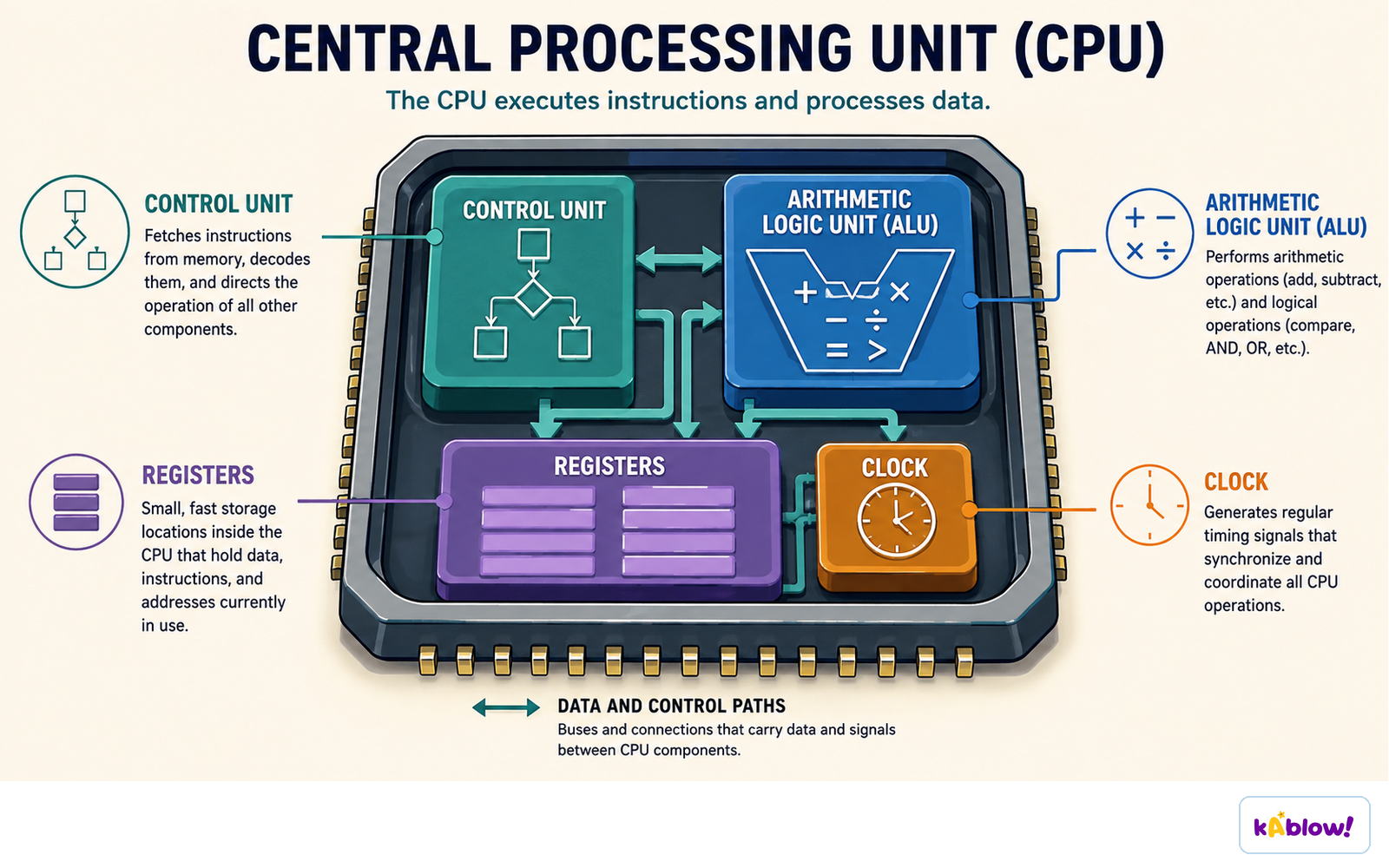
Components
- ALU (arithmetic logic unit): performs calculations and logical comparisons.
- Control unit (CU): directs the operation of the CPU, controlling the flow of data and instructions.
- Registers: very fast storage inside the CPU: program counter (PC) (address of the next instruction), memory address register (MAR), memory data register (MDR), accumulator (ACC) (stores results).
- Cache: small, very fast memory close to the CPU holding frequently used data.
CPU components
The fetch-decode-execute cycle
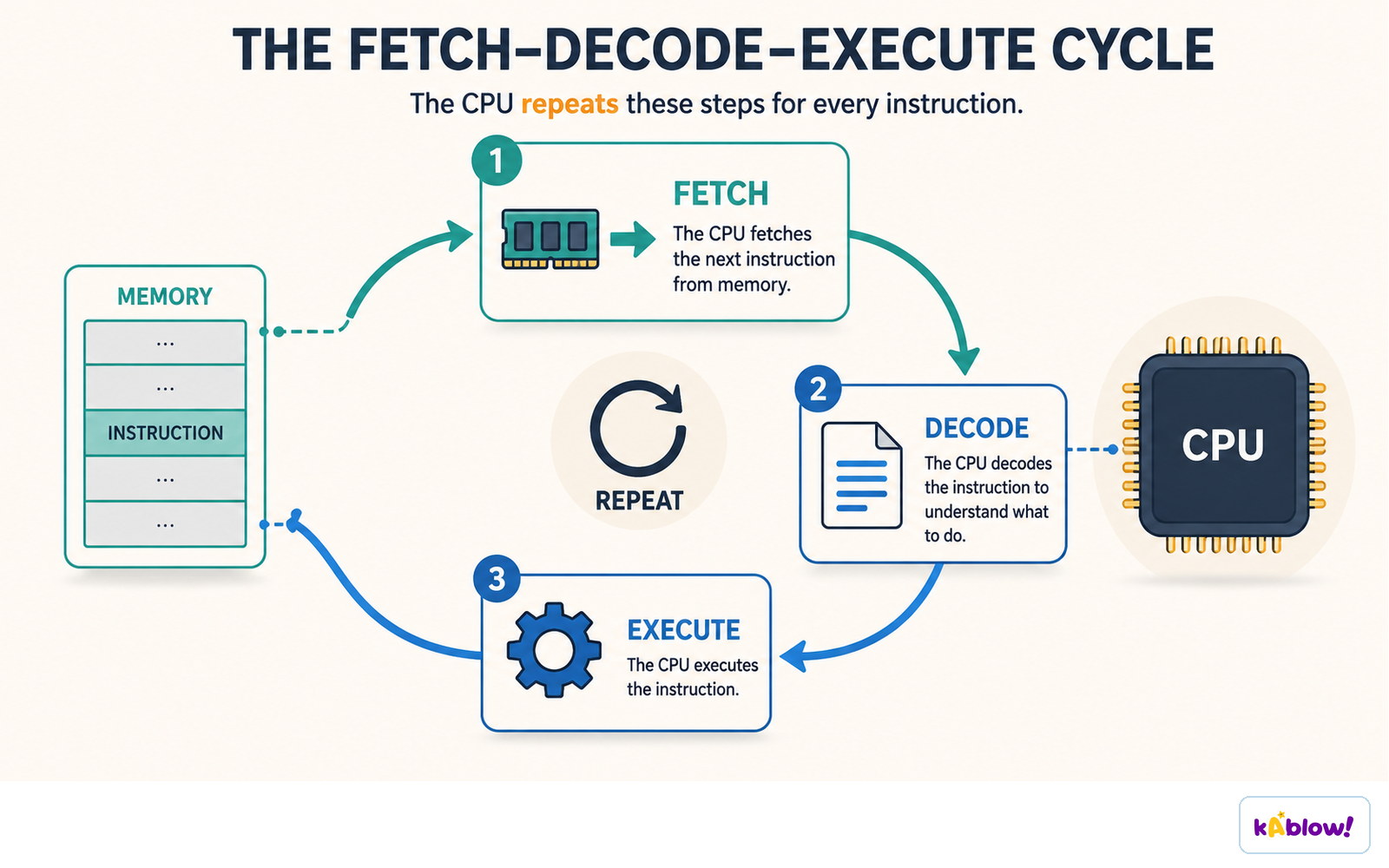
- Fetch: the PC's address is copied to the MAR; the instruction at that address is fetched into the MDR; the PC increments.
- Decode: the control unit decodes the instruction.
- Execute: the instruction is carried out (the ALU may calculate).
Fetch, decode and execute
Performance
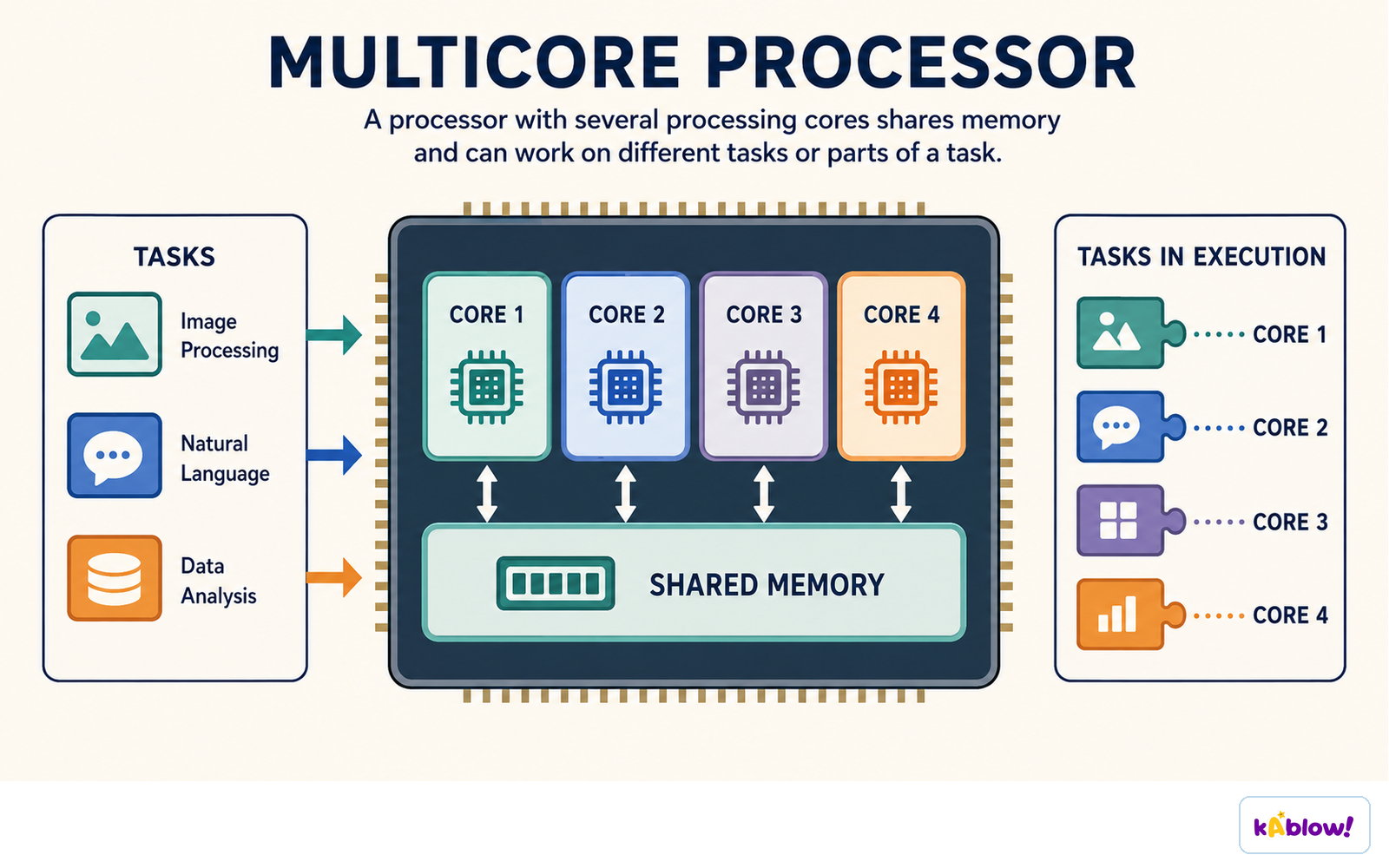
- Clock speed (GHz: cycles per second), number of cores (more can run tasks in parallel), and cache size affect speed.
Multiple processor cores
Von Neumann architecture
- Instructions and data are stored in the same memory. Embedded systems (e.g. washing machine controller) are dedicated computers.
Slide
Sign up free to view the lesson slides
Step through every slide for this topic — plus flashcards and revision notes — with a free account.
Câu hỏi luyện tập
Xem trước miễn phí — 8 trên 33 câu hỏi. Đăng ký để xem tất cả.
1.What does CPU stand for?
Easy- Acentral processing unit
- Bcentral program unit
- Ccomputer processing unit
- Dcore processing utility
2.What does ALU stand for?
Easy- Aarithmetic logic unit
- Ball logic unit
- Canalogue logic unit
- Darray logic unit
3.What does the control unit do?
Easy- Adirects the flow of data and instructions
- Bperforms calculations
- Cstores files
- Ddisplays output
4.What is a register?
Easy- Aa small, fast storage location in the CPU
- Ba hard drive
- Ca network card
- DRAM
5.What is cache memory?
Easy- Asmall, very fast memory close to the CPU
- Bslow storage
- Ca hard drive
- Da printer
6.What does the PC hold?
Easy- Athe address of the next instruction
- Bthe result
- Cthe current data
- Dthe clock speed
7.What does the MAR hold?
Easy- Athe address of the memory location being accessed
- Bthe data
- Cthe instruction
- Dthe result
8.What does the MDR hold?
Easy- Adata transferred to or from memory
- Bonly a memory address
- Conly the clock frequency
- Donly the result of every addition
Unlock all 33 questions & more
Tạo tài khoản miễn phí để xem mọi câu hỏi, slide, thẻ ghi nhớ và ghi chú ôn tập cho chủ đề này.
Đề thi cũ
Luyện đề thi cũ cho chủ đề này sắp ra mắt.
Sắp ra mắt