
Macbeth: plot, characters and context
Học bằng cách chơi
Trả lời những câu hỏi này để kiếm năng lượng, rồi câu cá và khám phá. Không cần tài khoản.
Dành cho nhà giáo dục: slide bài học, ghi chú ôn tập sẵn dùng cho Macbeth: plot, characters and context (English Literature, Shakespeare) — dùng trong bài giảng của bạn, hoặc chạy chủ đề như một hoạt động lớp học tương tác để người học chơi như một trò chơi trực tiếp.
Ghi chú bài học
Plot summary
- Act 1: After a battle, three Witches tell Macbeth he will be Thane of Cawdor and king, and tell Banquo his descendants will be kings. Macbeth is named Thane of Cawdor. Lady Macbeth urges him to kill King Duncan, who is staying at their castle.
- Act 2: Macbeth murders Duncan. Duncan's sons, Malcolm and Donalbain, flee; Macbeth becomes king.
- Act 3: Macbeth fears Banquo's prophecy and has him murdered, but Banquo's son Fleance escapes. At a banquet, Macbeth sees Banquo's ghost.
- Act 4: Macbeth returns to the Witches. The apparitions warn about Macduff and give misleading assurances concerning birth and Birnam Wood. Macbeth orders violence against Macduff’s household.
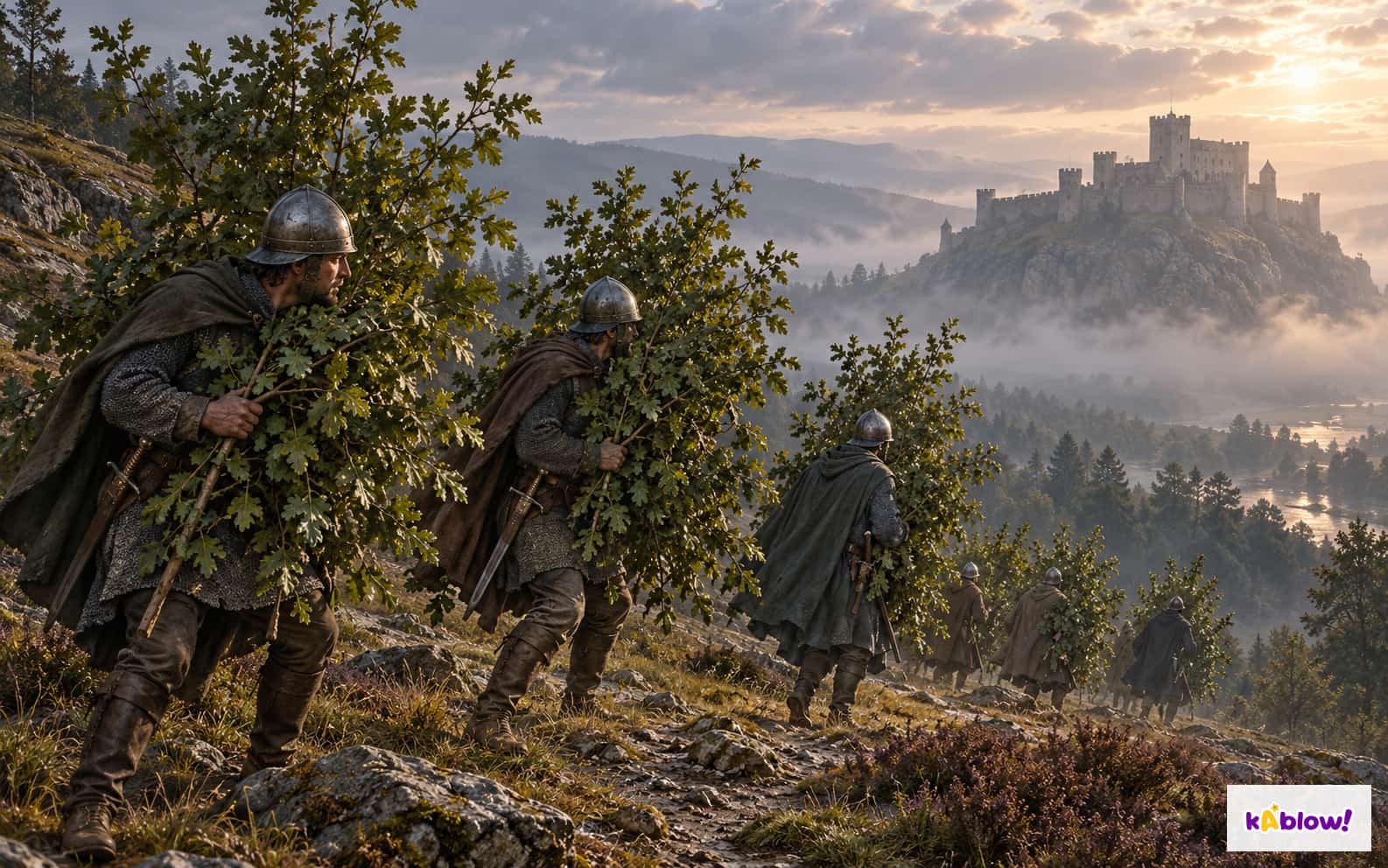
- Act 5: Lady Macbeth sleepwalks and her death is later reported. Malcolm’s soldiers carry branches from Birnam Wood toward Dunsinane. Macduff reveals that he was “untimely ripped” from the womb and kills Macbeth. Malcolm becomes king.
An imagined meeting on the heath

Main characters
- Macbeth moves from celebrated soldier to tyrant. Lady Macbeth urges violence and later displays distress. Banquo offers a contrast in his response to prophecy. Macduff opposes Macbeth; Duncan is generally presented as a legitimate, trusting king. The Witches prompt questions about temptation, fate and human choice.
Branches carried toward Dunsinane
Context
- Probably composed around 1606 during James VI/I’s reign. The 1605 Gunpowder Plot and divine-right ideas offer relevant contexts for treason and kingship, without establishing a single authorial purpose.
- James wrote Daemonologie and claimed Banquo as an ancestor. Distinguish the play, its chronicle sources and historical events; characters and events are not reliable historical records.
- Gender expectations and supernatural beliefs were contested and varied. Interpret Lady Macbeth’s language as her strategy and viewpoint rather than a fact that femininity means weakness.
Use context with care
Slide
Sign up free to view the lesson slides
Step through every slide for this topic — plus flashcards and revision notes — with a free account.
Câu hỏi luyện tập
Xem trước miễn phí — 8 trên 36 câu hỏi. Đăng ký để xem tất cả.
1.Who wrote Macbeth?
Easy- AWilliam Shakespeare
- BCharles Dickens
- CArthur Miller
- DJ. B. Priestley
2.Which king does Macbeth murder while he is a guest at Macbeth’s castle?
Easy- AMacbeth
- BBanquo
- CMalcolm
- DDuncan
3.Who are the 'three weird sisters'?
Easy- ADuncan's servants
- BBanquo's friends
- Cthe Witches
- DMacbeth's daughters
4.Who becomes king at the end?
Easy- ABanquo
- BMalcolm
- CMacbeth
- DMacduff
5.Which new title does Duncan award Macbeth after his success in battle?
Easy- AThane of Cawdor
- BKing of England
- CPrince
- DLord of Fife
6.Which monarch’s reign provides an important context for Macbeth’s probable composition around 1606?
Easy- AHenry VIII
- BElizabeth I
- CCharles II
- DJames I
7.What was the Gunpowder Plot?
Easy- Aa battle
- Ba marriage
- Can attempt to blow up Parliament and the king in 1605
- Da play
8.What did James I believe about kings?
Easy- Athey were equal to everyone
- Bthey were chosen by God
- Cthey were elected
- Dthey had no power
Unlock all 36 questions & more
Tạo tài khoản miễn phí để xem mọi câu hỏi, slide, thẻ ghi nhớ và ghi chú ôn tập cho chủ đề này.
Đề thi cũ
Luyện đề thi cũ cho chủ đề này sắp ra mắt.
Sắp ra mắt