
Much Ado About Nothing: themes, language and structure
Học bằng cách chơi
Trả lời những câu hỏi này để kiếm năng lượng, rồi câu cá và khám phá. Không cần tài khoản.
Dành cho nhà giáo dục: slide bài học, ghi chú ôn tập sẵn dùng cho Much Ado About Nothing: themes, language and structure (English Literature, Shakespeare) — dùng trong bài giảng của bạn, hoặc chạy chủ đề như một hoạt động lớp học tương tác để người học chơi như một trò chơi trực tiếp.
Ghi chú bài học
Key themes
- Deception and appearance: the plot depends on tricks: masks at the ball, the overhearing scenes, and Don John's slander. People are fooled by what they see and hear.
- Love and courtship: Claudio and Hero's conventional romance contrasts with Beatrice and Benedick's witty relationship, which grows from "merry war" to love.
- Manipulated evidence threatens reputation. Claudio’s understanding of honour can be read as a justification for cruelty; the play allows that understanding to be questioned.
- Beatrice voices anger at limits placed on her. Hero is not literally silent: she denies wrongdoing but is not believed. Compare power and credibility rather than treating women as uniformly passive.
- Wit and wordplay: language is a weapon and a game.
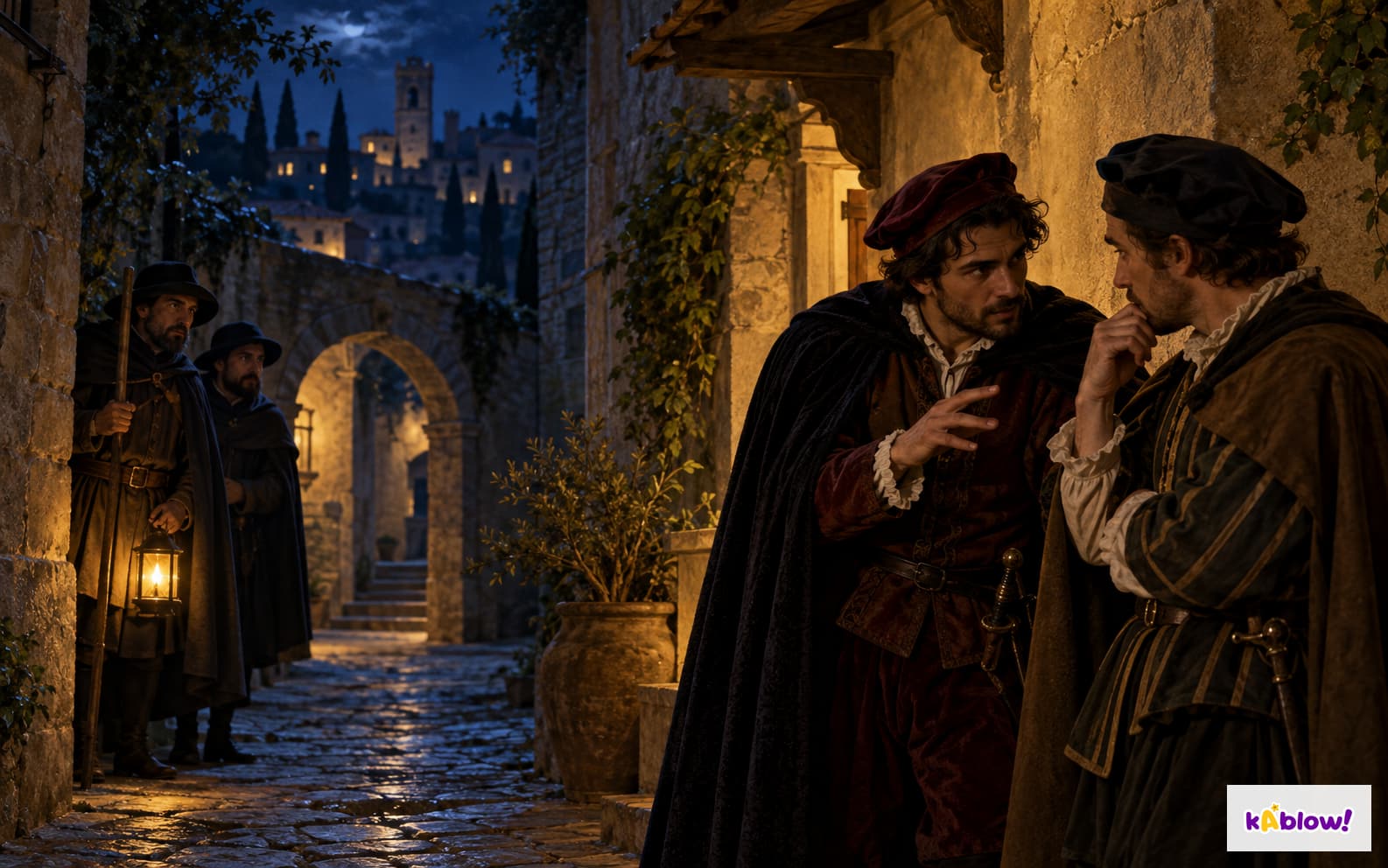
Who discovers the truth?
Language
- Verse and prose can shape rhythm, formality and relationships. Beatrice and Benedick often use prose for wit despite their rank; Claudio and Hero also vary language by situation. Explain the passage rather than imposing a mechanical class rule.
- Puns: "nothing"/"noting" (overhearing); malapropisms by Dogberry ("comprehended two auspicious persons").
- Imagery of war, animals and disease; Beatrice's lines such as "I had rather hear my dog bark at a crow than a man swear he loves me".
Words and dramatic knowledge
Structure
- The two principal courtships interweave with slander and discovery. Helpful and harmful deception can be compared. Anticipated weddings and a closing dance suggest reconciliation without proving every injury fully repaired.
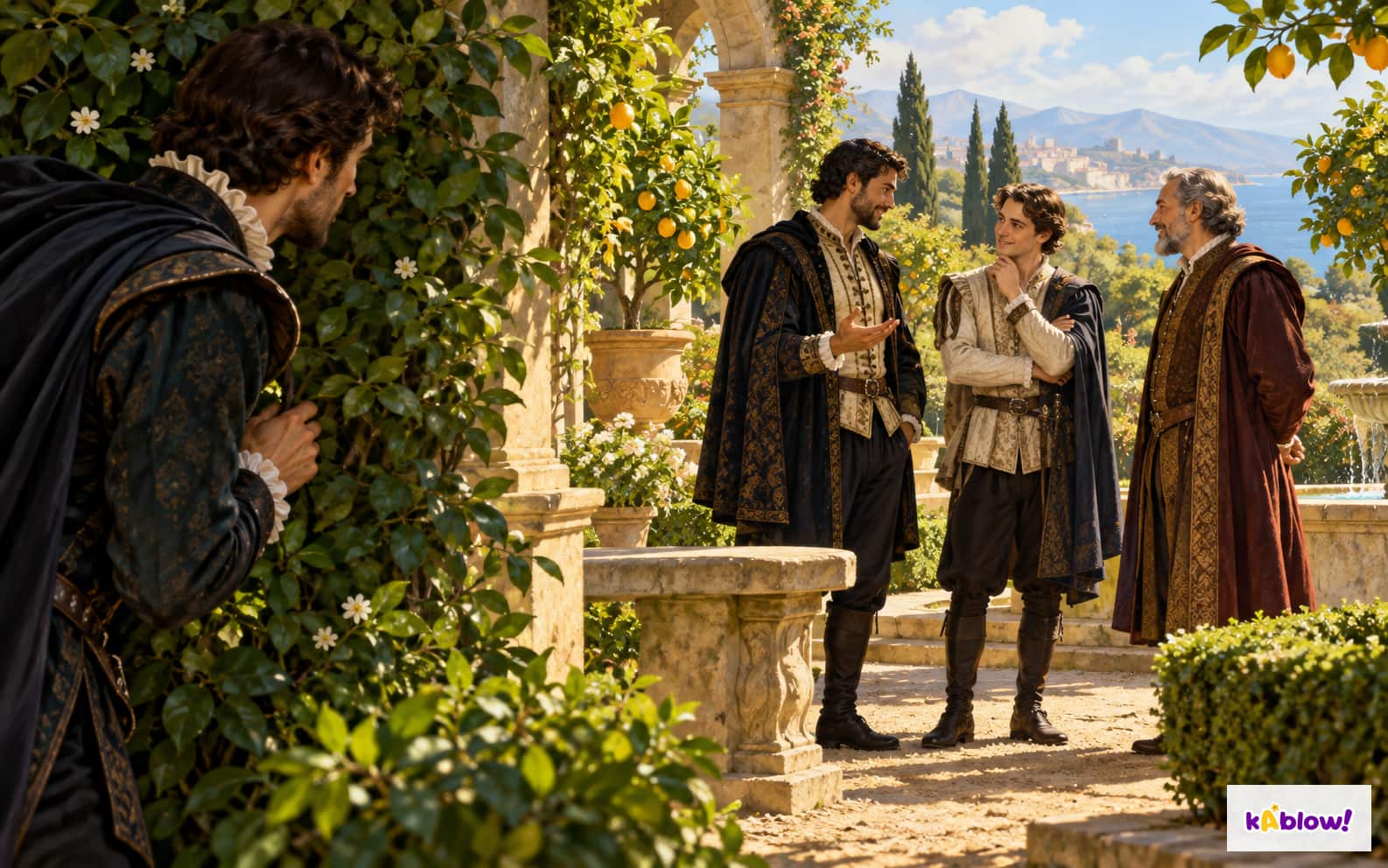
Dramatic irony in the garden
Slide
Sign up free to view the lesson slides
Step through every slide for this topic — plus flashcards and revision notes — with a free account.
Câu hỏi luyện tập
Xem trước miễn phí — 8 trên 32 câu hỏi. Đăng ký để xem tất cả.
1.What is a pun?
Easy- Aa play on words
- Ba type of verse
- Ca stage direction
- Da metaphor
2.What is a malapropism?
Easy- Aa rhyme
- Ba type of metaphor
- Ca song
- Dan incorrect word that sounds similar
3.What is the main theme linked to masks at the ball?
Easy- Ahunting
- Bwealth
- Cdeception
- Dwar
4.Which pair frequently uses prose for verbal sparring?
Easy- AClaudio only
- BBeatrice and Benedick
- Cthe Witches
- Dthe Prince only
5.What does 'I had rather hear my dog bark at a crow than a man swear he loves me' show?
Easy- ABeatrice's scorn for conventional romance
- Bher love for dogs
- Cher happiness
- Dher fear
6.What is a 'merry war'?
Easy- Aa real war
- Ba party
- Ca dance
- Da battle of wits
7.What does Claudio's behaviour at the altar suggest about honour?
Easy- AHero is guilty
- Bhe is kind
- Cpublic reputation can justify unfair accusations
- Dhonour is unimportant
8.Which plot is traditional romance?
Easy- ADon John
- BClaudio and Hero
- CBeatrice and Benedick
- DDogberry
Unlock all 32 questions & more
Tạo tài khoản miễn phí để xem mọi câu hỏi, slide, thẻ ghi nhớ và ghi chú ôn tập cho chủ đề này.
Đề thi cũ
Luyện đề thi cũ cho chủ đề này sắp ra mắt.
Sắp ra mắt