
Urbanisation and the growth of cities
Học bằng cách chơi
Trả lời những câu hỏi này để kiếm năng lượng, rồi câu cá và khám phá. Không cần tài khoản.
Dành cho nhà giáo dục: slide bài học, ghi chú ôn tập sẵn dùng cho Urbanisation and the growth of cities (Geography, Human Geography) — dùng trong bài giảng của bạn, hoặc chạy chủ đề như một hoạt động lớp học tương tác để người học chơi như một trò chơi trực tiếp.
Ghi chú bài học
Urbanisation
- Urbanisation is an increasing proportion living in defined urban areas; urban growth is an increase in the count. Invented totals of 40/100 and 48/120 both give 40%, despite a growing urban count.
- Definitions and boundaries matter. The UN World Urbanization Prospects 2025 distinguishes cities, towns and rural areas. Older national urban definitions and projections are not interchangeable with its city-only category. Megacity conventionally means at least ten million people in a defined urban area.
Count versus share: invented data
Causes
- Urban population change combines births, deaths, migration and boundary or classification changes. Push and pull factors can influence migration, but perceived opportunities are not guaranteed jobs or services.
- Age structure can affect natural increase, but not every migrant is young or has the same family circumstances. Compare places and periods instead of assuming a universal income-group growth rate.
Components of urban population change
Case study: Lagos, Nigeria
- Lagos has important trade, employment and cultural links, alongside pressures on housing, transport and services. Exact population and deprivation shares require a date, boundary and method; the lesson does not retain unsupported undated totals.
- Makoko includes waterfront and land areas. Housing conditions, service access and tenure differ. Informal work can support livelihoods while lacking adequate formal protection; it is not synonymous with crime or an absence of all regulation and tax.
- BRT and neighbourhood upgrading should be evaluated for coverage, reliability, affordability, rights and maintenance. The original Makoko Floating School was a prototype and collapsed; it must not be presented as a currently operating solution. Later design iterations are different projects.
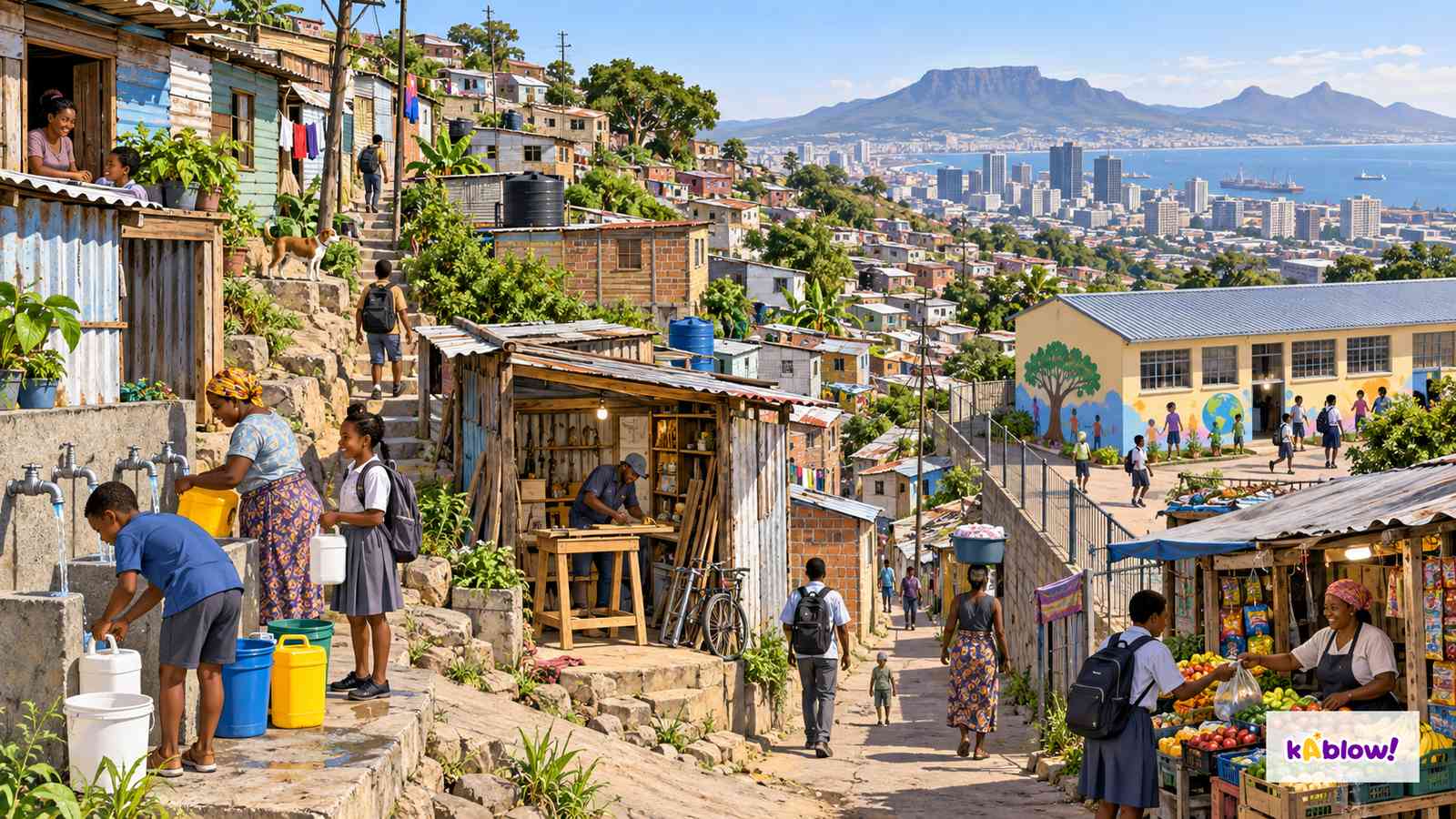
Imagined settlement, services and work
Evaluate upgrading and comparisons
- Brazilian favelas vary in location, building quality, services and tenure. A comparison with Lagos needs evidence for named neighbourhoods and dates, not a claim that all settlements are identical or on steep slopes.
- In-situ upgrading may preserve community links while improving services, but site hazards, rights, affordability and resident participation matter. Self-help schemes require materials, finance and safe support; clearance can displace people and cannot be assumed an uncomplicated improvement.
Evaluate an upgrading proposal
Slide
Sign up free to view the lesson slides
Step through every slide for this topic — plus flashcards and revision notes — with a free account.
Câu hỏi luyện tập
Xem trước miễn phí — 8 trên 33 câu hỏi. Đăng ký để xem tất cả.
1.What is urbanisation?
Easy- Aincreasing proportion of people in towns and cities
- Bpeople moving to villages
- Cfewer cities
- Dno migration
2.What is rural-urban migration?
Easy- Apeople moving to the countryside
- Bleaving the country
- Cnone
- Dpeople moving from the countryside to cities
3.Which is a pull factor?
Easy- Apoor services
- Bpoverty
- Cjob opportunities
- Ddrought
4.Which is a push factor?
Easy- Ahealthcare in cities
- Bpoverty in rural areas
- Cschools in cities
- Djobs in cities
5.What is natural increase?
Easy- Abirths exceeding deaths
- Bdeaths exceeding births
- Cmigration
- Dnone
6.What is a slum?
Easy- Aa luxury area
- Ba park
- Can airport
- Dhousing with one or more serious service, crowding, durability or tenure deprivations
7.What is Makoko?
Easy- Aa river
- Ban airport
- Ca Lagos community including waterfront and land-based areas
- Da park
8.What is the informal economy?
Easy- Atourism
- Beconomic activity insufficiently covered by formal arrangements
- Cgovernment jobs
- Dbanking
Unlock all 33 questions & more
Tạo tài khoản miễn phí để xem mọi câu hỏi, slide, thẻ ghi nhớ và ghi chú ôn tập cho chủ đề này.
Đề thi cũ
Luyện đề thi cũ cho chủ đề này sắp ra mắt.
Sắp ra mắt