
Studying a historic environment through sources
Học bằng cách chơi
Trả lời những câu hỏi này để kiếm năng lượng, rồi câu cá và khám phá. Không cần tài khoản.
Dành cho nhà giáo dục: slide bài học, ghi chú ôn tập sẵn dùng cho Studying a historic environment through sources (History, Historic Environment) — dùng trong bài giảng của bạn, hoặc chạy chủ đề như một hoạt động lớp học tương tác để người học chơi như một trò chơi trực tiếp.
Ghi chú bài học
What a historic environment study asks
- A historic-environment enquiry connects a place or area with its historical setting. Location, function, design, materials, people and phases can matter, depending on the question. A castle’s defence is one possible focus, not its only possible use.
- This lesson develops general skills and is not a complete prescribed-site pack. AQA’s British depth studies specify a site for the examination year; other specifications organise their historic environments differently. Check the actual board, option, year and question before applying exam advice.
Types of evidence
- Maps and plans can show layout, boundaries and change. Establish their dates, scales, symbols, purpose and coverage. A design may show an intention rather than a completed building, and a later reconstruction depends on evidence and interpretation.
- Photographs and paintings can show appearance, representation and viewpoint. Check framing, timing, staging, alterations and the purpose of production; neither is automatically a neutral view of the whole site.
- Excavation reports record finds, contexts and interpretations, affected by the area investigated and the quality of recording. Surviving fabric may include later repairs or restoration. Absence from today’s remains does not prove absence in the past.
- Primary status depends on the enquiry and the source’s relationship to it. A contemporary inventory, surviving feature or later first-hand memory can offer direct evidence of different kinds. Age or official status alone does not establish accuracy or usefulness.
A source’s form does not settle its accuracy
Using the site
- For each claim, identify the relevant feature, its date or phase, and the evidence supporting an interpretation of its use. Distinguish observation from inference and test possible explanations against context.
- Compare like with like where possible: different map conventions, scales or viewpoints can create apparent change. Continuity and change can coexist, for example a surviving wall within a building whose function has altered.
- An enquiry may combine plans, photographs, fabric analysis and written records. These can complement or challenge one another; independent corroboration is stronger than several copies of the same account. Written evidence is useful but is not compulsory for every explanation.
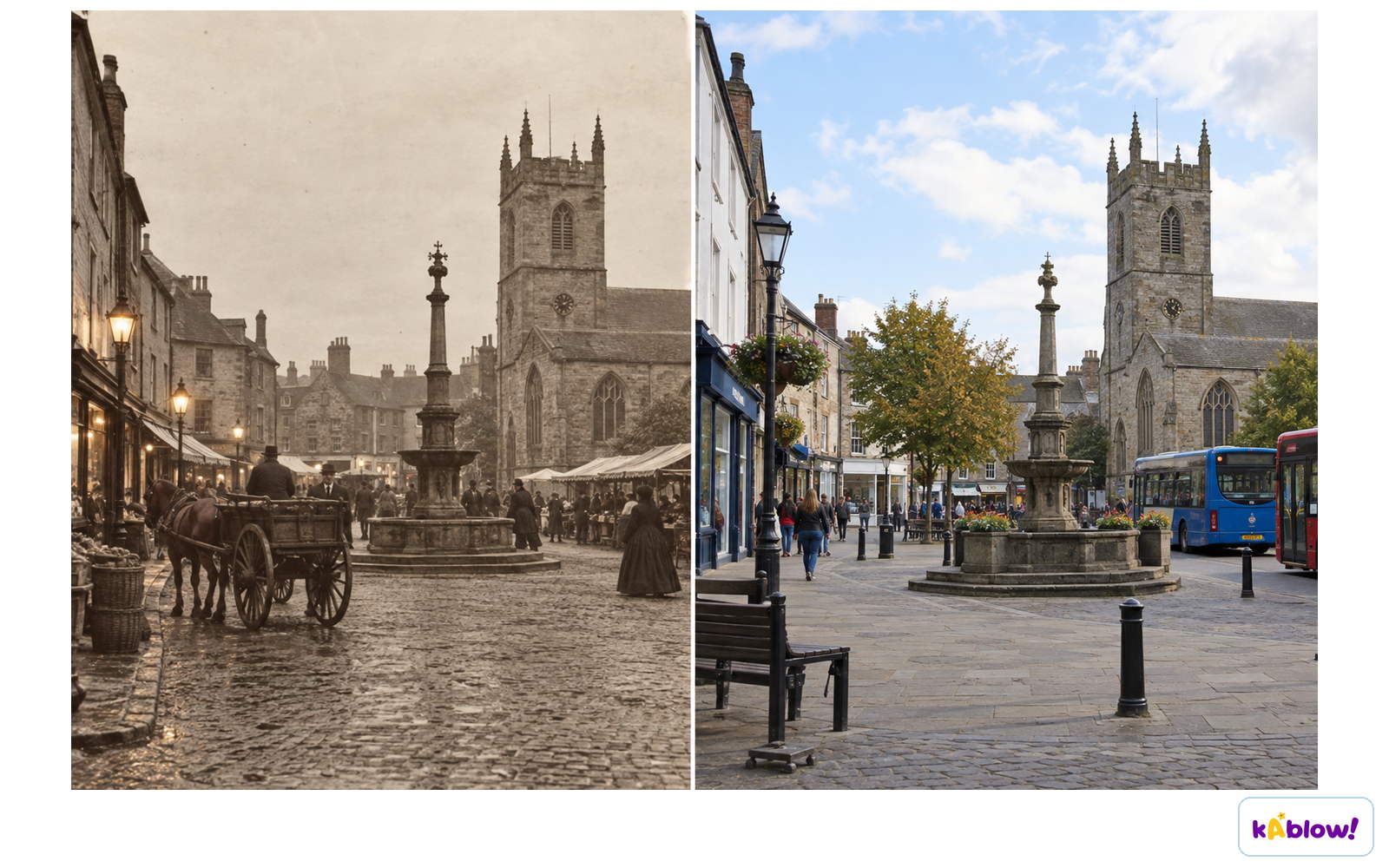
Use a scene to frame questions, not to prove history
Exam skills
- Answer the actual task with accurate relevant detail. Context should explain or test evidence rather than become an unrelated fact list. Do not impose one compulsory feature–context–significance paragraph formula on every question.
- For Pearson Edexcel Paper 1 Q2(b), the 2025 guidance links a relevant source detail, follow-up question, suitable existing primary or contemporary source and explanation of how it could answer the question. A detail can be clearly paraphrased; a direct quotation is not always required.
- That Edexcel task requires a source a historian could consult, rather than a new interview they propose to create. Generic labels such as the internet or records need a specific relevant source and expected information. This is a task-specific rule, not a ban on oral-history research in general.
- For AQA’s prescribed historic environment, study the specified site and wider depth-study context for the correct year. A site visit can aid learning but is not itself required for assessment. This generic lesson does not certify preparation for a named annual site.
Connect the parts of a follow-up enquiry
Slide
Sign up free to view the lesson slides
Step through every slide for this topic — plus flashcards and revision notes — with a free account.
Câu hỏi luyện tập
Xem trước miễn phí — 8 trên 32 câu hỏi. Đăng ký để xem tất cả.
1.What is a historic environment?
Easy- Aa site studied in its historical context
- Ba poem
- Ca map only
- Da museum shop
2.What can a map help investigate most directly?
Easy- Athoughts
- Bfeelings
- Cprices
- Dlocation and layout
3.What do excavation reports show?
Easy- Aspeeches
- Bdreams
- Crecorded finds, contexts and interpretations from an investigation
- Dpoems
4.Which is the best example of primary evidence for a site’s historical use?
Easy- Aa modern tourist advert giving no historical evidence
- Ban original room inventory made while the building was in use
- Ca recent textbook summary of several studies
- Dan unsupported guess about the occupants
5.What is a limitation of a photograph?
Easy- Ait shows only one moment and may be staged
- Bit is always wrong
- Cit shows everything
- Dit is a map
6.What is a strength of a plan?
Easy- Ait shows feelings
- Bit is always old
- Cit tells stories
- Dit can represent spatial relationships, subject to its date, scale and purpose
7.What does 'context' mean?
Easy- Aits price
- Bits owner
- Cthe wider time and events surrounding a site
- Dits colour
8.Why do features of a site matter?
Easy- Athey do not matter
- Bthey may provide evidence of use and change when dated and interpreted
- Cthey are decoration
- Dthey are random
Unlock all 32 questions & more
Tạo tài khoản miễn phí để xem mọi câu hỏi, slide, thẻ ghi nhớ và ghi chú ôn tập cho chủ đề này.
Đề thi cũ
Luyện đề thi cũ cho chủ đề này sắp ra mắt.
Sắp ra mắt