
The USA 1920-73: Opportunity and inequality
Học bằng cách chơi
Trả lời những câu hỏi này để kiếm năng lượng, rồi câu cá và khám phá. Không cần tài khoản.
Dành cho nhà giáo dục: slide bài học, ghi chú ôn tập sẵn dùng cho The USA 1920-73: Opportunity and inequality (History, Period Study) — dùng trong bài giảng của bạn, hoặc chạy chủ đề như một hoạt động lớp học tương tác để người học chơi như một trò chơi trực tiếp.
Ghi chú bài học
The boom of the 1920s
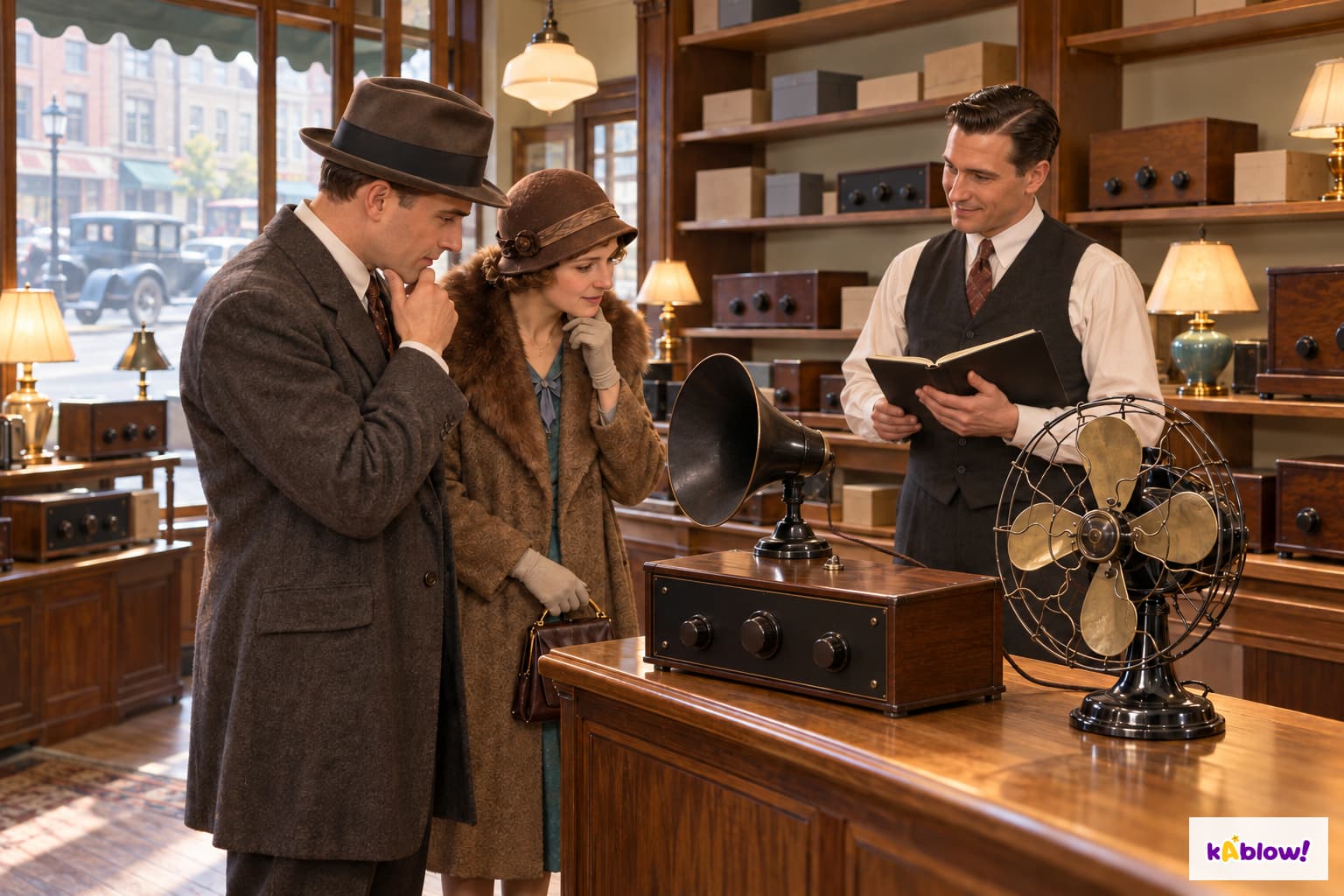
- Mass production, productivity, advertising, consumer credit and business-friendly policies helped some markets grow. Hire purchase for goods differed from borrowing to buy shares on margin. Rising consumption did not make every household secure or every industry prosperous.
- Republican governments favoured business and limited some regulation, but also used tariffs and other state powers. Hoover’s response later included federal interventions. Laissez-faire should not be translated as complete government inactivity.
New goods, unequal access
Tensions in the 1920s
- The Eighteenth Amendment was ratified in 1919 and took effect in 1920, with the Volstead Act providing enforcement rules. National Prohibition restricted manufacture, sale, transport, import and export of intoxicating liquor for beverage purposes, rather than simply banning drinking or every possession. Repeal came in 1933. Illegal markets benefited bootleggers and organised crime.
- The revived KKK mobilised white supremacy, anti-Black racism, antisemitism, anti-Catholicism and hostility to immigrants. Membership reached millions, with estimates varying by date and source; a fixed five-million count should not be treated as exact. The Red Scare and Sacco and Vanzetti case also exposed fears and contested justice.
- The 1921 and 1924 quota laws restricted immigration by national origin, with discriminatory effects. They did not end every route of immigration. The 1925 Scopes case concerned Tennessee’s law on teaching human evolution in publicly funded education, not a uniform conflict between every scientist and every religious person.
- Flapper styles challenged some conventions without representing all women. The Harlem Renaissance involved Black cultural creativity across literature, music and art, coexisting with continuing discrimination.
Distinguish law, practice and experience
Crash and Depression
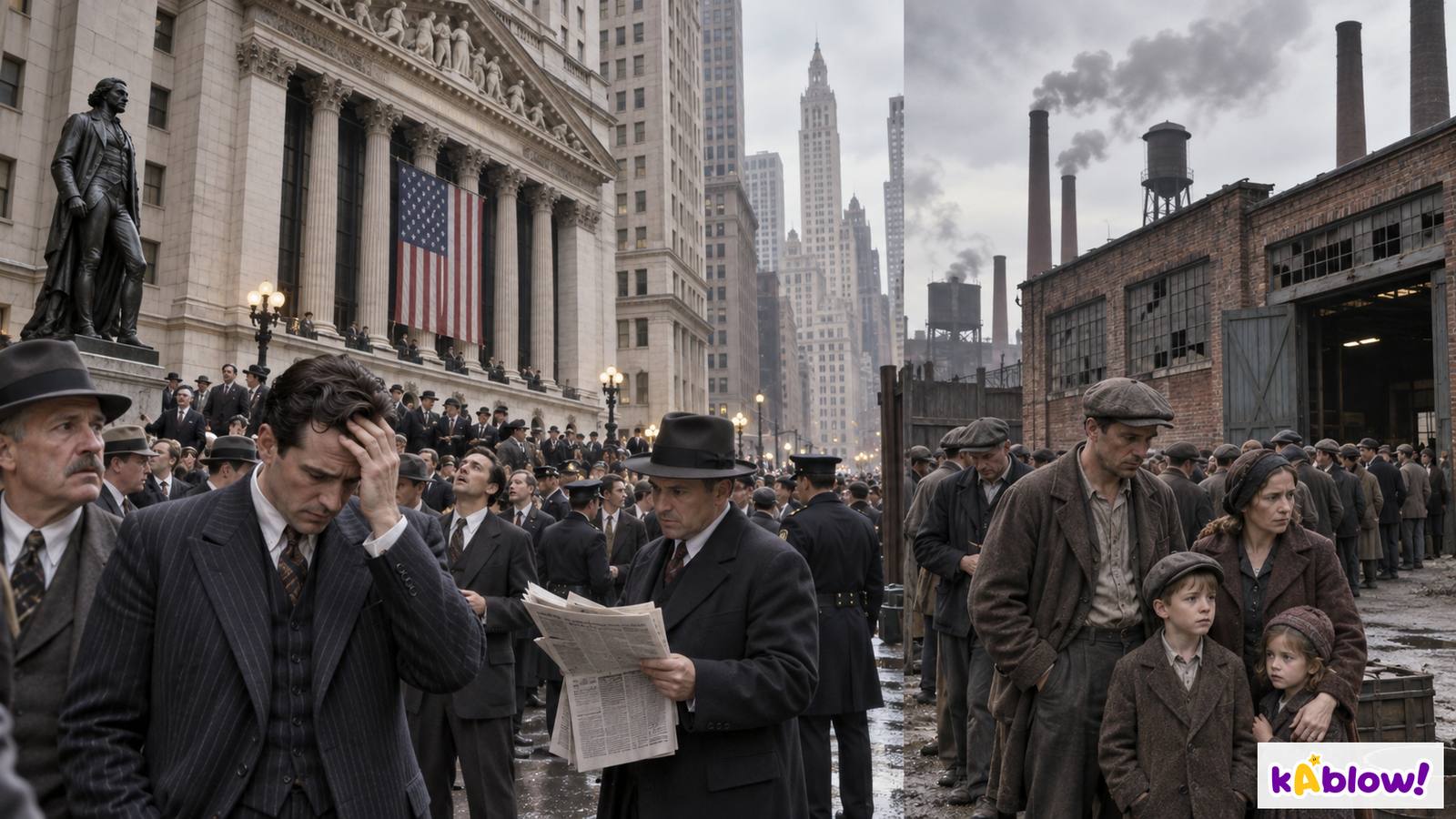
- The US contraction began in August 1929, before the sharp October share-price falls. The crash damaged confidence and finances, but later banking panics, monetary contraction, international pressures, output cuts and falling demand shaped the Depression’s depth and duration.
- By 1933 unemployment was approximately a quarter of the labour force under commonly used estimates. Figures depend on definitions, and no one statistic establishes a complete causal explanation. Hardship produced makeshift settlements; the 1932 Bonus Army sought early payment of a veterans’ benefit and was removed by federal troops.
Financial crisis and household hardship
The New Deal
- Roosevelt won in November 1932 and took office in March 1933. Banking stabilisation, employment, agricultural support, infrastructure and social insurance had different aims. The CCC, AAA, TVA and WPA should be explained through those functions rather than only memorised as initials.
- Benefits and costs were uneven: programmes could preserve segregation, agricultural changes could disadvantage tenants, and development could displace residents. The 1935 Social Security framework initially excluded agricultural and domestic workers from old-age insurance coverage, with disproportionate effects on Black workers and women.
- Some conservatives attacked intervention and spending; other critics wanted more redistribution or security. The Supreme Court struck down particular laws. The New Deal supported reform and an uneven recovery, including the 1937–38 recession; wartime mobilisation later drove much greater demand and employment without removing all inequality or war’s human costs.
Different programmes addressed different problems
Post-war affluence and unequal access
- After 1945, consumer spending, cars, television and suburban housing expanded. Education and housing support under the 1944 GI Bill helped many veterans, while discrimination in colleges, lending and housing limited access. Rising average prosperity did not mean poverty disappeared.
- Racial discrimination, restrictive housing practices and uneven employment shaped opportunity in both North and South. The Great Migration changed communities and cultural and political life; it did not provide an automatic escape from every form of exclusion.
Growth does not establish equal access
Cold War fears and civil rights
- Cold War fears encouraged loyalty investigations and allegations of communist influence. McCarthy became prominent in 1950 and was censured by the Senate in 1954. Accusation was not proof, and his Senate activity should not be confused with the separate House Un-American Activities Committee.
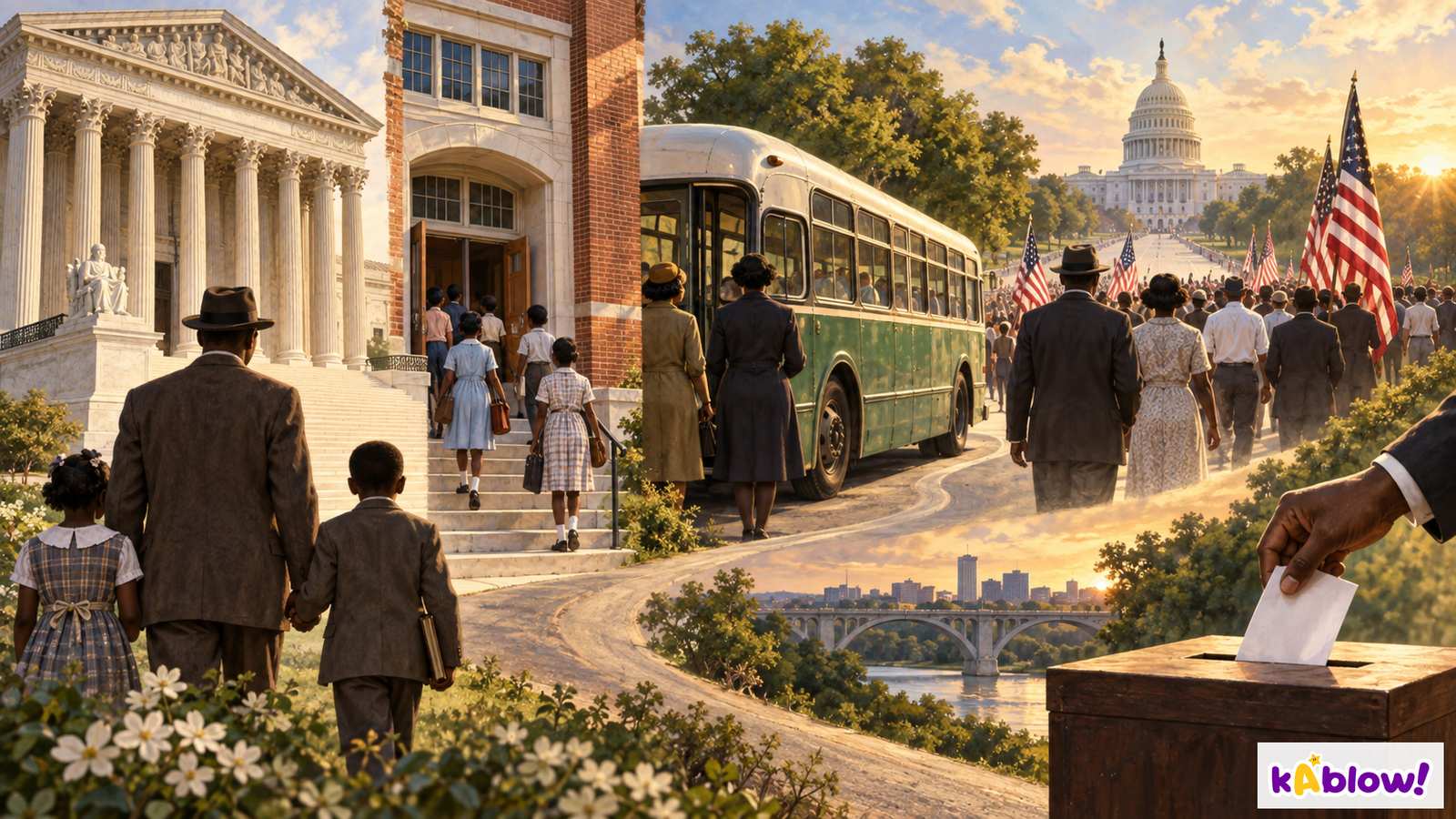
- Civil-rights campaigns involved local organisers, national organisations, courts, protest and legislation. Brown v. Board of Education in 1954 challenged compulsory public-school segregation; the Civil Rights Act of 1964 and Voting Rights Act of 1965 addressed particular barriers. Implementation faced resistance, and legal change did not instantly remove social and economic inequality. The companion civil-rights lesson develops this history further.
Campaigns, institutions and implementation
Women’s campaigns and developments by 1973
- Betty Friedan’s The Feminine Mystique (1963) challenged domestic limitations experienced by many women, particularly in its middle-class focus. NOW was founded in 1966 by Friedan and others; women’s campaigns had varied priorities and did not all share one background or strategy.
- The Equal Pay Act of 1963 addressed sex-based pay discrimination for equal work within its legal scope. Title VII of the 1964 Civil Rights Act addressed employment discrimination, and Title IX in 1972 concerned sex discrimination in federally supported education. Passing these measures did not make every workplace or school equal immediately.
- Congress approved the proposed Equal Rights Amendment in 1972 and sent it to the states; it had not completed ratification by 1973. In January 1973, Roe v. Wade recognised a constitutional abortion right under the framework the Court then adopted. This describes the historical decision, not unrestricted access at every stage.
- This is a broad overview, not complete close study of every event in every board’s 1920–73 option. Specific laws, decisions, experiences and opposition should support any judgement about changing opportunity.
Slide
Sign up free to view the lesson slides
Step through every slide for this topic — plus flashcards and revision notes — with a free account.
Câu hỏi luyện tập
Xem trước miễn phí — 8 trên 39 câu hỏi. Đăng ký để xem tất cả.
1.What did national Prohibition chiefly prohibit for beverage purposes?
Easy- Amanufacture, sale and transport of intoxicating liquor
- Bcars
- Cshares
- Dimmigration
2.Who was elected president in 1932?
Easy- AHerbert Hoover
- BCalvin Coolidge
- CHarry Truman
- DFranklin D. Roosevelt
3.What was the Wall Street Crash?
Easy- Aa war
- Ba law
- Cthe collapse of share prices in 1929
- Da gangster killing
4.What were Hoovervilles?
Easy- Aschools
- Bshanty towns for the homeless
- Cluxury homes
- Dfactories
5.What was the CCC?
Easy- ACivilian Conservation Corps giving young men work
- Ba bank
- Ca court
- Da law
6.What was 'buying on the margin'?
Easy- Apaying cash
- Bselling cars
- Csaving money
- Dbuying shares with borrowed money
7.How did consumer credit help expand some 1920s markets?
Easy- Ataxes ended
- Bprices fell
- Chire purchase let people buy now and pay later
- Dwages doubled
8.What was the Volstead Act?
Easy- Aabolished the KKK
- Bprovided enforcement rules for national Prohibition
- Ccreated the CCC
- Dended immigration
Unlock all 39 questions & more
Tạo tài khoản miễn phí để xem mọi câu hỏi, slide, thẻ ghi nhớ và ghi chú ôn tập cho chủ đề này.
Đề thi cũ
Luyện đề thi cũ cho chủ đề này sắp ra mắt.
Sắp ra mắt