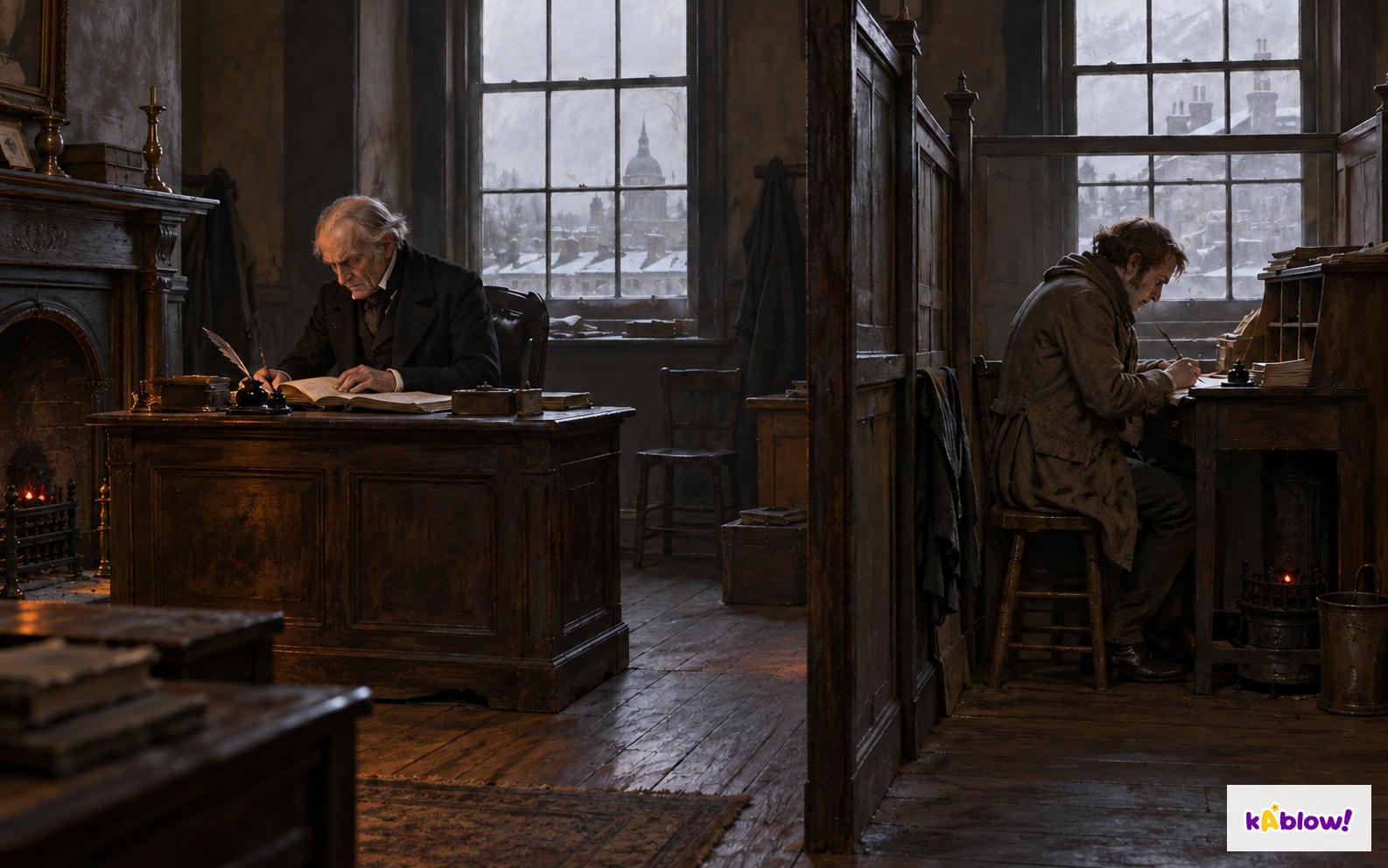
Scrooge’s movement from grasping isolation to practical generosity supports a theme of redemption. Show the changed conduct rather than treating “anyone can change” as a guaranteed fact about every person.
The Cratchits’ affection contrasts with Scrooge’s isolation, but hardship still matters. Tim’s vulnerability and Bob’s wages prevent a reading that poverty itself is desirable.
Social responsibility: Marley cries "Mankind was my business!" and the Spirits show that the wealthy must act. Ignorance and Want are children of society's neglect.
Family and Christmas spirit: warmth, generosity and togetherness, illustrated by the Cratchits and Fred.
Time, memory and consequence: the Spirits show how past, present and future connect.
Wealth, warmth and responsibility
Language and imagery
Cold imagery for Scrooge ("no warmth could warm, no wintry weather chill him") versus warmth, light and fire for generosity.
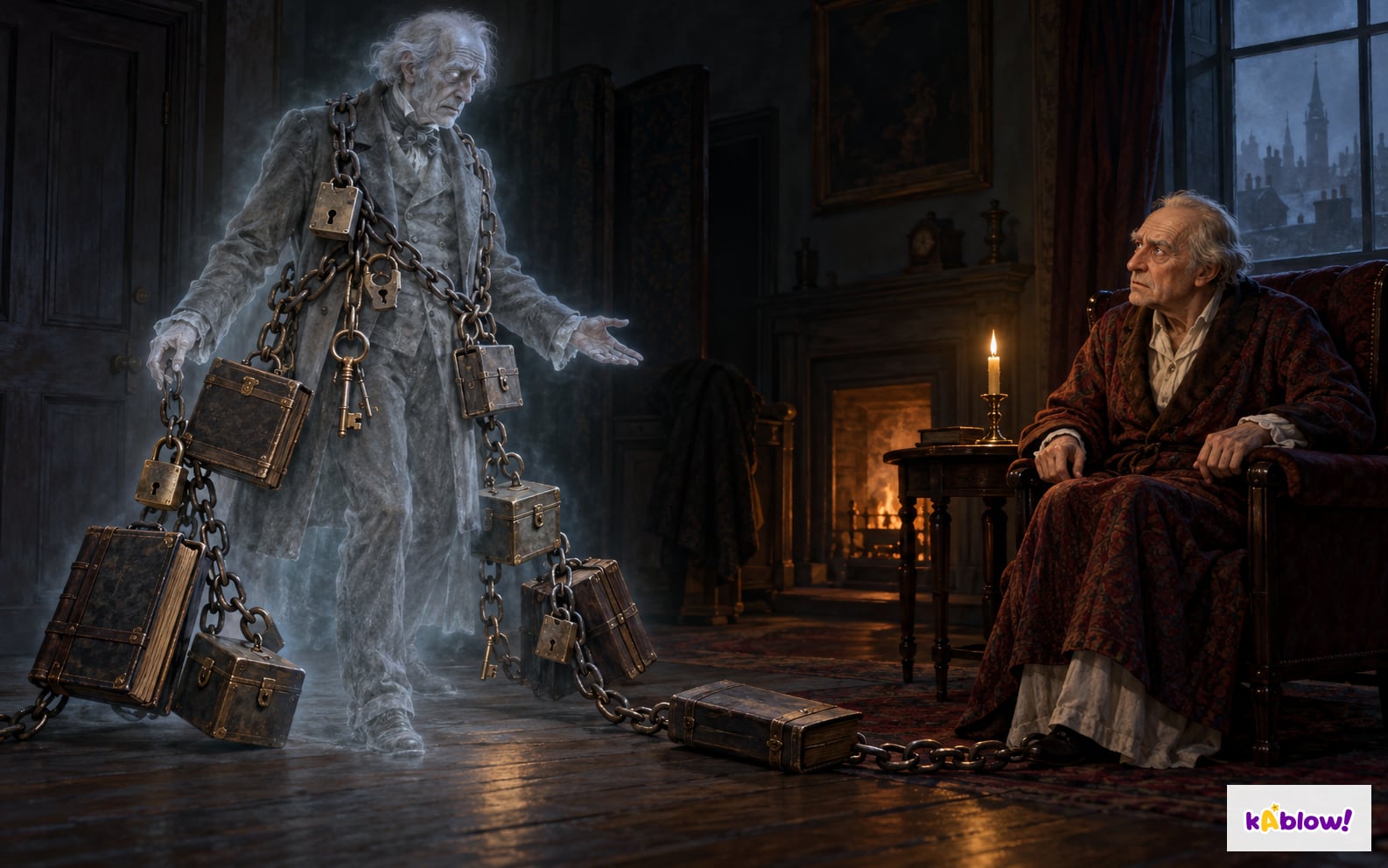
Gothic and supernatural details: chains, a door-knocker that becomes Marley's face, the shrouded Spirit.
The opening accumulates participial modifiers and adjectives; repetition, similes and personification shape the portrait. Scrooge’s speech changes from dismissive brevity to delighted exclamation. Explain these choices in their particular scenes.
Habits become a burden
Structure
Five staves connect the title with musical form. Movement through memory, present lives and a conditional future produces warning and change. The return to Christmas celebration can be read as renewal, but Christmas Eve-to-morning progression alone is not a simple cycle, and the ending extends into Scrooge’s later life.
Warning becomes sustained action
幻灯片
Sign up free to view the lesson slides
Step through every slide for this topic — plus flashcards and revision notes — with a free account.